


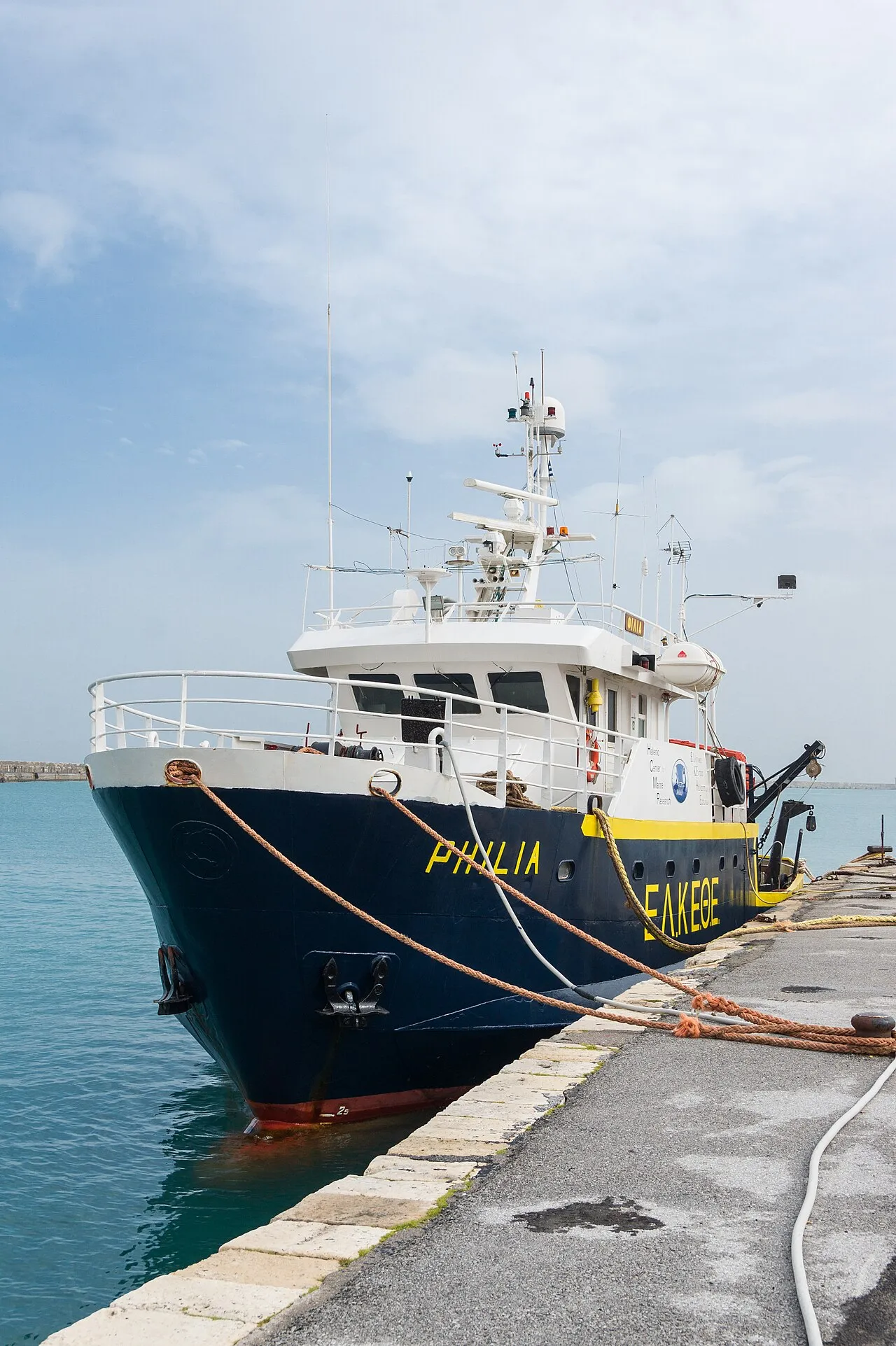
Photo: Wikimedia Commons
My Logbook: Where the Minotaur Still Walks
I heard Heraklion before I saw it. Standing on the upper deck as our ship curved into the harbour, the wind carried the clang of fishing-boat rigging and the distant call of a rooster somewhere in the hills above the port, and I gripped the rail feeling the same anticipation I had felt as a child reading about Theseus and the labyrinth. The Venetian fortress of Koules sat at the mouth of the harbour like a stone sentinel, its honey-coloured walls glowing in the early light, and beyond it the city climbed the hillside in a jumble of cream and terracotta. I gathered my daypack, pulled on my walking shoes, and stepped down the gangway into the oldest corner of European civilization.
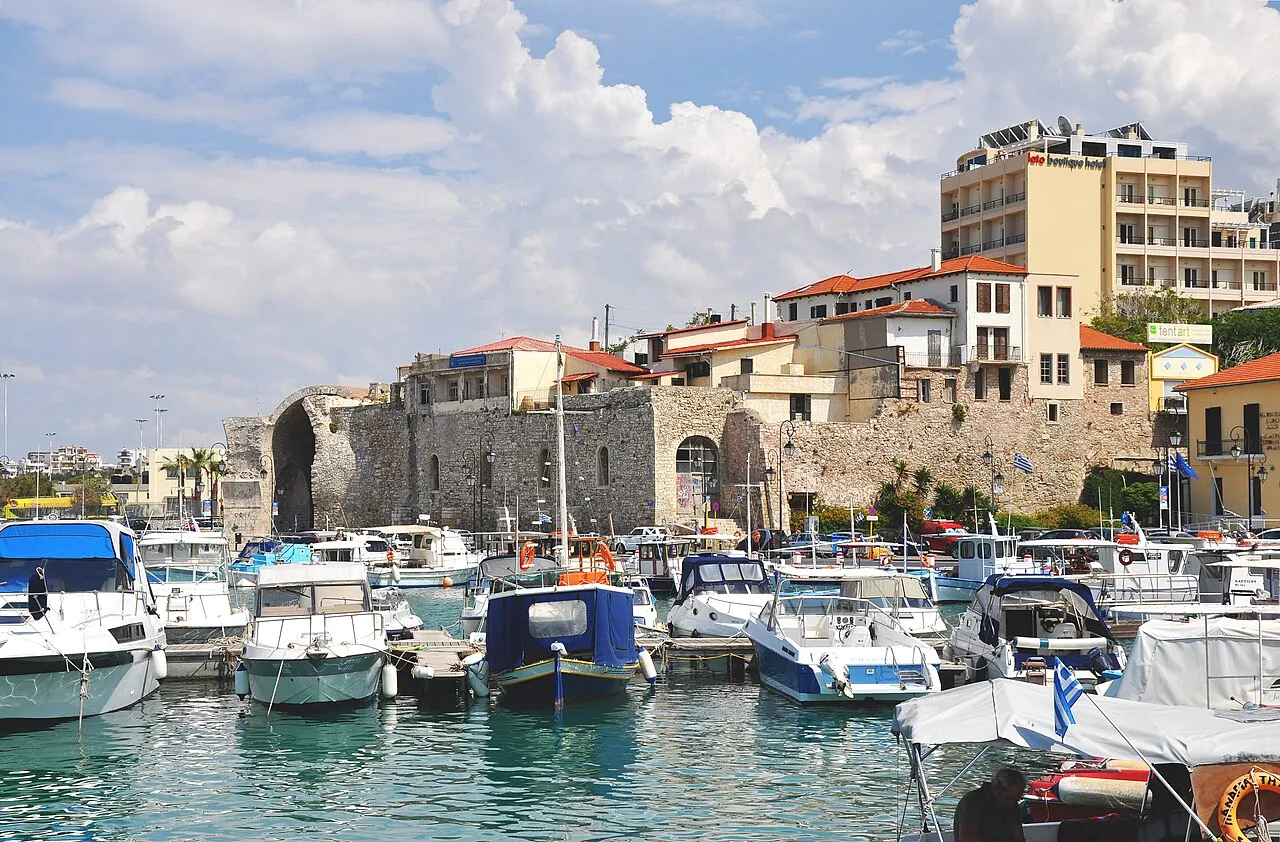
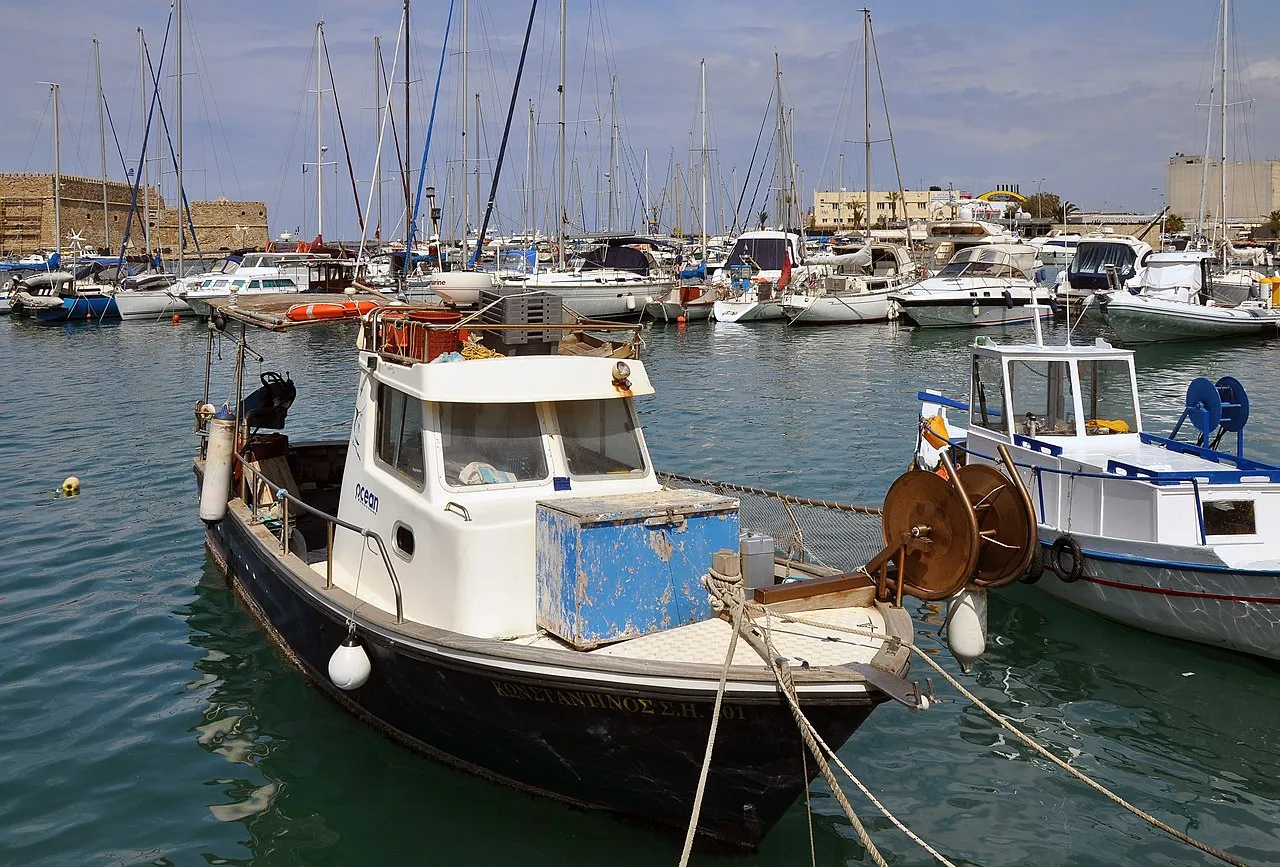
The walk from the cruise terminal to the old harbour took barely ten minutes, but it felt like crossing a threshold between the modern world and something far older. I passed through the Venetian sea gate and emerged onto a waterfront lined with fishing boats painted in faded blues and greens, their nets drying in the sun. The fortress loomed above me, and I paid the €10 entry fee and climbed the stone steps to the ramparts. From the top I could see the entire harbour spread below — the breakwater curving out to sea, our cruise ship gleaming white against the deep blue of the Aegean, and the Cretan mountains rising sharp and brown in the distance. A warm breeze pushed against my face, carrying the smell of salt and wild thyme, and for a moment the four centuries since the Venetians built these walls seemed to collapse into nothing.
I took a taxi to Knossos, arriving just after the gates opened at eight. The driver charged €15 for the five-kilometre ride, and I stepped out into the cool morning air with the ruins stretching before me. There were only a handful of visitors at that hour, and I walked through the entrance in near-silence. The first thing that struck me was the scale: the palace complex covers over 20,000 square metres, with corridors and stairways branching in every direction like the labyrinth of legend. Sir Arthur Evans, who excavated the site from 1900 onward, reconstructed portions of the palace with concrete and painted columns — the distinctive red pillars that taper downward in a style unlike anything Greek or Roman. Some archaeologists criticise the reconstructions, but standing in the Throne Room with its stone seat and painted griffins flanking the walls, I was grateful for them. They helped me feel the weight of what this place had been: the political and ceremonial heart of Europe's first civilization, built around 2000 BC, a full fifteen centuries before the Parthenon.
I wandered through the Royal Apartments and descended into the Queen's Megaron, where the famous dolphin fresco danced across the wall above me. The colours were still vivid after four thousand years — blues and golds and the graceful arc of leaping dolphins frozen in stone. I stood there alone for several minutes, and something shifted inside me. I thought of the Minoan woman who might have sat in this room, watching the same painted sea creatures, listening to the sound of water running through the clay pipes that served as the palace plumbing system — running water, in the Bronze Age. The sophistication of it stunned me. These people had multi-storey buildings, flushing toilets, sophisticated drainage, and international trade networks while most of Europe lived in scattered villages. I felt my eyes fill with tears, standing in that quiet underground room, overwhelmed by the sheer span of human ingenuity and the fragility of it all. An earthquake destroyed the first palace around 1700 BC. They rebuilt. Another disaster struck around 1450 BC, and the Minoan world ended. Yet these walls remain.
Back in Heraklion by midday, I walked to the Archaeological Museum, where the treasures pulled from Knossos and other Minoan sites fill two floors of glass cases. The Snake Goddesses — bare-breasted figurines holding writhing serpents — are smaller than I expected but radiate a strange power. The Phaistos Disc, with its mysterious spiral of undeciphered symbols stamped into clay, held me for twenty minutes. I whispered a quiet prayer of gratitude for the hands that had made these things and the hands that had preserved them. The combined ticket for Knossos and the museum cost €20, and I cannot imagine a better value for understanding how civilization began.
I ate lunch at a small taverna near Lion Square, where the Morosini Fountain — four stone lions spouting water from a Venetian basin — anchored a plaza bustling with locals and visitors. I ordered dakos, the Cretan bruschetta of barley rusk topped with tomato, mizithra cheese, and olive oil, for €6. The waiter, a grey-haired man named Nikos, brought a complimentary glass of raki and told me his grandfather had worked as a labourer during Evans's later excavations at Knossos. "We grew up with the Minoans," he said, smiling. "They are still our neighbours." I sat there eating slowly, watching the fountain splash in the afternoon light, and felt a deep contentment settle over me. However, the midday heat was fierce — easily 30 degrees in the shade — and I was glad I had visited Knossos early before the temperature climbed.
In the late afternoon I walked the old market street, 1866 Street, where vendors sold mountain honey, dried herbs, olive oil soap, and leather sandals from narrow storefronts. I bought a jar of thyme honey for €8 and a small bag of Cretan mountain tea for €3. The smell of grilling souvlaki drifted from a side street, and I followed it to a stand where a man was turning skewers over charcoal. Two sticks of pork souvlaki cost €4, and I ate them standing on the corner, watching the street fill with the golden light of a Mediterranean evening.
I made it back to the ship with an hour to spare, sunburned despite the sunscreen, carrying honey and herbs and the memory of dolphins painted on a wall four thousand years ago. As the ship pulled away from Heraklion, I stood at the rail and watched the fortress shrink into the dusk, its walls turning amber in the last light. Looking back, what Crete taught me is that civilization is both ancient and fragile, that the most extraordinary achievements can vanish in a single catastrophe, and that the impulse to create beauty — to paint dolphins on a wall, to carve lions around a fountain — is the thread that connects us across the millennia. I learned that the oldest wisdom is not locked in museums but living in the streets, in the honey and the herbs and the warm greeting of a taverna owner whose family has kept faith with this island for generations. I carry that lesson with me still.
Weather & Best Time to Visit
The Cruise Port
Ships dock at Heraklion Port, a commercial harbour located on the northern coast of Crete. Large vessels tie up at the main pier alongside the breakwater; smaller ships may use the inner harbour berths closer to the Venetian fortress. The cruise terminal is modest — a covered waiting area with basic amenities but no shops or restaurants inside the terminal itself. Taxis queue outside the port gate and charge a flat fare of approximately €15 to Knossos and €5–8 for destinations within the city centre. The walk from the terminal to the Venetian harbour and old town takes roughly ten minutes along a paved waterfront path that is mostly flat and wheelchair accessible, though some kerb cuts are uneven. Port security requires ship cards for re-entry. Free shuttle buses are sometimes provided by the port authority during peak season, running between the berth and the old town gate. The port area itself is industrial, so most visitors head straight into the city.
Getting Around
Heraklion's historic centre is compact and largely walkable from the cruise terminal. The Venetian harbour, Lion Square, the Archaeological Museum, and the market street are all within a fifteen-minute walk of the port gate, connected by paved pedestrian streets. For Knossos, which lies five kilometres south of the city, you have three options: a taxi (€15 each way, about twenty minutes), the public KTEL bus that departs every twenty minutes from the city centre bus station near the harbour (fare €1.70 each way), or a ship excursion that typically costs €50–80 per person and includes a guided tour. Taxis are metered and reliable; negotiate the fare to Knossos before departing, as drivers sometimes quote higher prices to cruise visitors.
For destinations further afield, car rental agencies operate near the port (from €35 per day), but parking in central Heraklion is limited and stressful. Ride-hailing apps work in Heraklion, though coverage is less extensive than in Athens. The city centre is generally flat, making it manageable for wheelchair users and those with limited mobility, though some older streets have cobblestones and narrow pavements. Knossos itself presents moderate-energy walking challenges: the site involves uneven stone paths, steps, and inclines with limited shade, so visitors with mobility concerns should plan accordingly and bring water. Public buses are not wheelchair accessible. For a low-energy alternative to Knossos, the Archaeological Museum in the city centre offers step-free access on the ground floor and air conditioning, providing an excellent introduction to Minoan civilization without the heat and terrain of the outdoor site.
Excursions & Activities
Knossos Palace
The headline attraction and the reason most cruise ships call at Heraklion. Knossos was the political and ceremonial centre of the Minoan civilization, built around 2000 BC, with a complex of over 1,300 rooms spread across multiple levels. Entry costs €15, or €20 for a combined ticket with the Archaeological Museum. Arrive at opening (8 AM in summer) to avoid heat and crowds — by 11 AM the site is packed. Allow two hours minimum. The site is partially reconstructed by Sir Arthur Evans with distinctive red columns and concrete walls. You can visit independently by taxi or bus; a ship excursion typically costs €50–80 and includes a guide, which adds valuable context. If your port time is limited, book ahead to avoid waiting in ticket queues. Moderate-energy visit with uneven terrain and limited shade.
Heraklion Archaeological Museum
The world's finest collection of Minoan artifacts, including the famous Snake Goddesses, the Phaistos Disc, and vivid frescoes recovered from Knossos and other Cretan sites. Entry costs €12, or €20 combined with Knossos. Located a fifteen-minute walk from the cruise terminal in the city centre. Allow 1.5–2 hours. The museum is air-conditioned and partially accessible on the ground floor. Visit independently — it is an easy walk from port, and no booking is needed. This is a low-energy alternative for visitors who prefer not to travel to Knossos.
Venetian Harbour & Koules Fortress
The old harbour is a ten-minute walk from the cruise terminal and the most atmospheric spot in Heraklion. Fishing boats bob alongside the Venetian arsenals, and Koules Fortress guards the harbour mouth. Entry to the fortress costs €10, and the views from the ramparts are worth the climb. The waterfront promenade is flat and accessible. Free to walk the harbour; allow one hour including the fortress. No need to book ahead — simply walk from port. This is a low-energy visit suitable for all mobility levels along the waterfront, though the fortress stairs require moderate fitness.
Old Town Walking Tour: Lion Square & 1866 Market Street
The heart of Heraklion centres on Lion Square (Plateia Venizelou), where the 17th-century Morosini Fountain sits surrounded by cafes and the elegant Venetian Loggia. From here, 1866 Street runs south through the old market district, lined with shops selling honey, herbs, olive oil, leather goods, and Cretan souvenirs. A self-guided walk takes about an hour and costs nothing. Guided walking tours run €15–25 per person. The streets are pedestrianised and largely flat, making this suitable for most visitors. You can explore independently without any advance booking.
Cretan Wine & Olive Oil Tasting
Several estates in the hills south of Heraklion offer tastings of local wine and olive oil, typically combined with a light Cretan lunch. Half-day tours cost €40–70 per person independently or €80–120 as a ship excursion, with guaranteed return to the vessel. Wineries like Lyrarakis and Boutari are within thirty minutes of the city. This is a relaxed, low-energy experience that pairs well with a morning visit to Knossos. Book ahead during peak season as group sizes are limited.
CretAquarium & Beach Day
The CretAquarium at Gournes, fifteen kilometres east of Heraklion, showcases Mediterranean marine life including sharks, jellyfish, and sea turtles. Entry costs €10 for adults. Nearby beaches at Ammoudara and Karteros offer calm water and sunbed rentals (€8–10 for two sunbeds and an umbrella). A taxi to the aquarium costs roughly €20 each way. This makes a pleasant half-day for families or those wanting a break from ancient ruins. The aquarium is fully wheelchair accessible.
Depth Soundings
Greece uses the Euro (EUR). As of early 2026, the Euro trades near parity with the US dollar. ATMs are plentiful in the city centre, particularly along 25th August Street and near Lion Square; most accept international cards with a withdrawal fee of €2–3. Credit cards are accepted at restaurants, museums, and larger shops, but market vendors, small tavernas, and the Knossos ticket booth sometimes prefer cash. Carry small notes — breaking a €50 at a souvlaki stand can be difficult.
Tipping is appreciated but not expected at the same level as North America. Leaving €1–2 on a cafe table or rounding up a taxi fare is generous. Restaurants may include a cover charge (€0.50–1.50 per person) on the bill. Greeks are warm and welcoming to visitors; a simple "efharisto" (thank you) goes a long way. Dress modestly when visiting churches — cover shoulders and knees. Cretans eat late: lunch rarely starts before 1 PM and dinner not before 9 PM, though tourist-oriented restaurants open earlier. Tap water in Heraklion is safe to drink and free at restaurants when requested. Cretan olive oil and honey make excellent gifts to bring home — the quality is exceptional and prices at the market are fair.
Photo Gallery
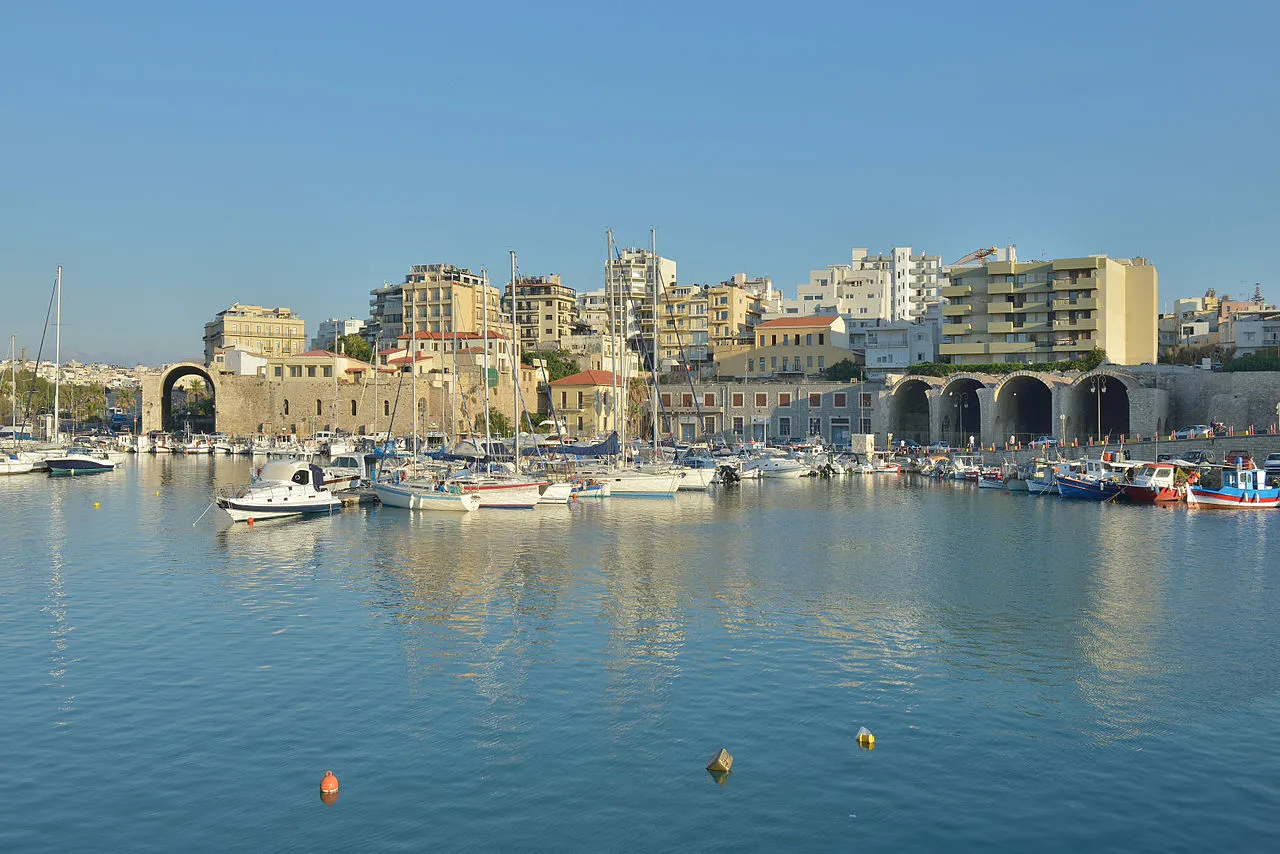
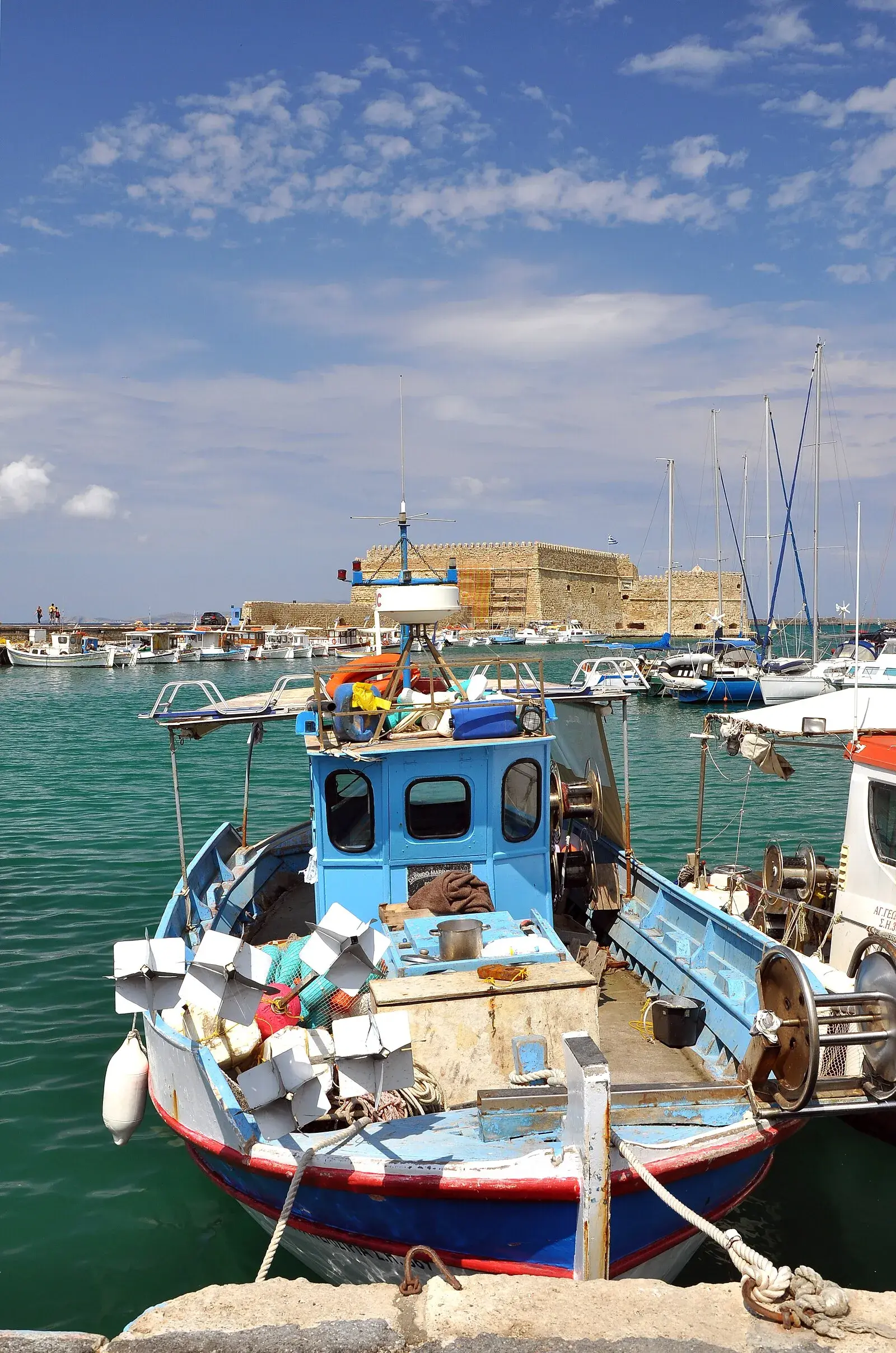
Image Credits
All photographs on this page are used under Creative Commons or free-use licenses. Images sourced from Wikimedia Commons, Unsplash, Pixabay, Pexels, and Flickr.
Frequently Asked Questions
Where do cruise ships dock in Heraklion?
Ships dock at Heraklion Port on the northern coast of Crete, about a ten-minute walk from the Venetian harbour and old town. The terminal is basic with taxis available outside the gate. Large ships berth at the outer pier; smaller vessels may use the inner harbour.
Can I visit Knossos independently from the cruise port?
Yes, and it is straightforward. Public buses run every twenty minutes from the city centre to Knossos (fare €1.70 each way), and a taxi costs roughly €15 each way. Allow two hours for the site itself plus travel time. Going independently saves significant money compared to a ship excursion, which typically costs €50–80 per person.
How long does it take to visit Knossos?
Plan two hours for the archaeological site plus 1.5–2 hours for the Heraklion Archaeological Museum if you want the full Minoan experience. Knossos gets very hot and crowded by 11 AM in summer, so arriving at opening (8 AM) is strongly recommended. A combined ticket for both sites costs €20.
Is the old town walkable from the cruise terminal?
Yes. The Venetian harbour, Koules Fortress, Lion Square, the Archaeological Museum, and the market street are all within a fifteen-minute walk of the port gate along mostly flat, paved paths. Only Knossos requires transport.
What currency do I need in Heraklion?
Greece uses the Euro (EUR). ATMs are plentiful in the city centre. Credit cards are accepted at most restaurants and shops, but carry cash for market vendors, small tavernas, and the Knossos ticket booth. The Euro trades near parity with the US dollar as of 2026.
What should I eat in Heraklion?
Try dakos (Cretan bruschetta with barley rusk, tomato, and mizithra cheese, around €6), souvlaki from a street vendor (€4 for two skewers), and local thyme honey. Cretan olive oil is among the finest in the world. Wash it down with a complimentary glass of raki, which tavernas often offer after a meal.
When is the best time to visit Heraklion?
The glance Temperature reads "10–16 °C (50–61 °F) winter; 25–33 °C (77–91 °F) summer" and Daylight reads "9.5 hours Dec; 15 hours Jun." Rain reads "Rainy season Oct–Mar; virtually no rain Jun–Aug."
When is Heraklion's storm season?
The glance Wind entry reads "Meltemi winds 20–40 km/h Jul–Aug; lighter in spring and autumn," and the hazard-note adds: "Strong northerly winds may affect tender operations; carry a windbreaker." Rain reads "Rainy season Oct–Mar; virtually no rain Jun–Aug."
What should I pack for Heraklion's weather?
The glance Temperature reads "10–16 °C (50–61 °F) winter; 25–33 °C (77–91 °F) summer" — pack for both ends of the year. The hazard-note advises: "carry a windbreaker" for the meltemi. The Packing Tips section lists "Sunscreen and sunglasses — essential year-round"; "Light layers for variable temperatures"; "Comfortable walking shoes for exploring"; "Rain jacket or compact umbrella."
Will rain ruin my Heraklion port day?
The glance Rain entry reads "Rainy season Oct–Mar; virtually no rain Jun–Aug." For short-term forecasts on a specific sailing date, the live weather widget in the seasonal panel above is the primary source.
Heraklion, Crete — Port Guide
Last reviewed: February 2026