


Ho Chi Minh City: Vietnam's Irrepressible Southern Metropolis
My Visit to Ho Chi Minh City
I stepped off the air-conditioned bus into the full weight of Saigon heat and felt it press against my skin like a warm, damp cloth. The transfer from Phu My Port had taken nearly two hours — eighty kilometers of industrial flatlands giving way to rice paddies, then motorbike traffic thickening until the road became a river of helmets and exhaust — and now my wife and I stood on a pavement in District 1 with the scent of grilled meat and jasmine incense swirling around us. Ho Chi Minh City, still called Saigon by nearly everyone who lives there, announced itself through every sense at once: the roar of ten thousand engines, the sweetness of ripe mango from a cart vendor, the shimmer of heat rising from tarmac. I reached for my wife's hand. We had never been anywhere that felt so immediately, overwhelmingly alive.

Our guide, a wiry man in his sixties named Thanh, led us first to Notre Dame Cathedral. The red brick facade rose before us like a fragment of southern France transplanted into tropical soil — every brick shipped from Marseille in the 1880s, the twin bell towers still standing after more than a century of war, revolution, and monsoon. Across the plaza stood the Saigon Central Post Office, designed by Gustave Eiffel's firm, its vaulted iron ceiling and polished wood counters still functioning as a working post office. I watched an elderly woman post a letter at the same counter where colonial administrators once dispatched correspondence to Paris. The building smelled of old wood and ink and something faintly sweet I could not identify. "It has always smelled this way," Thanh said quietly. "Even during the war." I stood beneath the arched ceiling and felt the cool air settle around me, and for a moment the noise of the city outside fell away entirely.
From there we drove northwest toward the Cu Chi Tunnels, and the city gradually thinned into green countryside and rubber plantations. Seventy kilometers from the center, I descended into the earth. The tunnels swallowed me. The air underground was hot, close, and smelled of damp clay and something older — the mineral scent of soil that has been sealed and breathed in by generations. I crawled through a section that had been widened for tourists, and still my shoulders scraped both walls. The ceiling brushed my head. I could hear my own breathing echoing back at me, and the heartbeat in my ears was deafening. The original passages were half this width. Entire families lived down here — kitchens, hospitals, schools, even theaters carved into the red laterite clay. Children were born in these tunnels. People died in them. The Viet Cong network stretched for over two hundred and fifty kilometers, and the soldiers who fought from within them endured conditions I could not comprehend even while crouched inside that same darkness.
When I emerged into the sunlight, gasping, my shirt soaked with sweat, I stood very still for a long time. My wife looked at me and saw something in my face she did not need me to explain. I felt my heart ache with a sorrow I had not expected — not grief exactly, but a recognition of suffering so vast and so close in time that the people who endured it are still alive, still walking these streets. This is not ancient history sealed behind museum glass. It is living memory. I whispered a quiet prayer for the souls who had sheltered beneath that ground, and for a moment I could not speak at all.
Back in the city that afternoon, we visited the Reunification Palace — the site where the Vietnam War ended on April 30, 1975, when a North Vietnamese tank crashed through the iron gates. The building remains frozen in that day: 1960s furnishings, war room maps still marked with tactical positions, the rooftop helicopter pad where the last evacuations took place. I walked through rooms where decisions that shaped millions of lives were made, and the silence inside was heavy with consequence. A few blocks away, the War Remnants Museum offered the Vietnamese perspective on the conflict — sobering, unflinching, and necessary. The cost was approximately 40,000 VND, less than two dollars. I spent an hour inside and emerged into the sunlight feeling hollowed out but grateful for the honesty. These two sites form a pair: one official, almost ceremonial; the other raw and unsparing. Together they tell a story that the city refuses to forget, even as it races forward into glass and steel and irrepressible modernity.
That evening, Thanh took us to Ben Thanh Market. The covered halls erupted in organized chaos — pyramids of spices in burnt orange and turmeric gold, bolts of silk in every color, lacquerware gleaming under fluorescent lights, and the sound of vendors calling prices and laughter echoing off the tin roof. At a noodle stall inside the market, I ordered a bowl of pho bo — beef broth with rice noodles, fresh herbs, and a squeeze of lime — and the first sip was a revelation. The broth was complex and layered, sweet from bone marrow and fragrant with star anise, and the warmth spread through my chest as the noise of the market hummed around us. My wife ordered banh mi from a cart just outside — a crispy baguette filled with pork, pickled daikon, cilantro, and chili — and she closed her eyes with the first bite. The cost was 30,000 VND, barely more than a dollar. "This is the best sandwich I have ever eaten," she said, and I believed her.
We ended the day at the Jade Emperor Pagoda, a Chinese temple built in 1909 and thick with incense smoke that curled through dim corridors lined with carved wooden figures of gods and demons. The air inside was warm and fragrant, and the soft chanting of worshippers mixed with the distant hum of the city outside the walls. I sat on a stone bench in the courtyard and watched the smoke rise and dissolve into the fading evening sky. However overwhelming the day had been — the tunnels, the palace, the museum, the market — this moment of stillness was what I needed. My wife sat beside me and said nothing. We did not need words.
Looking back, I realize what Ho Chi Minh City taught me. It is a place that refuses to be simplified. The French colonial elegance exists alongside Vietnamese resilience. The horror of war sits next to the joy of a bowl of pho served by a smiling grandmother. The tunnels where people suffered are now surrounded by rubber trees and birdsong. I learned that courage is not the absence of suffering but the refusal to be diminished by it. This city survived occupation, war, and revolution — and it did not merely survive. It thrived. That energy, that defiant insistence on life, permeates every street corner and every face. I carried it with me back to the ship that evening, through the two-hour drive past rice paddies and water buffalo, and I felt something shift inside me — a gratitude not just for the day, but for the people who built this city and rebuilt it and rebuilt it again, always forward, always irrepressible.
Featured Images
The Cruise Port
What you need to know before you dock.
- Terminal: Phu My Port is a commercial shipping facility approximately 80 km southeast of Ho Chi Minh City center. There are no tourist amenities at the port itself — no cafes, shops, or attractions. The pier area is flat and paved, making it accessible for wheelchair users and those with limited mobility during the transfer to buses.
- Distance to City: 1.5-2 hours each way by road; a ship excursion, private transfer, or pre-booked tour is essential
- Tender: No — ships dock directly at the commercial pier
- Currency: Vietnamese Dong (VND); USD widely accepted at tourist sites; credit cards accepted at larger establishments. ATMs available in the city center
- Language: Vietnamese; English spoken at tourist sites and by licensed guides
- Driving: Right side (traffic is intense by Western standards — do not attempt to drive yourself)
- Weather: Hot year-round (28-35°C); rainy season May–November; dry season December–April is peak cruise season
- Time Zone: Indochina Time (ICT), UTC+7
Getting Around
Transportation tips for cruise visitors.
- Ship Excursion: The most practical option for cruise passengers. Ship excursions handle the 80 km transfer from Phu My Port to Ho Chi Minh City and back, with a guaranteed return to the vessel before departure. Full-day tours combining Cu Chi Tunnels and city highlights typically cost $90-150 per person. These offer the security of a timed return and English-speaking guide, which is especially valuable given the distance from port.
- Private Transfers: Pre-arranged private cars or minivans can be booked through local tour operators. Expect to pay $80-120 for a full-day private vehicle with driver and guide. This offers more flexibility than a ship excursion but requires careful time management to ensure you return to Phu My before sailing. Book ahead through reputable operators recommended by your cruise line.
- Grab (Ride-Hailing): Southeast Asia's equivalent of Uber works well within Ho Chi Minh City itself. Fares are metered and affordable — a cross-city ride costs approximately 100,000-200,000 VND ($4-8). However, Grab is not practical for the Phu My-to-city transfer because few drivers operate in the port area.
- Walking in the City: District 1 (the tourist center) is compact and walkable, with Notre Dame Cathedral, the Post Office, Reunification Palace, War Remnants Museum, and Ben Thanh Market all within a 2 km radius. Crossing streets requires confidence — step out slowly and steadily, and motorbikes will flow around you. The major sidewalks along Dong Khoi Street and Le Loi Boulevard are generally flat and wheelchair accessible, though pavement quality varies on side streets.
- Taxis: Vinasun and Mai Linh are the two reputable metered taxi companies. Insist on the meter or agree on a fare before departure. A ride across District 1 costs approximately 50,000-80,000 VND ($2-3).
Ho Chi Minh City Area Map
Interactive map showing Phu My port, Cu Chi Tunnels, and city center attractions. Click any marker for details and directions.
Excursions & Activities
How to spend your time ashore. Given the 80 km distance from Phu My Port, a ship excursion or pre-booked independent tour is essential. Many visitors choose to book ahead through the cruise line for guaranteed return to the vessel, though independent operators offer more flexibility at lower cost.
Cu Chi Tunnels
The extraordinary underground network used by Vietnamese resistance fighters during the war. Explore widened tunnel sections — still narrow enough to feel claustrophobic — see reconstructed booby traps, and learn guerrilla survival techniques from local guides. The tunnels are located approximately 60 km northwest of the city center (about 1.5 hours each way). A half-day excursion costs approximately $50-70 per person through independent operators, or $80-120 through ship excursion packages. This is a moderate-walking activity requiring the ability to crouch and navigate uneven ground; sections are not wheelchair accessible. Book ahead during peak cruise season as group sizes are limited. Essential Vietnam experience that should not be missed.
Reunification Palace
Where the Vietnam War ended on April 30, 1975, when North Vietnamese tanks crashed through the gates. The building remains as it was that day — a time capsule of 1960s-era furnishings, war room maps, and the rooftop helicopter pad. Entry costs approximately 65,000 VND ($2.70). Central District 1 location. Low-walking activity suitable for most visitors. Allow 1-1.5 hours.
War Remnants Museum
A sobering and essential collection documenting the Vietnam War primarily from the Vietnamese perspective. Exhibits include photographs, military equipment, and personal accounts. Emotionally intense but historically significant. Entry costs approximately 40,000 VND ($1.70). Central location in District 3, walkable from Reunification Palace. Allow 1-2 hours. The ground floor is wheelchair accessible.
Notre Dame Cathedral & Central Post Office
Side-by-side French colonial landmarks in the heart of District 1. The cathedral's red brick facade was built with materials shipped from Marseille; the Post Office (designed by Gustave Eiffel's firm, 1877-1883) is still functioning and spectacular. Free to enter both. Walking distance apart. An excellent independent stop that does not require a guided tour. Low-walking activity.
Ben Thanh Market
Iconic covered market operating since 1914. Find souvenirs, textiles, spices, lacquerware, and extraordinary food stalls serving pho, banh mi, and fresh spring rolls at prices from 30,000-80,000 VND ($1.30-3.50). Haggling is expected and part of the experience. Best visited mornings before the heat intensifies. Central location in District 1.
Jade Emperor Pagoda
Atmospheric Chinese temple built in 1909, filled with swirling incense smoke and intricate wood carvings of gods and demons. A working place of worship — visit respectfully with shoulders and knees covered. Free entry. District 1 location. Allow 30-60 minutes.
Local Food & Drink
- Pho: The iconic noodle soup — beef or chicken broth simmered for hours with star anise and cinnamon, served with rice noodles and fresh herbs. From 40,000 VND ($1.70) at street stalls
- Banh Mi: Vietnamese baguette sandwich with meat, pickled vegetables, cilantro, and chili. One of the world's great street foods. From 25,000 VND ($1)
- Goi Cuon: Fresh spring rolls with shrimp, pork, vermicelli, and herbs wrapped in rice paper. Light and refreshing
- Ca Phe Sua Da: Vietnamese iced coffee with sweetened condensed milk — strong, sweet, and addictive. From 25,000 VND ($1)
- Banh Xeo: Crispy rice flour crepe stuffed with pork, shrimp, and bean sprouts. Satisfyingly crunchy
- Che: Sweet dessert soups — countless varieties with beans, jellies, and coconut milk
Depth Soundings Ashore
Lessons learned the hard way.
- Time Management: The 80 km transfer from Phu My Port consumes 3-4 hours of your day in travel alone. Plan ruthlessly and prioritize. Trying to see everything guarantees you enjoy nothing. Pick Cu Chi Tunnels plus two city highlights, or skip the tunnels and spend the full day in the city center.
- Crossing Streets: Traffic looks terrifying but follows an unwritten logic. Step off the curb slowly, walk at a steady pace, and do not stop or dart. Motorbikes will flow around you like water around a stone. Hesitation is more dangerous than confidence.
- Cu Chi Tunnel Prep: Wear lightweight, long clothing and sturdy shoes. The tunnels are hot, cramped, and dirty. Bring water. If you are claustrophobic, the above-ground exhibits and reconstructions are still worth the visit — you can skip the crawling sections without losing the experience.
- Currency Strategy: Carry small-denomination VND for street food and market purchases. USD is accepted at major sites but you will receive change in dong. ATMs are plentiful in District 1. Credit cards work at restaurants and larger shops but not at market stalls.
- Hydration: Saigon heat is relentless, especially between 11am and 3pm. Carry water and drink constantly. Coconut water from street vendors (approximately 20,000 VND) is refreshing and widely available.
- Respectful Dress: Cover shoulders and knees when visiting temples and pagodas. The Jade Emperor Pagoda is a working place of worship, not a museum. Show the same reverence you would expect in your own place of prayer.
Photo Collection
Photo Gallery
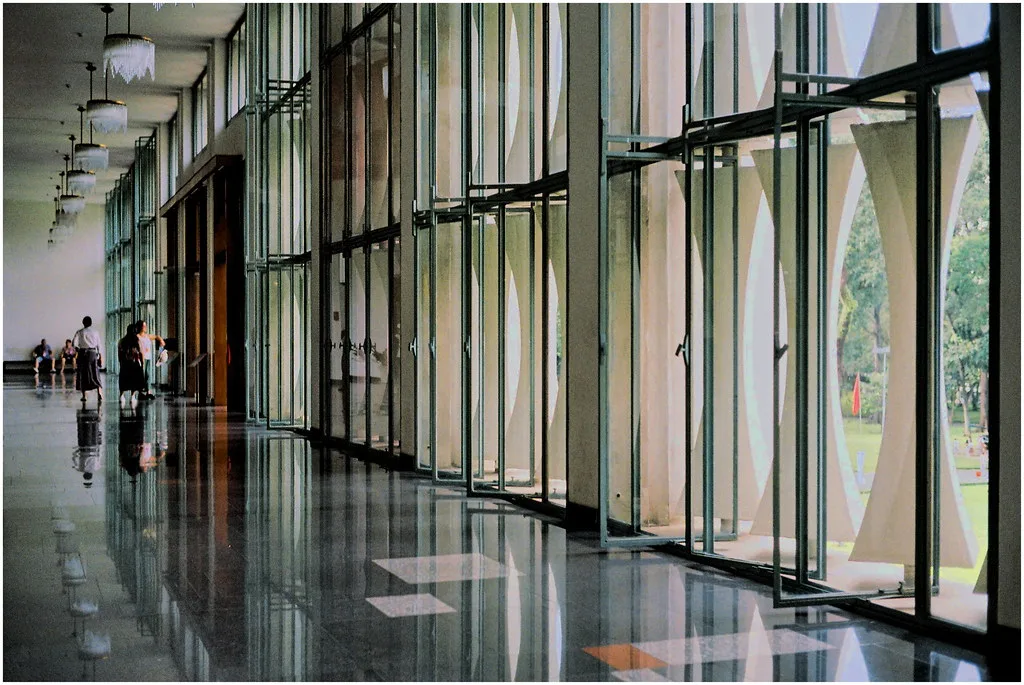
Image Credits
- Hero image and cathedral: Diego Delso via Wikimedia Commons (CC BY-SA 3.0)
- City, market, tunnels, palace, pagoda, skyline, traffic, museum, food: Wikimedia Commons (CC BY-SA)
Frequently Asked Questions
Q: Where do cruise ships dock for Ho Chi Minh City?
A: Ships dock at Phu My Port, approximately 80 km (1.5-2 hours by road) southeast of Ho Chi Minh City center. The port is a commercial shipping facility with no tourist amenities. A ship excursion or pre-arranged private transfer is strongly recommended.
Q: Can I visit both Cu Chi Tunnels and city highlights in one port day?
A: Yes, but it requires a full-day tour with efficient scheduling. Most ship excursions combine a Cu Chi Tunnels visit with Reunification Palace, Notre Dame Cathedral, and Ben Thanh Market. Expect a long but rewarding day. Independent tours offer similar itineraries at lower cost but without guaranteed return to the vessel.
Q: Is Ho Chi Minh City safe for cruise visitors?
A: Yes, generally safe for tourists. Watch for pickpockets in crowded areas like Ben Thanh Market. Traffic looks terrifying but flows; cross streets slowly and steadily. Keep valuables secure and use reputable taxi companies (Vinasun or Mai Linh).
Q: What should I wear?
A: Light, breathable clothing. Shoulders and knees covered for temples. Comfortable walking shoes essential. Hat and sunscreen are critical in the tropical heat. If visiting Cu Chi Tunnels, wear long trousers and closed shoes.
Q: Is Ho Chi Minh City accessible for visitors with mobility challenges?
A: The major attractions in District 1 are mostly on flat ground and accessible. The War Remnants Museum ground floor is wheelchair accessible. However, the Cu Chi Tunnels involve uneven terrain and are not suitable for wheelchair users. The Phu My Port pier area is flat and paved. Discuss specific needs with your cruise line or tour operator when booking.
Q: What's the best time of year to visit?
A: The dry season (December-April) offers the most comfortable weather. Peak cruise season aligns with this period. The rainy season (May-November) brings afternoon downpours but they usually pass quickly. Check the weather guide above for detailed seasonal recommendations.
Q: Should I exchange money before arriving?
A: USD is widely accepted at major tourist sites. ATMs dispensing VND are plentiful in District 1. Small vendors and street food stalls prefer dong. Having both currencies is practical.