


Photo: Wikimedia Commons
My Logbook: Where History Pulses Through Every Street
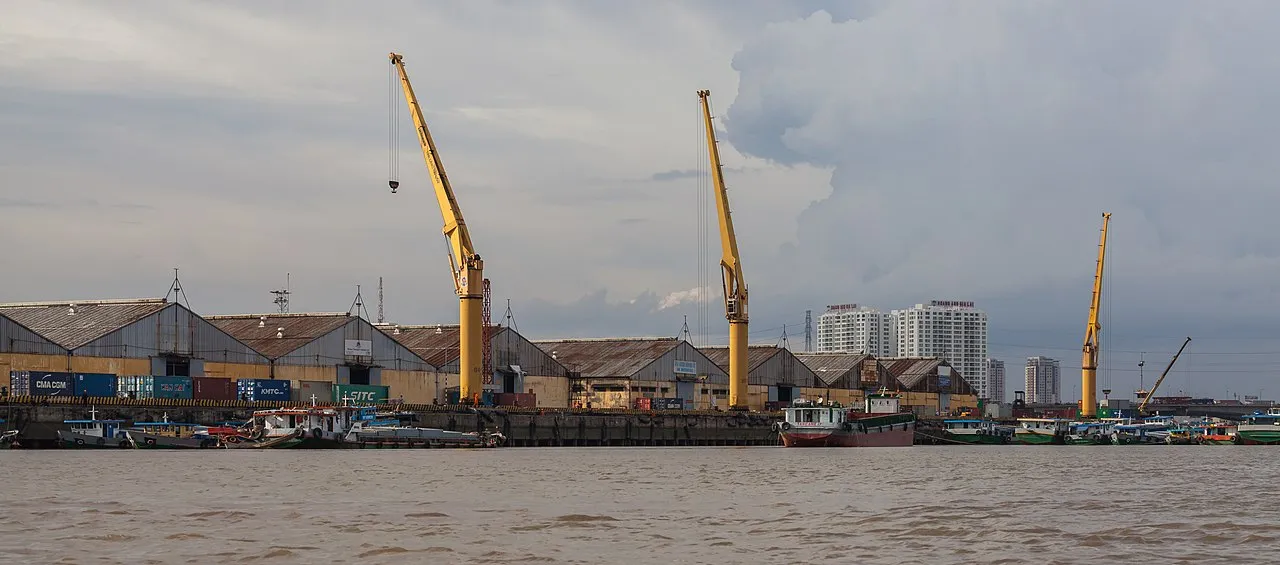
I woke before dawn on the morning we docked at Phu My, too restless to sleep. The air coming through the balcony door was already thick and warm, carrying the faint smell of diesel and river mud — not unpleasant, but unmistakably tropical, unmistakably Vietnam. I stood on the balcony watching the port cranes emerge from the grey pre-dawn light and felt my pulse quicken. I had read about Saigon for years, watched documentaries, heard other travelers describe it in breathless fragments, but nothing could have prepared me for what lay ahead. I gathered my daypack, tucked my passport into my money belt, and joined the line for the transfer bus. The ninety-minute drive from Phu My Port to central Ho Chi Minh City passed through flat green rice paddies and small towns where water buffalo stood motionless in the morning haze. I pressed my forehead against the cool glass of the bus window and watched Vietnam scroll past me like a film I had been waiting my whole life to see.
My first stop was the War Remnants Museum, and I will be honest — I almost did not go. I knew what was inside. I had seen photographs of the photographs. But something told me I owed it to this city to witness what it had endured, and so I paid my 40,000 VND ($1.60) entry fee and walked through the door. The ground floor exhibits were powerful but manageable — captured American tanks and helicopters arranged in the courtyard like a steel garden, informational plaques written in measured Vietnamese and English. However, upstairs the tone shifted. Room after room of photographs showing the human cost of the conflict, images I will not describe here because they belong to the people who lived them, not to me. I walked slowly, reading every caption, and somewhere on the second floor I found myself standing in front of a photograph of a Vietnamese mother holding her burned child, and I felt my eyes fill with tears. I stood there for a long time. A Vietnamese woman about my mother's age stood beside me, and without a word she reached over and placed her hand on my arm. We stood together in front of that photograph, two strangers from opposite sides of a war that ended before either of us could have stopped it, and she squeezed my arm gently and walked away. I whispered a quiet prayer — for the mother in the photograph, for the woman who touched my arm, for everyone who carries the weight of wars they did not choose.
I needed air after the museum, and the city gave it to me in its own chaotic way. Notre-Dame Cathedral Basilica rose at the end of a broad boulevard, its red Marseille bricks warm in the late-morning sun, the twin bell towers reaching upward like open hands. Next door, the Central Post Office — Gustave Eiffel's architectural gift to Saigon — still functions as a working post office, its arched ceilings and century-old maps mounted on the walls creating a strange and beautiful intersection of colonial grandeur and everyday life. I bought a postcard and mailed it to myself, a habit I have kept on every port day, though I never know what to write except "I was here, and it was more than I expected." The sound of motorbikes roaring past the cathedral doors mixed with the scratch of my pen on the postcard, and I caught the sweet scent of jasmine from a vendor's cart just outside the entrance.
Lunch was pho from a street cart — a bowl of beef broth so fragrant and deep that I closed my eyes and just breathed it in before I touched the chopsticks. The broth tasted of star anise and charred ginger and something I could not name, something that felt like the patience of a cook who had been making this same soup since before I was born. A full bowl cost 40,000 VND, barely over a dollar. I sat on a plastic stool the size of a child's chair, my knees practically at my chin, surrounded by Vietnamese office workers on their lunch break, and I felt something shift inside me — a loosening of the distance between myself and this city that had been there since the moment I stepped off the bus. Saigon was not performing for me. It was simply being itself, and it was letting me be there while it did.
The afternoon brought me to the Reunification Palace, where the war officially ended on April 30, 1975. The building is preserved exactly as it was — vintage 1960s furniture, the basement war room with its cold-war-era communications equipment, the rooftop helicopter pad from which the last evacuations departed. I walked through the silent rooms feeling the weight of what had happened here, the strangeness of a building frozen in time while the city outside roared with twenty-first-century energy. Then on to Ben Thanh Market for Vietnamese coffee — strong, dark, dripped slowly over sweetened condensed milk, served in a glass with ice, costing 25,000 VND ($1). I sat at a tiny stall watching the market swirl around me, the colors of silk scarves and lacquerware catching the light, the voices of vendors calling prices in Vietnamese and broken English, and I thought about how this city had rebuilt itself from rubble into something fierce and beautiful and alive.
On the bus back to Phu My, I leaned my head against the window and watched the rice paddies turn golden in the late-afternoon sun. The woman across the aisle was Vietnamese, traveling with her daughter, and when she caught me looking out the window she smiled and said something I did not understand. Her daughter translated: "My mother says you look like you are carrying something heavy." I told her I was carrying gratitude, and her mother nodded as though that was exactly the right answer. That is what Ho Chi Minh City taught me — that grief and joy and resilience are not separate things here, but braided together like the roots of the old banyan trees that line the boulevards, and that the truest way to honor a place that has suffered is to witness it honestly and carry its stories with you when you leave. I carry this city with me still.
Weather & Best Time to Visit
The Cruise Port
Most cruise ships dock at Phu My Port (also called Thi Vai International Port), located approximately 80 km southeast of central Ho Chi Minh City in the Ba Ria-Vung Tau province. The terminal building is basic — a covered arrivals area with security screening and a small air-conditioned waiting room, but no shops, restaurants, or ATMs inside the terminal itself. Immediately outside the port gate you will find taxi drivers and tour operators waiting for arriving passengers. Some cruise lines use Cat Lai Port, which is significantly closer to the city centre at roughly 30-40 minutes by road, though this dock handles fewer ship calls.
The transfer from Phu My to downtown Ho Chi Minh City takes 90-120 minutes each way depending on traffic, which means you lose three to four hours of your port day to travel alone. For this reason, most cruise visitors book a ship excursion or arrange a private driver ($80-120 for a full day) to maximize their limited time. The port area has level, paved surfaces that are wheelchair accessible at ground level, though the long transfer to the city by bus or van is the primary mobility consideration. Independent taxi transfers from Phu My to the city cost approximately 1,500,000-2,000,000 VND ($60-80) one way. Make sure your driver understands your ship's departure time — being late to Phu My is not an option given the distance.
Getting Around
Once you reach central Ho Chi Minh City, transport options are plentiful and affordable. Grab — Southeast Asia's ride-hailing app, similar to Uber — is the most reliable and comfortable option for cruise visitors. A Grab car from the War Remnants Museum to Ben Thanh Market costs approximately 30,000-50,000 VND ($1.20-2). Grab also offers motorbike taxis (Grab Bike) for solo travelers who want the full Saigon adrenaline experience at even lower prices. Traditional metered taxis from Vinasun or Mai Linh are trustworthy companies; avoid unmarked taxis that may overcharge tourists.
Walking is feasible in District 1 (downtown), where the major historical sites cluster within a manageable radius. The War Remnants Museum, Notre-Dame Cathedral, Central Post Office, Reunification Palace, and Ben Thanh Market are all within roughly one square kilometer. However, crossing streets in Ho Chi Minh City requires a particular kind of courage — millions of motorbikes flow through intersections like water, and traffic signals are treated as suggestions. The technique is simple: walk slowly and steadily at a consistent pace; do not stop, run, or make sudden moves. The motorbikes will flow around you. It feels terrifying the first time but becomes almost natural by the third crossing.
For wheelchair users and visitors with limited mobility, the sidewalks in Ho Chi Minh City present serious challenges — they are narrow, uneven, frequently blocked by parked motorbikes, and often used as extensions of restaurants and shops. Wheelchair accessible transport is best arranged through a private driver with a vehicle that can accommodate mobility equipment. The major museums (War Remnants Museum, Reunification Palace) have accessible ground-floor entrances, though upper floors may require stairs. Ben Thanh Market is crowded and the aisles are tight, so visitors using wheelchairs may prefer the newer Saigon Centre mall nearby, which is fully accessible with lifts and wide corridors. A low-energy alternative is to hire an air-conditioned private car and driver for $80-120 per day, allowing you to see the city at your own pace without navigating the chaotic streets on foot.
Excursions & Activities
War Remnants Museum
Vietnam's most visited museum presents the Vietnam War (called the American War locally) through Vietnamese eyes. Exhibits include photographs, military equipment, testimonies, and a moving collection of artifacts that tell the human cost of the conflict. Entry costs 40,000 VND ($1.60). Allow 90-120 minutes. The ground floor is wheelchair accessible; upper floors require stairs. Not suitable for young children due to graphic content. You can visit independently by taxi from your city drop-off point — it is located in District 3, a short ride from most other central attractions. Ship excursions typically include this museum as part of a city highlights tour costing $70-100.
Cu Chi Tunnels
A sprawling underground network where Viet Cong fighters lived, fought, and operated during the war. You can crawl through sections widened for visitors, see reconstructed booby traps, and visit hidden command centres. The round trip from central Ho Chi Minh City takes 3-4 hours including travel time (70 km northwest). A ship excursion to Cu Chi costs $80-130 and offers a guaranteed return to the vessel — this matters enormously given the distance back to Phu My Port. If you explore independently, hire a private driver ($40-60 for the half-day trip) and depart as early as possible. Entry costs approximately 110,000 VND ($4.40). Not accessible for wheelchair users due to the tunnel environment. Book ahead through your ship or a reputable local operator, as tour vehicles fill quickly on cruise port days.
Notre-Dame Cathedral & Central Post Office
Two stunning French colonial landmarks standing side by side in District 1. The neo-Romanesque cathedral (built 1863-1880) features red bricks imported from Marseille and twin bell towers rising above the surrounding streetscape. The Central Post Office, designed by Gustave Eiffel, boasts gorgeous arched ceilings, old-world maps, and still functions as a working post office where you can buy stamps and mail postcards. Both are free to enter (the cathedral exterior is viewable even during renovation). A low-energy, wheelchair-accessible stop on flat ground. Visit independently — a Grab taxi from Ben Thanh Market costs under 20,000 VND ($0.80).
Reunification Palace
The site where North Vietnamese tanks crashed through the gates on April 30, 1975, ending the war. The building is preserved with vintage 1960s furniture, basement war rooms, and the rooftop helicopter pad. Entry costs 65,000 VND ($2.60). Allow 60-90 minutes. The ground floor is accessible for wheelchair users. Located in District 1, it is easily reachable on foot from Notre-Dame Cathedral or by a short taxi ride.
Ben Thanh Market
Ho Chi Minh City's most iconic covered market is colorful, crowded, and chaotic. Shop for silk, lacquerware, Vietnamese coffee beans, spices, and souvenirs. Haggle firmly — start at half the asking price and work toward a fair deal. A bowl of pho inside the market food court costs 50,000-70,000 VND ($2-2.80). The market is a moderate-energy visit due to crowds and heat; aisles are narrow and challenging for wheelchair users. The night market outside (from 7 p.m.) is atmospheric with street food stalls and lanterns. No need to book ahead — simply show up and dive in.
Mekong Delta Day Trip
A full-day excursion south of the city to explore floating markets, fruit orchards, and sampan rides through narrow canals lined with coconut palms. This is an ambitious trip from Phu My Port — the total round-trip travel time (port to Mekong and back) can reach seven or eight hours, leaving limited time in the delta itself. A ship excursion is strongly recommended for this activity, as it provides a guaranteed return to the vessel and structured timing. Prices for organized Mekong tours range from $90-150 per person. Book through your ship or a trusted local tour operator well in advance. Moderate energy level; some boat transfers may not be wheelchair accessible.
Depth Soundings
Vietnam operates on the Vietnamese Dong (VND). As of early 2026, $1 USD buys approximately 25,000 VND. The numbers feel enormous at first — your morning pho costs 40,000 VND and your museum entry is 65,000 VND, but in real terms that is $1.60 and $2.60 respectively. ATMs are plentiful in central Ho Chi Minh City and accept international cards with a typical withdrawal fee of 20,000-50,000 VND. Credit cards work at hotels, malls, and upscale restaurants, but taxis, street food vendors, market stalls, and smaller shops require cash. Carry small denominations — getting change for a 500,000 VND note at a street cart is nearly impossible.
Tipping is not traditional in Vietnam but is increasingly appreciated in tourist areas. Round up taxi fares and leave 10-15% at sit-down restaurants if no service charge is included. Tour guides and private drivers appreciate $5-10 for a full-day service. Dress modestly at religious sites — cover shoulders and knees at cathedrals, pagodas, and the Reunification Palace. Remove shoes when entering Buddhist temples. The Vietnamese are welcoming and patient with visitors who make an effort. Learn "xin chao" (hello) and "cam on" (thank you) — even a clumsy attempt earns warm smiles. Street food is generally safe when eaten at busy stalls with high turnover; avoid pre-cut fruit and ice from questionable sources. Stay hydrated — the tropical heat above 30 °C combined with high humidity can cause exhaustion quickly. Bottled water costs 5,000-10,000 VND ($0.20-0.40) and is sold everywhere.
Photo Gallery
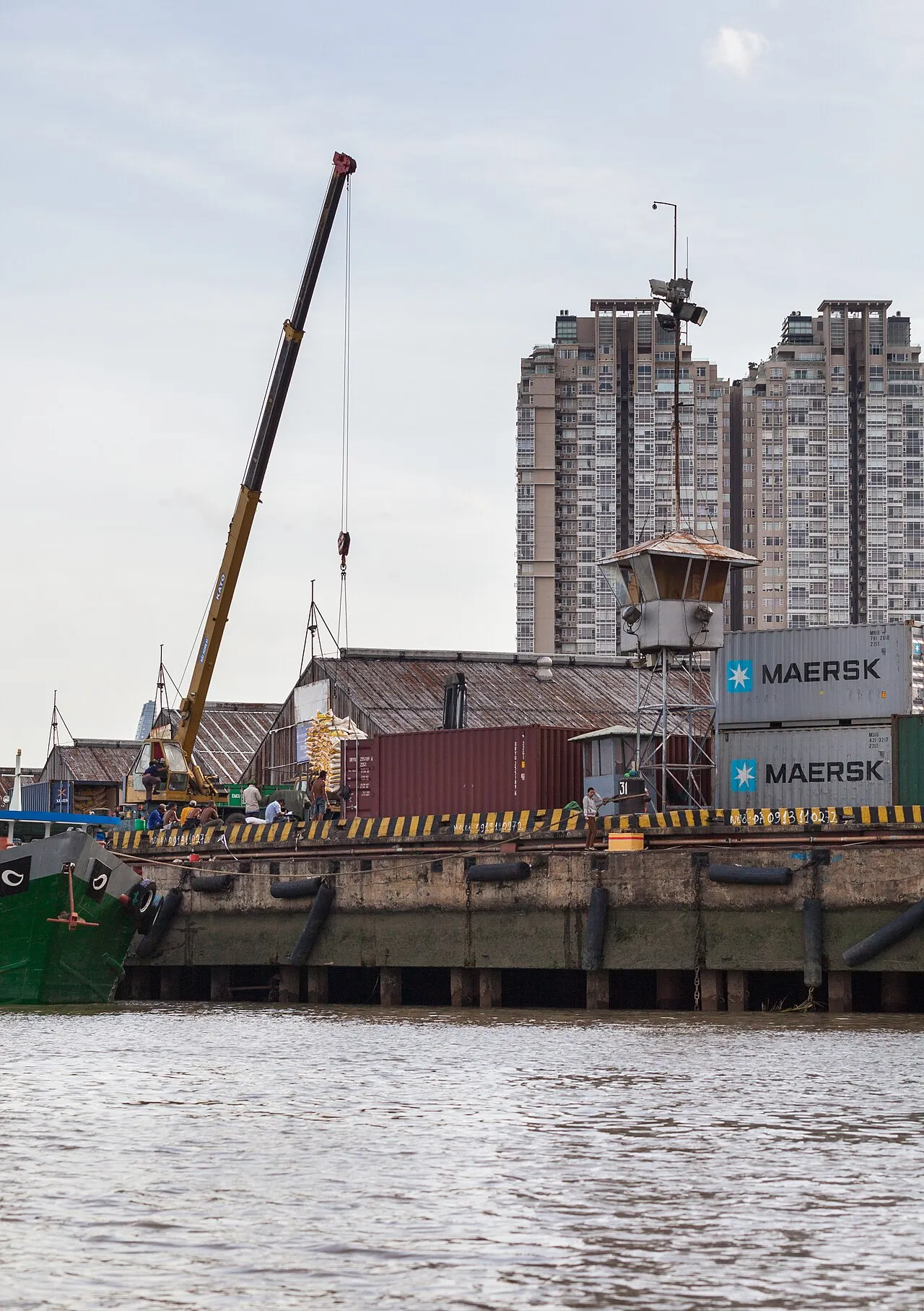
Image Credits
All photographs on this page are used under Creative Commons or free-use licenses. Images sourced from Wikimedia Commons, Unsplash, Pixabay, Pexels, and Flickr. Hero image and supplementary photographs courtesy of Flickers of Majesty.
Frequently Asked Questions
How far is Ho Chi Minh City from the cruise port?
Most ships dock at Phu My Port, about 80 km from central Ho Chi Minh City — roughly 90 minutes by transfer. Some ships use Cat Lai, which is closer at 30-40 minutes. Book ship excursions or private transfers for the easiest access.
Is the War Remnants Museum difficult to visit?
The museum presents the Vietnam War from the Vietnamese perspective with powerful, sometimes graphic exhibits. It is emotionally challenging but profoundly important. Allow 90-120 minutes and prepare for a moving experience.
Should I visit the Cu Chi Tunnels?
Yes — it is a fascinating half-day trip to see the underground network used by Viet Cong fighters. You can crawl through widened sections. Book early, as it is 90 minutes from the city and fills up fast on cruise port days.
How do I handle the motorbike traffic?
Cross streets slowly and steadily — do not stop or run. Millions of motorbikes flow around you like water. Use Grab for car or motorbike taxis. It feels chaotic but becomes manageable once you trust the rhythm.
What currency should I bring to Vietnam?
Vietnamese Dong (VND) is essential for markets, street food, and taxis. ATMs are plentiful in the city. Bring small USD bills for tips. Credit cards work at hotels and malls but not at street vendors.
Is Ho Chi Minh City accessible for visitors with mobility challenges?
Sidewalks are uneven and frequently blocked by motorbikes. Major museums have accessible ground-floor areas. Hire a private vehicle with driver for the most comfortable experience. Wheelchair users should plan on vehicle transport between sites rather than walking.
Ho Chi Minh City (Saigon) Cruise Port Guide
Last reviewed: February 2026