Captain's Logbook
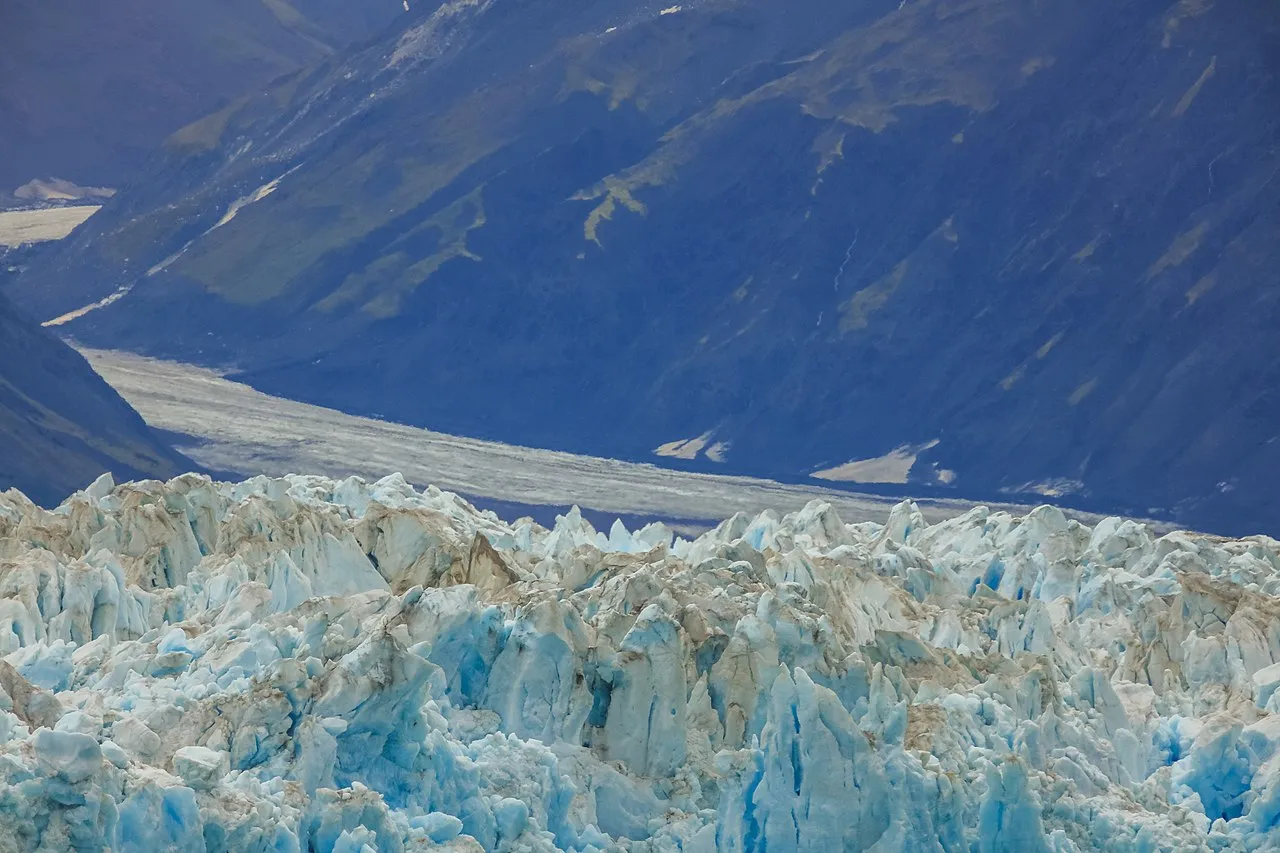
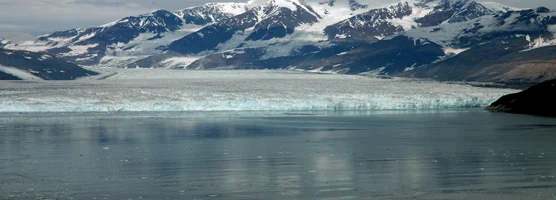
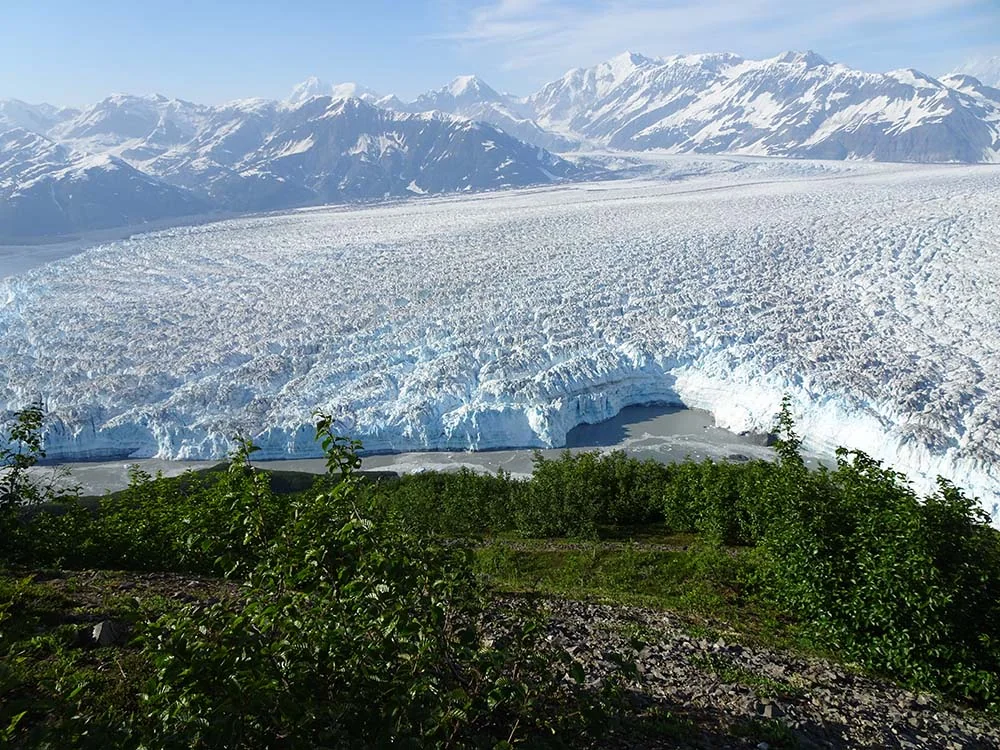
Nothing prepares you for the scale. I stood on the forward observation deck as our ship rounded Gilbert Point, and there it was — a wall of ancient ice stretching six miles across Yakutat Bay, rising 400 feet above the waterline with another 300 feet lurking below the surface. The blue was deeper than any sapphire I'd ever seen, the white more luminous than fresh snow. Hubbard is not just North America's largest tidewater glacier; it's a force of nature that puts human achievement in perspective. I had been on dozens of cruises, but nothing matched this first glimpse of Hubbard.
The captain announced we'd spend 90 minutes here, rotating the ship 360 degrees so passengers on both sides could get optimal views. I thought 90 minutes would be too long — how much can you stare at ice? I was wrong. The glacier's face constantly shifted in the changing light. Blues deeper than anything I could describe, whites that seemed to glow from within, and dark striations of volcanic rock telling geological stories millions of years in the making. The ice at the face started as snowflakes 400 years ago near Mount Logan in Canada, the second-tallest peak in North America. I found myself lost in contemplation of that timeline.
We had staked out our position on deck early — I'd skipped the formal breakfast to grab coffee and pastries from the buffet ($0 with cruise fare) and secured a spot on the starboard bow around 7 AM. Other passengers trickled out over the next hour, some bundled in parkas, others shivering in t-shirts until they realized how cold it would be. The air temperature hovered around 45°F, but the wind chill from our movement and the glacier's refrigerating effect made it feel closer to 35°F. My wife had brought extra gloves and was soon lending them to unprepared strangers.
Then came the calving. A crack like thunder echoed across the bay — a sound the locals call "white thunder." Everyone on deck fell silent. A house-sized chunk of ice separated from the glacier face in slow motion, tumbled 400 feet through the air, and exploded into the water with a splash that sent waves radiating toward us. Passengers gasped, cheered, some actually cried. However, the glacier didn't care about our reaction. It had been doing this for millennia. We just happened to witness a moment.
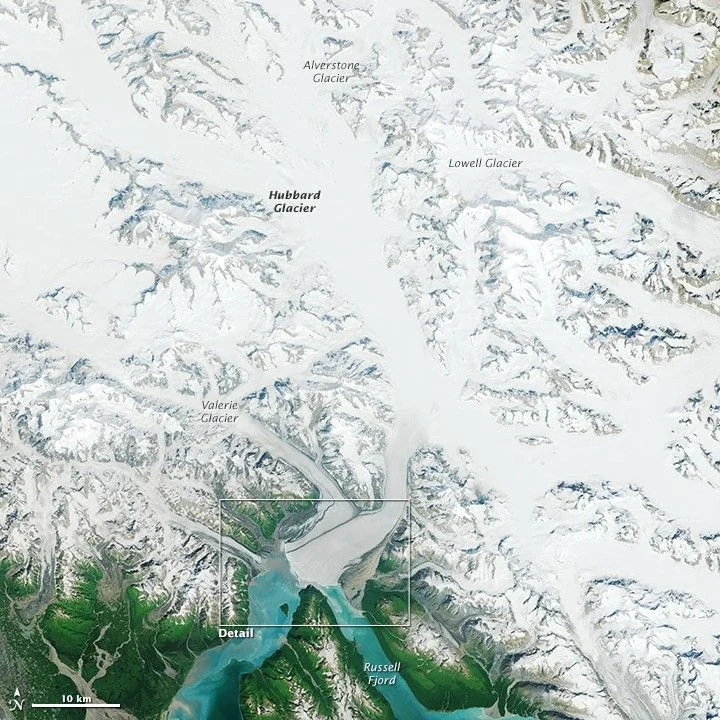
Over the next hour, we counted eleven calving events — some small chips, others dramatic collapses that sent turquoise bergs the size of cars tumbling into Disenchantment Bay. The ship's naturalist explained that Hubbard is called "The Galloping Glacier" because unlike most glaciers worldwide, it's been steadily advancing for over 100 years. It moves forward about 80 feet per year, occasionally surging to block Russell Fiord entirely. When that happens, the fiord becomes a lake until the ice dam dramatically breaks. Scientists watch it closely.
Wildlife appeared throughout our visit. Harbor seals hauled out on ice floes, their speckled bodies looking like oversized sausages against the white background. I spotted a mother and pup resting together — the pup occasionally lifting its head to look at our massive ship before deciding we weren't interesting enough to stay awake for. Bald eagles circled overhead, and kittiwakes dove for fish in the churned-up water. Although the glacier dominated our attention, the surrounding ecosystem was equally fascinating for those who looked beyond the ice.
The ship's photo team offered "professional" glacier photos for $25 each, but honestly, my phone captured the scene just fine from the observation deck. What no camera could capture was the sound — the constant groaning and cracking of ice under pressure, the boom of calving events, the splash of bergs hitting water. Or the smell — clean, cold, with a mineral edge that spoke of ancient stone and prehistoric ice. These sensory details made the experience unforgettable in ways photos couldn't preserve.
The Moment That Stays With Me: Standing in silence as a crack echoed across the bay, watching a wall of blue ice the size of a building separate and fall in slow motion, exploding into the water while the glacier groaned. Nobody on deck spoke. My breath caught in my throat, and I felt tears streaming down my face—something about witnessing such ancient power, such indifferent majesty, broke something open in me. I finally understood what people mean when they say nature humbles them. This process has been happening for thousands of years, utterly indifferent to human timelines and concerns, and will continue long after we're gone.
The pros: Hubbard Glacier is the most dramatic single sight on an Alaska cruise. The scale is genuinely humbling, calving events are frequent and spectacular, and Disenchantment Bay surrounded by the St. Elias Mountains provides a setting that stays with you. Ship excursion fees are minimal (included in your cruise fare), and both sides of the ship get excellent views as captains rotate position.
The cons: weather and ice conditions can prevent close approach on some visits — occasionally ships can't get within viewing distance at all. You'll spend the entire time on deck (dress warmly), and there's no option to get off the ship or explore independently. The experience depends heavily on weather — overcast days are less dramatic than sunny ones.
The bottom line: Hubbard Glacier consistently ranks as the highlight of Alaska cruises for good reason. Even passengers who've seen other glaciers find Hubbard's scale and activity level stunning. Don't sleep in — stake out deck space early, dress warmer than you think necessary, and bring binoculars. This is one experience that lives up to the hype.
Looking back, what Hubbard taught me was perspective—real perspective, the kind that shifts how you see everything else. I learned that standing before something ancient and indifferent makes all the small anxieties of daily life seem absurd. The glacier doesn't care about my deadlines, my worries, my carefully planned itineraries. It simply exists, as it has for millennia, calving and growing and retreating on timescales that dwarf human civilization. I realized that sometimes the greatest gift travel gives us isn't seeing new places but seeing ourselves more clearly against the backdrop of something vast.