
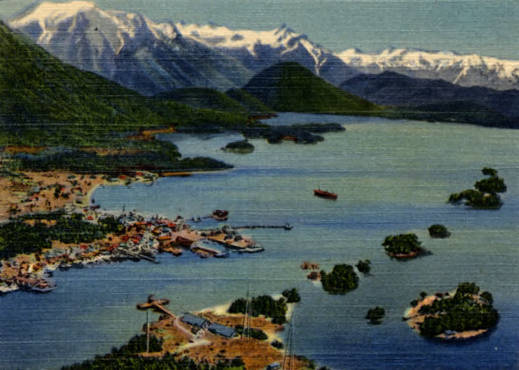
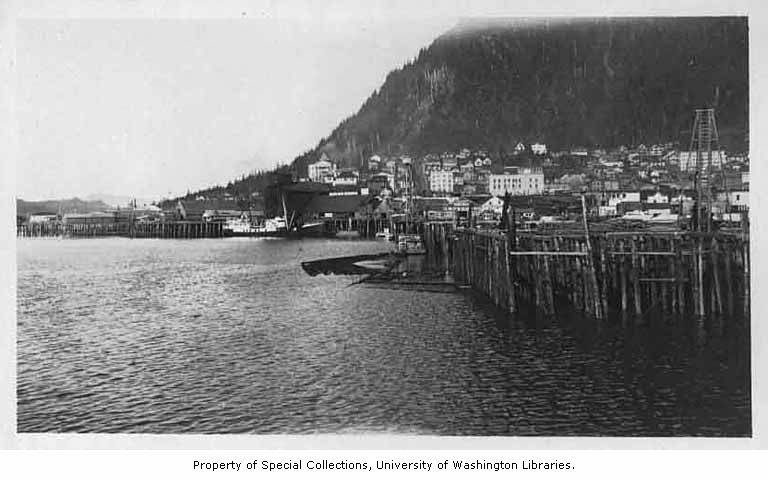
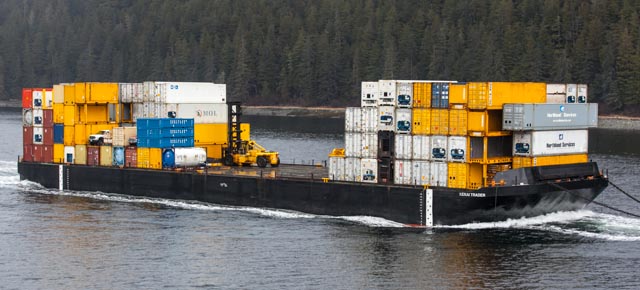
Photo: Sitka, on the Inside Passage (NBY 429795) — Wikimedia Commons (public domain)
Captain's Logbook
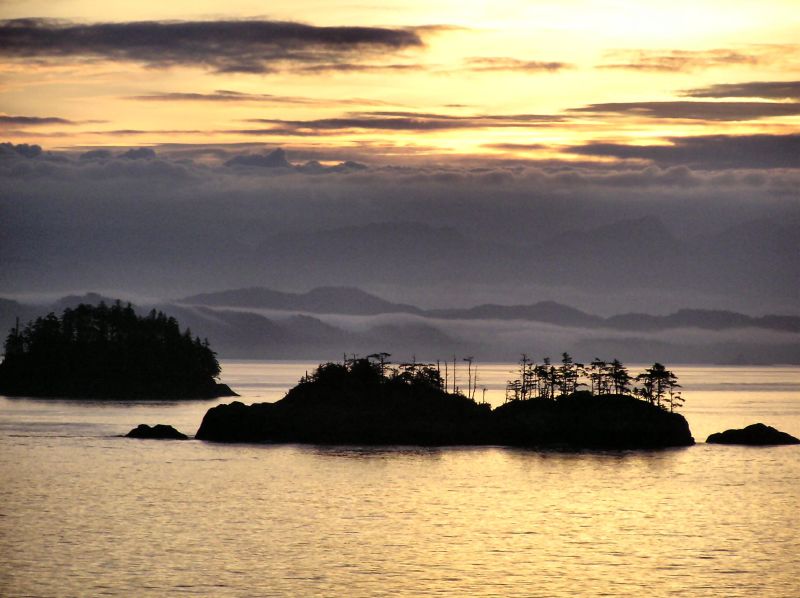
I woke before the announcement. Something in the ship's rhythm had changed — the gentle roll of open water replaced by an almost eerie stillness, as if we had entered a room rather than a channel. I pulled back the curtain and saw islands. Not distant smudges on the horizon but close, real, forested islands sliding past the glass so near I could make out individual trees. The water between us and the shore was dark and flat, reflecting the green canopy like a mirror. I dressed quickly and went topside.
The promenade deck was already occupied by a handful of early risers, coffee cups steaming in the cold morning air. Nobody was talking much. I found a spot at the rail and watched the world scroll past — island after island after island, each one draped in Sitka spruce and hemlock so dense it looked like a solid green wall. The air smelled of pine and salt and something cold I could not name, a mineral quality that I would come to associate with Alaska in general and the Inside Passage in particular. I breathed it in deeply and felt my shoulders drop for the first time in months.
We sailed through a labyrinth of protected waterways — over a thousand islands strung between the mainland and the Pacific, creating a sheltered corridor that shields ships from the open ocean swells. The captain came on the PA periodically with observations: the depth of Chatham Strait (2,000 feet in places), the width of Stephens Passage, the names of distant peaks visible through breaks in the cloud. I listened and watched and drank my coffee and felt the accumulated tension of ordinary life begin to dissolve in the cold air.
The wildlife appeared without fanfare. A bald eagle perched on a dead spruce near the shoreline, its white head bright against the green. Harbor seals watched us from rocky outcroppings, lifting their heads with calm curiosity. And then, mid-morning, the call came from the bridge: "Whales off the port side." I crossed the deck and there they were — three humpbacks, their dark backs breaking the surface in slow arcs, their breath rising in plumes that hung in the cold air before dissolving. One rolled sideways, showing a massive pectoral fin, and then dove, its flukes rising high before sliding under. I watched the spot where it had disappeared and waited, hardly breathing.
At 3 a.m. — because at this latitude in June the sun barely sets — I stood on the forward deck and watched the light do things I had never seen. The horizon glowed gold and violet simultaneously, the sky shifting through colors that have no common names, and the water reflected it all so perfectly that the ship seemed to float in a sphere of color with no clear boundary between sea and sky. A humpback breached off the port side, hanging impossibly in mid-air for a fraction of a second before crashing back in a fountain of white spray. The sound reached me a heartbeat later — a deep, wet percussion that echoed off the islands. I was too stunned to photograph it. My camera hung forgotten at my side.
The passage lasted three days in total — three days of islands and eagles and the slow procession of mountains that seemed to grow taller as we moved north. Each morning I woke earlier than the last, pulled to the deck by some gravity I did not fully understand. I met passengers who had done this route a dozen times and still stood at the rail with binoculars raised, still gasped when the whales appeared, still fell silent when the ship entered a narrow channel and the forest closed in on both sides. One woman told me she had booked this sailing every year since her husband died, that the Inside Passage was the only place where the world felt large enough to hold her grief and small enough to hold her in return. I thought about that for a long time.
Practical notes: bring binoculars ($20-50 rental onboard if you forget yours) — they transform distant shapes into eagles and dark patches into bears along the shoreline. Dress in warm layers with a waterproof shell; temperatures on deck run 45-55°F even in summer, and the wind adds bite. A camera with a 200mm+ zoom lens captures wildlife at distance. And stay on deck. The Inside Passage rewards patience and presence more than any shore excursion I have taken. The light at these latitudes does things you will not believe, and the wildlife appears on its own schedule, not yours. Some moments — a breach, a calving, a sunset that lasts four hours — are for witnessing, not capturing. I learned that here.
Cruise Port
What is the Inside Passage?
The Inside Passage is a network of protected waterways stretching over 1,000 miles from Seattle or Vancouver to Skagway, Alaska. Islands and peninsulas shield ships from the open Pacific, creating calm sailing conditions through some of North America's most spectacular scenery.
Unlike ocean crossings, the Inside Passage keeps land in sight most of the time. Forested islands, glaciers, and snow-capped peaks frame the route. Wildlife is abundant—whales, eagles, bears on distant shores.
The Route
Southbound to Northbound Highlights
- Puget Sound: Departure from Seattle through island-dotted waters.
- Vancouver & Georgia Strait: Alternate departure point. Stunning coastal scenery.
- Queen Charlotte Strait: Open water section before entering protected waters.
- Grenville Channel: Narrow passage between mainland and islands.
- Ketchikan: First Alaska port—totem poles and salmon.
- Tracy Arm or Endicott Arm: Fjords with tidewater glaciers.
- Juneau: State capital, Mendenhall Glacier.
- Lynn Canal: Deepest fjord in North America.
- Skagway/Haines: Northern terminus, Gold Rush history.
- Glacier Bay: Separate permit-limited destination. Spectacular calving glaciers.
Getting Around
How to position yourself during scenic cruising and sea days.
Best Deck Position
- Forward observation deck: Unobstructed views of approaching scenery. Fills quickly — arrive 15-30 minutes before announced scenic cruising.
- Promenade deck: Open-air walking deck. Easy port-to-starboard movement for wildlife on both sides.
- Upper observation lounge: Indoor viewing with panoramic windows. Excellent for rain or cold. Wheelchair accessible via elevator ($0).
- Balcony stateroom: Private viewing anytime. Worth the upgrade ($50-150/night premium) for Alaska sailings. Wildlife appears at all hours.
Weather & What to Wear
Cool and often wet. Expect 10-18°C (50-65°F) on deck. Temperatures drop 5-10°F near glaciers. Rain is common; layers and a waterproof jacket ($30-80) are essential.
- Layered clothing (temperatures drop near glaciers)
- Waterproof outer layer — non-negotiable
- Hat and gloves ($5-15) for glacier viewing
- Comfortable shoes with grip for wet decks
Viewing Tips
- Check the daily schedule for scenic cruising times — they are announced the evening before
- Binoculars ($20-50 rental onboard) transform the experience. Essential for wildlife and glacier detail
- Camera with zoom lens (200mm+). Cold drains batteries — bring extras kept warm in an inside pocket
- Listen for announcements from the bridge — the captain and naturalist will identify wildlife and features
Accessibility
Scenic cruising is fully accessible from any ship deck with elevator access. Wheelchair users and passengers with limited mobility can enjoy the full passage from observation decks ($0) or through panoramic lounge windows. No mobility requirements beyond reaching the deck. Ships with enclosed observation lounges provide weatherproof viewing for those unable to stand at the open rail. All ships sailing this route have accessible staterooms and elevator access to viewing decks.
Route Map
Top Excursions
The Inside Passage itself is a scenic cruising experience — no excursion booking required for the passage. However, the route connects to several of Alaska's premier glacier and wildlife destinations, and your itinerary likely includes one or more of these:
Glacier Bay National Park (Included in Itinerary)
Ships with Glacier Bay permits spend 8-10 hours navigating to Margerie and Grand Pacific glaciers ($0 — included in your cruise fare). National Park Service rangers board the ship to provide narration and identify wildlife. Glacier calving events are the highlight. Not all itineraries include Glacier Bay — check your sailing's route. Ships that visit Glacier Bay typically do not also visit Tracy Arm.
Tracy Arm Fjord (Included in Itinerary)
Alternative to Glacier Bay on many sailings ($0 — included). Narrow fjord with North and South Sawyer Glaciers. Icebergs float past the ship. Harbor seals rest on ice floes. More intimate than Glacier Bay, with cliffs rising 3,000 feet on both sides.
Whale Watching from Juneau ($150-250)
Dedicated whale watching excursions depart from Juneau during your port call. Humpback whales are common May through September; bubble-net feeding groups are a highlight. Book through the ship excursion desk ($180-250) for guaranteed return, or independently through local operators ($150-200) for smaller boats and lower prices. Dress warmly — boats are open to the elements.
Helicopter Glacier Landing from Juneau ($300-500)
Helicopter flights to the Juneau Icefield offer glacier landings where you walk on ancient ice. Some tours include dog sledding on the glacier ($400-500). Book well ahead through the ship excursion desk or directly with operators like Era Helicopters or Temsco. Weather-dependent — cancellations receive full refund.
Wildlife Along the Passage
Wildlife viewing from the ship is free and ongoing throughout the passage ($0). Common sightings include:
- Humpback Whales: Common May-September. Breaching and bubble-net feeding. Most active in Stephens Passage and Chatham Strait.
- Orcas: Resident pods near Vancouver Island. Transient orcas throughout Southeast Alaska.
- Bald Eagles: Ubiquitous. Perched in trees near every shoreline.
- Bears: Black and brown bears visible on shores, especially near salmon streams (binoculars essential).
- Sea Lions & Seals: Hauled out on rocks or riding ice floes near glaciers.
- Dolphins & Porpoises: Often ride the bow wave. Dall's porpoises are the speedsters.
Booking tip: For excursions at port stops along the passage, book ahead through the ship excursion desk for convenience and guaranteed return, or independently through local operators for lower prices and smaller group sizes. The most popular excursions (whale watching, glacier helicopters) sell out weeks in advance during peak season.
Scenic Cruising: The Inside Passage is a waterway, not a port. This guide covers the sailing experience through this spectacular route.
Depth Soundings
Essential facts about the Inside Passage waterway.
Geography
The Inside Passage stretches over 1,000 nautical miles from Puget Sound (Seattle) or the Strait of Georgia (Vancouver) to Skagway, Alaska. The route threads between the mainland coast and a chain of islands — the Alexander Archipelago in Alaska, Haida Gwaii and Vancouver Island in British Columbia — creating a sheltered waterway protected from Pacific swells. Depths range from 100 to over 2,000 feet in the major channels. Chatham Strait and Stephens Passage are among the deepest navigable waterways in the region.
Key Passages
- Grenville Channel: Narrow (0.3 miles wide in places), 45 miles long. Forests close enough to hear birdsong from the ship.
- Wrangell Narrows: 22-mile channel requiring precise navigation. Only small ships transit it.
- Lynn Canal: Deepest fjord in North America (over 2,000 feet). Route to Skagway and Haines.
- Chatham Strait: Major whale watching corridor. Humpbacks concentrate here to feed.
Season & Weather
Cruise season runs late April through early October. Summer temperatures average 50-65°F (10-18°C) on the water. Rainfall is common — Southeast Alaska receives 80-160 inches annually. The passage is sheltered from open-ocean swells, so seas are generally calm. Brief exposed sections (Queen Charlotte Strait, Dixon Entrance) can be rougher when fronts move through.
Weather & Best Time to Visit
Photo Gallery
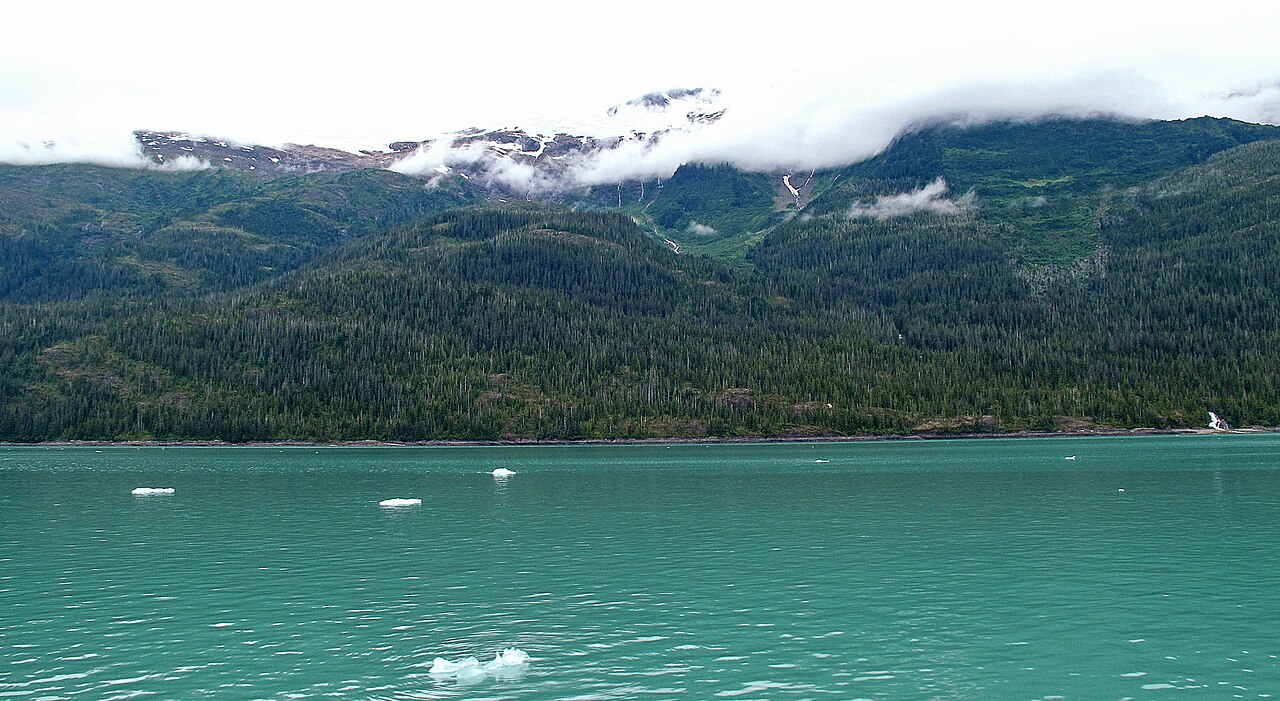
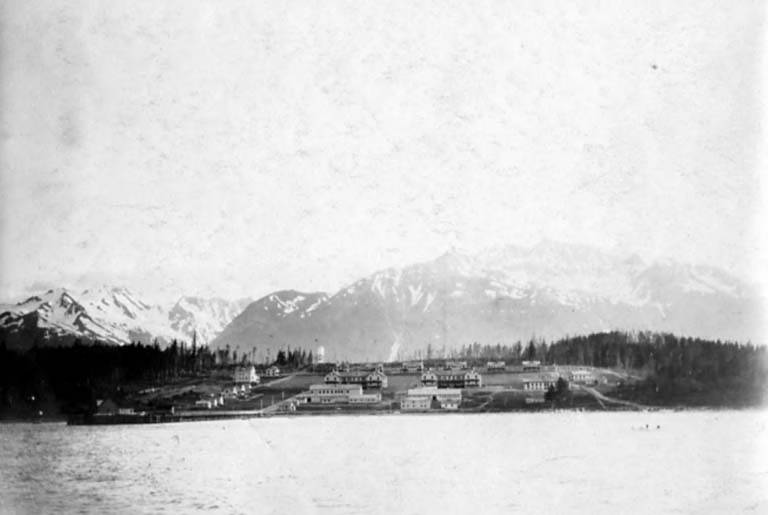
Gallery rebuilt 2026-04-12 with per-image Wikimedia Commons file URLs — each slide cites its specific File: page and license. Two duplicate files and one mis-attributed file were removed per admin/CAREFUL.md Image Verification Protocol.
Frequently Asked Questions
Q: When is the best time to cruise the Inside Passage?
Cruise season runs late April through early October. Late June through early August offers the warmest air (~55-65°F), calmest seas, and long daylight (up to 19 hours in Juneau at the solstice). May and September are quieter shoulder months with more variable weather. Humpback whale activity peaks July-August in Chatham Strait and Stephens Passage.
Q: What should I pack for Inside Passage weather?
Pack warm layers, a waterproof-and-windproof outer shell, hat, gloves, and non-slip shoes. Deck temperatures run 45-55°F even in midsummer and drop further near glaciers. Binoculars (8x42 or 10x42) are essential for wildlife; extra camera batteries help when cold drains them. Southeast Alaska is one of the wettest regions in North America — plan for rain.
Q: Is there a hurricane or storm season that affects the Inside Passage?
Alaska is not in a hurricane zone. The real concern is Gulf of Alaska extratropical storms, which intensify from late August through winter. Summer cruise days rarely encounter severe weather inside the protected passage itself; the brief exposed sections (Queen Charlotte Strait, Dixon Entrance) can produce moderate seas during fronts.
Q: Will rain ruin a scenic cruising day on the Inside Passage?
No. Southeast Alaska's temperate rainforest averages 80-160+ inches of annual precipitation depending on location, so rain is the default, not the exception. Most rain arrives as drizzle or showers rather than all-day downpours, and the moody light often makes the scenery more dramatic. Pack waterproof layers and stay on deck.
Q: Is the Inside Passage rough?
Generally calm. The route threads between the mainland and a chain of islands that shield ships from open-ocean Pacific swell. Motion-sensitive passengers find this much gentler than an open-ocean crossing. Brief exposed sections at Queen Charlotte Strait or Dixon Entrance can be choppier but are short.
Q: Will I see glaciers calving?
If your itinerary includes Glacier Bay or Tracy Arm/Endicott Arm, very likely. Ships hold position near tidewater glacier faces and calving events happen frequently in summer. Hubbard Glacier (a separate Gulf of Alaska call) is one of the most actively calving in North America.
Q: Should I book a balcony or inside cabin for Alaska?
Balcony cabins are worth the premium for Alaska sailings. Wildlife appears at all hours on Inside Passage days, and glacier viewing from a private balcony at 3 a.m. — when the light is doing something astonishing — is one of the great pleasures of this route. Inside cabins work fine; you just have to go to the deck.
Q: What ports does the Inside Passage include?
Standard Inside Passage itineraries call on several combinations of Ketchikan, Juneau, Skagway, and either Sitka or Icy Strait Point, plus scenic cruising at Glacier Bay or Tracy Arm/Endicott Arm. Northbound sailings from Vancouver or Seattle typically spend 3 days at sea on scenic cruising and 3-4 days in port.
Q: Which cruise lines sail the Inside Passage?
Most major lines: Princess, Holland America, Norwegian, Royal Caribbean, Celebrity, Disney, Cunard, Oceania, Regent Seven Seas, Seabourn, Silversea, Carnival, and others. Princess and Holland America have the longest history on this route and the most sailings per season. Smaller expedition lines (UnCruise, Lindblad Expeditions–National Geographic) run more intimate nature-focused itineraries.
Q: What wildlife can I see from the ship?
Humpback whales (most active July-August), orcas, harbor porpoises, Dall's porpoises, Steller sea lions, harbor seals on ice floes near glaciers, sea otters, bald eagles on almost every shoreline, coastal brown and black bears visible at distance, and mountain goats on steep cliffs. Binoculars transform the experience.
Q: What's the difference between Glacier Bay and Tracy Arm?
Glacier Bay is a ~3.3-million-acre National Park with ~7 major tidewater glaciers, NPS rangers aboard the ship, a Huna Tlingit cultural interpreter, and a full 8-10 hour day of scenic cruising. Tracy Arm is a narrower fjord in Tongass National Forest with North and South Sawyer Glaciers, typically a ~3-5 hour visit. Ships that call on Glacier Bay generally do not also call on Tracy Arm on the same sailing.
Q: Do I need binoculars for the Inside Passage?
Strongly recommended. Much of the wildlife along the passage is visible at distance — binoculars turn distant shapes into bears, reveal mountain goats on cliff faces, and let you watch whale behavior in detail. They're also essential at glaciers for crevasse detail and the deep blue of compressed ice. 8x42 or 10x42 pairs work best; ship rentals run $20-50/day.
Q: How long does a typical Inside Passage cruise last?
Most Inside Passage round-trip sailings from Seattle or Vancouver run 7 nights. One-way itineraries between Vancouver and Whittier/Seward (the Gulf of Alaska route) typically run 7 nights with more glacier scenic cruising. Longer 10-14 night sailings add ports or repositioning segments. Small-ship expedition cruises run 7-14 nights with more intimate wilderness access.
Alaska's protected 1,000-mile waterway — fjords, glaciers, and wildlife from Seattle or Vancouver to Juneau and Skagway.
Last reviewed: February 2026
These reflect observations from three passages through the Inside Passage on different cruise lines and ship sizes.