

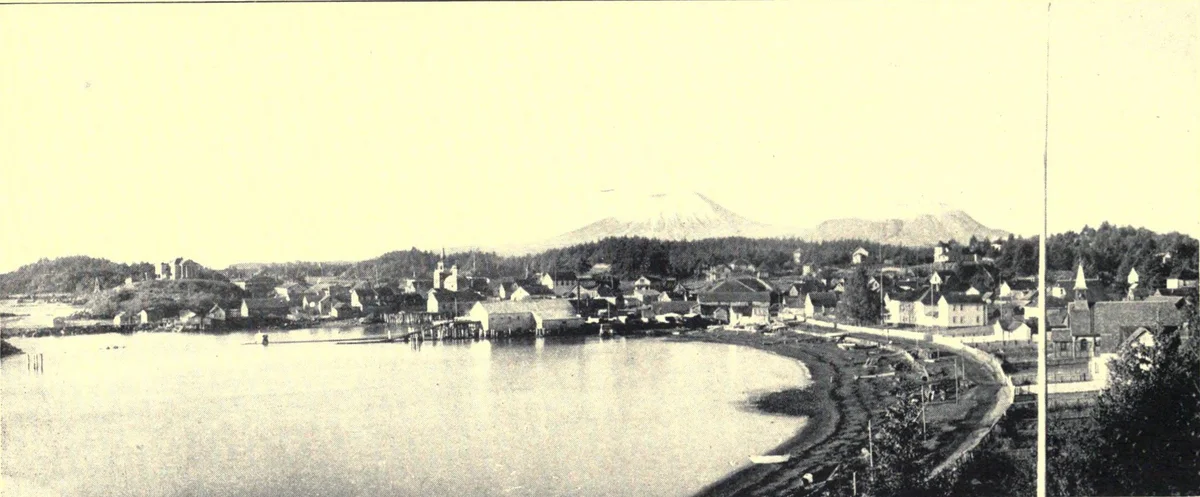
Photo: E.W. Merrill / Wikimedia Commons (Public Domain)
Sitka, Alaska
Region: Alaska | Season: May – September | Tender: Yes (usually)
 V1.Beta
Photo: E.W. Merrill / Wikimedia Commons (Public Domain)
Region: Alaska | Season: May – September | Tender: Yes (usually)
We tendered in and the very first thing I saw was a raft of 40+ sea otters floating on their backs right in front of the ship, cracking clams on their chests like furry little businessmen eating lunch. Sitka is heartbreakingly pretty — snow-capped Mount Edgecumbe across the sound looking like Alaska's answer to Mount Fuji, Russian church spires rising above the trees, bald eagles perched on literally every lamppost. This is the only Alaska port where Russian, Tlingit, and American histories collide so visibly, and walking these streets feels like stepping through multiple centuries at once.
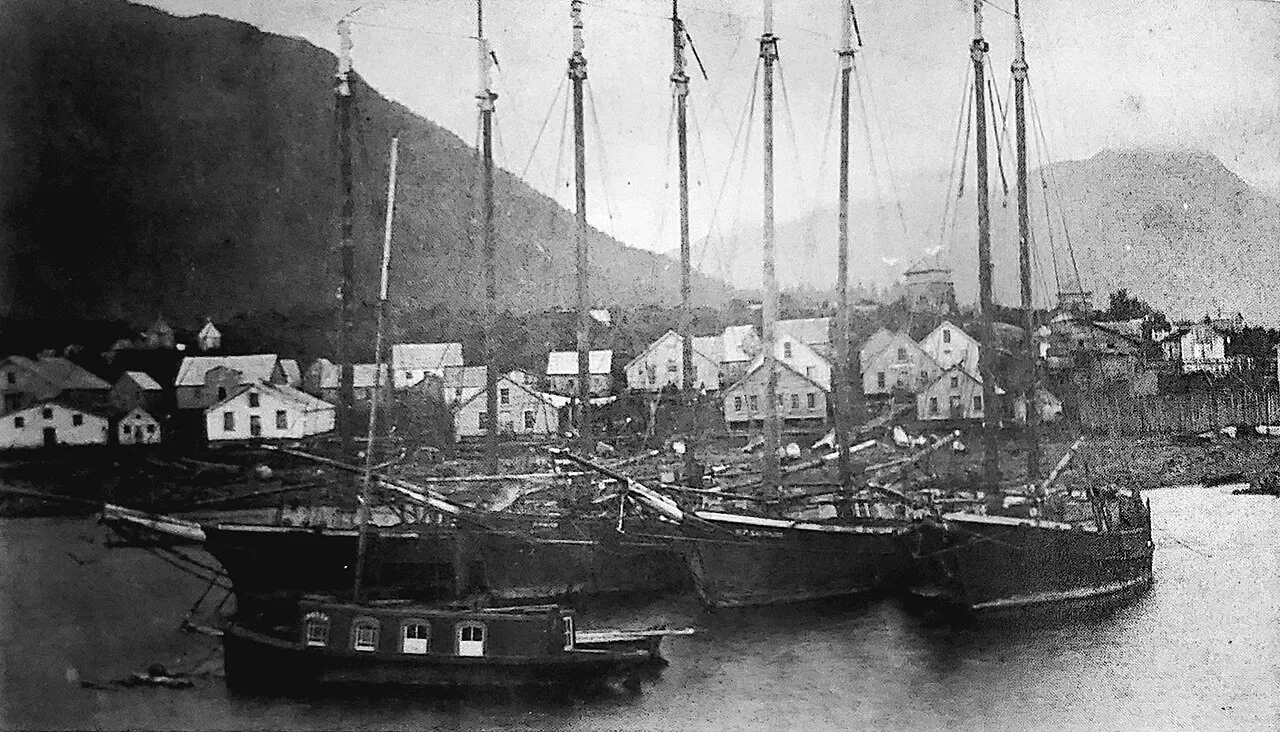
Sitka was the capital of Russian America from 1808 until the Alaska Purchase in 1867, and you feel that history everywhere. The Russians came for sea otter pelts — the same adorable creatures we watched floating in the harbor were once hunted to near-extinction for their impossibly soft fur. By the 1800s, New Archangel (as the Russians called Sitka) had grown to 800 residents and was the largest settlement on the Pacific coast north of San Francisco. The Tlingit people had lived here for thousands of years before the Russians arrived, and their presence remains strong — nearly half of Sitka's modern population claims Native heritage, and the totem poles standing throughout town tell stories that predate European contact by millennia.
We started at Sitka National Historical Park — the totem trail winds through temperate rainforest with poles standing like silent storytellers among spruce and salmonberry bushes. These aren't replicas; they're original poles rescued from abandoned Tlingit villages and carefully preserved. The visitor center film about the 1804 Battle of Sitka and Tlingit resilience made me tear up. Chief Katlian led 800 Tlingit warriors here defending their fort against the Russians, who'd already lost their first settlement to Tlingit forces in 1802. The battle ended in Russian victory, but the Tlingit resistance is remembered as one of the most significant Native military actions in Alaska history.
Then the Alaska Raptor Center — watching a bald eagle with a 7-foot wingspan spread its wings three feet from my face (behind glass) was humbling. This facility rehabilitates injured eagles, owls, hawks, and other raptors, releasing most back into the wild. The flight training center lets you watch eagles swooping overhead in a 20,000-square-foot enclosure. I'd never been so close to these magnificent birds, and understanding their anatomy and behavior from the naturalists made the experience even richer.
Fortress of the Bear was next — rescued orphaned brown bears in a huge natural enclosure. An 800-pound male named Killisnoo stood on his hind legs and roared — a sound I'll never forget. The sanctuary rescues orphaned cubs who would otherwise be euthanized, raising them in as natural an environment as possible. Seeing these massive animals up close (safely behind barriers) gave me a visceral appreciation for why bear safety matters so much in Alaska.
Afternoon whale watching was pure magic: we found humpbacks bubble-net feeding in a coordinated group of 12. The guide cut the engine and we drifted while they rose around us in a perfect circle, mouths open like living parachutes, water streaming off their baleen. Also saw transient orcas hunting seals and Steller sea lions hauled out by the hundreds on rocky islets. The wildlife density around Sitka rivals anywhere in Alaska — the cold, nutrient-rich waters of Sitka Sound support an incredible food chain.
St. Michael's Russian Orthodox Cathedral dominates downtown with its distinctive onion dome. The original 1848 structure burned in 1966, but the townspeople rushed into the flames to save the icons and artifacts, which now fill the rebuilt cathedral. Seeing 200-year-old Russian Orthodox icons in a frontier Alaska town is surreal in the best way. The New Archangel Dancers perform traditional Russian folk dances in colorful costumes at Harrigan Centennial Hall — surprisingly energetic and fun, a vivid connection to Sitka's colonial past.
Dinner was halibut Olympia at the Channel Club — baked with mayo, parmesan, and onions — sinful and perfect after a day on the water.
The pros: the most beautiful setting of any Alaska port, richest blend of Russian and Tlingit culture, exceptional wildlife variety, and that volcano backdrop is genuinely stunning. However, Sitka truly shines when you experience its wildlife firsthand.
The cons: it's a tender port with limited time since most ships only stay 6–8 hours, and the dock is 6 miles from town (free shuttles provided).
Practical tips: Book the whale and raptor combo tours for best value. Bring binoculars. The sea otters in the harbor are free entertainment — look for them from the tender or downtown waterfront.
Looking back, what Sitka taught me is that history doesn't erase itself — it layers. Russian onion domes and Tlingit totems share the same skyline not because one conquered the other but because both refused to disappear. I learned that the deepest cultural experiences happen not in museums but in the moments between — watching a master carver work in silence, hearing the breath of a whale before seeing its spout, noticing how local Tlingit families still gather at Sitka National Historical Park where their ancestors once defended these shores. Sitka asks you to hold contradictions gently: colonizer and colonized, sacred and profane, ancient and ongoing. It's uncomfortable. It's also honest.
Last reviewed: February 2026
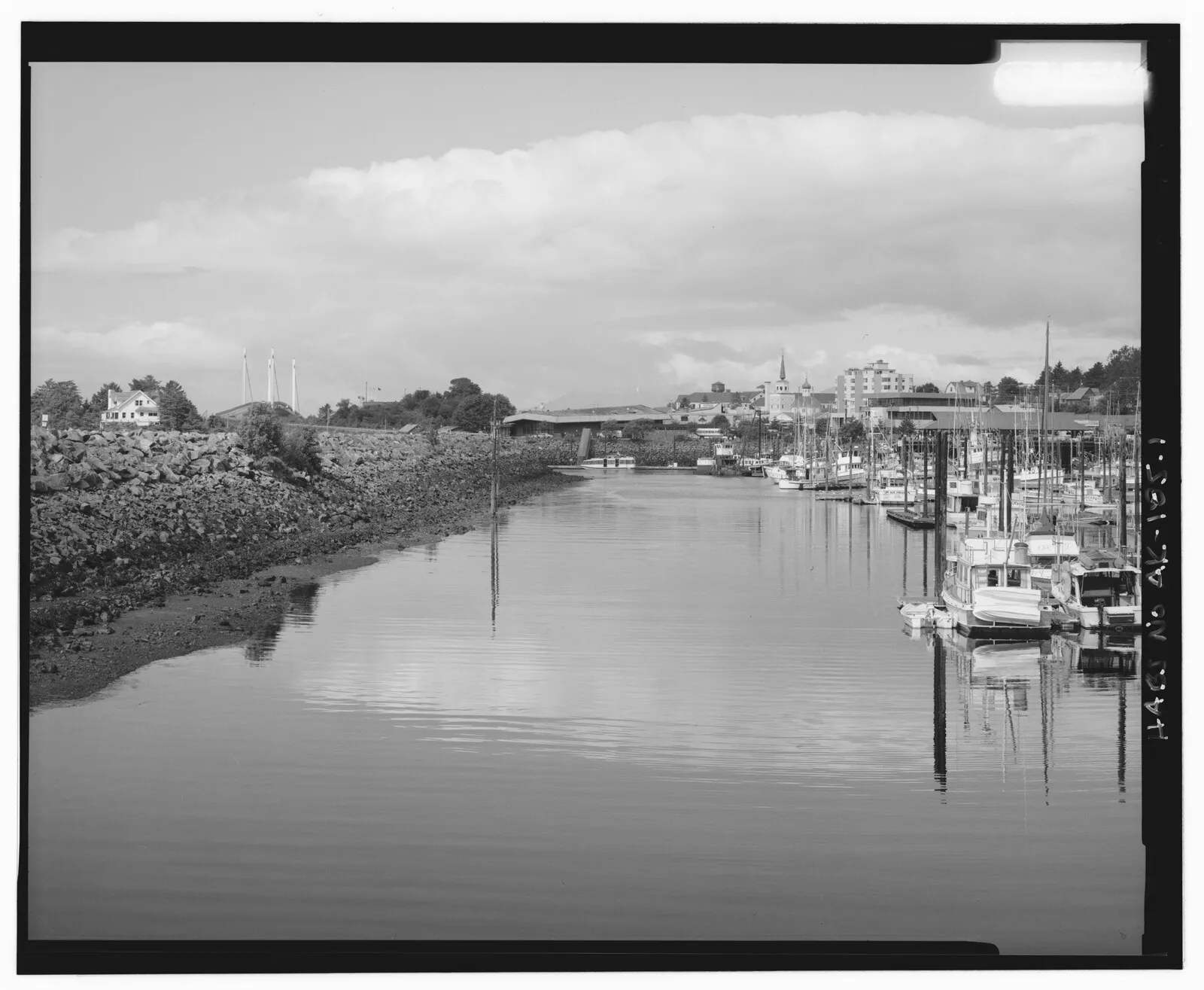
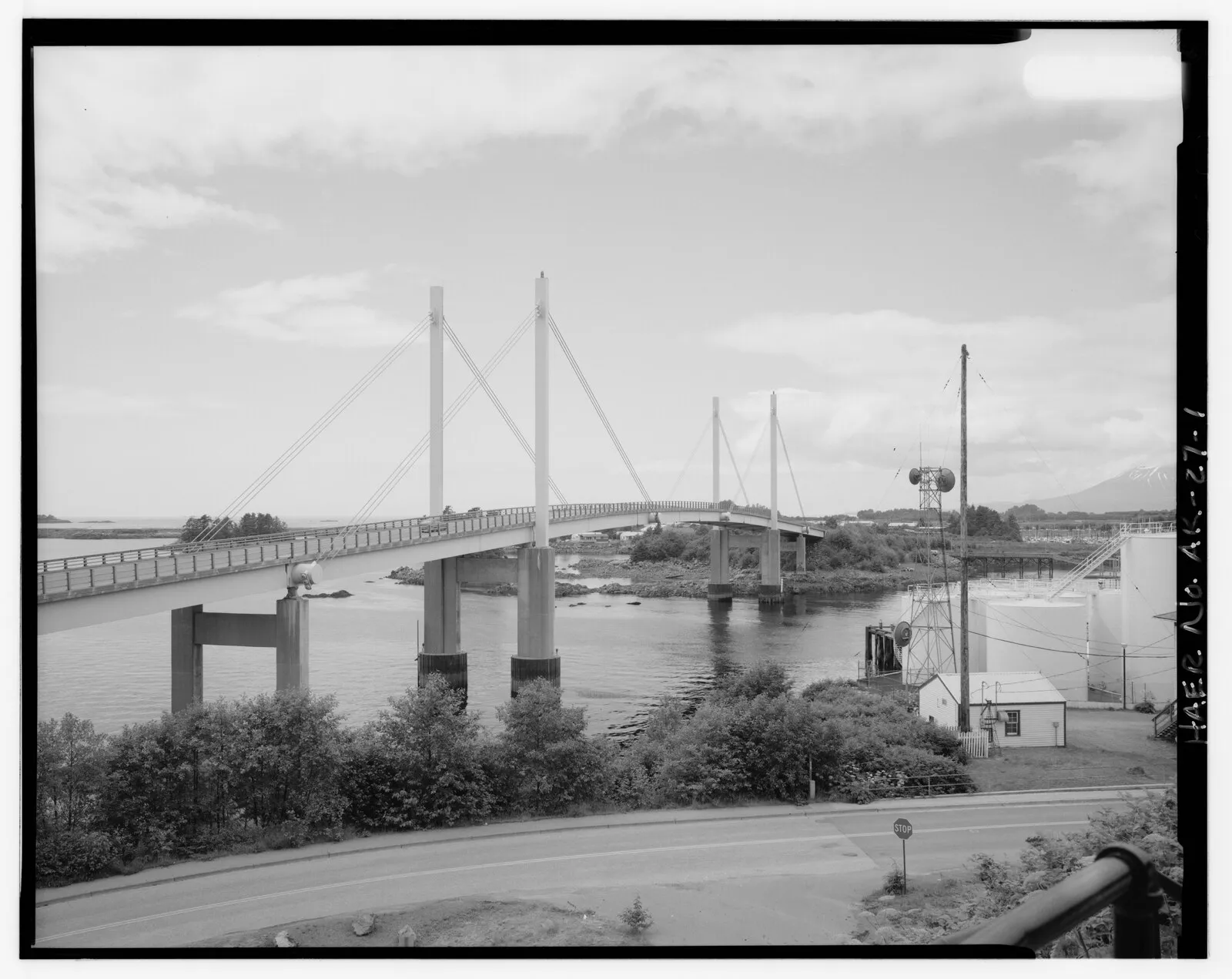
Sitka presents unique logistics compared to other Alaska ports. Most cruise ships anchor in Sitka Sound and tender passengers ashore, as the deep-water dock at Old Sitka is 6 miles north of downtown. Free shuttle buses run every 10 minutes from the dock to Harrigan Centennial Hall in the heart of town — the 10-15 minute ride passes through beautiful forested scenery. Some smaller ships anchor closer and tender directly to the downtown waterfront near the O'Connell Bridge.
Harrigan Centennial Hall serves as the de facto cruise passenger hub downtown. The facility includes visitor information, restrooms, gift shops, and is the performance venue for the New Archangel Dancers. Most walking tours and excursion pickups depart from this central location. The entire downtown core is compact and walkable once you arrive — St. Michael's Cathedral, the Russian Bishop's House, galleries, and restaurants are all within a 10-minute stroll.
Port time in Sitka is typically shorter than other Alaska ports — most ships stay 6-8 hours rather than a full day. Plan accordingly and book excursions that fit your schedule. The tender process can take 20-30 minutes each direction during peak times, so factor that into your day. The good news: Sitka's compact size means you can see the highlights even with limited time.
Once you reach downtown via the free shuttle, Sitka is easily walkable. The compact town center places most attractions within a 10-15 minute stroll of Harrigan Centennial Hall, and the flat terrain makes exploration easy for all mobility levels.
Most ships anchor in Sitka Sound and tender passengers to the Old Sitka dock (6 miles north) or directly to downtown. Free shuttles run every 10 minutes from the northern dock to Harrigan Centennial Hall. The shuttle ride takes 10-15 minutes through scenic forest.
The visitor center at Harrigan Centennial Hall provides free maps and local recommendations. With limited port time, many passengers opt for combination excursions that include transportation to multiple attractions.
Interactive map showing tender dock, St. Michael's Cathedral, Totem Park, Raptor Center, and attractions mentioned in this guide. Click any marker for details.
Note: Old Sitka dock is 6 miles north of downtown (free shuttle provided). Fortress of the Bear is 4 miles from town center.
Sitka excursions blend wildlife viewing with cultural experiences unique to Alaska's Russian heritage. With shorter port times (typically 6-8 hours), combination tours that bundle multiple attractions offer the best value. Book ahead during peak season — popular whale watching tours fill quickly.
Sitka Sound offers exceptional whale watching from May through September. Most tours ($150-200, 2.5-3 hours) encounter humpback whales, and many see orcas, Steller sea lions, harbor seals, sea otters, and puffins. The highlight is witnessing bubble-net feeding — coordinated group hunting where multiple humpbacks work together to corral fish. Operators like Sitka Sound Ocean Adventures and Allen Marine Tours offer guaranteed sightings. Book at least 30 days ahead for summer sailings.
This 17-acre facility ($15, 1-2 hours) rehabilitates injured bald eagles, owls, hawks, and other raptors, releasing most back to the wild. The flight training center allows you to watch eagles soaring in a 20,000-square-foot enclosure — you'll never get closer to these magnificent birds. Combination excursions pair the Raptor Center with other attractions for better value. Located 1 mile from downtown; most visitors arrive via excursion or taxi.
This sanctuary ($15-20, 1 hour) houses orphaned brown and black bears in large natural enclosures. Seeing 800-pound brown bears up close is thrilling and educational — naturalists explain bear behavior, ecology, and why these orphans couldn't be released. Located 4 miles from downtown; accessible via excursion or taxi.
The Sitka Historical Tour ($40-60, 2-3 hours) covers St. Michael's Cathedral, the Russian Bishop's House, and Sitka National Historical Park with expert guides explaining the Russian colonial period and Tlingit heritage. The New Archangel Dancers perform traditional Russian folk dances ($12-15, 30 minutes) at Harrigan Centennial Hall — colorful costumes and energetic choreography bring Sitka's Russian past to life. The National Historical Park's totem trail is free and walkable from downtown.
With shorter port times, combination excursions maximize your Sitka experience. The "Best of Sitka" tours ($100-150) typically include whale watching, the Raptor Center, and a historical overview — excellent value compared to booking separately. For independent exploration, book ahead for popular wildlife tours since ships sometimes only stay 6 hours. Compare ship excursion prices with local operators — you can often save 20-30% booking direct, but ship tours guarantee return to the ship even if schedules run late. Most whale watching operators offer money-back guarantees if no whales are spotted, though sightings are nearly universal during peak season.
Sitka port times are often only 6-8 hours, and tendering eats 30-60 minutes each way. Get on the first tender. The Raptor Center ranks among Alaska's finest wildlife experiences and costs only $12. The totem trail in the National Historical Park is free, beautiful, and walkable in an hour. Skip the jewelry shops and spend your time in nature.
Practical tips before you step off the ship.
Sitka receives significant rainfall — pack a waterproof jacket even if the forecast looks clear. Whale watching boats can be chilly; bring warm layers. The town is compact and walkable, so comfortable walking shoes are essential. Binoculars enhance wildlife viewing significantly.
Sea otters are protected under the Marine Mammal Protection Act — let them approach you, never the reverse. Keep a respectful distance and never feed wildlife. When watching whales, the boat maintains required distances; the whales often approach on their own.
Important: Factor tender and shuttle time into your day — the process can take 30-40 minutes each direction during peak times.
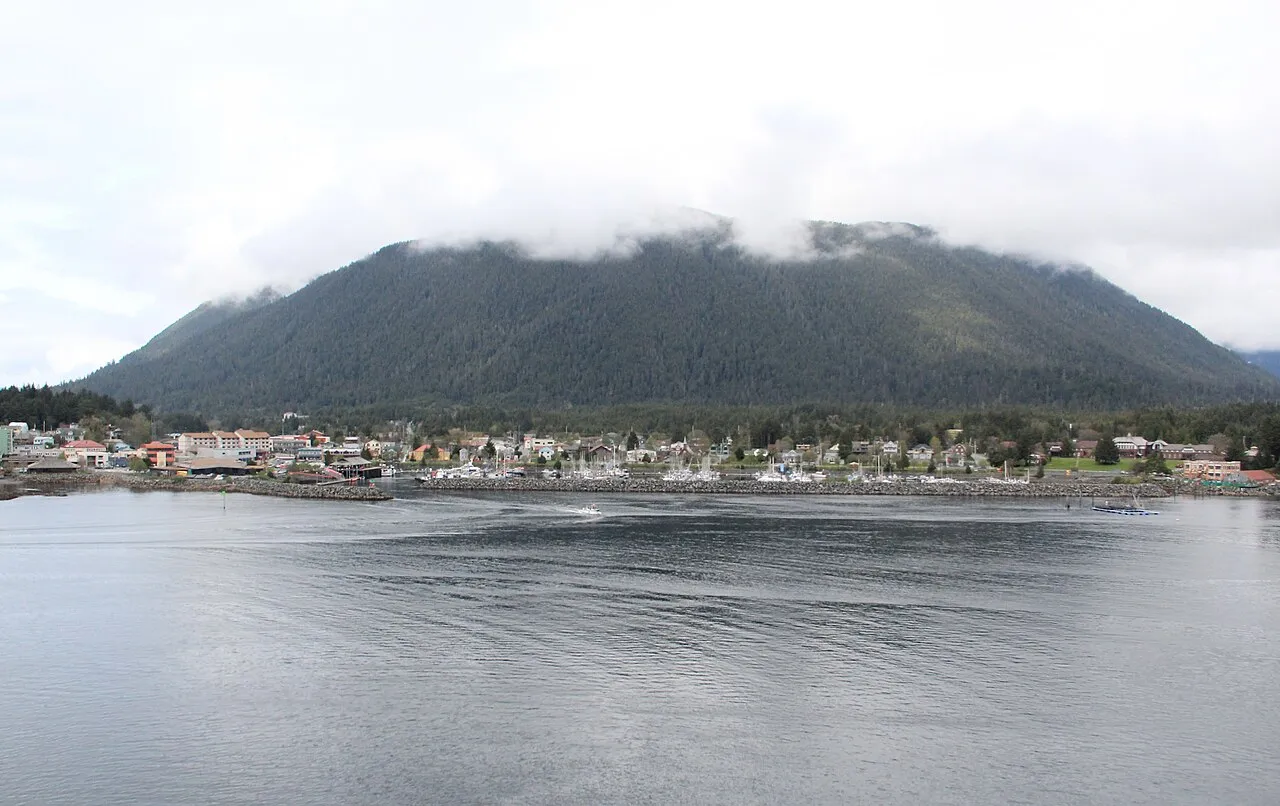
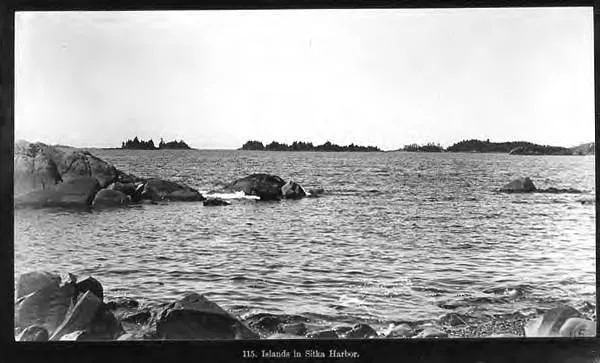

Images sourced from WikiMedia Commons under Creative Commons licenses.
Absolutely — Sitka offers the most unique cultural blend of any Alaska port. The Russian Orthodox heritage, Tlingit culture, exceptional wildlife (sea otters right in the harbor!), and stunning Mount Edgecumbe backdrop create an experience completely different from Juneau, Ketchikan, or Skagway. Many cruisers rank it as their favorite Alaska port.
The whale watching and wildlife tour is the top choice — Sitka Sound offers exceptional opportunities to see humpback whales, often bubble-net feeding, plus orcas, sea otters, and sea lions. For a fuller experience, book a combination tour that pairs whale watching with the Alaska Raptor Center. The "Best of Sitka" tours that bundle multiple attractions offer excellent value.
Most ships tender in Sitka. The deep-water dock at Old Sitka is 6 miles from downtown, so passengers either tender to that dock and take free shuttles (10-15 minutes) to town, or some ships anchor closer and tender directly to the downtown waterfront. Factor 30-40 minutes each direction for the full tender/shuttle process during busy periods.
Almost certainly! Sea otters are commonly seen floating in rafts right in Sitka Harbor — you can often spot them from the tender or downtown waterfront without even taking an excursion. Watch for them floating on their backs, cracking shellfish on their chests. They're one of Sitka's signature wildlife experiences and completely adorable.
Sitka was the capital of Russian America, giving it a completely different character from the Gold Rush towns of Ketchikan and Skagway or the state capital of Juneau. You'll see Russian Orthodox onion domes alongside Tlingit totem poles, eat Russian-influenced cuisine, and learn about a period of Alaska history that other ports barely mention. The wildlife is also exceptional — sea otters in the harbor, bubble-net feeding humpbacks, and the Alaska Raptor Center's rehabilitated eagles.
Peak cruise season offers the most reliable weather and best conditions for sightseeing. Check the weather guide above for specific month recommendations based on your planned activities.
Like most destinations, weather conditions vary by season. Check the weather hazards section above for specific concerns and the best months to visit. Cruise lines monitor conditions and will adjust itineraries if needed for passenger safety.
Essentials include sunscreen, comfortable walking shoes, and layers for variable conditions. Check the packing tips section in our weather guide for destination-specific recommendations.
Brief showers are common in many destinations but rarely last long enough to significantly impact your day. Have a backup plan for indoor attractions, and remember that many activities continue in light rain. Check the weather forecast before your visit.
Weather patterns vary by region and season. Check the weather hazards section above for specific storm season concerns and timing. Cruise lines closely monitor weather conditions and will adjust itineraries if needed for passenger safety. Travel insurance is recommended for cruises during peak storm season months.