
Photo: Wikimedia Commons
My Logbook: Diesel, Incense, and the Sound of Thirty Million People
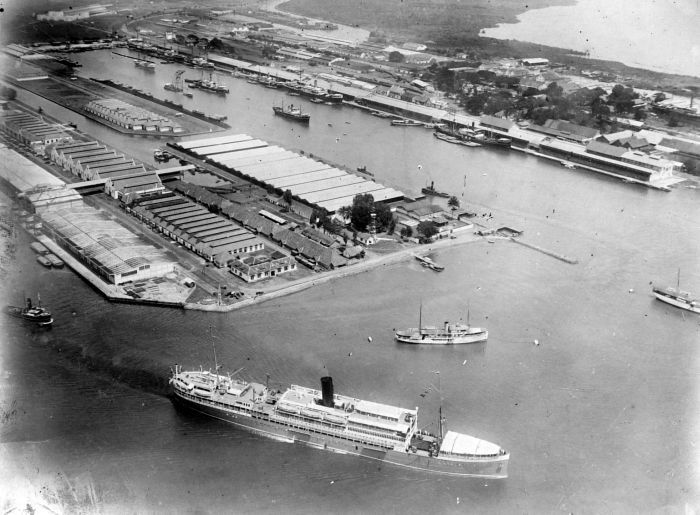
I smelled Jakarta before I saw it. Standing on the upper deck as our ship eased toward Tanjung Priok, a warm gust carried the scent of clove cigarettes and diesel fuel across the water, mixed with something sweeter I could not name — frangipani, maybe, or frying garlic drifting from a thousand roadside stalls. My hands gripped the railing as the industrial cranes of Indonesia's busiest commercial port came into focus, their skeletal arms swinging containers in slow arcs against a hazy tropical sky. I gathered my daypack, tucked a water bottle into the side pocket, and walked down the gangway into a city of eleven million souls.
The drive from Tanjung Priok to Old Batavia took ninety minutes, though my driver Ardi said on a good day it should take thirty. Jakarta traffic is not a rumor — it is a lived reality, an organism of motorbikes, trucks, and painted minibuses that breathes and stalls and surges with a logic all its own. However, I found that the journey itself was part of the experience. Through the taxi window I watched the city unscroll: street vendors selling fried bananas from wooden carts, children in white school uniforms waiting at bus stops, mosques with green domes rising above corrugated rooftops, and billboards the size of buildings advertising instant noodles next to designer handbags. Ardi pointed out landmarks as we crawled forward — the old Dutch canal, a Chinese temple tucked between apartment blocks, a man sleeping in a hammock strung between two trees on a traffic median. I pressed my forehead against the cool glass and watched it all, overwhelmed but unable to look away.
Old Batavia — Kota Tua, the locals call it — was the surprise I did not expect. After the relentless energy of the modern city, stepping into Fatahillah Square felt like slipping through a fold in time. The cobblestones were warm beneath my shoes. Dutch colonial buildings with shuttered windows and terracotta roofs surrounded the square on three sides, their facades cracked and weathered but still dignified. I sat at a table outside Cafe Batavia, ordered an iced coffee for 45,000 IDR (about $3), and listened to the sound of a gamelan ensemble playing somewhere inside the building. A group of Indonesian teenagers in batik shirts asked to take a photo with me — a common and charming custom, Ardi explained, since foreign visitors are still a novelty in parts of Jakarta. I smiled for the camera and they giggled and ran off, waving. Despite the heat, which sat on my shoulders like a damp blanket, I felt something ease inside me. The frenzy of the drive had faded, replaced by the slow pulse of a place that has been standing here for four hundred years.

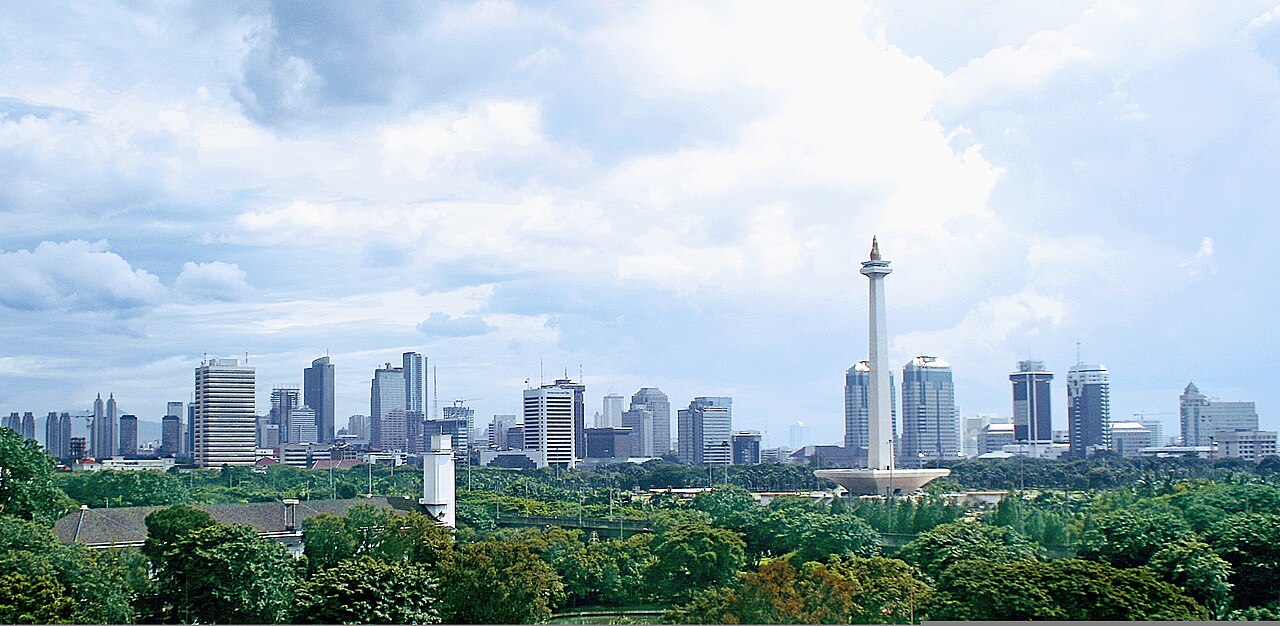
Ardi drove me south toward the National Monument, and even from a distance Monas commands the skyline — a 132-meter marble obelisk topped with a flame coated in solid gold. I paid 20,000 IDR (about $1.30) for the entrance fee and took the elevator to the observation deck. From that height, Jakarta stretches to every horizon — a carpet of rooftops and greenery and distant skyscrapers dissolving into tropical haze. I could hear the call to prayer rising from dozens of mosques simultaneously, their voices overlapping in a strange and beautiful dissonance that echoed off the glass around me. My eyes watered, though whether from the wind at that altitude or something deeper I could not say. I stood there for a long time, looking out over a city so vast it seemed to breathe.
Istiqlal Mosque sits just across the road from Jakarta Cathedral — the largest mosque in Southeast Asia facing a grand Dutch-era church, separated by a road and a shared parking lot. I removed my shoes at the entrance and a volunteer handed me a borrowed robe. The interior is staggering in its simplicity: white marble floors, soaring columns, and a dome that opens to the sky. I sat on the cool floor in a quiet corner and listened to the silence. A toddler wandered past, barefoot and giggling, chasing a pigeon that had flown in through an open door. His mother caught him and smiled at me, and I smiled back, and something shifted inside me in that moment — a recognition that kindness needs no common language, that warmth travels between strangers as easily as the breeze through that open dome. I whispered a prayer of gratitude for the grace of being here, in this place, at this hour.
The street food nearly undid me. At a stall near Fatahillah Square, I watched a vendor prepare nasi goreng with movements perfected over decades — rice flying in the wok, eggs cracking with one hand, kecap manis drizzling in precise circles. The plate cost 25,000 IDR (less than $2) and tasted like someone's grandmother had devoted her life to perfecting this single dish. The heat of the sambal hit the back of my throat, the sweetness of the soy followed, and the smoky char of the wok lingered on my tongue long after the last grain of rice was gone. I ate satay at another cart — chicken skewers with peanut sauce for 15,000 IDR ($1) — and washed it down with es cendol, a sweet iced drink of coconut milk and green rice-flour jelly that cost 10,000 IDR ($0.65). Each flavor was distinct and vivid, as though the heat and humidity had sharpened my taste buds to receive them.

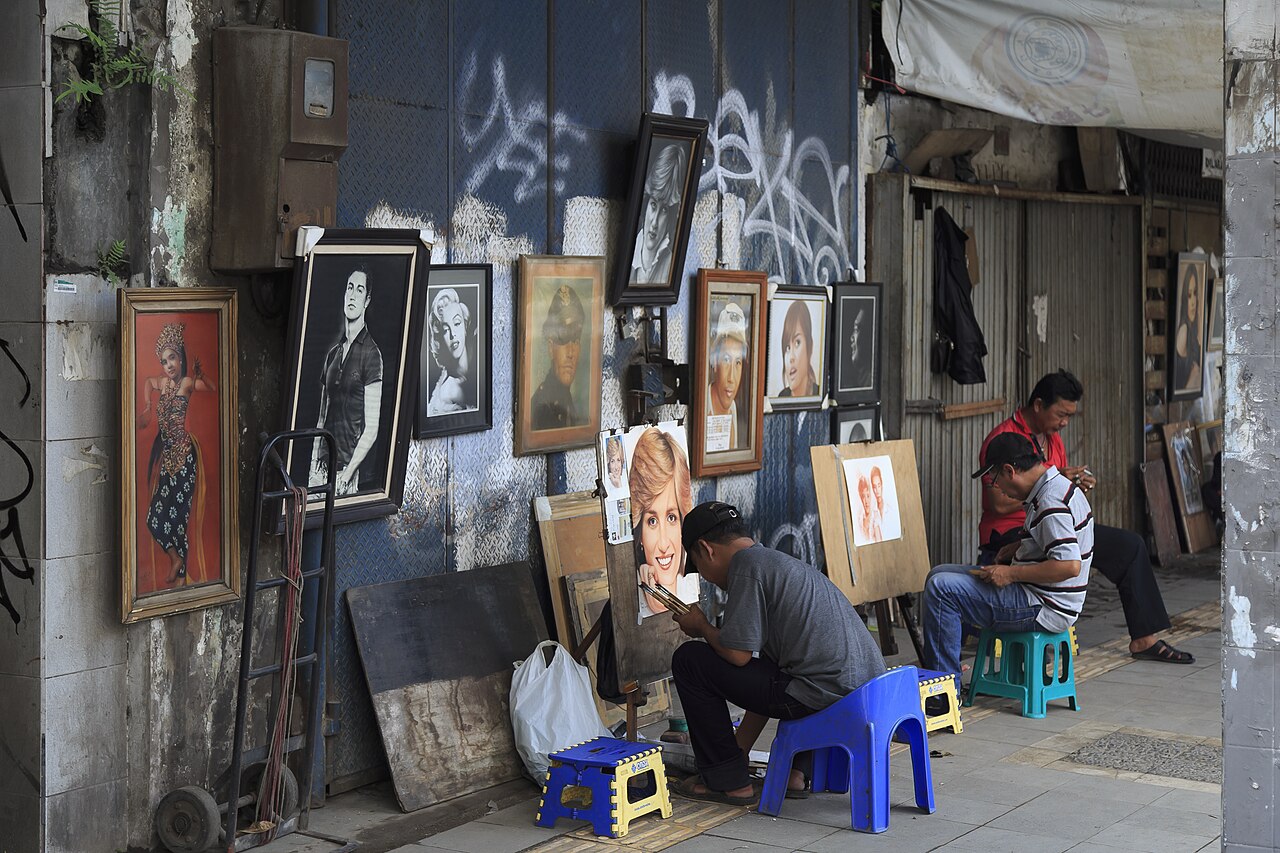
I made it back to the ship with forty minutes to spare, sunburned and carrying a bag of batik fabric I had bought from a woman in Kota Tua for 80,000 IDR ($5). As our vessel pulled away from Tanjung Priok in the fading light, I stood at the rail and watched Jakarta's skyline flatten into a band of amber and grey against the darkening sea. The city had exhausted me and moved me in equal measure. Although the traffic had tested my patience and the heat had drained my energy, I learned something in Jakarta I did not expect: that beauty does not require order, that generosity thrives in chaos, and that a city of thirty million strangers can still make one traveler feel, for a few bewildering hours, like he belongs. What Jakarta taught me is that the world is wider and warmer than my assumptions allowed, and I carry that lesson with me still.
Weather & Best Time to Visit
The Cruise Port
Cruise ships dock at Tanjung Priok, Indonesia's busiest commercial port, located approximately 20 km north of central Jakarta. The port is industrial and functional — not tourist-friendly. There is no dedicated cruise terminal; passengers disembark via the ship's gangway into a secured area with basic shade structures and security screening. Ship excursions or pre-arranged private transfers are strongly recommended because finding reliable transport independently at the port gate can be difficult and time-consuming.
Critical Note: Jakarta traffic is legendary. Journeys that appear short on a map can take two to three times longer in practice. Morning rush hour (7-10 a.m.) and evening rush (4-8 p.m.) are worst. Air-conditioned transport is essential given the tropical heat and humidity. Wheelchair users and those with limited mobility should note that the port area has uneven surfaces and limited accessible infrastructure; arrange vehicle transport in advance. The cost of a private car with driver for the day runs $40-60, which is the most practical option for cruise visitors wanting to cover multiple sites.
Getting Around
Jakarta is a sprawling megacity, and cruise-relevant sights are spread across a wide area. The most practical option for cruise visitors is hiring a private car with driver for the day at $40-60, arranged through your ship's shore excursion desk or booked independently through local operators. Grab and Gojek ride-hailing apps work well in Jakarta and offer transparent pricing — a ride from Tanjung Priok to Kota Tua costs roughly 50,000-80,000 IDR ($3-5) depending on traffic. Standard metered taxis are available but be sure to use reputable companies like Blue Bird, which are known for honest meters.
Jakarta's TransJakarta bus rapid transit system covers the city with dedicated lanes that bypass some traffic, but routes are confusing for first-time visitors and stations are not wheelchair accessible. Motorbike taxis (ojek) are fast and cheap but not recommended for cruise visitors unfamiliar with Jakarta's roads. Walking is feasible only within specific areas — Kota Tua's Fatahillah Square is compact and walkable, but sidewalks elsewhere are narrow, broken, and sometimes blocked by parked motorbikes. Visitors with mobility challenges should plan on vehicle transport between all sites. The heat and humidity make walking long distances uncomfortable even for fit travelers; carry water and seek air-conditioned breaks in malls or cafes. Budget extra travel time for every journey — what looks like a twenty-minute drive on a map may take an hour or more.
Port Map
Excursions & Activities
Old Batavia (Kota Tua)
The Dutch colonial heart of Jakarta surrounds Fatahillah Square, a cobblestoned plaza ringed by 17th-century buildings including the Jakarta History Museum (entry 5,000 IDR / $0.35) and the Fine Art and Ceramic Museum. Cafe Batavia offers colonial atmosphere and iced coffees from $3. The area is compact and walkable with flat terrain, making it a low-energy visit accessible to most mobility levels. You can visit independently by taxi or Grab for $3-5 from port, or join a ship excursion that typically combines Kota Tua with Monas and Istiqlal Mosque for $70-100. Allow 1.5-2 hours for the square and museums.
National Monument (Monas)
The 132-meter marble obelisk topped with a gold flame dominates Merdeka Square, the largest city square in the world. Entry costs 20,000 IDR ($1.30). The elevator to the observation deck offers panoramic views of the entire city. The basement museum covers Indonesian independence history. Moderate energy level; the elevator makes the observation deck accessible, though the grounds involve some walking. Visit independently by taxi or combine with a guided ship excursion. Allow 1-2 hours.
Istiqlal Mosque & Jakarta Cathedral
Southeast Asia's largest mosque faces a grand Dutch-era cathedral across the road — a powerful symbol of Indonesian religious tolerance. Istiqlal is free to visit; modest dress is required and borrowed robes are available at the entrance. The cathedral is also free and welcomes respectful visitors. Both are low-energy, wheelchair accessible on the ground floor. A short taxi ride from Monas. No need to book ahead — simply arrive during visiting hours (outside prayer times for the mosque). Allow 1-1.5 hours for both.
National Museum of Indonesia
Indonesia's finest museum houses Hindu-Buddhist gold artifacts, Javanese textiles, prehistoric tools, and ethnographic displays covering the archipelago's extraordinary diversity. Entry costs 25,000 IDR ($1.60) for foreign visitors. Air-conditioned galleries offer a welcome break from the heat. Partially wheelchair accessible on the ground floor; upper floors require stairs. Visit independently by taxi or as part of a city tour ship excursion. Allow 1.5-2 hours.
Street Food Tour
Jakarta's street food is among the most varied and affordable in Southeast Asia. Nasi goreng (fried rice) costs 20,000-30,000 IDR ($1.30-2), satay skewers run 15,000 IDR ($1), and es cendol (coconut ice dessert) is 10,000 IDR ($0.65). Ship excursions sometimes include curated food tours for $50-70. Independently, you can explore the stalls around Fatahillah Square or ask your driver to stop at local favorites. Book ahead if you want a guided food walk with a local operator — these run $25-40 per person and handle the language barrier. Moderate stamina required due to heat and walking between stalls.
Ancol Dreamland & Sea World
Closer to port than other attractions, Ancol is a large seaside entertainment complex with an aquarium (Sea World, 130,000 IDR / $8.50), beaches, and gardens. A good option for families or when traffic makes city-center trips risky. Low to moderate energy. Accessible paths in most areas. Visit independently — it is a short drive from Tanjung Priok. No need to book ahead for general admission.
Indonesian Cuisine
- Nasi Goreng: Fried rice, Indonesia's national dish — smoky wok flavor, typically $1.30-2.
- Satay: Grilled chicken or lamb skewers with peanut sauce, $1 per portion.
- Gado-Gado: Vegetable salad with peanut dressing, a hearty vegetarian option.
- Bakso: Meatball soup, ubiquitous street food found on almost every corner.
- Es Cendol: Sweet iced dessert with coconut milk and green rice-flour jelly, $0.65.
- Soto Betawi: A rich beef and coconut milk soup unique to Jakarta's Betawi culture.
Street food markets offer authentic experiences at remarkably low prices. Ship excursions may include curated food tours. For a sit-down meal, restaurants in Kota Tua and central Jakarta serve Indonesian cuisine from $5-15 per dish.
Depth Soundings
Indonesia operates on the Indonesian Rupiah (IDR). As of early 2026, $1 USD buys approximately 15,500 IDR. The large numbers take getting used to — a street meal that costs 30,000 IDR sounds expensive until you realize it is less than $2. ATMs are available at major intersections and shopping malls throughout the city, and most accept international cards with a withdrawal fee of 5,000-10,000 IDR. Credit cards work at hotels, malls, and upscale restaurants, but street vendors, tuk-tuk drivers, and local markets require cash. Carry small denominations because getting change from vendors can be difficult.
Tipping is not mandatory in Indonesia but is appreciated. A 10% service charge is often included at restaurants; if not, 10-15% is generous. Round up taxi fares. Dress modestly when visiting mosques — long trousers or skirts and covered shoulders for both men and women, with shoes removed at the entrance. English is limited outside tourist areas and upscale hotels; learning "terima kasih" (thank you) and "berapa harganya" (how much) earns warm responses. Jakarta's tropical climate means temperatures hover between 24-34 degrees Celsius year-round. The wet monsoon runs from November through March with heavy afternoon downpours; the dry season from April through October offers more comfortable sightseeing. Even in dry season, humidity remains high, so lightweight breathable clothing and regular hydration are essential.
Practical Information
Money
Indonesian Rupiah (IDR). Approximately 15,500 IDR = 1 USD (2025). Cards accepted at malls and hotels; cash essential for street vendors and local transport. ATMs widely available.
Weather
Hot and humid year-round (24-34 degrees Celsius). Monsoon season November through March brings heavy afternoon downpours. Dry season April through October. Carry an umbrella and stay hydrated.
Safety
Exercise normal precautions. Petty theft occurs in crowded areas. Use registered taxis (Blue Bird) or Grab/Gojek ride-hailing apps. Avoid isolated areas after dark.
Language
Bahasa Indonesia. Limited English outside tourist services and hotels. Translation apps are helpful for market interactions.
Photo Gallery




Frequently Asked Questions
How far is the port from central Jakarta?
Tanjung Priok is about 20 km from central Jakarta. Allow 45 minutes to over two hours depending on traffic conditions. Morning and evening rush hours are worst.
Is Jakarta safe for independent exploration?
Jakarta is generally safe for cruise visitors during daytime in tourist areas. Petty theft can occur in crowded markets; keep valuables secure. Use Grab or Gojek apps for reliable transport with transparent pricing.
Can I visit Borobudur from Jakarta?
Not on a regular port call. Borobudur is in Yogyakarta, about 450 km away by air. Some cruise lines offer overnight excursions or pre/post-cruise extensions to Yogyakarta.
What is the best way to get around?
A private car with driver for the day costs $40-60 and is the most practical option. Grab and Gojek apps also work well. Avoid relying on street hailing or public buses as a first-time visitor.
What should I buy in Jakarta?
Batik textiles, wayang shadow puppets, Indonesian coffee, and spices make excellent souvenirs. The markets around Kota Tua and Sarinah department store offer good selections at fair prices.
Do I need Indonesian Rupiah?
Yes, cash is essential for street food, local transport, and market shopping. ATMs accepting international cards are widely available throughout the city. Credit cards work at malls and hotels only.
When is the best time to visit Jakarta?
The glance Temperature reads "74-89°F year-round tropical" and the Rain entry reads "Heavy wet season Dec-Mar; dry season Jun-Sep." The page's body adds: "temperatures hover between 24-34 degrees Celsius year-round. The wet monsoon runs from November through March with heavy afternoon downpours; the dry season from April through October offers more comfortable sightseeing."
When is Jakarta's monsoon and storm season?
The glance Rain entry reads "Heavy wet season Dec-Mar; dry season Jun-Sep," and the Wind entry adds "Light monsoon winds." The hazard-note reads: "Wet season flooding is common and can strand you. Air quality can be poor — check conditions." For current tropical-system status on a specific sailing date, use the live weather widget in the seasonal panel above.
What should I pack for Jakarta's weather?
The glance Temperature reads "74-89°F year-round tropical" and Humidity "High year-round; drier Jun-Sep." The body text adds: "humidity remains high, so lightweight breathable clothing and regular hydration are essential." For mosque visits, the page notes "long trousers or skirts and covered shoulders for both men and women, with shoes removed at the entrance."
Will rain ruin my Jakarta port day?
The glance Rain entry reads "Heavy wet season Dec-Mar; dry season Jun-Sep." The hazard-note adds: "Wet season flooding is common and can strand you." For short-term forecasts on a specific sailing date, the live weather widget in the seasonal panel above is the primary source.
Jakarta (Tanjung Priok) Cruise Port Guide
Last reviewed: February 2026