


My Logbook: A Singapore Day
I stood at the bow railing at five-thirty in the morning, gripping my coffee mug so tightly my knuckles went white, watching the silhouette of Marina Bay Sands rise from the dark water like a monument to everything I never expected from Asia. Our Royal Caribbean ship was gliding through the Strait of Singapore at a crawl, and the first rays of dawn caught the triple towers and turned them golden, then pink, then blazing white. I heard the low rumble of a tugboat passing to our port side, felt the warm tropical breeze on my face carrying the faint salt-and-diesel scent of a working harbor, and I whispered a quiet prayer of gratitude that I was alive to witness this. The city was waking up, and my heart swelled with an emotion I could not name.

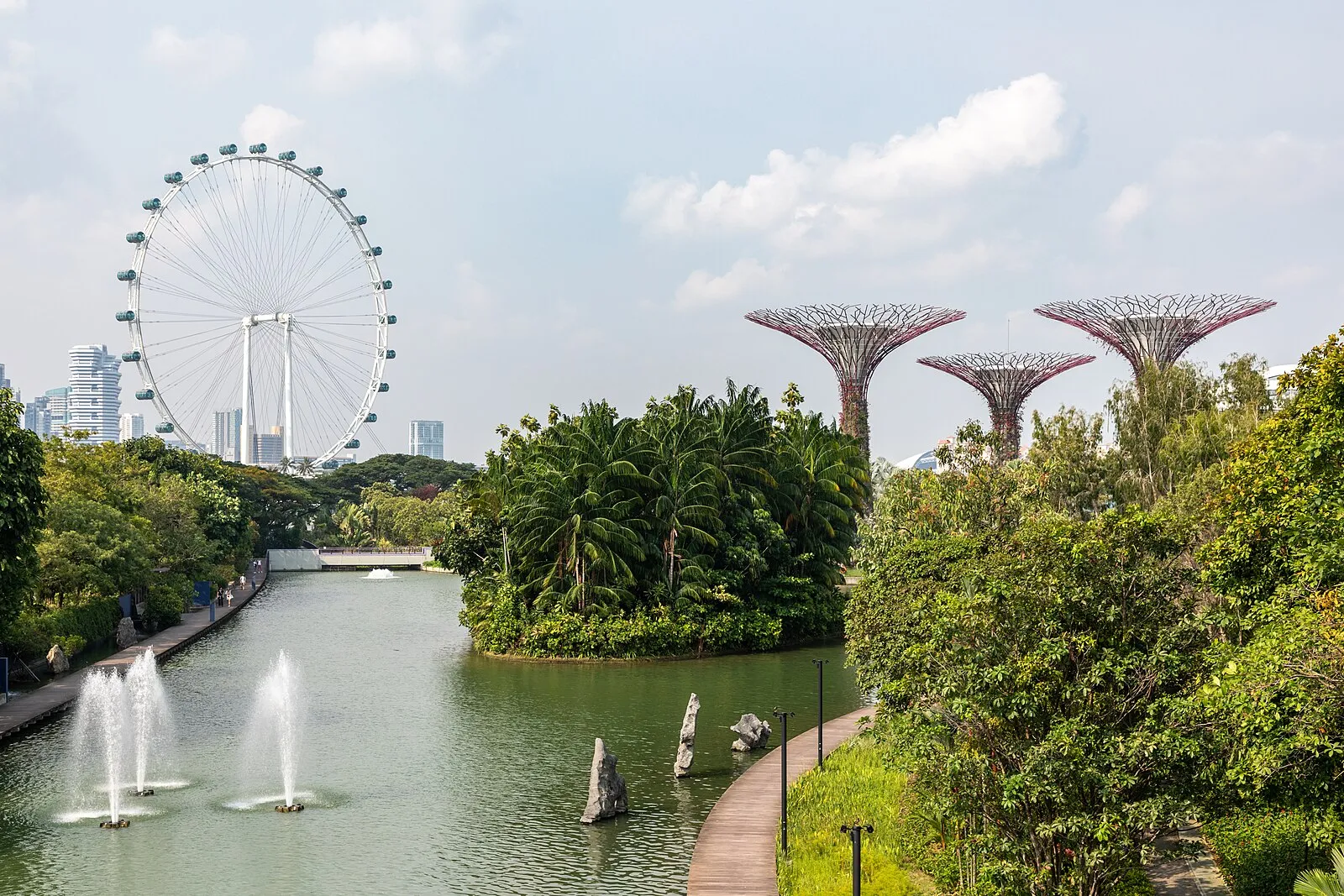
My perfect day started the second we docked at the Marina Bay Cruise Centre. I walked down the gangway into air so humid it felt like a warm towel wrapped around my shoulders. The terminal itself was sleek and modern, and within ten minutes I was on the MRT heading toward Gardens by the Bay. This is where Singapore reveals its soul: those towering Supertrees soar over fifty meters tall, wrapped in ferns and orchids, and when I stepped beneath the canopy and looked straight up, I saw sunlight filtering through living green walls while birds darted between the metal branches. The Flower Dome held the Guinness record for the world's largest glass greenhouse, yet it was the Cloud Forest dome that stole my breath entirely. I walked through the entrance and a thirty-five-meter indoor waterfall roared down a misty mountainside, the cool air biting my arms after the heat outside. I stood there feeling the mist on my face, listening to the cascade echo off the glass walls, and something shifted inside me. I realized that Singapore had taken everything I thought I knew about cities and quietly rewritten the rules.

From the gardens I made my way to the Merlion, that wonderfully whimsical creature with a lion's head and a fish's body. The iconic 8.6-meter statue spouted water into the bay while Marina Bay Sands loomed behind me, its infinity pool fifty-seven stories up still making me dizzy just looking at it. But the moment that truly undid me was quieter than I expected. I was standing on the Esplanade bridge watching the Singapore River bumboats chug past toward Clarke Quay, and an elderly couple next to me pointed at the skyline and started speaking in Hokkien, their voices full of wonder even though they had clearly lived here their whole lives. The woman noticed me watching and smiled, and I smiled back, and for a few seconds two strangers from opposite sides of the planet shared something that did not need translation. I learned in that moment that beauty does not belong to tourists alone — it belongs to everyone who pauses long enough to see it.

Lunch pulled me into the hawker centers, and I will never forget the experience. At Lau Pa Sat I ordered chicken rice for $4 and chili crab for $12, sat down at a communal steel table, and tasted flavors so vivid they made me close my eyes. The chili sauce was sweet, sour, and searingly hot all at once. Around me the noise of a hundred conversations blended into a comforting roar, and the smell of satay smoke drifted from the outdoor stalls on Boon Tat Street. However rushed my schedule felt, I forced myself to slow down, because this was not just food. This was Singapore telling me its story through flavor and fire.
After lunch I took the MRT to Little India, where the streets erupted in color — sari shops with fabrics in every shade of the rainbow, the scent of jasmine garlands and fresh curry leaves spilling from open doors. I ducked into the Sri Veeramakaliamman Temple, removed my shoes, and felt the cool stone floor beneath my feet while incense smoke curled toward the painted ceiling. Although I was only a visitor, the stillness inside that space made me feel welcome, even held. Chinatown came next, with its red lanterns strung between shophouses and the Buddha Tooth Relic Temple rising golden and serene at the end of the street. Despite the crowds, there was an order to everything — Singapore's gift is making complexity look effortless.

My afternoon belonged to Sentosa Island. I took the monorail across the short causeway and spent two hours at the S.E.A. Aquarium, watching manta rays glide past a wall of glass so enormous I felt like I was standing inside the ocean itself. The beaches on Sentosa were small but clean, and I sat on the warm sand listening to waves lap the shore while container ships moved silently across the horizon. Yet even paradise has its tensions: Sentosa felt polished and curated in a way that made me miss the raw honesty of the hawker centers. Still, the island was a welcome change of pace, and the views back toward the Singapore skyline at dusk were breathtaking.
I returned to the Merlion one last time before heading back to the ship. The laser show at Marina Bay was starting, and the water glowed in shifting patterns of blue and green. Looking back, I understood what Singapore had taught me. It is a city that refuses to choose between its past and its future, between concrete and garden, between efficiency and warmth. I learned that you can plan the perfect port day down to the minute, but the moments that change you are the ones you never planned at all — a smile from a stranger, the taste of chili on your lips, the sound of water falling inside a forest made of glass. Singapore did not just impress me. It made me grateful to be alive, and that is the truest gift any place can give.
Weather & Best Time to Visit
The Cruise Port
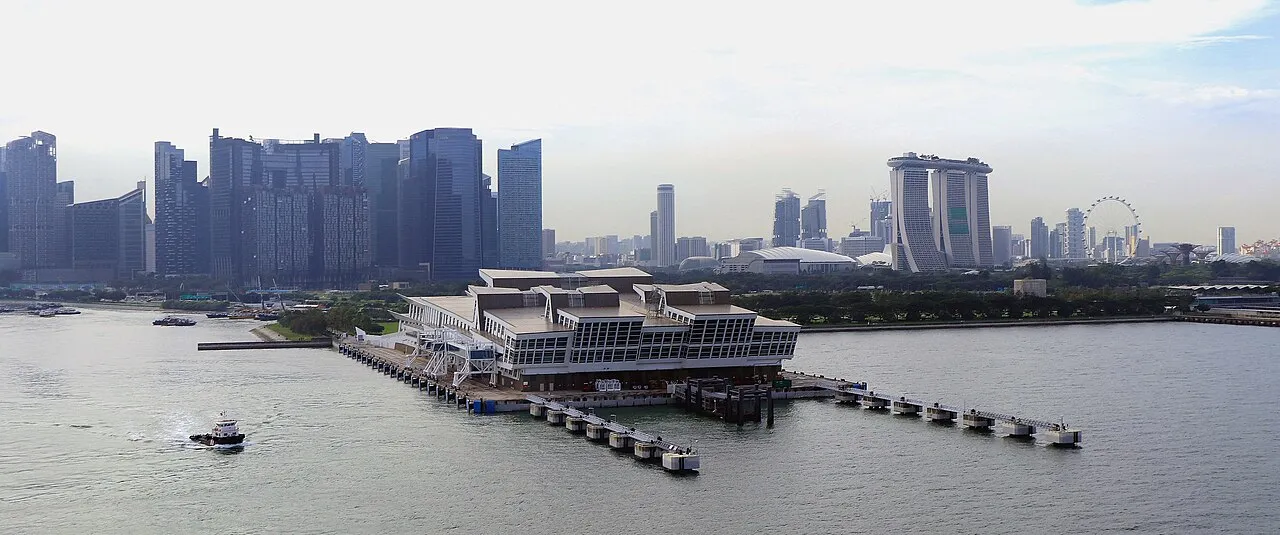
Singapore operates two cruise terminals. The Marina Bay Cruise Centre (MBCC) is the newer facility, located at Marina South and designed to handle the largest megaships in service today. It features modern check-in halls, air-conditioned waiting areas, wheelchair accessible ramps and elevators throughout, and a direct connection to the Bayfront MRT station. The older Singapore Cruise Centre at HarbourFront handles smaller vessels and connects to the HarbourFront MRT station and VivoCity shopping center. Both terminals offer taxi stands, ride-hail pickup zones, and clearly signed pathways to public transport. Immigration and customs processing is typically fast and efficient, and porters are available for guests with mobility needs. Free Wi-Fi is available in both terminals, and currency exchange counters are located near the exits. Expect to clear the terminal within fifteen to twenty minutes of stepping off the gangway on a typical port day.

Getting Around
Spectrum of the Seas and Icon of the Seas dock at the Marina Bay Cruise Centre, which sits five to ten minutes by taxi from Gardens by the Bay (fare approximately $8–$15 SGD). Smaller ships sometimes use the HarbourFront terminal, which connects directly to the HarbourFront MRT station. Both terminals provide smooth access to Singapore's exceptional Mass Rapid Transit (MRT) system.
The MRT is clean, air-conditioned, safe, and remarkably affordable. A single trip costs $1–$3 SGD depending on distance, and stored-value EZ-Link cards (available for $12 SGD at station kiosks, including a $5 deposit) make tapping in and out effortless. Trains run every three to five minutes during peak hours and every seven minutes at other times. For destinations not directly on a train line, Grab ride-hailing (Singapore's equivalent of Uber) offers fixed-price fare estimates before you book — typical rides within the city center cost $8–$15 SGD.
Taxis are metered and reliable, with fares starting at $4 SGD. Public buses complement the MRT and reach every corner of the island, though they can be slower due to traffic. Walking is pleasant in many districts despite the heat: covered walkways connect MRT stations to nearby attractions in areas like Orchard Road and Marina Bay. For guests with mobility concerns, the MRT system is fully wheelchair accessible with elevators and tactile guidance paths at every station. Sentosa Island is reached by monorail from HarbourFront ($4 SGD round trip) or by a free boardwalk suitable for wheelchair users.
Port Map
Explore Singapore's cruise terminals, attractions, hawker centers, and neighborhoods. Click markers for details and directions.
Top Excursions & Attractions
Singapore rewards both independent explorers and those who prefer a ship excursion with a guaranteed return to the vessel. The city is safe, English-speaking, and superbly connected by public transport, so going independent is straightforward. However, if you want a curated, guide-led overview, you should book ahead through your cruise line or a reputable local operator. Below are the top experiences for a single port day.

Gardens by the Bay
The Supertree Grove is free to enter, but the two conservatories (Flower Dome and Cloud Forest) require tickets at $32 SGD for adults. The OCBC Skyway between the Supertrees costs an additional $14 SGD. Allow two to three hours for a thorough visit. This is a low-walking, moderate-energy excursion with elevator access throughout, making it suitable for guests with walking difficulty or wheelchair users. The free Garden Rhapsody light show runs nightly at 7:45 p.m. and 8:45 p.m.
Marina Bay Sands SkyPark Observation Deck
The observation deck on the 57th floor costs $26 SGD per adult and offers sweeping views of the harbor, Gardens by the Bay, and the city skyline. It is wheelchair accessible via elevator. The ArtScience Museum at the base of the towers hosts rotating exhibitions (tickets from $19 SGD).
Hawker Center Food Tour
Singapore's hawker centers are UNESCO-recognized and serve exceptional food at local prices. A self-guided tour hitting Lau Pa Sat, Maxwell Food Centre, and Chinatown Complex costs as little as $15–$25 SGD total for multiple dishes. Chicken rice runs $4–$5 SGD per plate, laksa $5–$6, and chili crab at a restaurant-style stall starts around $25 SGD. This is a moderate-walking excursion easily done independently using the MRT.
Little India and Chinatown
Both neighborhoods are free to wander and richly rewarding. Visit the Sri Veeramakaliamman Temple in Little India (free entry, remove shoes) and the Buddha Tooth Relic Temple in Chinatown (free entry). The two districts are connected by a short MRT ride or a twenty-minute walk. This is a moderate-energy, high-sensory experience with flat terrain accessible to mobility-impaired visitors.

Sentosa Island
Reached by monorail ($4 SGD round trip), Sentosa offers beaches, the S.E.A. Aquarium ($41 SGD adults), and adventure activities. The aquarium is wheelchair accessible. Allow half a day for Sentosa if combined with other activities. You can reach Sentosa independently from HarbourFront MRT station in under ten minutes.
Singapore River Bumboat Cruise
A forty-minute river cruise costs $25 SGD per adult and passes Clarke Quay, Boat Quay, the Merlion, and Marina Bay Sands. Boats depart every fifteen minutes from Clarke Quay pier. This is a low-energy, seated experience with step-free boarding assistance available for those who need it.
Booking tip: For a ship excursion, you get the security of a guaranteed return to the vessel, which is valuable if your ship departs in the evening. If you prefer to explore independently, Singapore's safety and connectivity make it an outstanding port for self-guided touring. Either way, book ahead for the Cloud Forest and SkyPark to skip queues, especially during peak season.
Depth Soundings
The honest truth about Singapore is that it manages to be both immaculate and deeply human at the same time. The famous rules — no chewing gum, heavy fines for littering — sound austere on paper, but in practice they create a city that feels safe, welcoming, and remarkably stress-free for cruise visitors. The MRT runs like clockwork, taxi drivers are honest, and the signage is clear and bilingual. However, the heat and humidity can be punishing, especially for those unaccustomed to tropical weather. Carry water, wear breathable clothing, and plan to duck into air-conditioned spaces every hour or so.
Prices are moderate by Western standards but higher than much of Southeast Asia. A full day of sightseeing including the Cloud Forest ($32 SGD), a hawker lunch ($10 SGD), the bumboat ride ($25 SGD), and MRT fares ($5 SGD) totals roughly $72 SGD (about $54 USD). Budget travelers can have an exceptional day for under $30 USD by sticking to free attractions and hawker food. Singapore is a place that rewards planning and gratitude in equal measure — plan your route, budget your time wisely, and let the city surprise you with its generosity of spirit.

Photo Gallery


Frequently Asked Questions
Where do cruise ships dock in Singapore?
Most large ships dock at the Marina Bay Cruise Centre (MBCC). Some smaller vessels use the Singapore Cruise Centre at HarbourFront. Both terminals have direct MRT access and are wheelchair accessible with elevators and ramps.
What is the best way to get from the cruise terminal to Gardens by the Bay?
From MBCC, take the MRT from Bayfront station (one stop). The ride costs under $2 SGD. Alternatively, a taxi or Grab costs $8–$15 SGD and takes five to ten minutes. Both options are accessible for guests with mobility needs.
Is Singapore expensive for cruise visitors?
Moderate. Public transport runs $1–$3 SGD per trip. Hawker center meals cost $4–$8 SGD per dish. Top attractions like the Cloud Forest cost $32 SGD. A comfortable full day of sightseeing and dining can be done for $50–$75 USD. Budget travelers can spend under $30 USD by focusing on free attractions and hawker food.
Can I do Gardens by the Bay and Sentosa in one day?
Yes, but it will be a full day. I recommend starting at Gardens early, spending the morning in the conservatories, then heading to Sentosa after lunch. Both are connected by MRT with a transfer at HarbourFront. Budget at least two hours for each.
Is Singapore safe for solo cruise visitors?
Extremely safe. Singapore consistently ranks among the safest cities in the world. English is widely spoken, signage is clear, and public transport is well-lit and monitored. Solo travelers, including women traveling alone, report feeling comfortable at all hours.
What should I bring for a port day?
Comfortable walking shoes, sunscreen, a compact umbrella or rain jacket, a reusable water bottle, and a camera for the stunning scenery. Light, breathable clothing is essential given the tropical heat and humidity.
Singapore Cruise Port Guide
The Lion City Where My Heart Swelled at Every Turn
Last reviewed: February 2026
Quick Answer: Singapore consistently ranks among the top ports in Asia-Pacific for cruise passengers (4.9–5.0 stars). Highlights include Gardens by the Bay Cloud Forest, chili crab at hawker centers ($5–$8 per plate), and the Marina Bay Sands light show. The MRT is spotless, cheap, and gets you everywhere. The port is wheelchair accessible with smooth, flat pathways throughout the terminal area.
Image Credits
- singapore-harbor.webp: Wikimedia Commons (CC BY-SA)
- singapore-gardens.webp: Wikimedia Commons (CC BY-SA)
- singapore-marina-bay.webp: Wikimedia Commons (CC BY-SA)
- singapore-hawker.webp: Wikimedia Commons (CC BY-SA)
- singapore-merlion.webp: Wikimedia Commons (CC BY-SA)
- singapore-little-india.webp: Wikimedia Commons (CC BY-SA)
- singapore-sentosa.webp: Wikimedia Commons (CC BY-SA)
- singapore-temple.webp: Wikimedia Commons (CC BY-SA)
- singapore-orchid.webp: Wikimedia Commons (CC BY-SA)
- singapore-skyline.webp: Wikimedia Commons (CC BY-SA)
- singapore-river.webp: Wikimedia Commons (CC BY-SA)
All images sourced from Wikimedia Commons under Creative Commons licenses.