


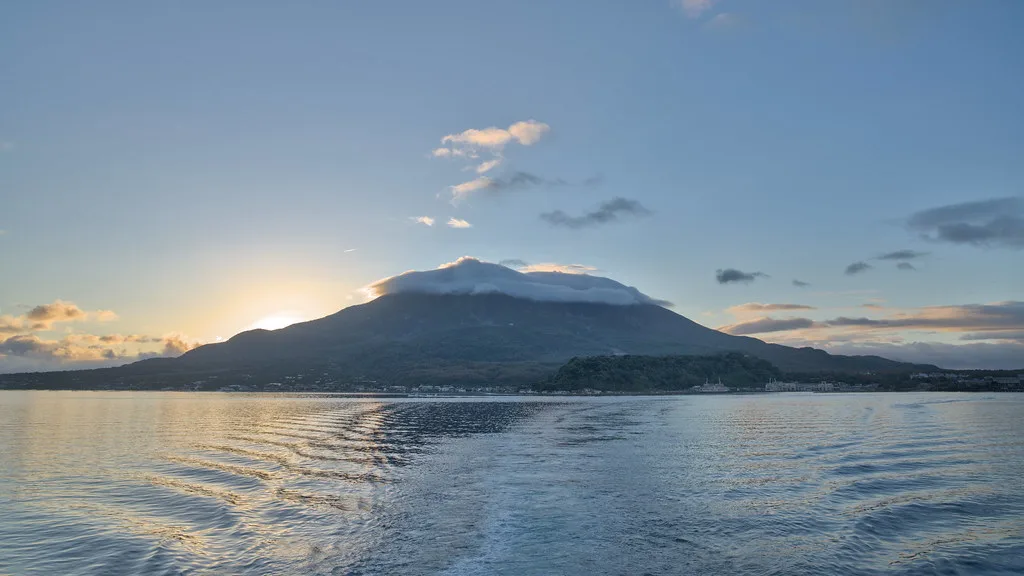
Photo: Wikimedia Commons
My Logbook: Ash, Steam, and the Weight of History
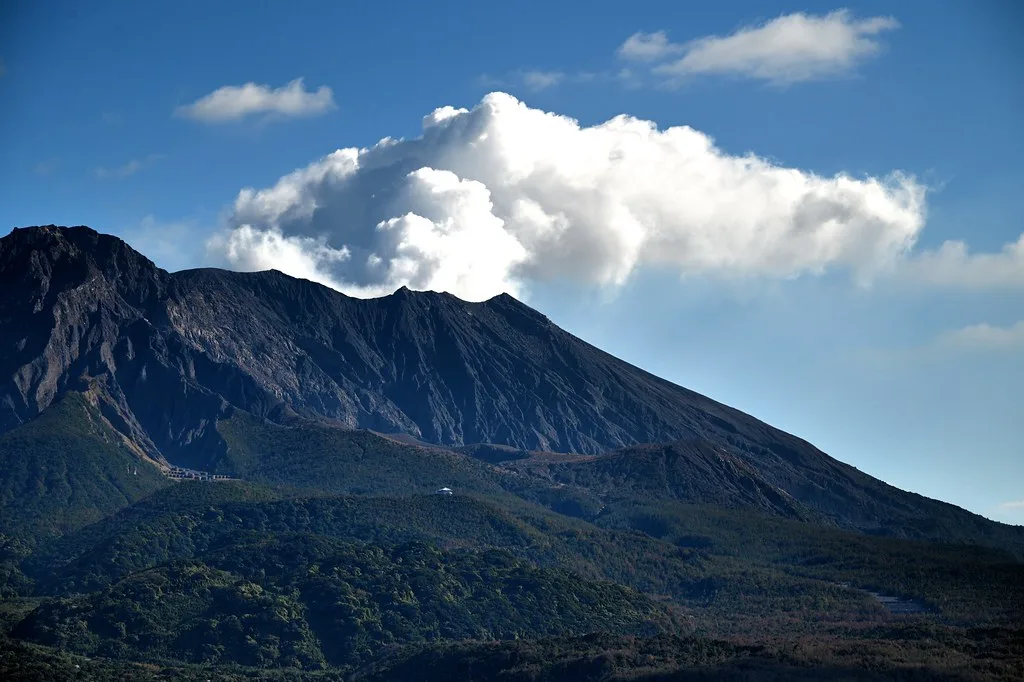
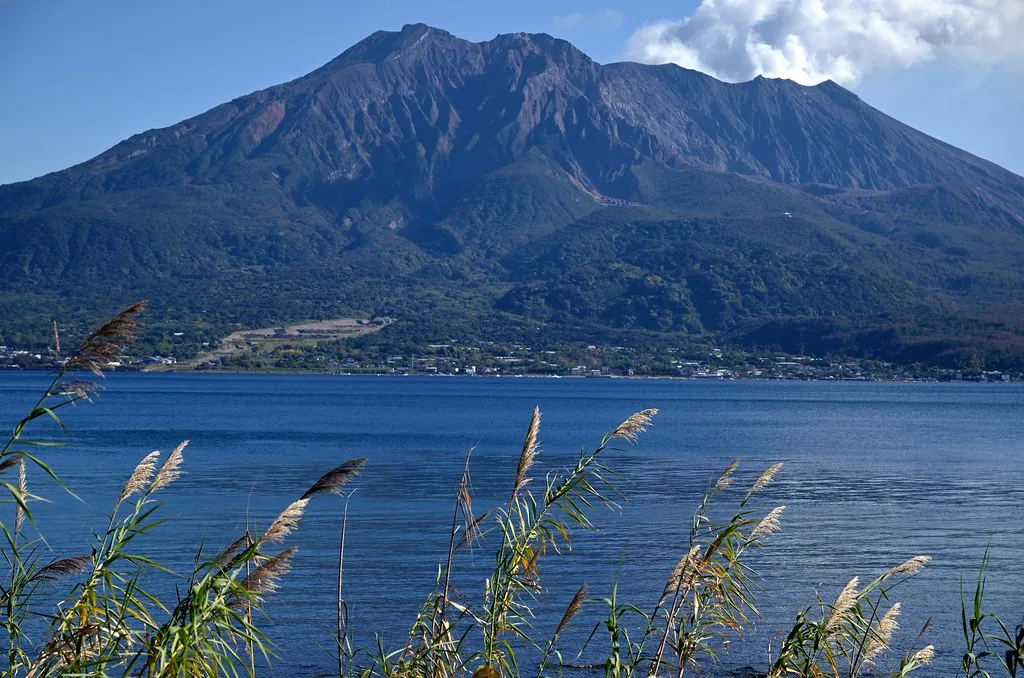
I stepped off the ship into a warm morning already thick with humidity, and the first thing I noticed was the mountain. Sakurajima filled the horizon across the bay — an enormous dark cone trailing a thin white plume of steam into the pale sky, as steady and unhurried as breath. I had read about the volcano, studied the maps, watched videos of its eruptions, but nothing had prepared me for the sheer physical presence of it. The mountain was not distant scenery. It was a living thing, exhaling into the morning, and I stood on the dock with my bag over my shoulder and simply stared.
A taxi carried me to the Sakurajima ferry terminal in under ten minutes, and I bought my ticket for ¥200 — barely $1.50. The ferry was already loading: office workers heading to jobs on the volcanic peninsula, school children in uniform, a pair of elderly women carrying cloth shopping bags. I found a spot at the bow rail and watched the volcano grow as we pulled away from the Kagoshima side. The water in the bay was dark and flat, and the air smelled of salt and something faintly sulfurous, like struck matches. I could hear the low thrum of the ferry engine and the cry of gulls wheeling overhead, and I felt my breathing slow as the city receded behind me and the mountain took over the sky.
Fifteen minutes later I was standing on Sakurajima itself. The visitor center near the ferry terminal explained the volcano's history — hundreds of eruptions per year, most of them small ash plumes, but the 1914 eruption was catastrophic enough to bury an entire torii gate. I walked the short trail to see it: only the top crossbar of the shrine gate was visible above the hardened lava, the rest entombed beneath meters of volcanic rock. A sign explained that the gate had once stood three meters tall. I touched the warm stone and thought about what it would have been like to see that wall of lava moving toward you. My hand trembled slightly, though whether from awe or fear I could not say.

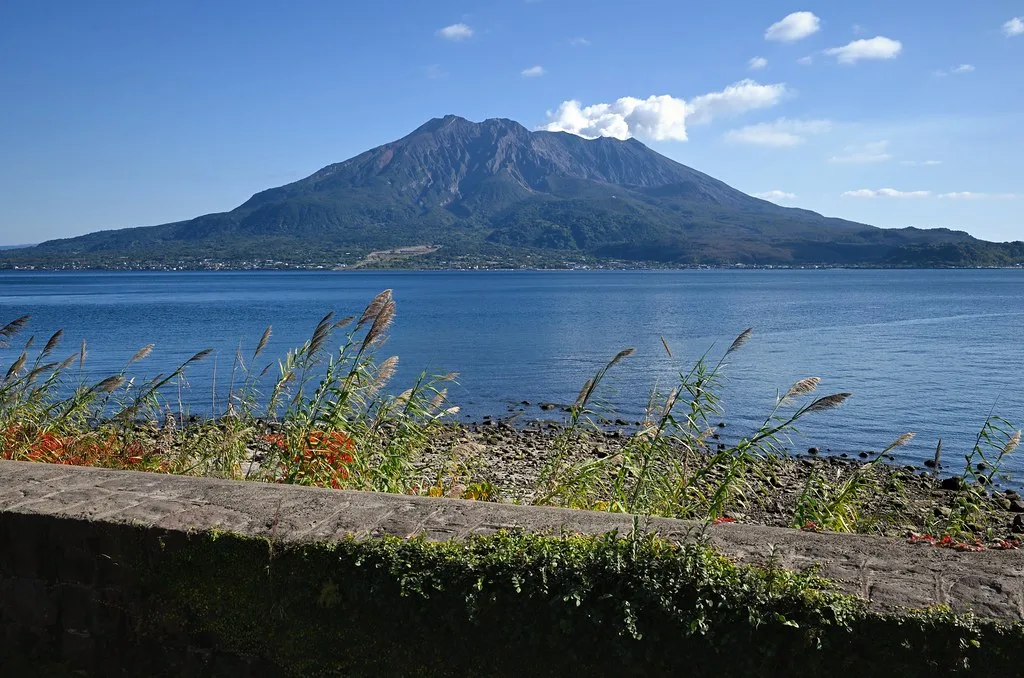
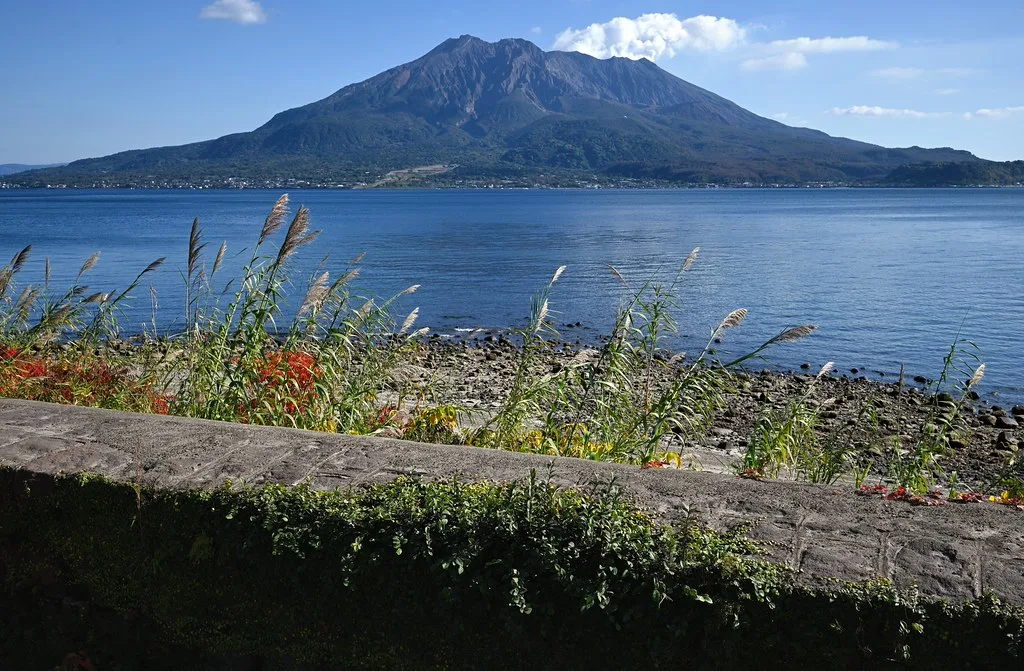
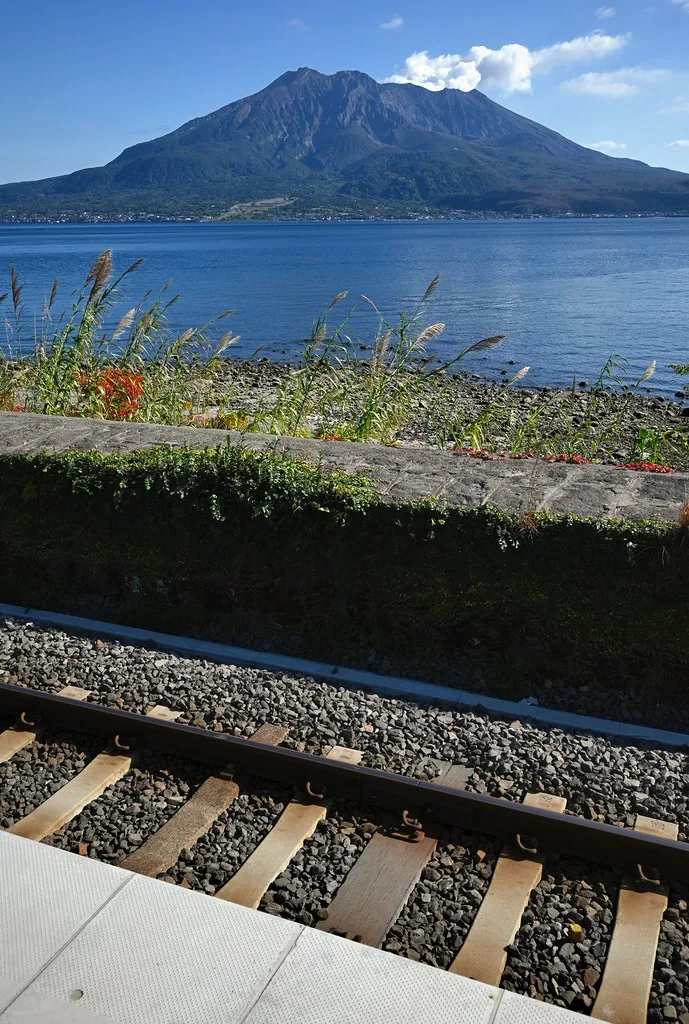
Back in Kagoshima, I took the City View Bus to Sengan-en Garden. The Shimazu clan built this place in 1658, and they chose their site with genius: the garden uses Sakurajima and the bay as "borrowed scenery," so the volcano itself becomes part of the design. I walked through the gate and felt the temperature drop under ancient camphor trees. The stone lanterns were covered in moss. A stream wound through carefully placed rocks, and beyond the garden walls the volcano rose like a painted backdrop, so close it seemed I could reach out and touch it. I sat on a wooden bench near the main pond and listened to the water trickling over stones. The sound was so delicate, so patient, that I felt something inside me unclench — a tension I had not known I was carrying. A gardener in blue overalls knelt nearby, pulling weeds with the kind of focused care that made each small gesture look like prayer. I watched him for a long time. He never looked up. He did not need to. He knew the garden was beautiful without having to check.
I had lunch at a small restaurant in Tenmonkan, the city's covered shopping arcade. I ordered kurobuta tonkatsu — Kagoshima's famous black pork, breaded and deep-fried, served with shredded cabbage and a dark, sweet sauce. The first bite was revelatory: the meat was rich and tender, with a depth of flavor I had never tasted in pork before. The breading was golden and impossibly crisp. I ate slowly, savoring each piece, while the owner watched from behind the counter with quiet satisfaction. The meal cost about ¥1,500 — roughly $10. I told the owner it was extraordinary. He bowed and said, in careful English, "Our pigs eat well. So we eat well." I laughed, and he laughed with me, and in that moment I felt the particular warmth that comes from sharing honest food and honest words with a stranger.
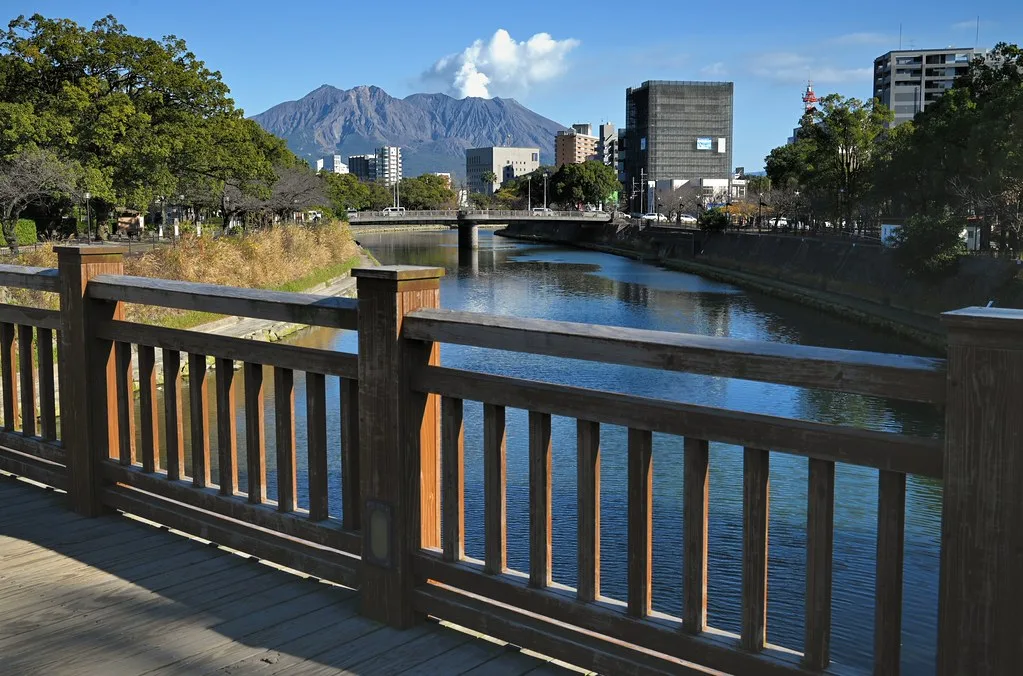
In the afternoon, I climbed to Shiroyama, the forested hilltop where Saigo Takamori — the man they call the last samurai — made his final stand in 1877. The observation deck offered a sweeping view of the city below and Sakurajima smoking quietly across the water. However, what struck me was not the view but the silence. This was where a man who had tried to preserve an entire way of life had lost everything. I read the memorial plaque and felt the weight of it settle on my shoulders. Saigo had been a reformer who became a rebel, a patriot who ended up fighting his own government, and in the end he knelt on this very hillside and chose death over surrender. I stood there with tears in my eyes, not for the politics of it, but for the human cost — for the grief of a man who loved his country so much that he could not survive its transformation. I whispered a quiet prayer for all the people throughout history who have been caught between the world they knew and the world that was coming, and I felt grateful — genuinely, deeply grateful — to be standing where he had stood, breathing the same air, looking at the same volcano.

I soaked my feet in a free volcanic hot spring near the Sakurajima ferry terminal before catching the last ferry back to the city side. The water was almost too hot, heated by the same magma that powered the eruptions above, and I sat on a stone bench with my feet submerged and my eyes closed, listening to the lap of the bay and the distant rumble of the mountain. An old man sat beside me and nodded. We did not share a language, but we shared the warmth, and that was enough.
As my ship pulled away from Kagoshima that evening, I stood at the rail and watched Sakurajima turn golden in the setting sun, then fade to silhouette against a violet sky. A thin thread of steam still rose from the crater, steady and untroubled. That is what Kagoshima taught me — that life beside a volcano is not reckless but faithful. The people here do not ignore the danger; they respect it, prepare for it, and then go about their lives with a calm that borders on courage. They plant gardens in the shadow of eruptions. They raise pigs and brew shochu and tend shrines that might be buried in ash tomorrow. They choose to live fully, knowing the earth beneath them is restless. I carry that lesson with me now — not to wait for safety before beginning, but to begin anyway, with gratitude for each day the mountain lets us stay.
Weather & Best Time to Visit
Kagoshima has a subtropical climate with warm, humid summers and mild winters. Temperatures range from about 5 °C (41 °F) in January to 32 °C (90 °F) in August. The rainy season (tsuyu) hits in June and July, bringing heavy downpours that can last for days. Typhoon season runs from August through October, and storms occasionally force ships to alter itineraries. Spring (March to May) and autumn (November to early December) offer the most comfortable conditions for walking and sightseeing, with clear skies and moderate temperatures. Winter visits are cool but rarely cold enough to be unpleasant. Volcanic ash from Sakurajima can fall on the city any time of year, carried by prevailing winds. Locals keep ash umbrellas and dust masks handy; visitors should carry a compact umbrella regardless of forecast.
The Cruise Port
Ships dock at Marine Port Kagoshima, a modern terminal on the waterfront with views directly across to Sakurajima. The terminal building has a small waiting area, restrooms, and tourist information desk with English-language maps and bus schedules. Taxis queue outside, and the Sakurajima ferry terminal is within walking distance — roughly ten minutes on flat, paved ground. The City View Tourist Bus stops near the port entrance and loops past major attractions for ¥600 per day pass ($4). A taxi to Sengan-en Garden costs approximately ¥1,500 ($10), and a taxi to the Tenmonkan city center runs about ¥800 ($5). The port area has accessible ramps and flat pavement, though some curbs in the surrounding streets can be uneven. Wheelchair users will find the ferry terminal accessible, with elevator access to the boarding level. This is a walkable port for those heading to the ferry, but vehicle transport is recommended for attractions beyond the waterfront.
Getting Around
Kagoshima offers several transport options that make independent exploration straightforward. The City View Bus is the most convenient for tourists — a loop route that passes the cruise port, Sengan-en Garden, Shiroyama, Tenmonkan, and other key sites. A one-day pass costs ¥600 ($4) and allows unlimited hop-on, hop-off use. Buses run every twenty to thirty minutes. The city tram (streetcar) network covers the central areas and costs ¥170 ($1.10) per ride, with flat fares regardless of distance. Tram stops are announced in Japanese and English.
Taxis are plentiful and metered, with starting fares around ¥680 ($4.50). A full round of the main sights by taxi would cost roughly ¥5,000-8,000 ($35-55) for a half day. Drivers rarely speak English, so having destinations written in Japanese is helpful — the tourist information desk at the port can provide a printed card. The Sakurajima ferry runs every fifteen to twenty minutes from early morning until late evening, taking fifteen minutes each way and costing ¥200 ($1.50). On Sakurajima itself, an Island View Bus loops the volcanic peninsula's attractions for ¥500 ($3.50) per day.
Walking is feasible in the Tenmonkan shopping district and along the waterfront, though Kagoshima's hills make some routes steep. Wheelchair users should note that the City View Bus is wheelchair accessible, and the ferry has step-free boarding. The main tram stops have level platforms, but older stops may have gaps. Summer heat and humidity make air-conditioned transport welcome between June and September.
Port Map
Tap markers to explore Kagoshima
Excursions & Activities
Sakurajima Volcano by Ferry
The ferry ride to Sakurajima is an experience in itself — you sail directly toward the smoking cone as it grows to fill your field of vision. On the island, the Visitor Center (free entry) explains the volcano's history and current activity levels. The buried torii gate, where only the top crossbar remains visible above the 1914 lava flow, is a striking reminder of the eruption's scale. The Arimura Lava Observatory sits atop hardened lava with views of the crater, and several free volcanic foot baths let you soak your feet in naturally heated spring water. The ferry costs ¥200 ($1.50) each way. Allow three to four hours for the ferry and island exploration. A ship excursion typically combines Sakurajima with Sengan-en for $80-120. You can easily visit independently — buy your ferry ticket at the terminal and catch the Island View Bus on arrival.
Sengan-en Garden & Shoko Shuseikan
Built in 1658 by the Shimazu clan, Sengan-en is a traditional strolling garden that uses Sakurajima volcano and Kagoshima Bay as "borrowed scenery." The garden and the adjacent Shoko Shuseikan museum (Japan's first Western-style factory, now a UNESCO World Heritage Site) together cost ¥1,000-1,500 ($7-10) for entry. Allow 1.5 to 2 hours. The paths are mostly flat gravel, accessible for wheelchair users on the main routes. Reach Sengan-en by City View Bus (¥600 day pass) or taxi (¥1,500 from port). You can book ahead through your ship's excursion desk to combine with other sites, or visit independently with no reservation needed.
Shiroyama Observation Point & Saigo Takamori History
The hilltop where Saigo Takamori, the inspiration for "The Last Samurai," made his final stand in 1877 offers panoramic views of the city and volcano. The observation deck is free. The nearby Saigo Takamori statue in the city center and the Reimeikan Museum (¥400 / $2.75 entry) provide context on the Satsuma samurai legacy. A taxi to Shiroyama costs about ¥1,200 ($8) from the port. Moderate energy — the observation deck requires a short uphill walk from the parking area.
Ibusuki Sand Bath (Half-Day Excursion)
About fifty minutes south of Kagoshima by train, the coastal town of Ibusuki offers a unique experience: being buried in naturally heated volcanic sand on the beach. Attendants cover you in warm sand while you lie in a yukata robe, and the geothermal heat soaks into your muscles. A sand bath session costs about ¥1,200 ($8). The round trip by JR train is ¥2,000 ($14). This is a longer excursion, so book ahead if taking a ship excursion ($100-140), or plan carefully if going independently — you will need 4-5 hours. Confirm your ship's departure time allows this trip.
Tenmonkan Shopping & Kurobuta Dining
Kagoshima's covered shopping arcade is the place to sample kurobuta black pork, browse for local shochu (sweet potato spirit), and pick up souvenirs. A kurobuta tonkatsu lunch costs ¥1,200-1,800 ($8-12). The area is flat, wheelchair accessible, and a short tram or bus ride from port. No need to book ahead — simply walk in to any restaurant.
Depth Soundings
Japan operates on the Japanese Yen (¥). As of early 2026, $1 USD buys approximately 145-155 yen. ATMs that accept international cards are found in convenience stores (7-Eleven, Lawson, FamilyMart) throughout the city — look for the "International ATM" signage. Credit cards are accepted at larger shops, hotels, and chain restaurants, but smaller eateries, market stalls, and the Sakurajima ferry ticket booth often require cash. Carry ¥10,000-15,000 ($70-100) for a comfortable day of sightseeing, meals, and ferry rides.
Tipping is not customary in Japan and can cause confusion — simply pay the listed price. Bowing slightly when greeting or thanking someone is appreciated. English signage exists at major attractions, transport hubs, and the tourist information desk, but everyday English proficiency is limited. Having your destination written in Japanese characters saves time with taxi drivers. Temple and shrine visits require modest behavior but no specific dress code beyond removing shoes when entering indoor areas. Volcanic ash falls are unpredictable — if ash is falling, cover your mouth and nose, protect camera equipment, and avoid rubbing your eyes. The city provides free ash-disposal bags at public buildings.
Photo Gallery

Kagoshima: In the Shadow of a Living Volcano
Last reviewed: February 2026
Frequently Asked Questions
Can I visit Sakurajima volcano on a cruise day?
Yes. The ferry takes fifteen minutes and costs ¥200 ($1.50). The volcano is active but closely monitored. Viewpoints, a visitor center, lava fields, and volcanic foot baths are accessible on the island. Allow three to four hours for the round trip.
Is Kagoshima safe during volcanic eruptions?
Yes. Sakurajima erupts frequently with small ash plumes, but the city is well prepared. Ash occasionally falls on Kagoshima and residents carry umbrellas. Significant eruptions are rare and closely monitored. Cruise ships adjust itineraries when necessary.
What is Sengan-en Garden?
A traditional Japanese strolling garden built in 1658 by the Shimazu clan. It uses Sakurajima volcano as borrowed scenery. The adjacent Shoko Shuseikan museum is a UNESCO World Heritage Site. Entry costs ¥1,000-1,500 ($7-10).
What is kurobuta pork?
Kagoshima's famous Berkshire black pork, prized throughout Japan for its rich flavor and tender texture. Served as tonkatsu, shabu-shabu, or braised kakuni. A kurobuta lunch costs ¥1,200-1,800 ($8-12) at local restaurants.
Do I need Japanese yen in Kagoshima?
Yes, cash is essential for the ferry, small restaurants, and many local shops. International ATMs are available at 7-Eleven and other convenience stores throughout the city. Credit cards work at larger venues but not at most small eateries.
Can I reach the Ibusuki sand baths from Kagoshima port?
Ibusuki is about fifty minutes south by JR train. A sand bath session costs ¥1,200 ($8) and the round-trip train fare is ¥2,000 ($14). You will need four to five hours total, so confirm your ship's schedule allows sufficient time before making the trip.
When is the best time to visit Kagoshima?
The page's climate paragraph reads: "Kagoshima has a subtropical climate with warm, humid summers and mild winters. Temperatures range from about 5 °C (41 °F) in January to 32 °C (90 °F) in August. Spring (March to May) and autumn (November to early December) offer the most comfortable conditions for walking and sightseeing."
What is Kagoshima's typhoon and storm season?
The Weather Hazards panel above identifies "May – Nov (Western Pacific typhoon season)." The page's climate paragraph reads: "Typhoon season runs from August through October, and storms occasionally force ships to alter itineraries." For current tropical-system status on a specific sailing date, use the live weather widget in the seasonal panel above.
What should I pack for Kagoshima's weather?
The climate paragraph notes: "Volcanic ash from Sakurajima can fall on the city any time of year, carried by prevailing winds. Locals keep ash umbrellas and dust masks handy; visitors should carry a compact umbrella regardless of forecast." The temperature range is "5 °C (41 °F) in January to 32 °C (90 °F) in August." The Packing Tips section lists "Sunscreen and sunglasses — essential year-round"; "Light layers for variable temperatures"; "Comfortable walking shoes for exploring"; "Rain jacket or compact umbrella."
Will rain ruin my Kagoshima port day?
The page's climate paragraph reads: "The rainy season (tsuyu) hits in June and July, bringing heavy downpours that can last for days. Typhoon season runs from August through October." For short-term forecasts on a specific sailing date, the live weather widget in the seasonal panel above is the primary source.