


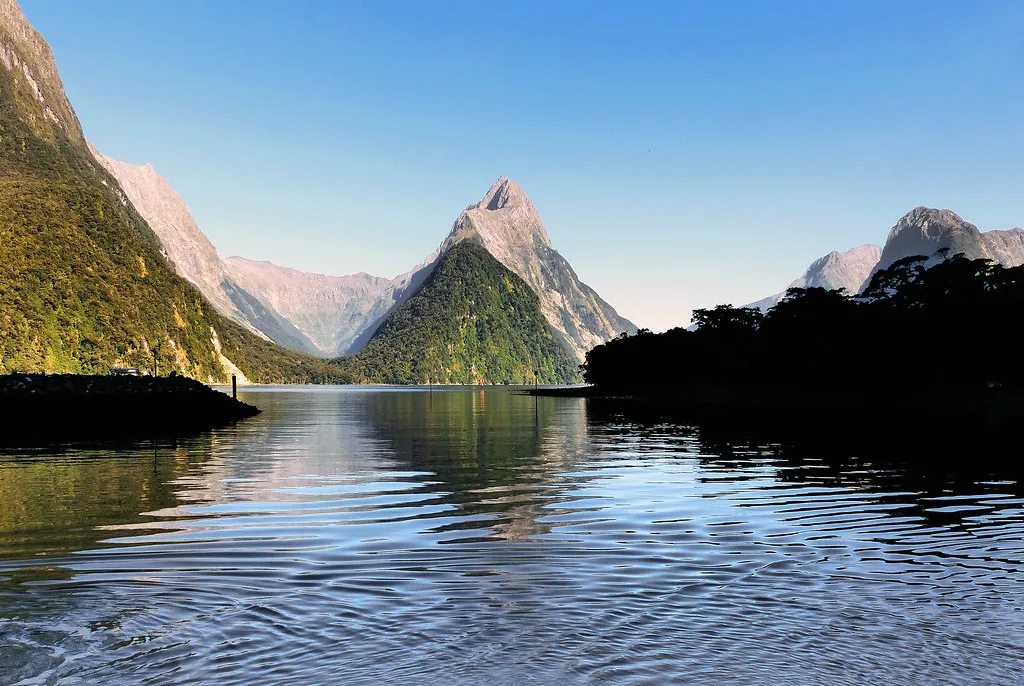
Photo: volvob12b / Flickr (CC BY-SA)
My Logbook: Into the Eighth Wonder
I heard Milford Sound before I saw it. Standing on the upper deck at dawn, wrapped in every warm layer I owned, I listened to the deep, resonant roar of falling water echoing off invisible cliffs hidden behind curtains of grey mist. The ship had entered from the Tasman Sea in near darkness, and as the first pale light crept over the eastern ridgeline, the world revealed itself in fragments — a wall of rock here, a thread of white water there, the dark surface of the fjord as still as oil beneath us. My hands were cold around my coffee cup. I did not move. I could not move.
Then the mist parted, and Mitre Peak appeared. I had seen photographs. I had read the numbers — 1,692 metres from sea level to summit, rising directly from the water without a single foothill or gentle slope. But nothing prepared me for the reality of standing at the base of something that enormous while it emerged from cloud like a cathedral being unveiled. The peak's pyramid face caught the first sunlight and turned a pale gold against the grey sky behind it. Around me, passengers who had been chatting fell silent. The only sounds were the low throb of the ship's engines, the distant thunder of Bowen Falls dropping 160 metres in a silver ribbon off our port side, and the click of camera shutters. I watched a woman next to me lower her phone slowly and just stare. I understood completely.
Our captain brought the ship deep into the fjord, navigating the 15 kilometres from the entrance to the head at a pace slow enough to absorb every detail. Sheer granite walls rose on both sides — cliffs sculpted by glacial ice over millions of years, draped in emerald rainforest that clung to ledges and crevices where no forest had any reasonable right to grow. I spotted a fur seal lounging on a flat rock near the waterline, utterly unconcerned by the enormous vessel passing metres away. Through my binoculars I could see its whiskers, the rise and fall of its breathing. Fiordland is home to bottlenose dolphins too, and as we rounded a bend, a pod of four appeared off the starboard bow, riding our wake for a few exhilarating minutes before peeling away into deeper water.
Then the rain came — and this is where Milford Sound transforms from beautiful to otherworldly. Within twenty minutes, hundreds of temporary waterfalls materialized on every cliff face. Thin white threads appeared from nowhere, cascading down vertical granite, joining into broader torrents that plunged hundreds of metres into the dark water below. The permanent falls — Stirling Falls at 155 metres and Bowen Falls at 160 — grew from graceful ribbons into roaring cataracts. The captain eased us close enough to Stirling Falls that the spray reached our balcony six decks up, and I felt the cold mist on my face, tasted the mineral freshness of glacial water on my lips. I heard individual stones tumbling in the torrent. This place receives over seven metres of rainfall annually — a temperate rainforest climate that feeds one of the wettest inhabited corners on Earth. Every drop of that rain becomes spectacle.
Rudyard Kipling came here in 1891 and called it the eighth wonder of the world. Standing on deck with rain drumming on my hood, watching waterfalls appear and vanish like ghosts on the cliff faces, I understood his awe. However, what struck me most was not the grandeur but the intimacy. This is a UNESCO World Heritage Site — part of Te Wahipounamu, the Southwest New Zealand World Heritage Area, encompassing 2.6 million hectares of primeval wilderness — and yet the fjord is only 15 kilometres long and barely 2 kilometres wide. The scale is immense, but the space is enclosed. You feel held by it. The cliffs do not merely surround you; they enfold you. The sound of water is everywhere — falling, dripping, flowing, echoing — and it creates a silence of its own, a hush that swallows human noise and leaves only the ancient conversation between stone and water.
We reached the head of the Sound where the Cleddau River feeds in, turned, and made the slow journey back toward the Tasman Sea. Three hours total. I stayed on deck for every minute, despite the cold, despite the rain. On the return pass I noticed details I had missed going in — a Fiordland crested penguin standing motionless in the bush near the waterline, a kea circling overhead with its olive-green wings catching the grey light, the way the rainforest changed colour from emerald to almost black where the shadows fell deepest. I noticed, too, that the temporary waterfalls were already beginning to thin as the rain eased. They are ephemeral by nature — here for an hour, gone until the next downpour. Every transit through Milford Sound is unique. No two ships see the same fjord.
The cons are real. Weather can close in completely, reducing visibility to a ship's length. Some transits see nothing but grey fog. Yet even then, locals and veteran cruisers say, the atmosphere is haunting — mist rising from black water, the occasional phantom cliff looming from nowhere, the sound of unseen waterfalls echoing through the murk. Milford Sound does not perform for you. It simply exists, and you are privileged to witness whatever it chooses to reveal.
The pros: among Earth's most dramatic natural scenery; wildlife including dolphins, seals, and penguins; every cruise sees a different light show; the rain itself is part of the spectacle. The cons: weather can scrub visibility; it is cold and wet even in summer; there is no shore access from cruise ships. Still, I would not trade my rainy, misty, tear-streaked morning in Milford Sound for the sunniest day anywhere else on Earth. This is a place that reaches past your camera and grabs your soul. I hope it does the same for you.
Weather & Best Time to Visit
The Cruise Port
Milford Sound is a scenic cruising destination only — no ship docks here, and there is no tendering ashore. Your cruise vessel enters from the Tasman Sea, navigates the full 15-kilometre length of the fjord to the head, and returns the same way. The entire transit typically takes two to four hours depending on the ship's speed and the captain's chosen route. There is no port terminal, no shore excursion meeting point, and no town — Milford Sound has no permanent residents apart from a small seasonal tourist lodge that serves day-trippers arriving by road from Queenstown (a drive costing $60-90 by coach). Your ship is your base for the entire experience. The best viewing is from open decks, forward observation lounges, or your private balcony if you have one. No special fee applies for the scenic cruising — it is included in your fare.
Getting Around
You never leave the ship during a Milford Sound scenic cruising transit, so getting around means choosing the right viewing position on board. Stake out a spot early — the best forward observation areas and open deck space fill up fast once the ship enters the fjord. Port side (left when facing forward) typically offers the best morning light and closer views of Stirling Falls on the inbound pass; starboard side gives a direct line to Mitre Peak. On the return journey, the sides reverse, so move accordingly.
If your ship has a forward-facing observation lounge — many larger vessels do — this provides weather-protected panoramic views, though the windows can create reflections that frustrate photographers. For the best photographs and the most immersive experience, dress warmly and head outside. Upper open decks offer the widest views but the most exposure to wind and rain. Mid-deck promenades with overhanging shelter are a good compromise for passengers with limited mobility or those who prefer wheelchair accessible covered areas. Bring binoculars ($15-40 at ship gift shops), a waterproof jacket (essential — rain can arrive within minutes), and warm layers even in summer when temperatures can drop to 8-10 degrees Celsius on deck. The ship's daily programme will list the expected transit time, so plan your morning meal accordingly — many passengers grab coffee and pastries from the buffet (included in your fare) and eat on deck as the fjord reveals itself.
Excursions & Activities
Scenic Cruising from the Ship
The primary experience at Milford Sound is the scenic cruise itself, included in your voyage fare at no additional cost. Your captain navigates the full 15-kilometre fjord, passing beneath vertical cliffs that soar over 1,200 metres, close to permanent waterfalls like Stirling Falls (155m) and Bowen Falls (160m), and through waters where fur seals, dolphins, and penguins make their home. Most ships offer narrated commentary over the PA system or via the ship's app. This is a low-energy activity accessible to all mobility levels — simply find a comfortable viewing spot and let the fjord come to you. Passengers using wheelchairs can access covered observation areas on most vessels.
Ship Excursion: Milford Sound Nature Cruise
Some cruise lines offer a ticketed ship excursion that transfers passengers to a smaller vessel at the Milford Sound marina for a closer, more intimate cruise through the fjord. These smaller boats ($120-180 per person) approach waterfalls and wildlife at distances the large cruise ship cannot reach. The excursion typically lasts three to four hours including the transfer by Zodiac or tender. This is a moderate-energy activity. Book ahead through your cruise line's excursion desk, as capacity is limited and these sell out quickly during peak season (December-February). The ship excursion guarantees your return to the vessel.
Independent Options from Queenstown or Te Anau
If your cruise itinerary includes a port call at Dunedin or an overnight in Queenstown before or after the sailing, you can independently book a day trip to Milford Sound by road. Coaches depart from Queenstown ($80-150 return) or Te Anau ($50-90 return), and the drive through the Homer Tunnel is spectacular in its own right. Independent day-cruise operators like Real Journeys and Jucy Cruise offer fjord cruises ($60-95 per adult). However, this is not possible during a scenic cruising transit — you cannot leave the ship. If your itinerary includes both scenic cruising and a Queenstown port day, budget for the independent cruise on the port day and enjoy the free transit from the ship deck on the other.
Wildlife Spotting from Deck
Bring binoculars and patience. New Zealand fur seals haul out on rocks near the fjord entrance — look for their dark shapes against grey stone on the lower cliff ledges. Bottlenose dolphins sometimes ride the bow wake, especially in calmer conditions. Fiordland crested penguins, a rare endemic species, nest in the coastal bush and are occasionally visible from the ship between October and February. Overhead, watch for kea — New Zealand's famously cheeky alpine parrots — circling on thermals near the cliff tops. This is a low-energy, wheelchair accessible activity that requires only a good viewing position and sharp eyes. No booking needed, no cost beyond the binoculars you already own.
Capturing the Fjord from Deck
Milford Sound is among the most photographed landscapes in the Southern Hemisphere, and your deck is the vantage point. Bring a camera with a wide-angle lens for the towering cliffs and a telephoto for wildlife. A waterproof cover or dry bag for your gear is essential — spray from Stirling Falls and sudden rain squalls can soak unprotected equipment in seconds. The best light occurs in early morning or when cloud breaks allow shafts of sunlight to pierce the fjord. Overcast and rainy conditions, despite the discomfort, produce the most atmospheric and moody images. No cost, no booking, and accessible to all.
Depth Soundings
New Zealand operates on the New Zealand Dollar (NZD). As of early 2026, $1 USD buys approximately NZ$1.60-1.70. However, you will not need local currency at Milford Sound since there is no shore access from cruise ships — everything you need is aboard. If your itinerary includes Dunedin or another New Zealand port, ATMs are plentiful and accept international cards with a withdrawal fee of NZ$3-5. Credit cards are widely accepted ashore at shops and restaurants in New Zealand port towns.
The fjord's fresh-water surface layer — created by that extraordinary 7+ metres of annual rainfall — sits atop the heavier salt water below, creating a unique dark tannin-stained surface that blocks light and allows deep-water species like black coral to grow at unusually shallow depths. The water temperature ranges from 10-16 degrees Celsius in summer at the surface. Tipping is not customary in New Zealand, though rounding up a fare or leaving 10% at restaurants is appreciated. English is the primary language. The time zone is NZST (UTC+12), or NZDT (UTC+13) during daylight saving from late September to early April. Power outlets use Type I plugs (three-pin angled) at 230V — bring an adapter if your devices use different standards.
Photo Gallery
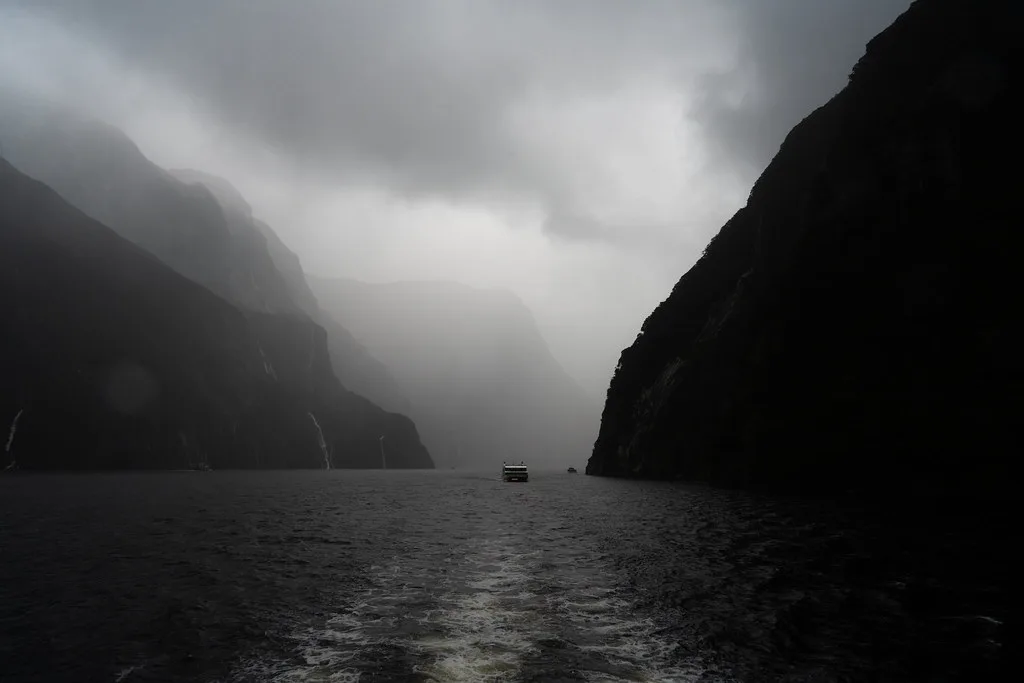
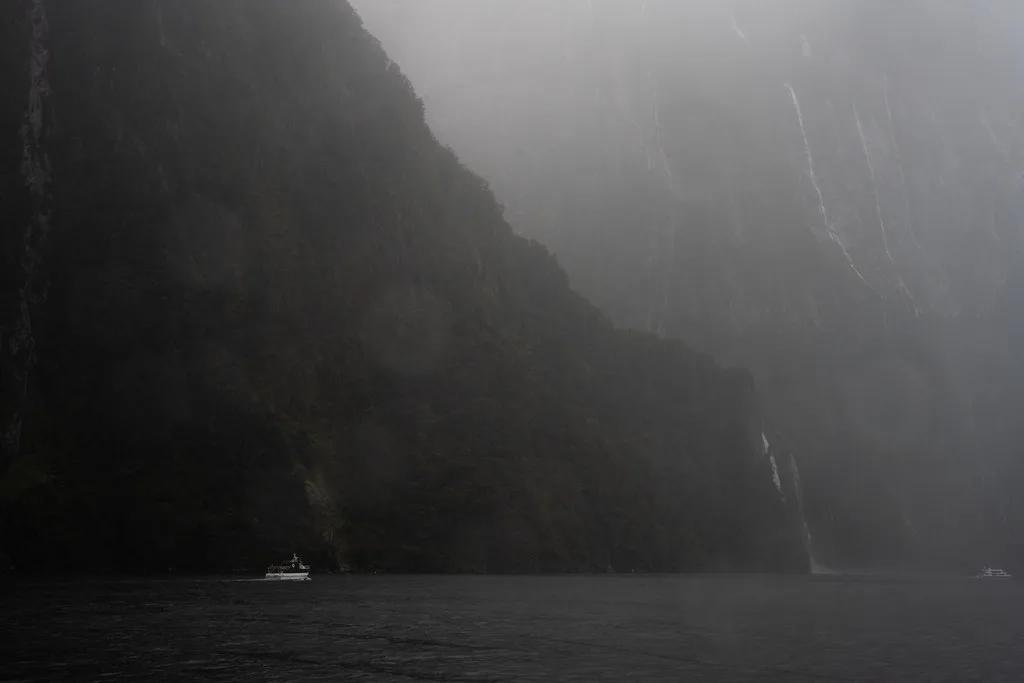
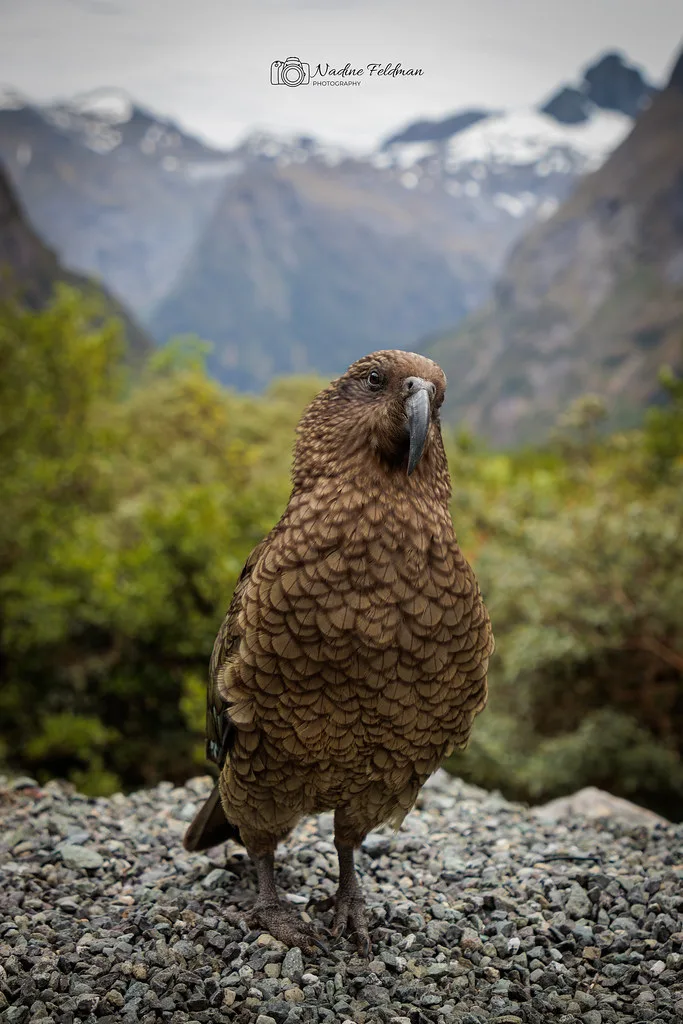
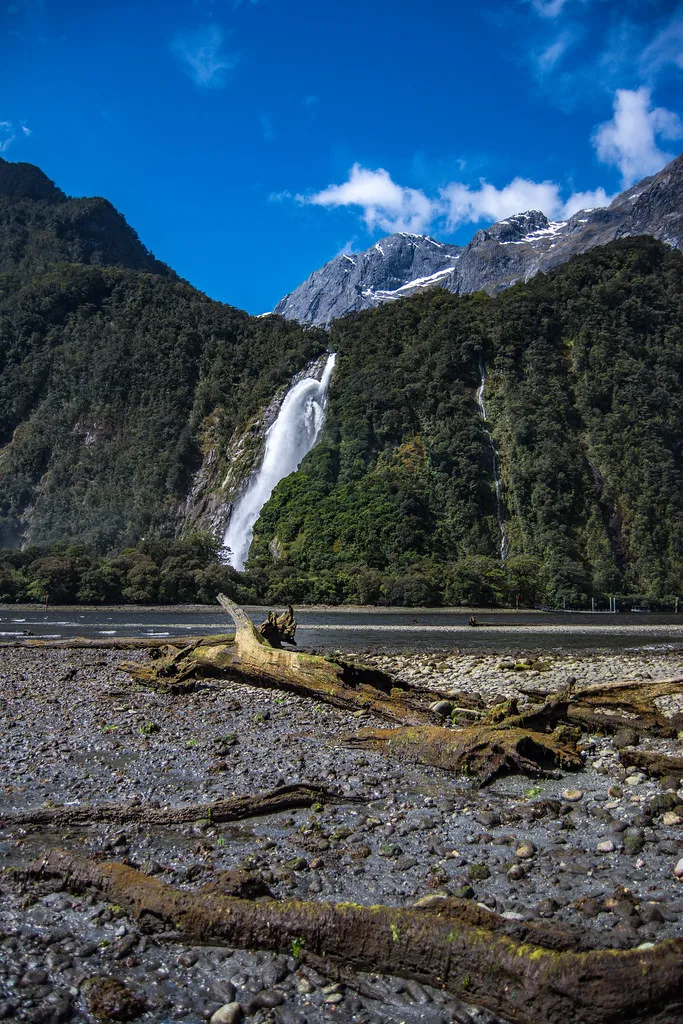
Image Credits
All photographs on this page are used under Creative Commons or free-use licenses. Images sourced from Wikimedia Commons, Unsplash, Pexels, and Pixabay. Hero image and supplementary photographs courtesy of Flickers of Majesty.
Frequently Asked Questions
Do cruise ships dock at Milford Sound?
No. Large cruise ships navigate the 15km fjord from the Tasman Sea to the head and back, but never dock. The entire experience is scenic cruising from the ship's deck, balcony, or observation areas. There are no facilities ashore for cruise passengers.
When is the best time to see Milford Sound's waterfalls?
After rain — and it rains here over 200 days per year. The permanent waterfalls (Stirling Falls, Bowen Falls) always flow, but heavy rain activates hundreds of temporary cascades on every cliff face. Many cruisers say rainy days create the most dramatic atmosphere.
Why did Rudyard Kipling call this the eighth wonder of the world?
Kipling visited in 1891 and was overwhelmed by the sheer scale — vertical cliffs rising 1,200m from the sea, Mitre Peak's iconic pyramid, ancient rainforest, and pristine wilderness. The combination creates scenery that many consider unmatched anywhere on Earth.
What wildlife can I expect to see?
New Zealand fur seals haul out on rocks near the entrance. Bottlenose dolphins sometimes ride the bow wake. Fiordland crested penguins nest in coastal forests and are best spotted October through February. Overhead, watch for kea (alpine parrots).
Is Milford Sound worth visiting in bad weather?
Many visitors say it is even better in rain. Low clouds create a haunting atmosphere, mist rises from the water, and rain activates countless ephemeral waterfalls. The dramatic scale overwhelms in any conditions. Pack layers and waterproof gear.
What should I pack for the scenic cruising transit?
A waterproof jacket is essential — rain can arrive without warning. Bring warm layers (temperatures range 2-18 degrees Celsius), binoculars for wildlife ($15-40 at ship shops), and a camera with rain protection. Comfortable shoes with grip help on wet decks.
Milford Sound — Scenic Cruising Guide
Last reviewed: February 2026