


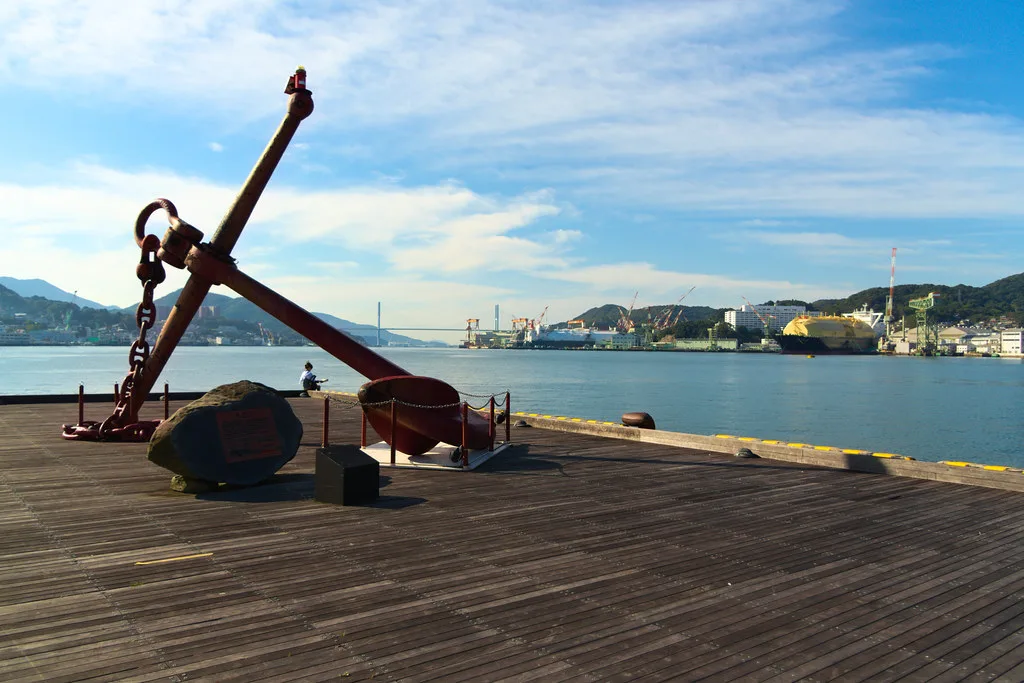
My Visit to Nagasaki
I stepped off the gangway at Matsugae Pier into a pale morning mist that clung to the harbor like gauze, and the first thing I noticed was the silence. Not the absence of sound — seabirds called above the waterline, a tram bell clanged somewhere beyond the terminal — but a particular quality of stillness that seemed to belong to Nagasaki alone, as though the city had learned long ago how to hold its breath.
My wife and I had planned this port day for months, but nothing I had read prepared me for the emotional weight of actually being here. We walked from the pier toward the tram stop, passing schoolchildren in uniform who bowed politely as we fumbled with our day passes. The fare was only ¥600 for unlimited rides — a price that felt almost too generous for the access it granted to every corner of this layered city. I clutched the pass like a ticket to something I wasn't sure I deserved.
We rode the tram north to Peace Park first, because I knew if we didn't go early, I might lose my nerve. The morning air was cool on my arms, and I could smell wet stone and freshly cut grass as we climbed the steps from the tram stop. The park opened before us in terraces of green and gray, dotted with memorial sculptures donated by nations around the world. However, it was the central figure that stopped me — the Nagasaki Peace Statue, ten meters tall, its right hand raised to the sky in warning and its left arm stretched wide in a gesture of peace. I stood there for a long time, feeling my throat tighten. I had seen photographs of this statue dozens of times. Standing before it was something else entirely. My heart swelled with a sadness I hadn't expected, and I whispered a quiet prayer for the souls lost here on August 9, 1945.
The Atomic Bomb Museum, just below the park, is where tears came. I don't say that lightly. The exhibits are arranged with extraordinary care — not to shock, though the melted artifacts and frozen clock faces do that on their own, but to bear witness. A child's lunch box, charred beyond recognition. A rosary fused into a lump of glass. A pocket watch stopped forever at 11:02 a.m. Yet despite the horror documented in every room, the museum's final galleries turn toward hope. There are letters from survivors who chose forgiveness over bitterness. There are origami cranes folded by children who will never know what happened here but who fold them anyway, because someone taught them that peace is worth the effort. I walked out into the sunlight and sat on a bench, unable to speak for several minutes. My wife held my hand. We didn't need words.
We needed something gentler after that, so we took the tram south to Dejima. Although the island was once Japan's sole conduit to the Western world during over two hundred years of isolation, today it feels almost playful — reconstructed Dutch warehouses painted in cheerful colors, a miniature bridge that once separated two civilizations, and exhibits showing how coffee, telescopes, and medical texts first seeped into Japan through this tiny gap in the wall of sakoku. I found myself grinning at the absurdity of it: an entire nation's contact with the outside world squeezed onto a fan-shaped plot barely larger than a soccer pitch. But the displays also reminded me that ideas are stubborn things. Even the thickest walls cannot keep out curiosity forever.
Lunch was champon noodles in Chinatown, and I will remember that bowl until my last breath. The broth was rich and deeply savory, thick with pork, shrimp, squid, cabbage, and bean sprouts heaped over fat, springy noodles. The taste was unlike anything I had experienced before — simultaneously Japanese and Chinese and Portuguese all at once, a reflection of the city itself. I slurped loudly, as is polite here, and watched the lanterns sway in the breeze above the narrow lane. A bowl cost about ¥950, and it was worth every yen. The scent of pork fat and sesame lingered on my jacket for the rest of the afternoon.
After lunch we climbed to Glover Garden, and despite my tired legs, the view from the summit stole whatever complaints I had. Thomas Glover's mansion — built in 1863, the oldest Western-style wooden residence in Japan — perches on the hillside like a Scottish laird's daydream. Glover was a merchant and an arms dealer and a revolutionary sympathizer and, if the stories are true, the inspiration behind Puccini's Madame Butterfly. I sat on his veranda, watched the harbor shimmer below, and tried to imagine what he saw when he looked out from this same spot more than a century and a half ago. Yet it wasn't the grand history that moved me most. It was a small plaque near the garden entrance describing how Glover's Japanese wife, Tsuru, tended this garden after his death, planting flowers in soil that had once grown only ambition. Something shifted in me when I read that. Love outlasts empire. It always does.
Our last stop was Oura Church, a short walk downhill from Glover Garden. Japan's oldest surviving church is modest in size — a Gothic jewel box, my wife called it — but enormous in meaning. It was here, in 1865, that a group of Japanese villagers approached the French priest and whispered, "We are of the same heart as you." They were hidden Christians, descendants of converts who had worshipped in secret for 250 years under penalty of death. I stood in that nave, heard the quiet creak of old wood, felt the cool air on my face, and I realized that faith does not need a building. It needs only a heart willing to endure. The entry fee of ¥1,000 felt like a small offering for so large a lesson.
Walking back to the pier in the late afternoon, I realized what Nagasaki had taught me. This city has been burned, bombed, isolated, and shaken — and still it opens its arms to strangers. The contrast between the devastation I saw in the museum and the warmth of the people I met on the street was staggering. I learned that resilience is not about forgetting. It is about choosing, every morning, to face the world with grace instead of bitterness. Looking back on that day, I understand now why Nagasaki is not merely a port of call. It is a place that changes the way you see everything that comes after.
The Cruise Port
What you need to know before you dock.
- Terminal: Matsugae Pier — modern facility in the city center with information desk and Wi-Fi; about 15 minutes on foot to Glover Garden
- Transit: Tram network covers most attractions; fare is ¥150 per ride or ¥600 day pass (excellent value for multiple stops)
- Tender: No — ships dock directly at the pier, which is wheelchair accessible at ground level
- Currency: Japanese Yen (¥); cash preferred at many smaller shops and local eateries
- Language: Japanese; English signage at major attractions, less so in neighborhoods
- Driving: Left side
- Best Season: Spring (cherry blossoms) and autumn; summers are hot and humid, winters mild but gray
Getting Around Nagasaki
Nagasaki's tram system is one of the most visitor-friendly in Japan and the easiest way to navigate the city from the cruise pier. The network consists of four color-coded lines that crisscross the city, connecting Matsugae Pier to Peace Park, Dejima, Glover Garden, Chinatown, and the main railway station. A single ride costs ¥150 (flat fare regardless of distance), or you can purchase a one-day pass for ¥600 — well worth it if you plan to visit three or more stops. Stops are announced in both Japanese and English, and route maps are posted at every platform. The trams accept IC cards (Suica, PASMO) or cash (exact change preferred).
For those who prefer walking, Nagasaki is compact but hilly. The waterfront from Matsugae Pier to Dejima and Chinatown is flat and manageable, roughly a 10-minute stroll. However, reaching Glover Garden or Oura Church requires climbing steep slopes, which may be challenging for visitors with mobility concerns. An escalator system near the Glover Garden entrance helps with the ascent, and the tram stops are positioned at the base of most hills. Taxis are readily available near the pier and cost approximately ¥700-1,200 for short trips within the city center. Wheelchair users should note that tram platforms are generally level-boarding, and the main attractions including Peace Park and Dejima are largely accessible, though Glover Garden's hillside pathways present some challenges. Budget roughly ¥2,000-3,000 per person for a full day of independent transport including tram, entry fees, and incidental costs.
Nagasaki Area Map
Interactive map showing cruise terminal, peace memorial, historic sites, and tram routes. Click any marker for details and directions.
Excursions & Activities
How I'd spend my time. You can book ahead through the ship excursion desk for a guaranteed return to the vessel, or explore independent options for more flexibility and lower cost.
Peace Memorial Park & Atomic Bomb Museum
The hypocenter of the August 9, 1945 bombing, now a place of solemn reflection where grass grows over what was once ash. The museum documents the event with remarkable sensitivity and forward-looking hope, presenting first-hand survivor testimonies and artifacts that survived the blast — a melted rosary, a pocket watch frozen at 11:02 a.m., a child's lunch box. The exhibition does not seek to assign blame but to bear witness, to remember, and to advocate for a world where such weapons are never used again. Allow 2-3 hours minimum; this is the soul of Nagasaki. Museum entry is ¥200. The site is largely wheelchair accessible with ramps at the main entrances. A ship excursion typically pairs this with Glover Garden for about $89 per person, though independent visitors can reach it for the cost of a single tram fare.
Dejima
The restored Dutch trading island where Japan maintained its sole foreign contact for over 200 years during sakoku. Walking onto this fan-shaped artificial island is like stepping into a living diorama — reconstructed Dutch warehouses, the Chief Factor's residence with its European furniture and Japanese tatami blending awkwardly, and the narrow bridge that once connected this 120-meter stretch to the mainland. Exhibits include period maps, trade goods, and immersive displays showing how Dutch merchants lived confined lives, trading under scrutiny. Entry costs ¥520, and the site is accessible on flat ground.
Glover Garden
A hillside open-air museum of Western-style mansions with sweeping harbor views. Thomas Glover's own residence — the oldest Western-style wooden house in Japan, built in 1863 — sits at the summit. Glover was a merchant and revolutionary sympathizer who supplied arms to the rebels who overthrew the shogunate, and a founder of what became the Mitsubishi empire. His Japanese wife and their story inspired Puccini's Madame Butterfly. Entry costs ¥620. Book ahead if you want the ship excursion combination that includes both Glover Garden and Peace Park with guaranteed return to the pier.
Nagasaki Chinatown
One of Japan's three great Chinatowns, dating to the 17th century when Chinese merchants settled here. The lantern-draped streets are compact but atmospheric, with the scent of champon noodles drifting from every doorway. Champon bowls cost about ¥900-1,100 and sara udon roughly ¥850-1,000. This is ideal for an independent lunch stop — no booking required, and it is walking distance from Dejima.
Oura Church
Japan's oldest surviving church, built in 1864 for the foreign community, and a UNESCO World Heritage Site. It was here that hidden Christians revealed themselves after 250 years of secret worship. A Gothic jewel box, modest in scale but monumental in meaning. Entry fee is ¥1,000.
Mount Inasa Night View
If your ship lingers past dusk, the ropeway ascent delivers one of Japan's three celebrated night panoramas — a glittering amphitheater of lights wrapped around the harbor. Ropeway round trip costs ¥1,250. Even by day, the panorama justifies the price of the ride.
Depth Soundings
Nagasaki is not a port you visit for souvenirs or sunshine, though both are available. It is a port that asks you to slow down, to look carefully, and to sit with difficult feelings. The Atomic Bomb Museum will test your composure, however gently it is curated. Peace Park will reward your patience with a quiet sense of hope that lingers for days. Dejima will surprise you with its playfulness. Glover Garden will remind you that ambition and love are often intertwined. And Chinatown will fill your stomach and restore your spirits when you need it most.
What I realized, looking back, is that Nagasaki gives you something few ports can: the experience of witnessing a city that has survived the worst humanity can inflict and still chosen to face the world with openness rather than fear. Despite everything, Nagasaki remains warm and welcoming. That is not a small gift. Plan your day with care, bring comfortable shoes and an open heart, and do not rush. This city has earned your full attention, and it will repay it generously. I know it changed me. I suspect it will change you too.
Photo Gallery

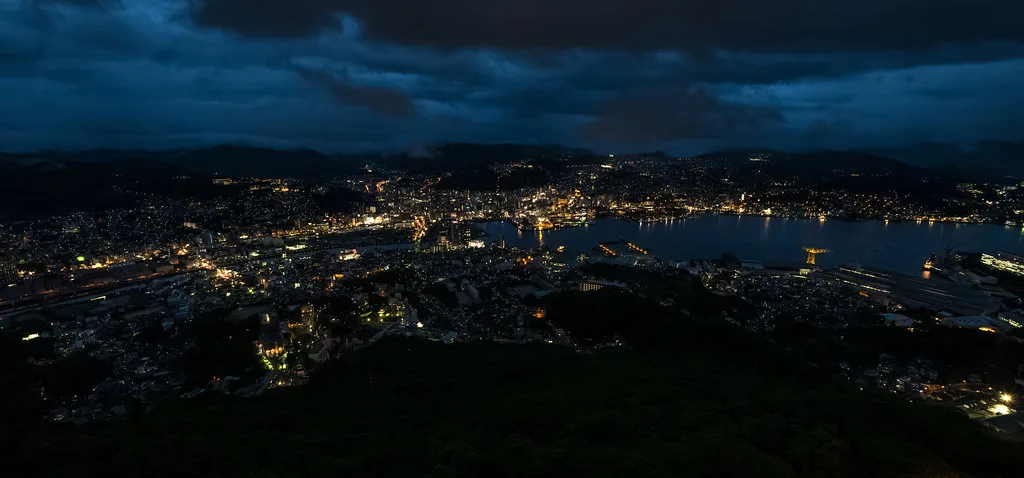
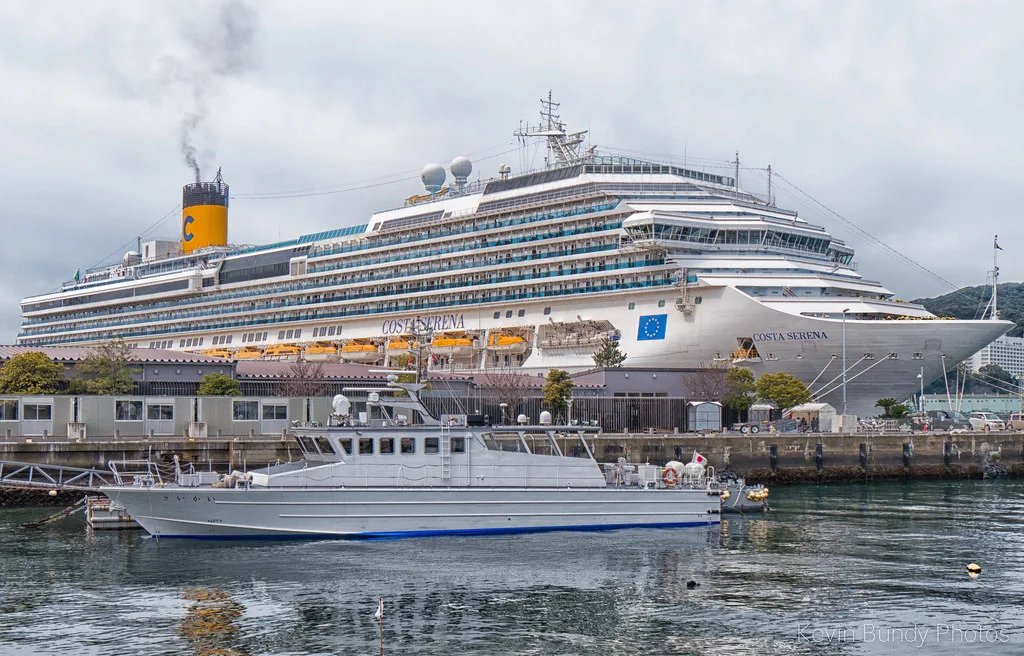
Image Credits
All images on this page are used under Creative Commons licenses or are original work. Sources include Wikimedia Commons. Individual photo credits are noted beneath each image.
Frequently Asked Questions
Q: Where do cruise ships dock in Nagasaki?
A: Ships dock at Matsugae Pier, a modern terminal centrally located with tram access steps away. Glover Garden is a 15-minute walk if you prefer to stretch your legs. The pier is wheelchair accessible at ground level.
Q: Is the Peace Memorial emotionally heavy?
A: Yes, but thoughtfully presented. The Atomic Bomb Museum includes first-hand survivor accounts and artifacts, but the focus is on hope and peace rather than graphic imagery. It is solemn, not despairing. Allow at least two hours. Museum entry costs ¥200.
Q: Can I see everything in one port day?
A: You can cover the highlights, but not at a leisurely pace. I would suggest either a Peace Park focus (museum, memorial, perhaps Oura Church) or a cultural focus (Dejima, Glover Garden, Chinatown). With efficient use of the tram (¥600 day pass), you can sample both routes.
Q: Is the tram easy to navigate?
A: Yes. Lines are numbered, stops announced in English, and the day pass offers unlimited rides. It is one of Japan's most visitor-friendly transit systems and accessible for those with mobility needs.
Q: Should I visit Dejima or Glover Garden if time is limited?
A: Both are excellent and relatively close. Dejima for the isolation period and Dutch heritage. Glover Garden for Meiji-era architecture, harbor views, and the Madame Butterfly connection. Entry to Dejima is ¥520; Glover Garden is ¥620.
Q: What should I budget for a day in Nagasaki?
A: A reasonable independent budget is ¥4,000-6,000 per person, covering tram pass (¥600), two or three admission fees (¥200-1,000 each), lunch (¥900-1,200), and a castella souvenir box (around ¥1,000). Cash is preferred at most venues.
Q: What is the best time to visit Nagasaki?
A: The seasonal panel above lists Peak Season as "Oct, Nov, Dec, Jan, Feb, Mar," Transitional Season as "Apr, Sep," and Low Season as "May, Jun, Jul, Aug." The avoidance note flags "Jul, Aug, Sep" for "(monsoon/typhoon season)." Use the live weather widget in the seasonal panel for current short-term conditions.
Q: What is Nagasaki's typhoon and storm season?
A: The Weather Hazards panel above labels Nagasaki a "Monsoon/Typhoon Season" zone with "Season: Jun – Nov" and "Peak risk: Aug, Sep, Oct." The hazard-note reads: "Ships may reroute during typhoons; check weather forecasts." The avoidance note in the Best Time block also flags "Jul, Aug, Sep" for "(monsoon/typhoon season)." For current tropical-system status, the live weather widget in the seasonal panel above is the primary source.
Q: What should I pack for Nagasaki's weather?
A: The Packing Tips section in the seasonal panel above lists: "Sunscreen and sunglasses — essential year-round"; "Light layers for variable temperatures"; "Comfortable walking shoes for exploring"; and "Rain jacket or compact umbrella." Specific Nagasaki temperature ranges are not detailed on this page — the glance Temperature entry reads "Varies by season — check forecast" — so use the live weather widget for current conditions.
Q: Will rain ruin my Nagasaki port day?
A: The seasonal panel does not give Nagasaki-specific rainfall data — the Rain entry reads "Seasonal variation — check forecast." The Best Time block lists "Oct, Nov, Dec, Jan, Feb, Mar" as Peak Season, with "Jul, Aug, Sep" flagged in the avoidance note for "(monsoon/typhoon season)." The Weather Hazards panel also labels Jun-Nov the monsoon/typhoon window. The live weather widget in the seasonal panel is the source for short-term forecasts on a specific sailing date.