


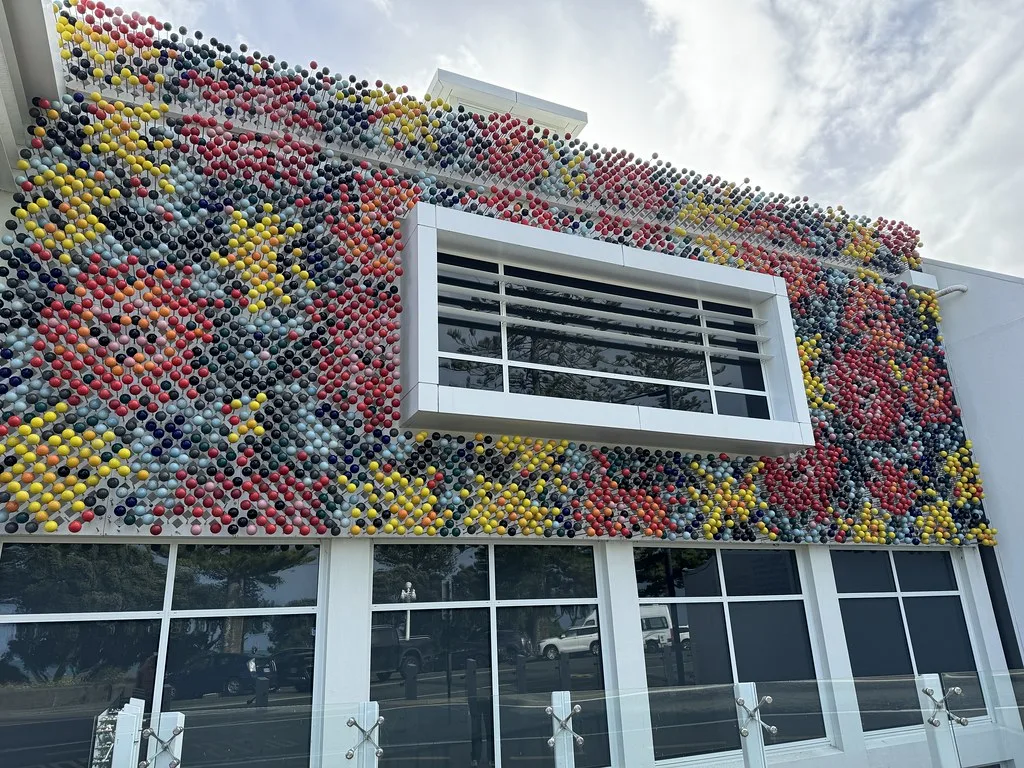
Photo: Wikimedia Commons (CC BY-SA)
Last reviewed: February 2026
Weather & Best Time to Visit
My Logbook: Napier
I step off the ship at Napier Port and into sunshine so abundant it seems to pour from the sky itself. The harbor lies about a kilometer north of the city center, a short shuttle ride to the i-SITE Visitor Centre on Marine Parade, though I find myself wanting to walk. The morning air carries the scent of saltwater and something floral I cannot quite name, and ahead of me lies a city that rose from catastrophe into something more beautiful than it had ever been before.
Walking down Emerson Street feels like stepping onto a 1930s movie set preserved in amber. Sunlight catches the geometric patterns on pastel facades — zigzags on the Daily Telegraph Building, chevrons climbing toward rooflines, stylized fountains frozen in terra cotta. The Masonic Lodge rises with Egyptian revival columns, and the National Tobacco Company building displays its sunburst motif like a promise of better days ahead. Every corner reveals another Art Deco gem, and every building whispers the same story: catastrophe transformed into grace.
On February 3, 1931, at 10:47 in the morning, a magnitude 7.8 earthquake shook Hawke's Bay for two and a half minutes that must have felt like eternity. When the tremors ceased and the fires were finally extinguished, 256 people had perished and Napier's downtown was rubble and ash. But the earthquake performed an unexpected miracle: it lifted the seabed by as much as 2.7 meters in places, raising 4,000 hectares of new land where fish had swum the day before. The harbor I walked through this morning — much of downtown itself — had been underwater before that terrible Tuesday morning.
The city refused to surrender to grief. Napier rebuilt itself almost overnight in the fashionable Art Deco and Spanish Mission styles of the early 1930s, creating what stands today as the world's most concentrated collection of authentic Art Deco architecture. Only South Beach in Miami rivals it for preservation and coherence, and architecture enthusiasts debate which city wears the crown more gracefully. I know which one has my heart — Napier's Art Deco is not merely aesthetic; it is resilience made visible, optimism cast in concrete and glass.
Something shifted inside me as I stood before the National Tobacco Company building with its rose-tinted pillars and geometric sunburst. A local guide spoke softly about the weeks after the earthquake when the city could have given up, could have scattered, could have mourned forever. Instead, they chose beauty. They chose jazz-age elegance and bold color and a defiant belief that tomorrow could be brighter than yesterday. I finally understood what courage looks like when it is cast in stone. My eyes welled with quiet tears — not of sadness, but of gratitude for a city that taught me the meaning of grace under pressure. Every February since 1988, Napier celebrates with an Art Deco Festival — the 30th anniversary in 2018 drew more than 45,000 attendees in vintage costume, dancing in the streets that tragedy had once leveled. That is what stays with me: not just the architecture, but the spirit that built it.
Marine Parade stretches along the waterfront for more than two kilometers, a sun-drenched promenade lined with Norfolk pines that cast long shadows in the afternoon light. I walk slowly, past the colonnade with its elegant arches, past the Sound Shell where concerts echo across the water on summer evenings. And there, gazing out toward the waves, stands Pania of the Reef — a bronze statue of a Maori sea maiden who, according to legend, loved a mortal man but belonged forever to the ocean. She sits on the rocks where tide pools glisten, forever caught between two worlds, and I think perhaps that is fitting for this city that was reborn from the sea.
The ocean crashes just meters away, and the whole promenade feels unhurried, almost Mediterranean in its gentle embrace of sunlight and salt air. Napier claims the title of New Zealand's sunniest city — over 2,200 hours of sunshine annually — and I believe it absolutely. The light here has a quality I have rarely encountered elsewhere, warm and golden and forgiving. However, even beneath this brightness, the wind carries a coolness that reminds me the Pacific is vast and unforgiving beyond the sheltered bay.
Inland lies Napier's other treasure: Hawke's Bay wine country, New Zealand's oldest wine-making region and still among its finest. French missionaries planted the first vines here in the 1850s, recognizing in the climate something familiar, something that reminded them of home. The region is warm and dry, the soil rich with minerals from ancient river terraces, and the result is award-winning Chardonnay, Syrah, and Bordeaux blends that rival anything produced in the Old World.
I visit Mission Estate Winery on a hillside overlooking endless rows of vines that march toward distant mountains. The estate was founded in 1851 and has been producing continuously ever since — the oldest winery in New Zealand. In the tasting room, I sip a reserve Syrah and tasted blackberry and pepper and something earthy I cannot quite articulate, and the winemaker tells me about the unique terroir, about the Gimblett Gravels where stones store the sun's heat and release it slowly through cool nights. It is, quite simply, a reminder of how place and passion combine to create something extraordinary. The fresh local produce and artisan foods complement the wines perfectly — cheeses from nearby farms, olives cured in local brine, bread still warm from ovens.
On my last afternoon, I take an excursion to Cape Kidnappers, a dramatic peninsula that juts into the Pacific about half an hour south of Napier. The cape is home to one of the world's largest and most accessible mainland gannet colonies — more than 15,000 seabirds nest here between November and February, their white bodies covering the cliffs like snow. I watched from the viewing platform as gannets wheel overhead, their wingspans vast and graceful, and watch them plunge into the water from absurd heights in pursuit of fish. It is chaotic and beautiful and utterly mesmerizing, and yet despite the spectacle, it is the silence between the cries that I remember most — the hush of wind and wave beneath the colony's roar.
Before I leave, I visit one more place: the old Napier Prison, which held its first inmates in 1862 and served for more than a century as New Zealand's oldest continuously operating prison. Today it is a museum, the only site in Napier that deliberately preserves the earthquake damage — cracked walls and collapsed cellblocks stand as testimony to that morning in 1931. Walking through the cells, reading the stories of inmates and guards, seeing the fractures in stone that time has not healed, I am reminded that history lives in what we choose to remember and what we choose to rebuild.
I learned something about grace under pressure in Napier, about choosing beauty in the face of loss, about building tomorrow without forgetting yesterday. What this city taught me is that resilience is not the absence of grief — it is the decision to create something luminous from the darkest moments. As I board the ship and watch the Art Deco skyline recede into the golden afternoon light, I think about cities and courage and the human capacity to craft hope from rubble. Napier did not merely survive its earthquake; it transformed tragedy into art, and that, perhaps, is the greatest story any city can tell.
The Cruise Port
What you need to know before you dock.
- Terminal: Napier Port (inner harbour), approximately 1km north of city center
- Distance to Town: Walking distance (15-20 min), or take the free shuttle to i-SITE Visitor Centre on Marine Parade
- Tender: No — ships dock directly at the pier. The pier is wheelchair accessible and suitable for passengers with mobility needs.
- Currency: New Zealand Dollar (NZD). ATMs available at the port and in town.
- Language: English and Maori (te reo Maori)
- Driving: Left side
- Weather: New Zealand's sunniest city — over 2,200 sunshine hours annually, warm and dry especially in summer
- Coordinates: 39.4902 S, 176.9120 E
Getting Around
Napier is one of the most walkable cruise ports in New Zealand. The city center and Art Deco district are compact and flat, making it easy to explore on foot even for those with moderate mobility. From the cruise terminal, it is roughly a 15-to-20-minute walk south along Marine Parade to reach the i-SITE Visitor Centre and the heart of the Art Deco quarter. A free shuttle service operates on most ship days, ferrying passengers between the port and the visitor center.
For destinations beyond walking distance, taxis queue at the port gate and cost approximately $15-$20 NZD to reach the main wineries. Ride-share services such as Uber operate in Napier, though availability can be limited during busy port days. Several local tour companies offer half-day wine tours starting from around $85-$120 NZD per person, which include transport, tastings, and commentary. Rental cars are available in town from about $55-$75 NZD per day if you prefer independent exploration, but remember to drive on the left.
Public buses run by the Hawke's Bay Regional Council connect Napier to Hastings and outlying areas, with a fare of roughly $3-$5 NZD per trip. The bus station is near Clive Square, a short walk from Marine Parade. Cycling is another popular option; several shops near the waterfront rent bikes for around $30-$40 NZD per day, and dedicated cycle trails connect Napier to Hastings through scenic wine country. For visitors with walking difficulty or wheelchair users, the flat terrain and accessible sidewalks make the Art Deco quarter navigable, though some older buildings may have steps at their entrances.
Napier Area Map
Interactive map showing cruise terminal, Art Deco district, Marine Parade, and nearby wineries. Click any marker for details and directions.
Top Excursions & Attractions
How I'd spend my time.
Art Deco Walking Tour
The world's most complete Art Deco cityscape deserves a guided tour. The Art Deco Trust offers daily walks (1-2 hours, approximately $25-$35 NZD per person) that reveal the history and architectural details you would miss on your own. Book ahead — this is popular with cruise passengers and groups fill quickly. Self-guided maps are available at the i-SITE if you prefer to wander independently. This is a low-walking-energy option suitable for most mobility levels.
Hawke's Bay Wine Tour
This is one of New Zealand's premier wine regions. Mission Estate (NZ's oldest winery, 1851), Church Road, and Craggy Range are all accessible on a half-day tour. Expect exceptional Chardonnay, Syrah, and Bordeaux blends. Most cruise lines offer organized ship excursion options (approximately $110-$160 NZD), or hire a private driver for around $85-$120 NZD per person for a small-group experience. The ship excursion offers guaranteed return to the vessel. Independent visitors should allow at least an hour buffer before all-aboard.
Marine Parade Stroll
The 2+ kilometer oceanfront promenade is lined with Norfolk pines, Art Deco structures, and attractions like the Pania of the Reef statue. Ideal for a leisurely stroll. Free to walk — bring a camera. The National Aquarium of New Zealand is located here (entry fee approximately $23 NZD for adults), featuring native marine life, penguins, and a kiwi nocturnal house.
Cape Kidnappers Gannet Colony
One of the world's largest and most accessible mainland gannet colonies, with over 15,000 seabirds nesting from November to February. The dramatic peninsula offers breathtaking views and the chance to watch gannets plunge-dive from spectacular heights. Tours cost around $50-$80 NZD per person from Napier (about 30-40 minutes each way), though timing can be tight on a port day — book ahead and confirm departure times carefully. Worth it for nature lovers.
Napier Prison
New Zealand's oldest prison (1862-1993), now a fascinating museum. Entry costs approximately $25 NZD for adults. The only site in Napier that deliberately preserves earthquake damage from 1931 — cracked walls and collapsed cellblocks stand as haunting testimony. Guided tours reveal stories of inmates, guards, and prison life across 130 years. Located on Coote Road, about 15 minutes walk from downtown. Allow 1-2 hours.
MTG Hawke's Bay (Museum)
Modern museum telling the story of the 1931 earthquake, Napier's rebuild, and Maori history. The earthquake exhibition includes survivor testimonies and dramatic footage. Entry is free for the main gallery. Allow 1-2 hours. Located on Marine Parade, an easy walk from the port.
Depth Soundings
Napier rewards the visitor who slows down. The Art Deco district is beautiful at a glance, but its stories reveal themselves only to those who linger — who read the plaques, who ask guides about the earthquake, who notice the Maori motifs woven into the 1930s geometry. This is a city that chose hope over despair, and that choice still resonates in every pastel facade and sunburst window. Although many visitors rush through the downtown in an hour, I would urge you to take at least half a day to absorb what Napier has to offer.
The wine country inland is genuine world-class, yet despite its quality the region remains refreshingly unpretentious. Winemakers here talk about soil and seasons, not prestige and price points. The gannet colony at Cape Kidnappers is worth the journey if your schedule permits, but be honest about timing — missing the ship for a bird colony, however magnificent, is not the kind of story you want to tell. Plan carefully. Budget wisely. And give thanks for the sunshine, because Napier delivers it in abundance.
Key Facts
- Country
- New Zealand
- Region
- Pacific
- Currency
- New Zealand Dollar (NZD). ATMs available at the port and in town
- Language
- English and Maori (te reo Maori)
Photo Gallery

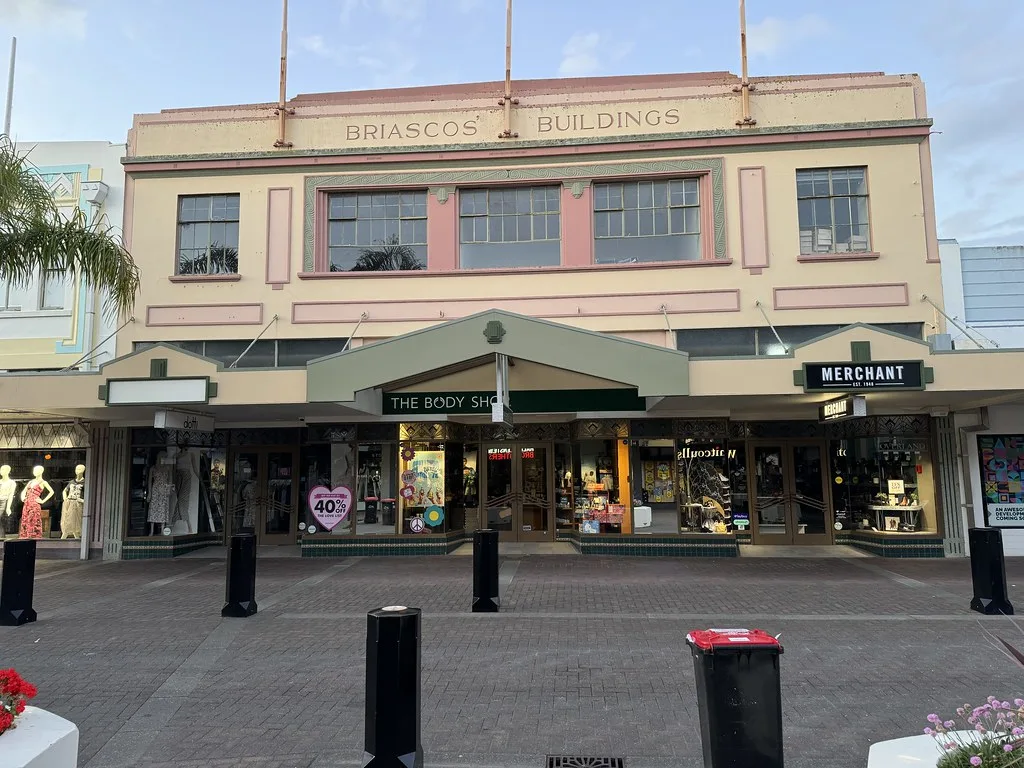
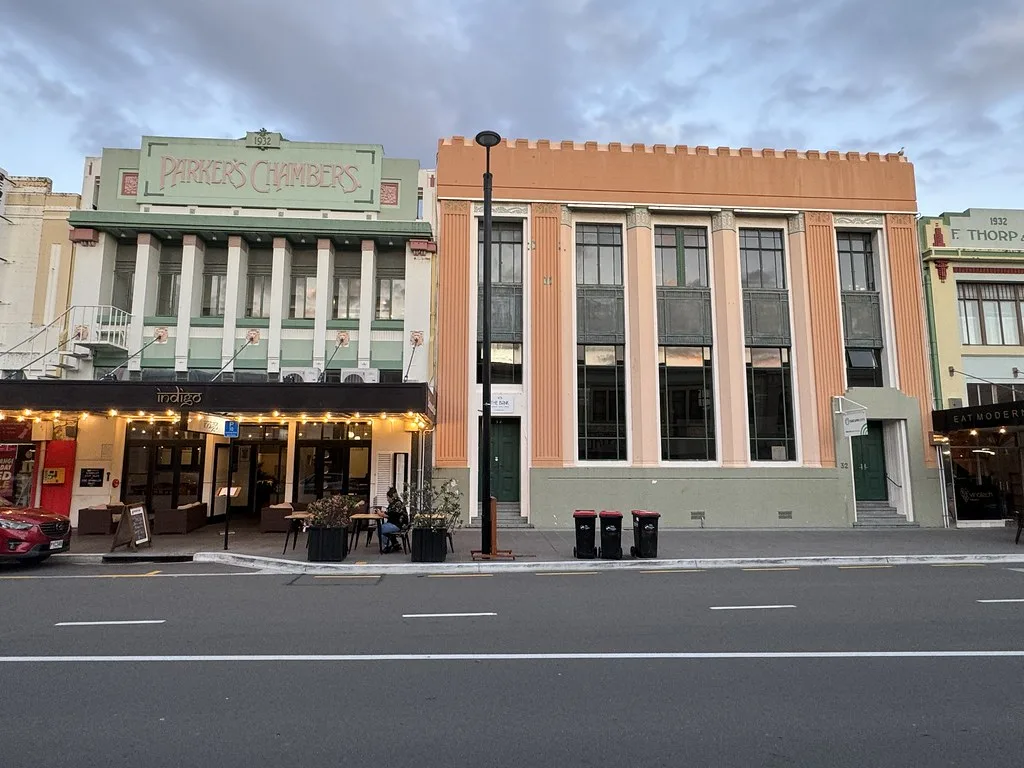

Image Credits
- Hero image: Wikimedia Commons (CC BY-SA)
- Art Deco facades: Wikimedia Commons (CC BY-SA)
- Church: Wikimedia Commons (CC BY-SA)
- Marine Parade: Wikimedia Commons (CC BY-SA)
- Winery: Wikimedia Commons (CC BY-SA)
- Pania statue: Wikimedia Commons (CC BY-SA)
- Cape Kidnappers: Wikimedia Commons (CC BY-SA)
- Harbour: Wikimedia Commons (CC BY-SA)
- Beach: Wikimedia Commons (CC BY-SA)
- Vineyard: Wikimedia Commons (CC BY-SA)
- Gannets: Wikimedia Commons (CC BY-SA)
- Gardens: Wikimedia Commons (CC BY-SA)
Frequently Asked Questions
Can I walk from the cruise terminal to downtown?
Yes, absolutely. The port is about 1km north of the city center — a pleasant 15-20 minute walk along Marine Parade. Shuttles to the i-SITE Visitor Centre are also available on ship days. The entire Art Deco district is compact, flat, and walkable.
Are wineries accessible on a port day?
Yes. Hawke's Bay is New Zealand's oldest wine-making region. Many cruise lines offer organized wine tours as a ship excursion, or you can arrange private transport. Most wineries are 15-30 minutes from downtown. Mission Estate (NZ's oldest winery, 1851) and Church Road are particularly accessible for half-day visits.
What happened in the 1931 earthquake?
On February 3, 1931, a magnitude 7.8 earthquake destroyed Napier, killing 256 people. The earthquake also lifted the seabed by up to 2.7 meters, raising 4,000 hectares of new land. The city was rebuilt entirely in Art Deco style, creating the world's most complete Art Deco cityscape — rivaled only by South Beach, Miami.
Is the Art Deco tour worth the cost?
Absolutely. At around $25-$35 NZD per person, the guided walks bring the history alive and point out architectural details you would otherwise miss — the Daily Telegraph Building's zigzags, the Masonic Lodge, and National Tobacco Company's sunburst. Book through the Art Deco Trust or at the i-SITE.
What is the weather like in Napier?
Napier is New Zealand's sunniest city — over 2,200 sunshine hours annually. Summers are warm and dry (20-26 C / 68-79 F). Even winter is mild. The dry, sunny climate makes it perfect wine country. Still, carry sunscreen and a light layer for the occasional cool breeze.
Is Napier accessible for wheelchair users?
The Art Deco district and Marine Parade are flat and largely accessible for wheelchair users and those with limited mobility. The port terminal itself is accessible. Some older buildings may have steps at entrances, but the outdoor walking routes are smooth and well maintained.