


Photo: Wikimedia Commons
My Logbook: The Kingdom at the Edge of the Map
I heard the sanshin before I saw the island. Standing on the upper deck as our ship rounded the southern headland into Naha port, someone had started playing the three-stringed instrument on a lower balcony, and its reedy, plaintive notes drifted up to where I stood gripping the rail. The sound was nothing like any music I had heard in Tokyo or Osaka — it carried something older, something that belonged to the sea and the wind rather than to concert halls or city streets. I watched the green hills of Okinawa rise above a turquoise waterline, and I felt my chest tighten with an anticipation I could not explain. I had read about this place for months. But reading about Okinawa and arriving in Okinawa are two different things entirely.
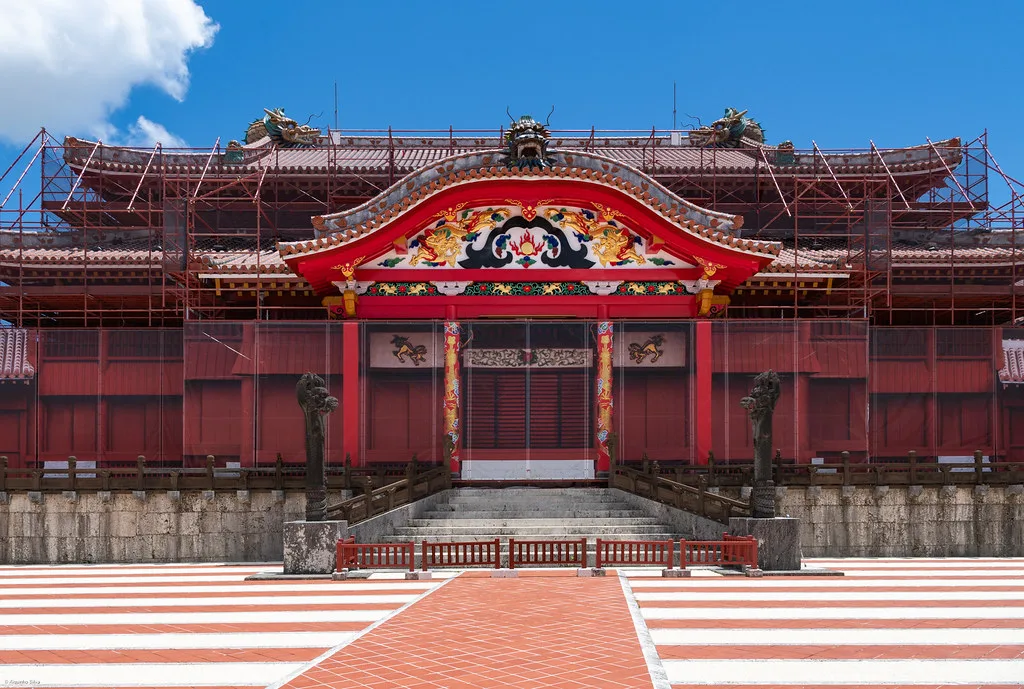
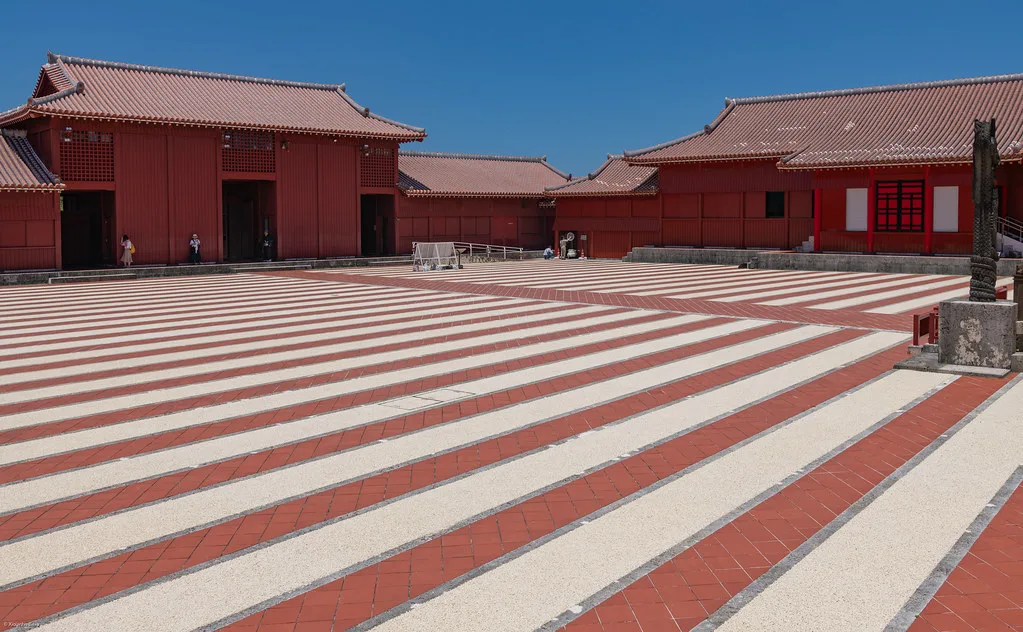
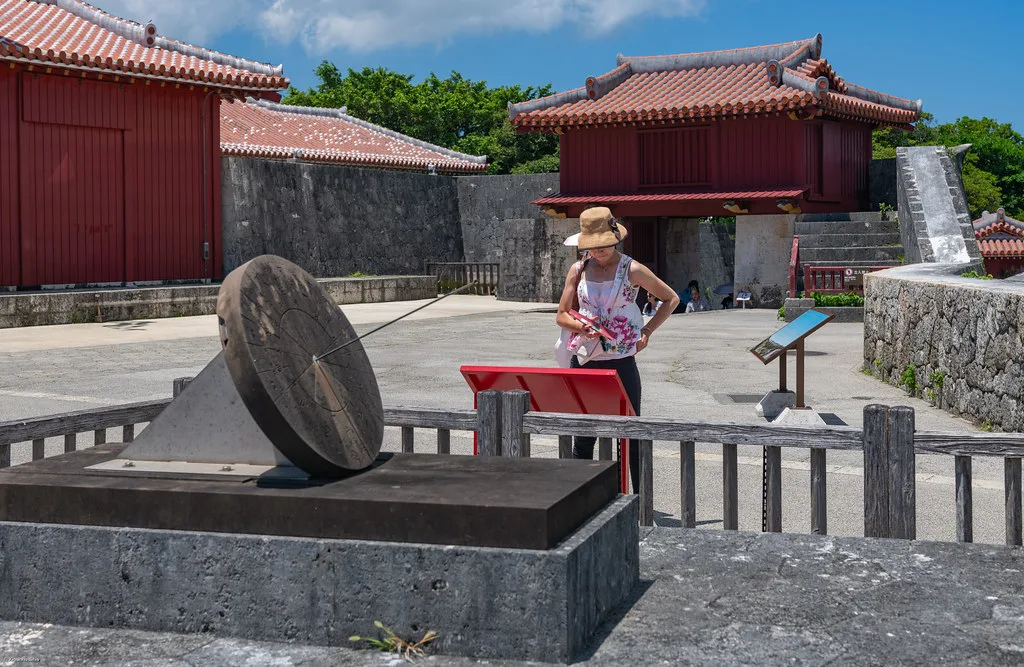
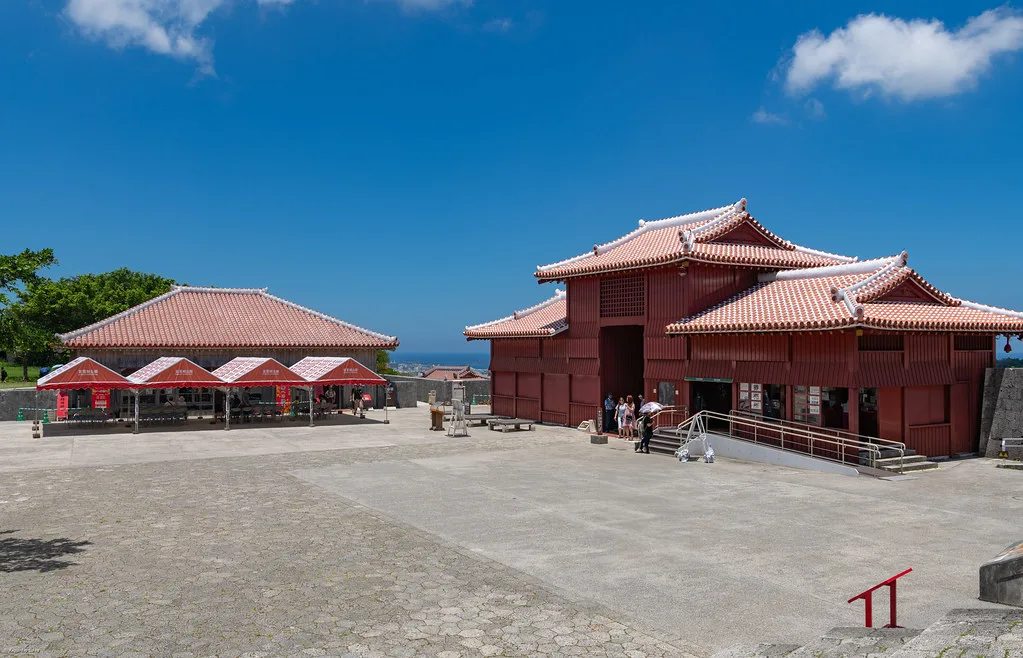
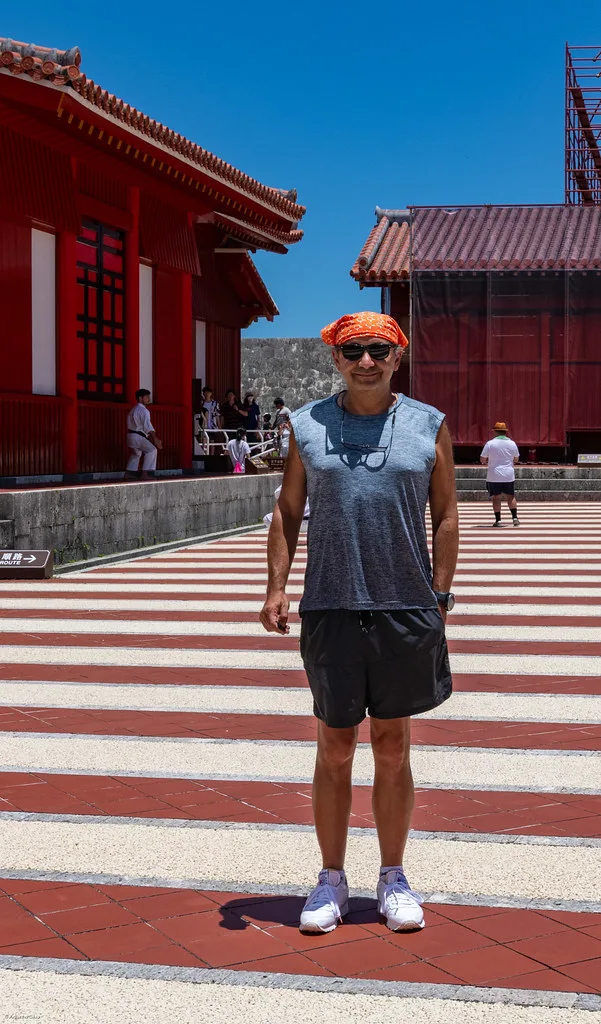
The taxi from Naha Cruise Terminal to Shuri Castle took twenty minutes through streets lined with palm trees and low concrete buildings topped with distinctive red clay tiles. My driver, a quiet man named Higa-san, pointed out the Yui Rail monorail gliding overhead and said the castle was still being rebuilt after the devastating fire of October 2019. I had seen the news footage — the vermillion hall engulfed in flames, centuries of Ryukyu heritage turning to ash — and I was not sure what to expect. However, when we climbed the stone steps through the Shureimon gate and I looked out across the castle grounds to the city and the ocean beyond, I understood why the Ryukyu kings had chosen this hilltop. The view stretched in every direction, and the warm subtropical breeze carried the smell of frangipani from the garden walls. Construction scaffolding surrounded the main hall, but the foundation stones, the ancient walls, the arching gates — they remained. I pressed my hand against the cool limestone and thought about how many hands had touched this same stone over five hundred years. The kingdom had fallen, the castle had burned twice, yet here it stood again, rising. I whispered a quiet prayer of gratitude for the stubborn hope that rebuilds what fire destroys.
I took the monorail back into central Naha and walked the length of Kokusai Street, the mile-long shopping avenue that serves as the city's tourist spine. Vendors sold purple sweet potato tarts — beni-imo, the island's signature flavor — and I bought one for about 200 yen ($1.35) and ate it while watching an elderly woman in a bright bingata kimono arrange flowers outside a craft shop. The taste was sweet and earthy, nothing like mainland wagashi, and I savored each bite. Sanshin music drifted from open doorways. The smell of simmering pork broth — the base for Okinawa soba — floated from a tiny restaurant with only six seats, and I could not resist. I sat down and ordered a bowl for 650 yen ($4.50). The noodles were thick and chewy, the broth rich with bonito and pork, and the tender stewed pork belly on top fell apart at the touch of my chopsticks. The woman beside me, a local grandmother, noticed my expression and smiled. She said something in Okinawan dialect that I did not understand, but her warmth needed no translation.
The afternoon brought me south to the Peace Memorial Park at Mabuni, on the cliffs where the Battle of Okinawa ended in June 1945. My taxi cost about 4,000 yen ($27) one-way, and the thirty-five-minute drive through the quiet southern countryside gave me time to prepare myself for what I knew would be difficult. The Battle of Okinawa was among the bloodiest engagements of the Second World War — over 200,000 people died in eighty-two days, including perhaps 100,000 Okinawan civilians who were caught between two armies on their own island. I walked through the Cornerstone of Peace, where row upon row of black granite panels bear the names of every person who died — Japanese, American, British, Korean, Okinawan — listed without distinction of nationality. I ran my fingers along the carved names and felt my eyes fill with tears. These were not soldiers alone. These were schoolgirls and farmers and fishermen and mothers. The Himeyuri Peace Museum nearby tells the story of high school girls conscripted as battlefield nurses, many of whom died in the caves where they had been ordered to treat the wounded. I stood in the reconstructed cave entrance, listening to the recorded testimony of a survivor, and I could not speak. The grief was not abstract. It was specific and personal and present, even eighty years later.
Yet outside the museum, children were playing on the grass. A school group sat in a circle eating bento boxes and laughing. The ocean below the cliffs was impossibly blue, and a warm breeze moved through the memorial trees. I watched an old man place flowers at one of the name panels, bow deeply, and then turn to his grandchild and take her hand. Something shifted inside me as I stood there. The island had chosen to remember without bitterness — to honor every name, every nation, every loss — and in doing so had created something that felt less like a monument and more like a place of healing. I thought about what it means to forgive on that scale, to build peace not by forgetting but by holding all the names together, side by side. I finally understood why people call Okinawa the island of longevity. It is not just the diet or the climate. It is this capacity to carry grief and still choose life.
On my way back to the ship, Higa-san stopped at a small roadside stand where an elderly couple sold fresh shikuwasa juice — the tiny green citrus fruit native to Okinawa — for 150 yen ($1) a cup. The taste was sharp and bright, like lime crossed with tangerine, and the cold juice cut through the afternoon heat. The old man asked where I was from, and when I told him he smiled and said, in careful English, "Welcome home." I did not understand at first, but then I noticed the small sign behind his stand: "Ichariba chode" — an Okinawan proverb meaning "Once we meet, we are family." I felt the tears come again, though this time they were tears of gratitude rather than grief. Standing in the late sun, drinking shikuwasa juice from a paper cup, I realized that what Okinawa had taught me was not a lesson about history or culture or food, though it had offered all of those generously. What this island taught me was that the deepest courage is not in the fighting but in what comes after — in the stubborn, tender, daily work of rebuilding, forgiving, and welcoming strangers as family. I carry that lesson with me still, pressed like a flower between the pages of my logbook.
Weather & Best Time to Visit
The Cruise Port
Ships dock at Naha Cruise Terminal on the western coast of Okinawa's main island, adjacent to the Naha commercial port. The terminal building is modern and air-conditioned, with basic facilities including restrooms and a small tourist information desk where staff speak English and can help arrange taxis. Taxis queue immediately outside the terminal — a ride to Kokusai Street costs approximately 800–1,000 yen ($5–7), while the walk takes about ten to fifteen minutes along flat, paved roads. The Yui Rail monorail station at Asahibashi is a fifteen-minute walk from the terminal and connects to Shuri Castle (about 30 minutes, 340 yen or $2.30). The terminal area has accessible ramps and flat surfaces, though the walk into town crosses several intersections. Wheelchair users can navigate the terminal and taxi area without difficulty. Currency exchange is available at the terminal, but rates are better at 7-Eleven or Family Mart ATMs, which accept international cards and dispense yen with minimal fees.
Getting Around
The Yui Rail monorail is Okinawa's most convenient public transport for cruise visitors. It runs from the waterfront through central Naha to Shuri Castle, with trains every six to ten minutes. A single ride costs 230–340 yen ($1.50–2.30) depending on distance, and a one-day pass costs 800 yen ($5.50). Stations have elevators, making the system wheelchair accessible. The monorail covers central Naha well, but attractions beyond the city — Peace Memorial Park, Churaumi Aquarium, beaches — require taxis or organized excursions.
Taxis are plentiful, metered, and honest. Drivers rarely speak English, so have your destination written in Japanese or show a map on your phone. A taxi to Peace Memorial Park costs approximately 4,000 yen ($27) one-way (35 minutes), while Churaumi Aquarium is roughly 10,000 yen ($68) one-way (about two hours). For full-day exploration beyond Naha, hiring a private driver costs $150–200 for eight hours. Walking works well along Kokusai Street and the central Naha area — sidewalks are well maintained and mostly flat, with accessible crossings at major intersections. Mobility-impaired visitors should note that Shuri Castle grounds involve uphill walks and some steps, though the main gate area and lower courtyards are accessible. Renting a car is possible but less practical for a single port day due to left-hand driving and limited parking near attractions.
Okinawa Port Map
Interactive map showing cruise terminal and Okinawa attractions. Click any marker for details.
Excursions & Activities
Shuri Castle & Ryukyu Heritage
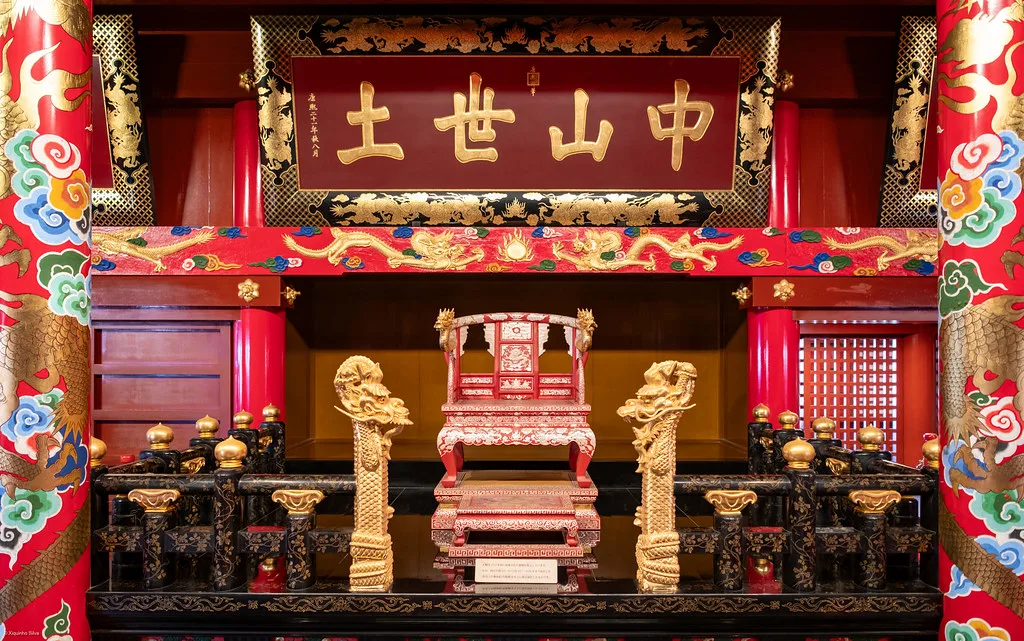
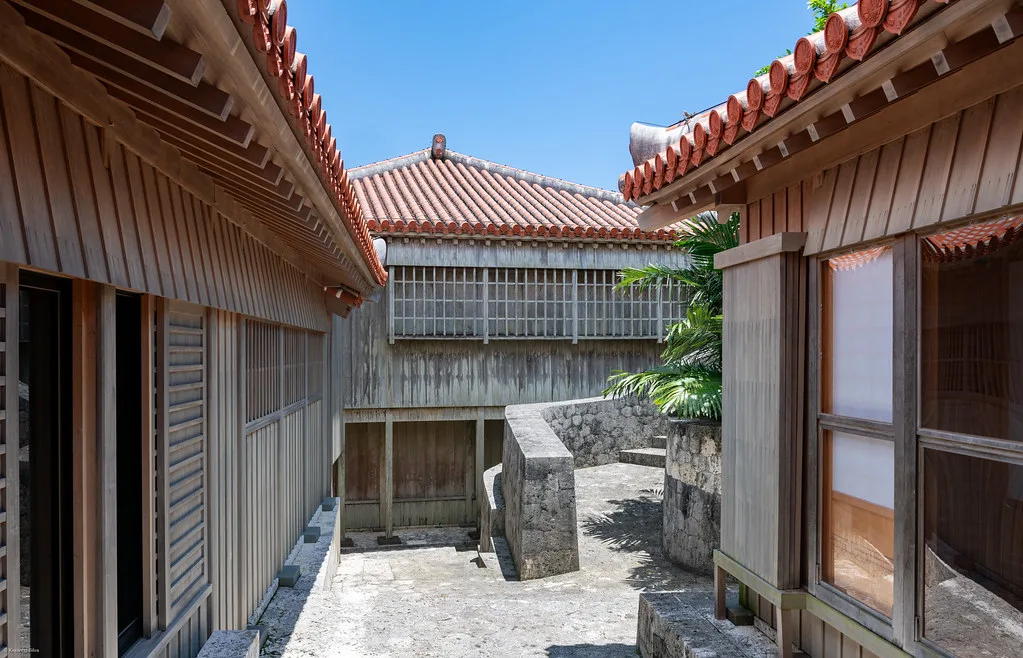
The hilltop castle served as the royal palace of the Ryukyu Kingdom from the 15th century until 1879. Although the main hall burned in 2019 and reconstruction continues through 2026, the grounds, gates, stone walls, and several structures remain open. Entry to the grounds costs 400 yen ($2.70) for adults. Allow 1.5–2 hours. Accessible on the lower levels, though the upper courtyards involve stairs and steep paths. You can visit independently by monorail (Shuri Station, then a 15-minute walk) or taxi. A ship excursion typically combines Shuri Castle with other Naha highlights for $60–90 and includes a guide who explains the Ryukyu Kingdom's history.
Peace Memorial Park & Himeyuri Museum
Located thirty-five minutes south of Naha, this solemn site commemorates the Battle of Okinawa. The Cornerstone of Peace is free to visit. The Himeyuri Peace Museum costs 450 yen ($3) for adults. Allow 2–3 hours for both sites. The park grounds are largely flat and wheelchair accessible, though some memorial paths are gravel. This is a moderate-energy half-day trip. A ship excursion ($70–100) guarantees your return to the vessel and provides historical context that is difficult to access independently. If visiting independently, arrange a round-trip taxi in advance — public buses run infrequently to this area. Book ahead if you want an English-speaking guide.
Churaumi Aquarium
Home to the enormous Kuroshio Sea tank with whale sharks and manta rays, Churaumi is located about two hours north of Naha in Motobu. Entry costs 2,180 yen ($15) for adults. Allow 2–3 hours at the aquarium plus four hours for travel. This is a full-day commitment. A ship excursion ($120–160) is the safest option because the distance leaves no margin for traffic delays — missing the ship is a real risk for independent visitors who linger too long. If going independently, depart the terminal as early as possible and set a firm departure time from the aquarium.
Kokusai Street & Makishi Market
Naha's main tourist avenue is walkable from the cruise terminal. Kokusai Street stretches about 1.3 kilometers and offers souvenir shops, restaurants, and Okinawan craft stores. Makishi Public Market, located in the side alleys, sells fresh seafood, tropical fruit, and local specialties — you can buy fish downstairs and have it prepared upstairs for a cooking fee of about 500 yen ($3.50). No advance booking is needed. This is a low-energy, self-guided activity suitable for all mobility levels along the main street, though the market alleys are narrow. Budget 1–2 hours.
Kerama Islands Snorkeling
The Kerama Islands, a thirty-minute to one-hour ferry ride from Naha, offer pristine coral reefs and frequent sea turtle sightings. Half-day snorkel tours from Naha cost 5,000–8,000 yen ($34–55) and typically depart at 8:30 or 9:00 a.m. Diving requires certification and advance booking. The ferry terminal at Tomari Port is about ten minutes by taxi from the cruise terminal. This is a high-energy activity. Book ahead through a local operator — same-day availability is not guaranteed, especially in peak season from March through November.
Depth Soundings
Japan operates on the yen (¥). As of early 2026, $1 USD buys approximately 148 yen. While credit cards are accepted at larger stores, hotels, and chain restaurants, many smaller Okinawan shops, market vendors, and family-run eateries are cash-only. 7-Eleven and Family Mart ATMs accept international cards and charge modest fees — withdraw yen there rather than at the cruise terminal exchange desk, where rates are less favorable.
Tipping is not customary in Japan and can cause confusion — simply say "gochisousama deshita" (thank you for the meal) when leaving a restaurant. Okinawa is exceptionally safe; petty crime is rare even in tourist areas. English signage is limited outside Kokusai Street, so having Google Translate downloaded in offline mode helps considerably. Convenience stores (konbini) are everywhere and sell excellent ready-to-eat meals for 300–600 yen ($2–4), making them a practical and budget-friendly option for cruise visitors short on time. Temples and sacred sites require respectful behavior — speak quietly, do not touch artifacts, and follow posted guidelines. The subtropical sun is strong year-round; wear sunscreen and carry water, especially if visiting outdoor sites like the Peace Memorial or Shuri Castle grounds.
Photo Gallery


Frequently Asked Questions
Where do cruise ships dock in Okinawa?
Ships dock at Naha Cruise Terminal, about a ten to fifteen minute walk from Kokusai Street. Taxis queue outside the terminal and cost 800–1,000 yen ($5–7) to central Naha. The terminal has air conditioning and basic facilities.
Is Shuri Castle open after the 2019 fire?
The grounds, gates, stone walls, and several structures remain open. The main hall is under reconstruction through 2026. Entry costs 400 yen ($2.70). The site is still worth visiting for the Ryukyu architecture, views, and historical significance.
How is Okinawa different from mainland Japan?
Okinawa was the independent Ryukyu Kingdom until 1879. It has its own cuisine, music (sanshin), dialect, textiles (bingata), and cultural traditions. The subtropical climate and relaxed pace feel distinctly different from Tokyo or Osaka.
Can I reach Churaumi Aquarium on a port day?
Yes, but it requires a full day. The aquarium is two hours north of Naha by road. A ship excursion ($120–160) is the safest choice because traffic delays can make independent return risky. Depart early if going on your own.
What is the best time to visit Okinawa?
October through April offers pleasant subtropical weather with temperatures between 15 and 25 degrees Celsius. The rainy season runs from May through June. Typhoon season peaks from July through October, and ships may alter itineraries during this period.
Do I need cash in Okinawa?
Yes. Many smaller restaurants, market stalls, and local shops accept cash only. 7-Eleven and Family Mart ATMs accept international cards. Withdraw yen at convenience stores rather than using the cruise terminal exchange, where rates are less favorable.
Okinawa — Port Guide
Last reviewed: February 2026