


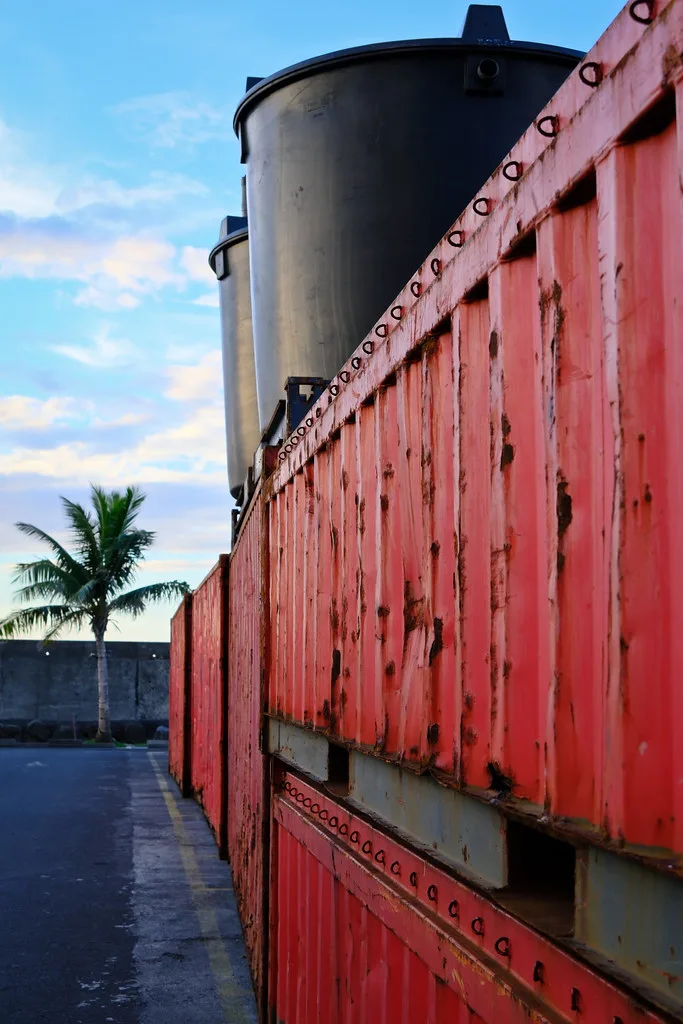
Photo: Wikimedia Commons (CC BY-SA)
Captain's Logbook
Papeete
I stepped off the gangway into Papeete at six in the morning, and the harbor was already alive with a restless energy I had not expected from a place most people associate with hammocks and cocktails. Fishing boats were unloading the morning's catch onto wet concrete, their crews shouting in a rapid mix of French and Tahitian that I could not follow but somehow understood — the universal language of people who work before the sun gets too high. Ferries idled at their berths, waiting to shuttle passengers to Moorea and the outer islands. Along the waterfront, the roulottes — Papeete's famous food trucks — sat quiet and shuttered, resting before their evening transformation into the best open-air dining scene in the South Pacific. This is the capital of French Polynesia, a city of 26,000 that serves as the commercial and cultural hub for 118 islands scattered across an ocean expanse the size of Western Europe. The name Tahiti itself derives from the Polynesian word for "sunrise" or "dawn," and standing here at first light, watching the volcanic mountains emerge from purple shadows while mist clung to their ridges, I understood why.
I walked to Le Marche de Papeete within ten minutes — the covered public market that functions as the beating heart of the city. Even at that early hour, vendors were arranging pyramids of rambutan, star fruit, and mangoes so ripe they perfumed the air from three stalls away. I stopped at a flower vendor's table where a woman was weaving a crown of tiare blossoms, her fingers moving with a practiced ease that suggested she had done this ten thousand times before. She looked up, smiled, and placed the finished crown on a display stand without a word. The scent of tiare — Tahiti's national flower — is something I carry in my memory still: sweet, jasmine-like, but with a warmth underneath that belongs only to these islands. I bought a small bottle of monoi oil infused with the blossoms, and every time I open it at home, I am transported back to that market stall.
The black pearl vendors on the upper level deserved more time than I initially gave them. French Polynesia produces the world's finest black pearls, cultivated in the lagoons of the Tuamotu and Gambier archipelagos, and each pearl's luster and overtones — peacock green, aubergine, silver — tell the story of years spent forming inside a black-lipped oyster. I watched one vendor hold a strand up to the light and turn it slowly, and the colors shifted like oil on water. I had expected a hard sell, but the man simply said, "You see? Each one is different. Like people." I ended up buying a single loose pearl for my wife, and it cost less than I had feared — the market is where locals shop, not just tourists, and the prices reflected that honesty.
Captain James Cook anchored at Point Venus in 1769 to observe the transit of Venus across the sun — a celestial event that gave the promontory its name and brought Tahiti into the Western imagination. Twenty years later, Fletcher Christian and the mutineers of HMS Bounty chose these islands as their paradise, forever linking Tahitian shores with tales of rebellion and tropical refuge. France made Tahiti a protectorate in 1842, establishing Papeete as the colonial capital, and later moved nuclear testing here from Algeria — the airport itself exists because of atomic weapons. But beneath the French bureaucracy and the croissants, Polynesian culture endures: the language, the music, the flowers worn behind the ear, the unhurried attitude that life is meant to be lived slowly.
Paul Gauguin arrived in 1891, fleeing European civilization for what he imagined as an unspoiled Eden. He painted here through 1893, returned to Paris briefly, then came back to Polynesia in 1895 and remained until his death in 1901. Those decade-long Tahitian years produced his most celebrated works — vibrant canvases of women, flowers, and light that reimagined Post-Impressionism through a tropical lens. The artist found not innocence but complexity, not escape but deeper questions. His legacy here is everywhere: in the museum that bears his name, in the ongoing dialogue between Western art and Polynesian subject, in the reminder that paradise is never quite what outsiders expect.
I could see the overwater bungalows of a resort from the port area — thatched-roof structures perched on stilts above the lagoon, their glass floor panels catching the morning light. Tahiti gave the world this invention. In 1967, three American hotel pioneers known as the "Bali Hai Boys" constructed the first bungalows built on stilts over water, merging Polynesian building traditions with tourist dreams. The concept spread across French Polynesia and then to resorts worldwide, but it began here. Seeing them from the dock, I felt the odd pull of recognizing something I had only ever seen in photographs — real, imperfect, smaller than imagination had made them, and somehow more beautiful for it.
Looking back on my time in Papeete, I realize I arrived expecting a postcard and found a city instead — one with traffic and bureaucracy and noise, but also with a generosity of spirit that caught me off guard. The Polynesian concept of mana — a spiritual force that connects people to their land, their ancestors, and each other — is not something you read about in Papeete. It is something you feel, in the way a stranger shares his table, in the way a vendor places a flower behind your ear without asking, in the way the mountains watch over the harbor like old guardians who have seen everything and judge nothing. I did not understand Tahiti when I arrived. I am not sure I understand it now. My breath caught as the ship pulled away and the volcanic peaks of Moorea turned violet against the sunset, and in that quiet moment of grace I felt my eyes fill with tears I had not expected — the beauty of this place had reached somewhere deeper than I knew how to name. But I carry a piece of it with me — that loose black pearl, that bottle of monoi oil, that conversation over poisson cru — and when I hold them, the distance between here and there shrinks to almost nothing.
Weather & Best Time to Visit
The New Cruise Terminal
Booking guidance: Ship excursion options provide guaranteed return to port and are worth considering for first-time visitors. For those who prefer to explore independently, local operators often offer competitive rates — book ahead during peak season to secure your preferred times. Whether you choose a ship excursion or go independent, confirm departure times and meeting points before heading out.
In February 2025, Papeete unveiled a sleek new cruise terminal in the heart of downtown – a 2,700-square-meter facility capable of handling three ships and 2,000 passengers simultaneously. The design incorporates natural materials and Tahitian aesthetic sensibility, with Tahiti Tourism staff at the information desk offering free guides and marked tour pickup spots.
French Polynesia is experiencing a cruise boom – over 110,000 cruise passengers arrived in 2024 via 465 port calls, and numbers continue rising. More than a third of all visitors to French Polynesia now experience the islands by cruise ship, making Papeete increasingly important as the gateway.
From the terminal, Le Marché is a 10-minute walk, and the waterfront roulottes (food trucks) line Place Vaiete just steps away. The downtown area is compact and walkable.
Getting Around
Papeete's downtown area is compact and walkable from the new 2025 cruise terminal. Le Marche (the public market) is a ten-minute walk, and the waterfront roulottes at Place Vaiete are even closer — just steps from the terminal exit. Most downtown attractions, shops, and restaurants fall within a comfortable fifteen-minute walking radius, making independent exploration on foot the easiest option for short visits.
For destinations beyond downtown, Le Truck — Tahiti's distinctive public bus system — provides affordable transport around the island, though schedules can be irregular and routes confusing for first-time visitors. Buses depart from the central market area and run along the coastal road in both directions. Taxis are available at the terminal but are notably expensive by most standards: expect to pay roughly $15-20 USD equivalent for even a short ride within town, with fares climbing quickly for longer trips to Point Venus (about $30-40 round trip) or the south coast. Rates are metered but always confirm the fare before departing. For those wanting to explore the full island at their own pace, rental cars are available from agencies near the port and airport, typically costing $60-90 per day. The coastal ring road around Tahiti Nui (the larger portion of the island) makes for a scenic half-day driving tour, though the mountainous interior requires a 4x4 vehicle and some confidence on unpaved roads.
Island Excursions
Booking guidance: Ship excursion options provide guaranteed return to port and are worth considering for first-time visitors, particularly for interior 4x4 tours where navigation can be challenging. For those who prefer to explore independently, local operators often offer competitive rates — book ahead during peak season (May-October) to secure your preferred times. The Moorea ferry and Marche de Papeete market require no advance booking. Whether you choose a ship excursion or go independent, confirm departure times and meeting points before heading out.
Point Venus: Located about 10 km east of Papeete (20 minutes by taxi, roughly $30-40 round trip), this black sand beach marks where Captain Cook observed the transit of Venus in 1769 — an astronomical event that required precise timing and clear skies, both of which Tahiti providentially offered. The observation contributed to calculating the distance from Earth to the Sun. Today the site features a lighthouse, a small museum, and calm swimming waters. Ship excursions typically include Point Venus as part of a half-day island tour ($80-120 per person).
Fautaua Waterfall: One of Tahiti's most spectacular natural sites, this waterfall cascades nearly 300 meters through a lush jungle valley. Reaching it requires a moderate hike of roughly two hours each way through tropical forest. A permit is technically required (available at the Papeete town hall for a small fee). Guided hiking tours through local operators cost approximately $50-80 per person and handle the permit logistics.
Moorea Day Trip by Ferry: The high-speed ferry to Moorea departs from the Papeete waterfront terminal — visible from the cruise port — and costs approximately $15 USD each way, with crossings taking just 30 minutes. Moorea offers dramatic mountain scenery, better beaches than Tahiti, excellent snorkeling in the lagoon, and a slower pace. This is one of the best independent day trips available from any cruise port in the South Pacific, though timing must be managed carefully against your ship's departure.
Marche de Papeete (Public Market): Free to enter and open daily (best visited early morning), the market is an excursion in itself — black pearl vendors, tropical produce, flower crowns, monoi oil, and Tahitian vanilla beans that cost $10-15 for a bundle of premium pods. The ground floor fish and produce section is most vibrant before 8 AM.
Pearl Farms: Several pearl farm tours operate from Papeete, offering guided explanations of black pearl cultivation in the Tuamotu lagoons. Half-day tours typically cost $60-100 per person and include pearl shopping at farm-direct prices.
4x4 Interior Tours: For adventure seekers, guided 4x4 tours penetrate Tahiti's mountainous interior — volcanic peaks, remote waterfalls, ancient marae temple sites, and jungle valleys inaccessible by regular vehicle. Full-day tours run $100-150 per person and include lunch. These are among the most memorable excursions available but sell out quickly during peak season.
The Paul Gauguin Museum, located in the botanical gardens at Papeari on Tahiti's south coast, celebrates the post-Impressionist painter who spent a decade here across two periods: 1891-1893 and 1895-1901. Island circle tours pass black sand beaches, blowholes, and botanical gardens. The Museum of Tahiti and Her Islands (Musee de Tahiti et des Iles) provides excellent context on Polynesian navigation, culture, and natural history — worth an hour if cultural depth appeals.
Depth Soundings
Money: The local currency is CFP Franc (€-pegged). ATMs are generally available near the port area, though fees vary. Credit cards are widely accepted at tourist-oriented establishments, but carry some local cash for markets, street food, and smaller vendors. Your ship's exchange rate is typically unfavorable — withdraw from a bank ATM instead. Budget $30–$80 per person for a comfortable day including lunch, transport, and a few entry fees.
Timing: Start early if your ship arrives at dawn — the first hours offer pleasant conditions and smaller crowds. Allow at least 30 minutes buffer before all-aboard time. Set a phone alarm as backup. Most port visits allow 8–10 hours on shore, which is enough to see the highlights without rushing if you prioritize well.
Safety: Standard port-town awareness applies — keep valuables close and stick to well-traveled areas during daylight. Your ship's ID card is your most important item — losing it creates a genuine headache at the gangway.
Communication: Wi-Fi is often available at cafés and restaurants near the port. Consider downloading offline maps before disembarking — cellular data roaming charges can be substantial and surprising. Google Maps offline mode or Maps.me work well for navigation without data.
Food & Water: Tap water safety varies by destination — ask locally or buy bottled water to be safe. The best food often comes from busy local restaurants rather than tourist-facing spots near the port. Lunch at a popular local place typically costs $8–$20 per person. Street food can be excellent value if you choose busy stalls with high turnover.
Last reviewed: February 2026
Papeete: Where Polynesian Soul Meets French Flair
Le Marché (Papeete Public Market)
The covered market at the heart of Papeete is sensory overload in the best way – tropical fruits piled in pyramids (rambutan, star fruit, the pungent durian), flower vendors weaving traditional crowns and leis, pearl sellers displaying the black pearls for which Tahiti is famous, vendors of monoi oil (the coconut-scented potion that perfumes all of Polynesia). Tahitian vanilla beans – among the world's finest and most aromatic – fill the air with their sweet, floral fragrance; these beans command premium prices in culinary circles worldwide, and buying them here means encountering the genuine article at its source.
The ground floor focuses on produce, seafood, and prepared foods – including poisson cru, Tahiti's national dish of raw fish marinated in lime juice and coconut milk. Upper levels sell crafts, pareos (sarongs), shell jewelry, and souvenirs. Early morning is best for the freshest produce and local atmosphere; by midday, cruise passengers dominate.
The black pearl vendors deserve particular attention. French Polynesia produces the world's finest black pearls, cultivated in the lagoons of the Tuamotu and Gambier archipelagos. Each pearl's luster and overtones – peacock green, aubergine, silver – tell the story of years spent forming in the mantle of the black-lipped oyster. Bargaining is acceptable but not aggressive – Tahitians prefer pleasant interactions over hard negotiations. Prices are in CFP francs; some vendors accept USD or euros.
Photo Gallery
Frequently Asked Questions
Q: What's the best time of year to visit Papeete?
A: Cruise season runs May through October — drier months and year-round tropical temperatures (69-87°F). January and February are the months to avoid (peak South Pacific cyclone risk).
Q: Does Papeete have a cyclone or hurricane season?
A: Yes — South Pacific cyclone season runs November through April, with peak risk in January, February, and March. January and February are the months to avoid. Cruise season concentrates in the drier May–October window.
Q: What should I pack for Papeete's weather?
A: Light breathable clothing. Rain gear for wet season. Reef-safe sunscreen. Comfortable walking shoes. Light cover-up for market shopping.
Q: Will rain ruin my port day in Papeete?
A: Wet season runs November through April; drier May through October. Cruise season concentrates in the drier May–October window.
Q: Is Papeete suitable for passengers with mobility challenges?
A: Accessibility varies by area. The port vicinity and main commercial streets are generally manageable, but older historic districts may feature cobblestones, stairs, and uneven surfaces. Consider booking an accessible ship excursion if you have concerns. The ship's shore excursion desk can advise on specific accessibility options for this port.
Q: Do I need to exchange currency before arriving?
A: The local currency is CFP Franc (€-pegged). Most tourist-facing businesses accept major credit cards. ATMs near the port offer competitive exchange rates. Carry some local cash for small purchases, markets, and tips. Avoid exchanging money on the ship — the rates are typically unfavorable compared to local bank ATMs.
Q: Can I explore independently or should I book a ship excursion?
A: Both options work well. Ship excursions guarantee return to the vessel and handle logistics, making them ideal for first-time visitors. Independent exploration costs less and allows more flexibility — just keep track of time and allow a 30-minute buffer before all-aboard. Many passengers combine approaches: an organized morning tour followed by free afternoon exploration.
Port Map
Tap markers to explore Papeete's highlights
Frequently Asked Questions
Is Papeete walkable from the cruise terminal?
Yes – the new downtown terminal puts Le Marché 10 minutes on foot, and the waterfront roulottes (food trucks) are steps away. Most downtown attractions are within walking distance.
What should I eat in Tahiti?
Poisson cru (raw fish in coconut milk) is essential. The roulottes at Place Vaiete serve excellent local food at dinner. Try Tahitian vanilla in desserts – among the world's finest.
Getting Around
Papeete waterfront walkable. Le Truck local buses run around the island (~300 XPF). Taxis expensive (~3000 XPF to airport). For Moorea (sister island), ferry from port takes 30 min (~2000 XPF round trip). Car rental available for island circle tour.