


My Logbook: Patmos
The tender rocked gently as I stepped down into it, salt spray catching my wrist, and I watched the ship grow smaller behind us while Skala grew larger ahead. My wife squeezed my hand. The morning sun was already warm on our shoulders, but a cool breeze came off the Aegean carrying the scent of wild thyme and seawater. I had read about Patmos for years, yet nothing I had read prepared me for the feeling of approaching this island. The white buildings stacked up the hillside looked almost luminous against the deep blue sky, and the dark stone monastery crowned the summit like a fortress keeping watch over centuries of prayer.
We stepped ashore onto the Skala waterfront and I noticed the silence first. Not absolute silence, but a gentle quiet unlike any other Greek island I had visited. No blaring music from beach clubs, no hawkers shouting for tourist dollars. Instead I heard church bells ringing from somewhere uphill, the soft clatter of coffee cups at a harbor cafe, and the rhythmic slap of small waves against the pier. I felt my breathing slow. My shoulders dropped. Something in me recognized this place even though I had never been here before.
Our plan was simple: walk uphill to the Cave of the Apocalypse first, then continue to the Monastery of St. John, then wander Chora, the medieval hilltop village. The walk from Skala is steep — I will not pretend otherwise. My calves burned within ten minutes, and the cobblestones were uneven and sun-warmed through the soles of my shoes. But the views behind us kept growing more beautiful with every switchback. I could see our ship anchored in the bay, small tenders crossing back and forth like water beetles. The harbor sparkled. Despite the effort, I did not want to stop. The path itself felt like a pilgrimage, and I understood why people have walked it for a thousand years.
The Cave of the Apocalypse sits halfway up the hill inside a small whitewashed chapel. We entered through a low doorway, and I had to duck my head. Inside, the air was cool and heavy with the scent of beeswax and incense. Silver lamps hung from the rough stone ceiling. An Orthodox priest was chanting softly in Greek, his voice low and resonant, echoing off the ancient rock. I saw the hollow in the wall where tradition says St. John rested his head, and the triple fissure in the ceiling where God's voice reportedly spoke the words of Revelation. I knelt on the cold stone floor. My wife knelt beside me. Although other visitors filled the small space, cameras raised, phones recording, there was nonetheless a hush that pressed inward from the walls.
I finally understood something I had struggled with for years. I had always read the Book of Revelation as a text, words on a page, abstract and difficult. But kneeling in that cave, I felt the weight of the place where those words were born. My eyes filled with tears I did not expect. It was not sadness. It was awe. It was the quiet grace of standing where heaven once touched earth, and feeling that the distance between the two was thinner than I had ever imagined. My breath caught. I whispered a prayer of gratitude — thank God for this moment, for this journey, for the gift of being alive in a place so ancient and so holy.
We climbed higher to the Monastery of St. John the Theologian, that massive stone fortress that has guarded Patmos since 1088. The entrance fee was €6 each, and it was worth every cent. Inside, we walked through cool stone corridors into courtyards open to the sky. I gazed at Byzantine icons with gold leaf still gleaming after eight hundred years. The treasury held manuscripts older than most nations, illuminated Gospels, silver crosses, embroidered vestments. I stood before a sixth-century fragment of the Gospel of Mark and felt the hair rise on my arms. Still, it was the silence that affected me most. The thick walls blocked the wind, blocked the sound of the world outside. I heard my own heartbeat.
Chora village surrounds the monastery like a living garment. We wandered its narrow alleys for over an hour, getting happily lost. The streets are too narrow for cars, paved with smooth grey stones, lined with white walls where bougainvillea spilled purple and magenta overhead. I tasted a warm cheese pie called pougia from a bakery, flaky pastry filled with herbs and mizithra cheese, and the flavor was earthy and sharp and perfect. We sat on a stone bench overlooking the Aegean. The water stretched out impossibly blue. I could see other islands in the distance, hazy outlines against the horizon. Despite all the climbing and the heat, I did not want to leave.
On the walk back down to Skala, we stopped at a small taverna and I ordered grilled octopus with lemon and olive oil. It was tender and smoky, charred at the edges, tasting of the sea. We drank cold water and watched the tenders crossing the bay. An elderly Greek woman at the next table smiled at us and said something I did not understand, but her warmth needed no translation. I smiled back and nodded. The simple kindness of strangers in a sacred place — that is what I carried back to the ship.
Looking back, I realized that Patmos taught me something about the value of slowness. We live our lives rushing from port to port, experience to experience, yet the places that change us are the ones where we stop long enough to listen. I learned that silence is not emptiness. I discovered that a cave on a small island can hold more meaning than a cathedral in a capital city. The real gift of Patmos was not what I saw but what I felt — the quiet, stubborn holiness of a place that has been prayed over for two thousand years. Sometimes you have to kneel on cold stone to understand what matters.
The Cruise Port
What you need to know before you tender ashore.

Tender Port
Ships anchor offshore and passengers take small boats (tenders) to reach the pier. Wheelchair accessible tenders may be available on request; ask guest services early.
- Terminal: Skala — tender port; ships anchor in bay and ferry passengers ashore via small boats
- Tender Wait: Can vary 15-45 minutes depending on weather, passenger volume, and ship schedules
- Distance to Main Sites: Cave of the Apocalypse (halfway up hill, 20 min walk); Chora & Monastery (hilltop, 30-40 min walk or 10 min taxi)
- Currency: Euro (€) — limited ATMs; bring cash for taxis, cafes, small shops
- Language: Greek; English spoken in tourist areas and by younger residents
- Driving: Right side; narrow mountain roads; scooter/ATV rental available; taxis plentiful
- Best Season: April-June and September-October (warm, fewer crowds); Holy Week (Easter) for pilgrims; summer hot and busier
- Mobility Note: Skala waterfront is flat and wheelchair accessible, but uphill routes to the Cave and Monastery are steep with uneven cobblestones. Travelers with limited mobility should plan for taxi transport (cost €5-10 each way).
Getting Around
Patmos is a small island with limited but adequate transportation options for cruise visitors. The key challenge is elevation — Skala port sits at sea level, while the Cave of the Apocalypse and Chora village are perched on the hillside and hilltop respectively. Planning your route is important, especially if you have mobility concerns.
- Walking: Skala is flat and walkable. Cave of the Apocalypse is a 20-minute uphill walk (steep). Chora and the Monastery take 30-40 minutes of strenuous climbing. Doable for fit travelers; bring water and a hat. Not recommended for travelers with knee or mobility issues.
- Taxis: Plentiful at the tender dock. Fixed route prices posted: Skala to Cave approximately €5; Skala to Chora approximately €8-10. No meters. Drivers speak basic English. Share a taxi to save on fare — cost per person drops significantly with four riders.
- Bus: Small local buses run the Skala-Cave-Chora route for approximately €2 per person. Infrequent schedule. Not reliable enough for cruise day planning. Taxis are more practical when your time is limited.
- Scooter/ATV Rental: Available in Skala for approximately €20-30 per day. Fun for exploring remote beaches and countryside. International license required. Roads are narrow and winding — not for inexperienced riders.
- Boat Excursions: Small boats offer trips to Psili Ammos beach and nearby islets. Arranged at the harbor. Half-day options available from €15 per person. A lovely way to see the coastline from the water.
For wheelchair users and those with limited mobility, the Skala waterfront promenade is accessible and pleasant. Taxi drivers are accustomed to assisting passengers to the monastery entrance. Ask at the tender dock for accessible transport options.
Patmos Area Map
Interactive map showing tender port in Skala, Cave of the Apocalypse, Monastery of St. John, Chora village, and nearby beaches. Click any marker for details and directions.
Excursions and Activities
How to spend your time on this sacred island — whether you book ahead through the cruise line or explore independently.
Cave of the Apocalypse
UNESCO World Heritage Site — the actual cave where St. John received his visions and dictated the Book of Revelation (95 AD). Now a working chapel with icons, silver lamps, and the fissured rock where tradition marks God's voice. Halfway between Skala and Chora. Free entry; modest dress required (shoulders and knees covered). Open daily except during services. 20-minute uphill walk or short taxi ride at a cost of about €5. Allow 30-45 minutes. A ship excursion typically combines this with the monastery for about €45 per person with guaranteed return to the ship. Independent visitors can take a taxi for far less.
Monastery of St. John the Theologian
11th-century fortress-monastery crowning the Chora hilltop — UNESCO World Heritage, one of Greece's most important religious sites. Byzantine architecture, priceless icons, ancient manuscripts including 6th-century Codex Porphyrius. Treasury museum displays sacred artifacts. Dress code strictly enforced. Entry fee is €6 per person. Views over the Aegean are stunning. Allow 1-2 hours. Most visitors combine this with the Cave on a single ship excursion or an independent taxi tour. Book ahead if visiting during Holy Week — the monastery hosts special ceremonies with limited access.
Chora Village Walk
Hilltop capital — labyrinthine alleys, whitewashed houses, stone archways, hidden chapels (over 40 on the island). Car-free historic center ideal for wandering. Artisan shops, tavernas, stunning views. Captains' mansions from Patmos' maritime golden age. Bring comfortable shoes — cobblestones and slopes. Half-day to explore properly. Free to wander. This is best done independently at your own pace, without the time pressure of a group tour.
Skala Port Village
Where tenders dock — charming waterfront with cafes, shops, bakeries, and the feel of authentic Greek island life. Stroll the harbor promenade, watch fishing boats unload, explore side streets. Good for souvenir shopping (Orthodox icons, ceramics, honey, herbs). Easy flat walking. Ideal for your first hour ashore or last moments before tendering back. Independent exploration works perfectly here.
Grikos Bay and Psili Ammos Beach
Grikos Bay (3 km from Skala) — calm, family-friendly beach with tavernas and clear water. Psili Ammos (southeastern coast) — quieter, golden sand, accessible by small boat or footpath. Both offer swimming and the signature Aegean blue. Not the main draw of Patmos but lovely for relaxation. Bring reef-safe sunscreen. Half-day beach visit if time allows after the spiritual sites. A taxi to Grikos costs about €8 from the port.
Sunset Walk to Kastelli Hill
Ancient acropolis site above Skala — Hellenistic walls, foundations, and sweeping sunset views over harbor and monastery. Short uphill walk from port. Free access. Locals gather here at golden hour. Peaceful way to reflect on the day. 20 minutes up, panoramic reward. Best done independently — no excursion needed for this gentle walk.
Depth Soundings Ashore
Honest notes and practical wisdom from our time exploring Patmos — the things guidebooks often skip.
- Dress modestly for religious sites — shoulders and knees covered, no shorts or tank tops. Bring a shawl or light pants. Dress codes strictly enforced at Cave and Monastery. Cost of a light cover-up if you forget: about €10 from Skala shops.
- Cave of the Apocalypse closes during services (check hours). Monastery museum closed Sunday mornings and Orthodox holidays. Arrive early to avoid crowds and heat.
- Bring cash (euros) — ATMs limited and occasionally empty. Small shops, taxis, and tavernas prefer cash. Credit cards accepted at larger establishments only.
- Tender waits can be long — factor in 30-60 minutes round-trip for ship transfers when planning your day. Last tender time is non-negotiable. Price of missing the last tender: a hotel in Skala at about €80 per night plus rebooking fees.
- Walk Chora slowly — narrow streets, steep steps, uneven cobblestones. Comfortable shoes essential. Elderly or mobility-limited visitors may struggle with the terrain. Wheelchair access is extremely limited in Chora proper.
- Photography allowed in most areas but ask before photographing monks, worshippers, or inside chapels during services.
- Water costs about €1 from shops in Skala. Bring a refillable bottle. The walk uphill in summer heat without water is miserable.
Photo Gallery

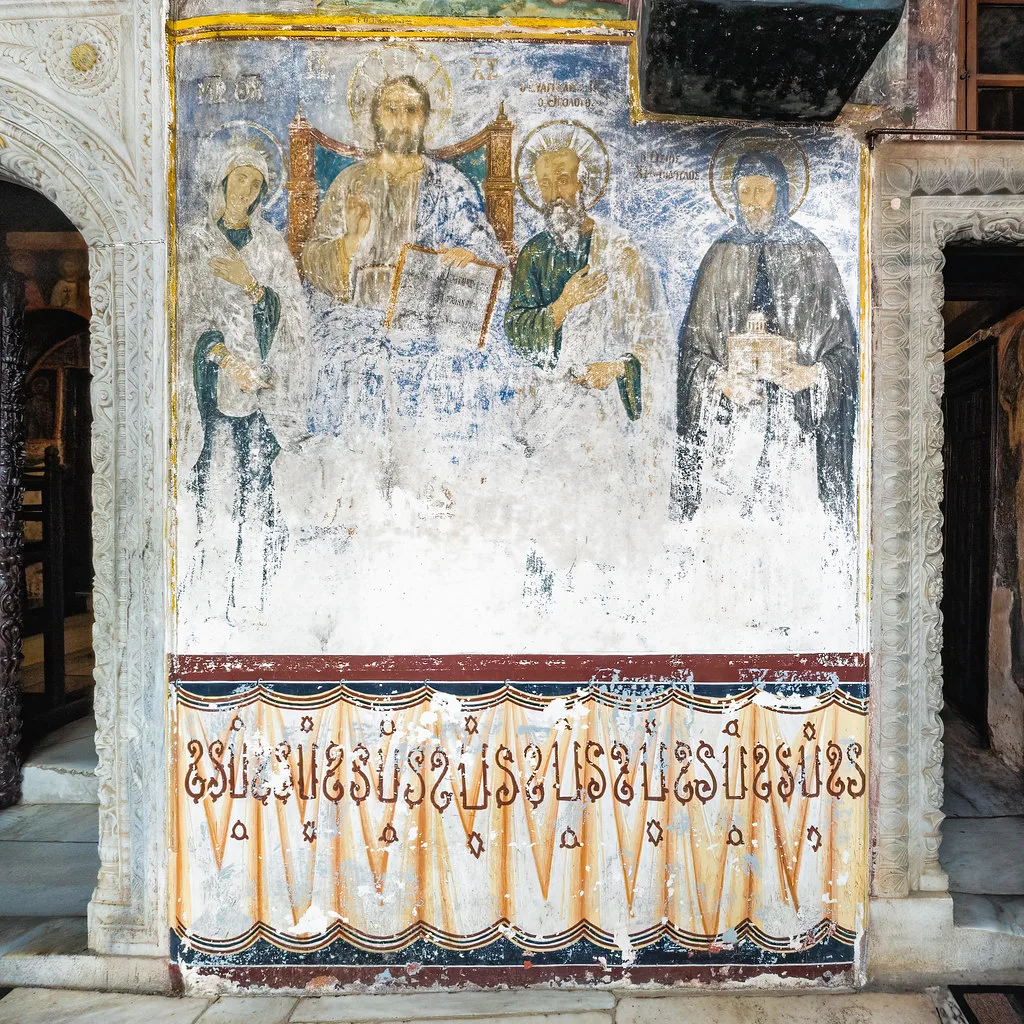
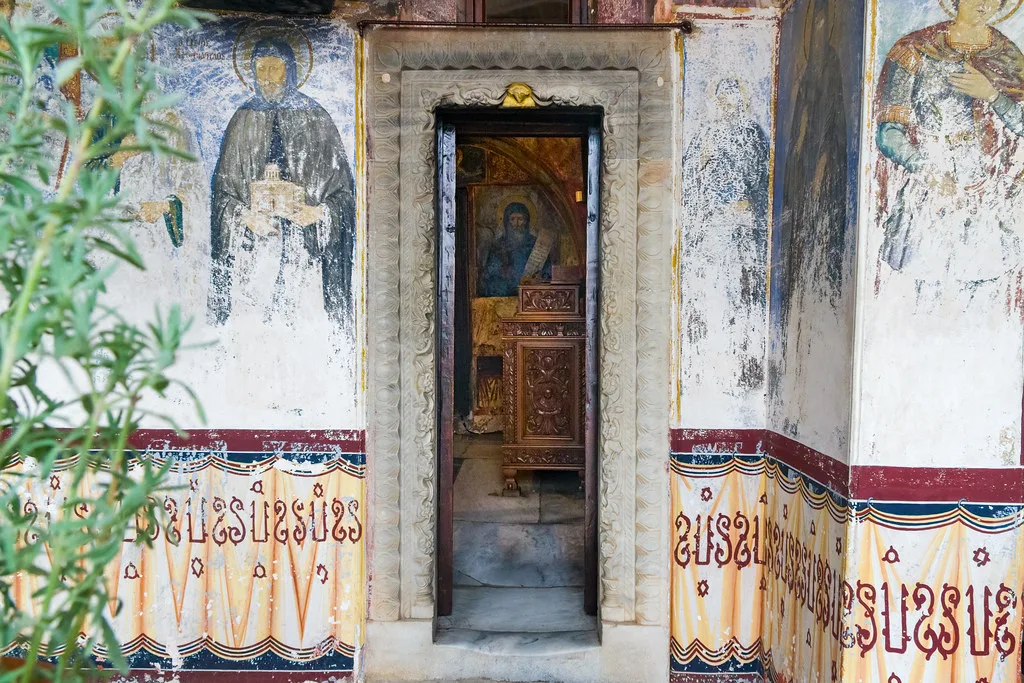
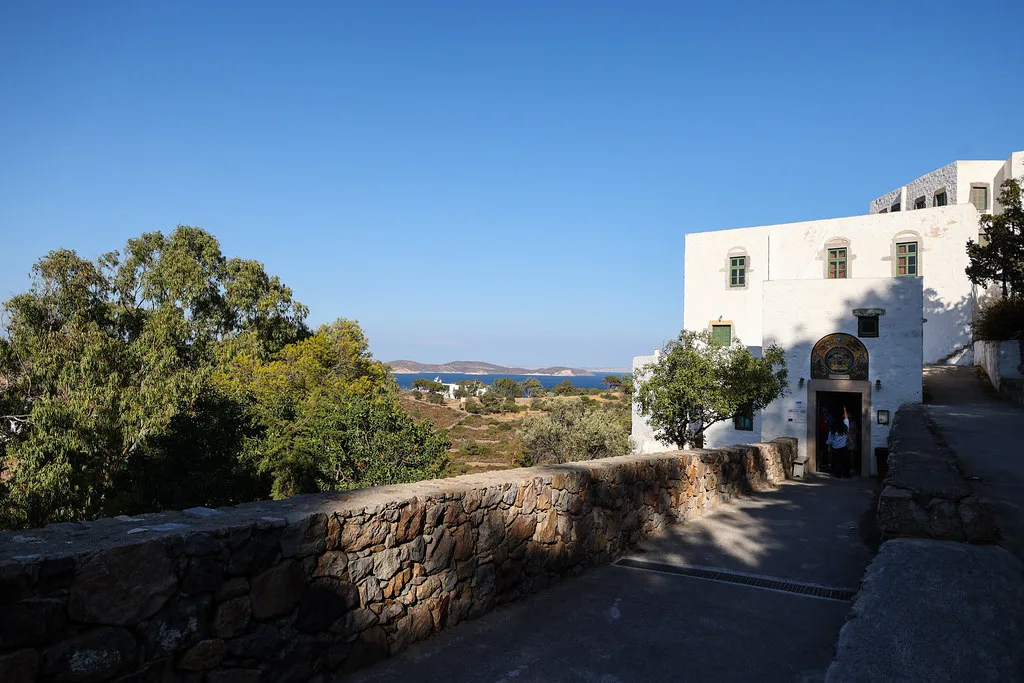
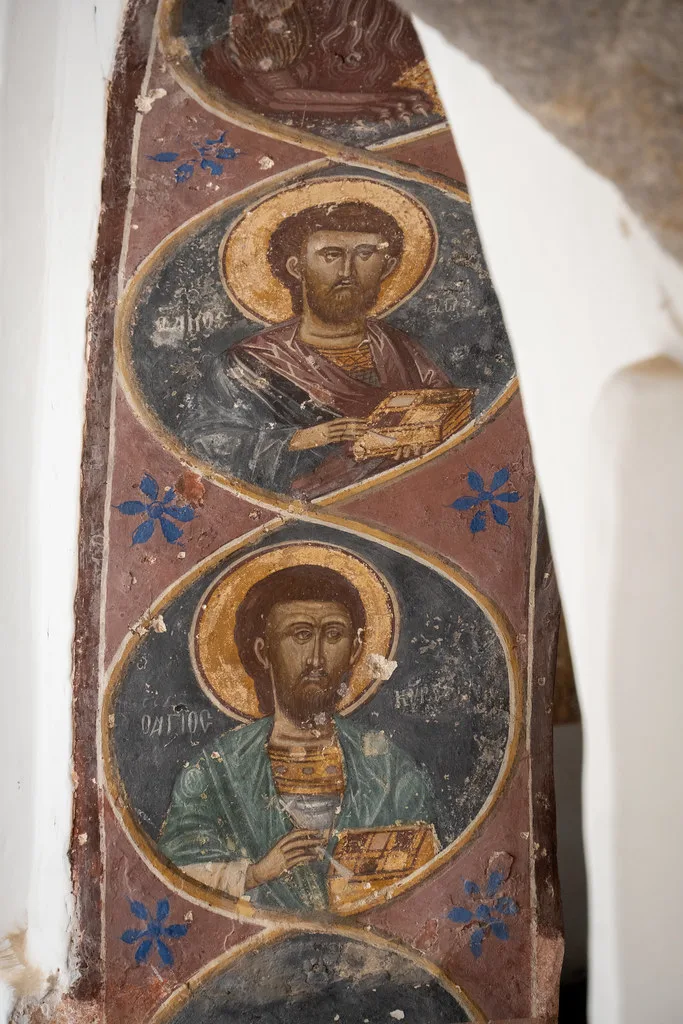
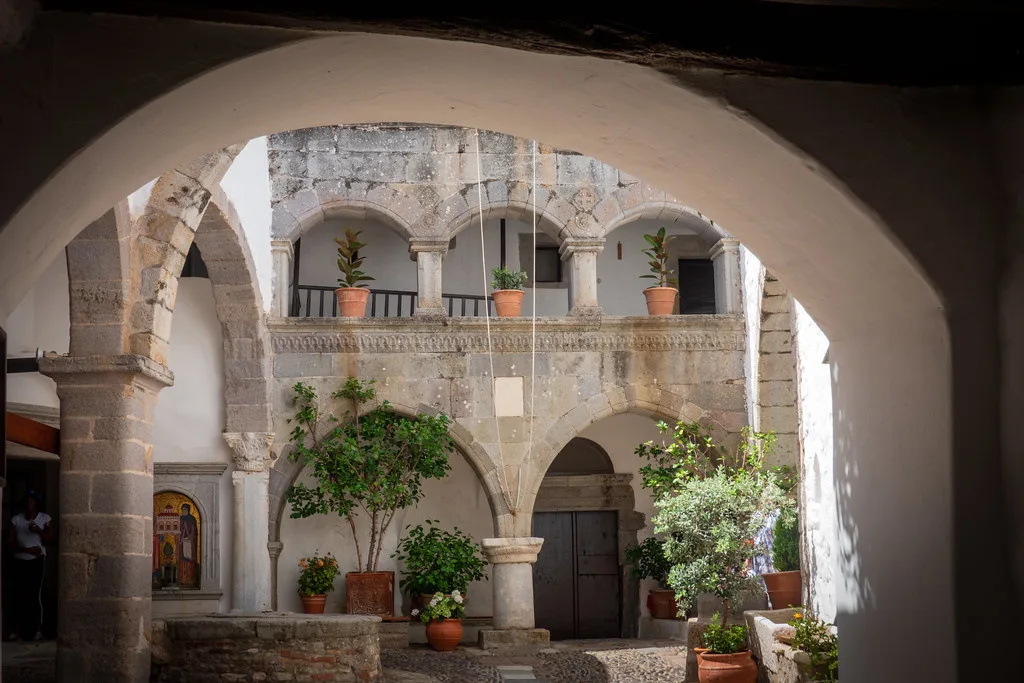
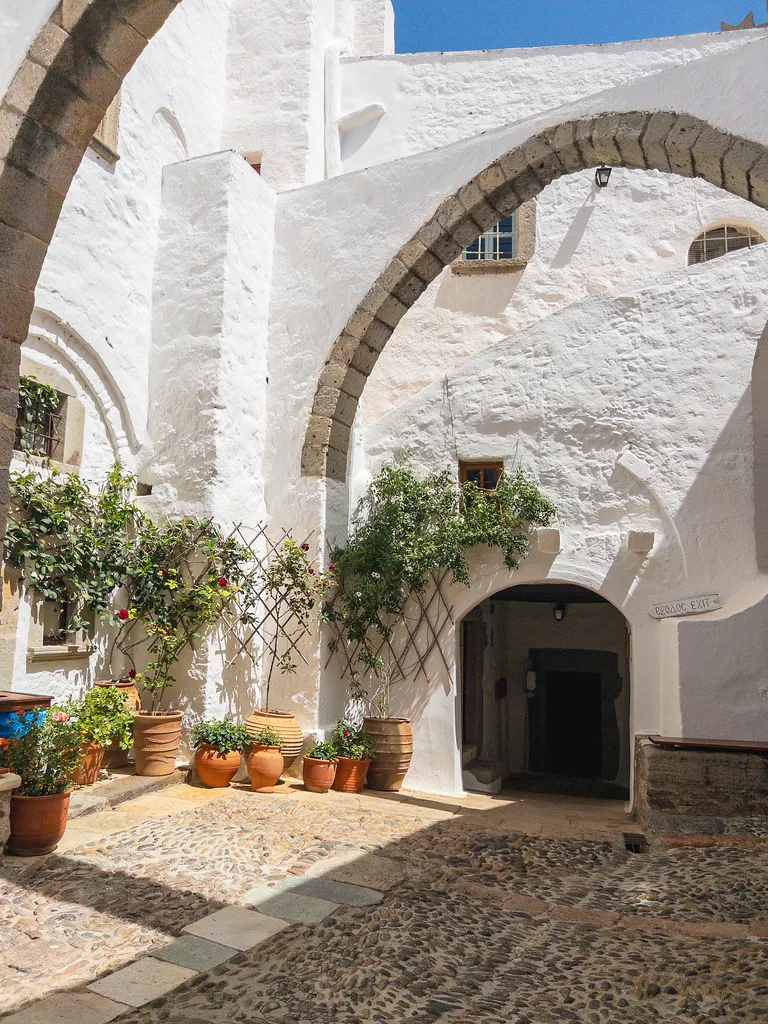
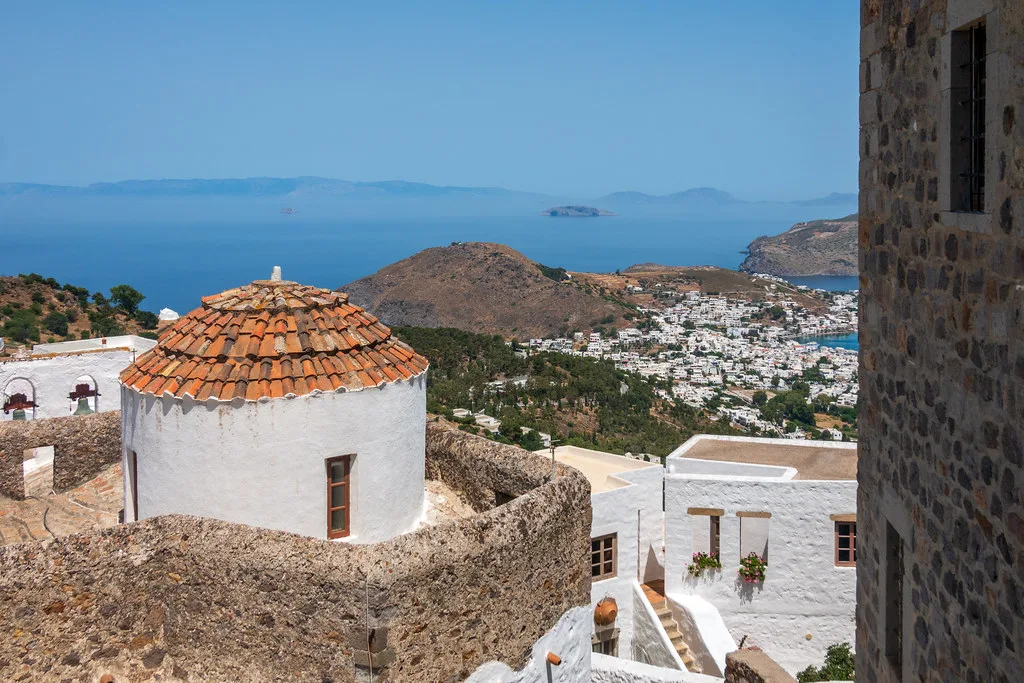
Image Credits
- Hero and gallery images: Wikimedia Commons (CC-BY-SA)
- Cave of the Apocalypse: Wikimedia Commons
- Monastery images: Wikimedia Commons
Weather & Best Time to Visit
Frequently Asked Questions
Q: What's the best time of year to visit Patmos on a cruise?
Typical range 45-86°F — holy island, peaceful; rain: Dry May-Sep; wet winters. Peak cruise months: Jun, Jul, Aug. Avoid months: N/A.
Q: Is there a severe weather or storm season that affects Patmos?
Patmos is not marked as a warm-water hurricane zone in our seasonal guide. Local concern: Small island; Meltemi winds Jul-Aug.
Q: What should I pack for Patmos's weather?
For Patmos, pack for 45-86°F — holy island, peaceful. Modest clothing for monastery; Comfortable walking shoes for hill to monastery; Sunscreen; Cash — limited ATMs
Q: Will rain ruin my Patmos port day?
Brief rain is common enough around Patmos that a flexible plan beats canceling. Monastery of St. John and Cave of Apocalypse are UNESCO; Small island — tender port
Q: Do cruise ships dock in Patmos?
No, Patmos is a tender port. Ships anchor in the bay near Skala, and passengers are ferried ashore by small boats. Tender times vary depending on weather and passenger volume; allow extra time for the crossing.
Q: How do I visit the Cave of the Apocalypse?
The Cave is halfway up the hill between Skala and Chora. Walk (steep 20 min), take a taxi for about €5, or join a ship excursion. Free entry but modest dress required. It is a working chapel — respectful behavior expected.
Q: Is the Monastery of St. John worth the entrance fee?
Absolutely. This 11th-century UNESCO World Heritage fortress-monastery is one of Greece's most significant spiritual sites. The treasury museum displays priceless Byzantine artifacts. Entry is €6 per person. Dress code enforced.
Q: Is Patmos walkable from the port?
Skala port village is flat and walkable. Main sites (Cave, Monastery, Chora) are uphill — steep but doable for fit travelers. Taxis readily available for €5-10 each way. Wheelchair users should note that Skala waterfront is accessible but the hill routes are not.
Q: Are there beaches on Patmos?
Yes — Grikos Bay and Psili Ammos are the most popular. Clear water, quiet atmosphere. However, Patmos is primarily a spiritual and cultural destination, not a beach island. Prioritize the Cave and Monastery.
Q: How much money should I bring?
Budget about €30-50 per person for a comfortable day: taxi fare round-trip (€10-20), monastery entry (€6), lunch (€10-15), water and snacks (€3-5). Bring extra for souvenirs. Cash preferred at most small establishments.