Réunion is a French department in the Indian Ocean with a live volcano at one end and a dead one at the other, and the dead one is more dramatic. Piton des Neiges, 3,070 m and the highest point in the Indian Ocean, collapsed and eroded into three vast amphitheatres — the cirques of Cilaos, Salazie and Mafate. Together with the ramparts and peaks they make up Pitons, cirques et remparts de l'île de La Réunion, inscribed by UNESCO in 2010 and covering 105,838 hectares, more than forty per cent of the island.
The problem for a cruise passenger is that a road map lies here. Everything is close and nothing is quick. The rule of thumb on Réunion's mountain roads is to divide the distance by twenty-five or thirty kilometres an hour, not sixty — and a coach is slower still. Mafate has no road into it at all. That single fact reshapes the whole day, and it is why the helicopter is on this page as a recommendation rather than an indulgence.
Last reviewed: 30 July 2026
Weather & Best Time to Visit
Captain's Logbook
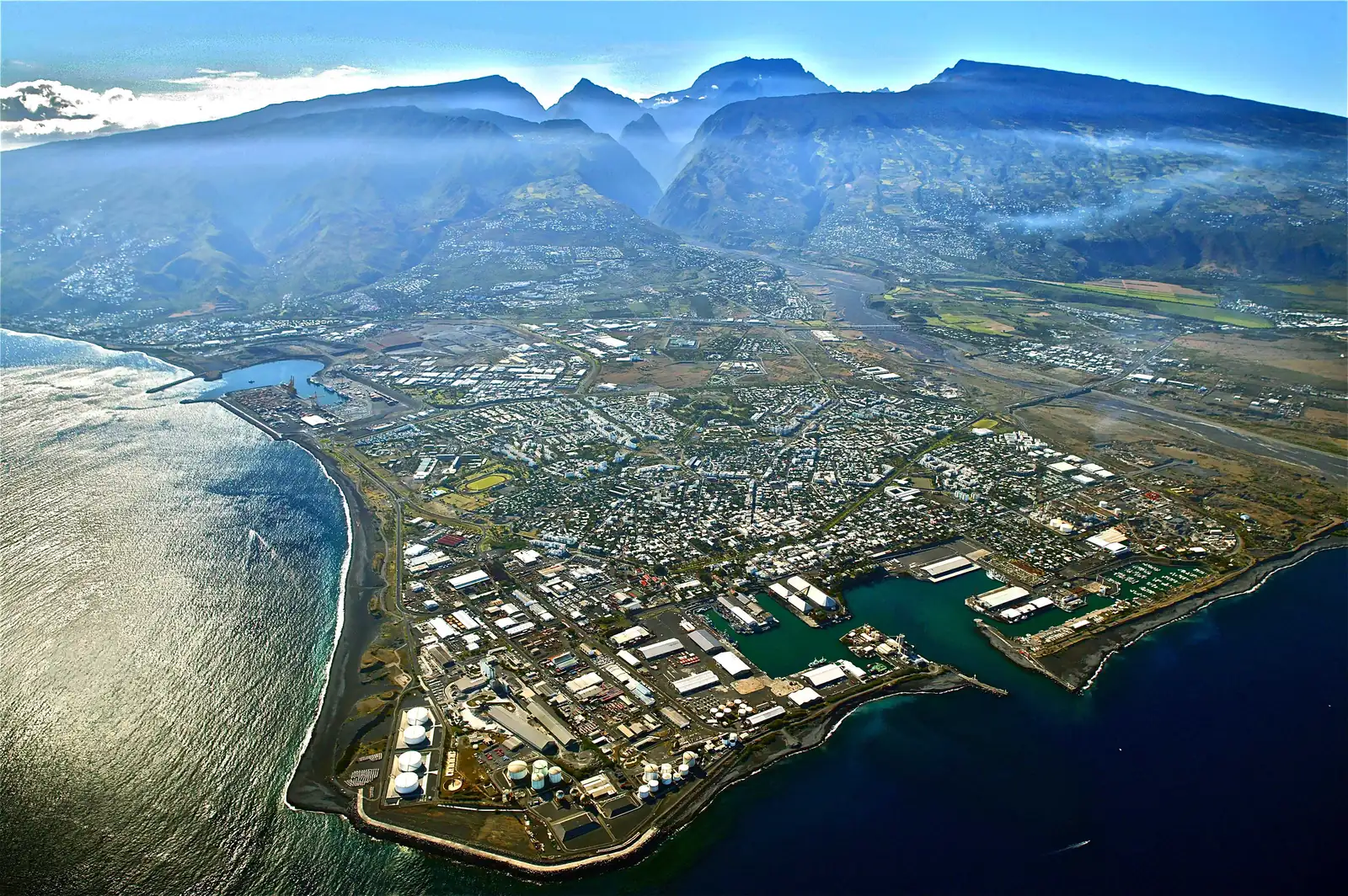
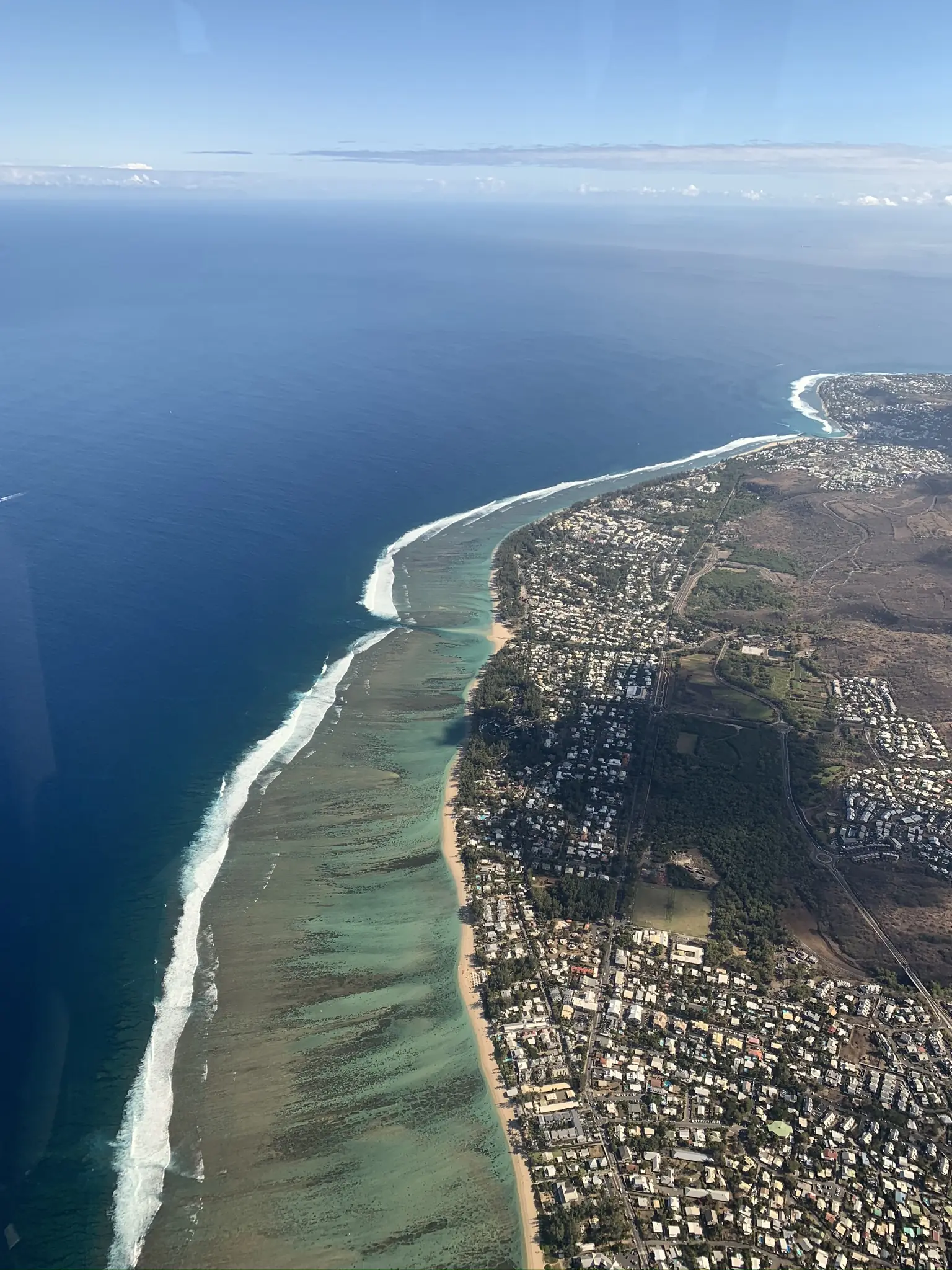
Le Port from the air. Port Est, the deep-water basin on the right, is where you berth — alongside, no tendering. Photo: Ville du Port, CC BY-SA 4.0 via Wikimedia Commons
An honest note before I begin: I have not stood on the quay at Le Port. What follows is read from the record — from the volcano observatory's daily bulletin, from the prefecture's own orders, from UNESCO's inscription file, from Météo-France, and from the helicopter operators' published tariffs. Soundings in another's wake, not my own footprints. When I sail here I will come back and log what I actually found.
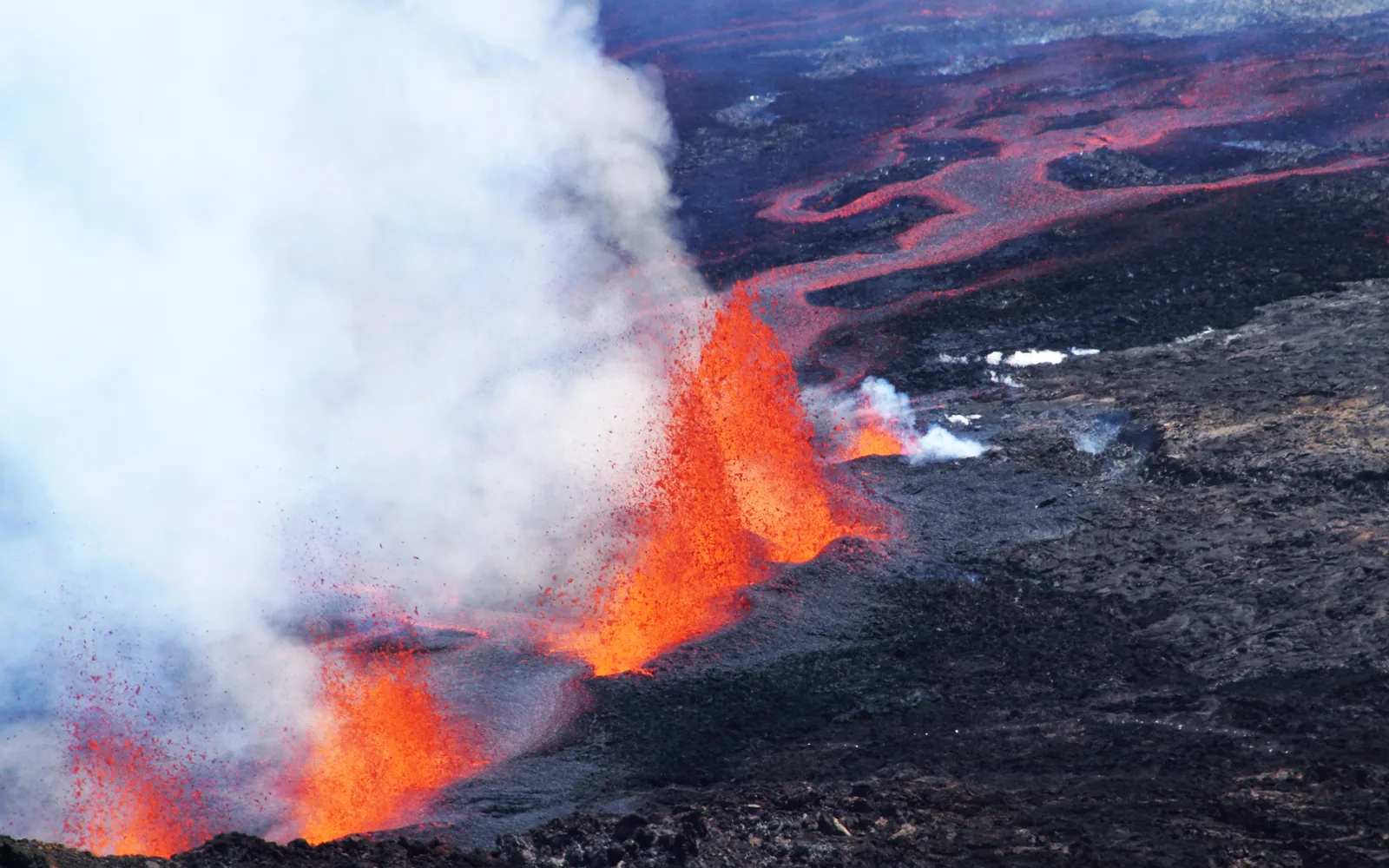
The first thing that struck me about Réunion is that it is a French department with a volcano that erupted twice in the first four months of 2026. The second was in February and it ran for fifty-eight days — stopping, restarting, stopping and restarting again — pushing somewhere between twenty-nine and thirty-six million cubic metres of lava out and building eight and a half hectares of new land into the sea. The island got bigger. I have looked at the photographs of those fountains more times than is useful — twenty to thirty metres of it, standing up out of a fissure — and I still cannot quite hold it as a thing that happened on a French department in an ordinary year. That is not a thing I have had to write about a port before.
Piton de la Fournaise in eruption. It went twice in the first four months of 2026; the second ran fifty-eight days and added 8.5 hectares of new land. Photo: Martin Mergili, CC BY 3.0 via Wikimedia Commons
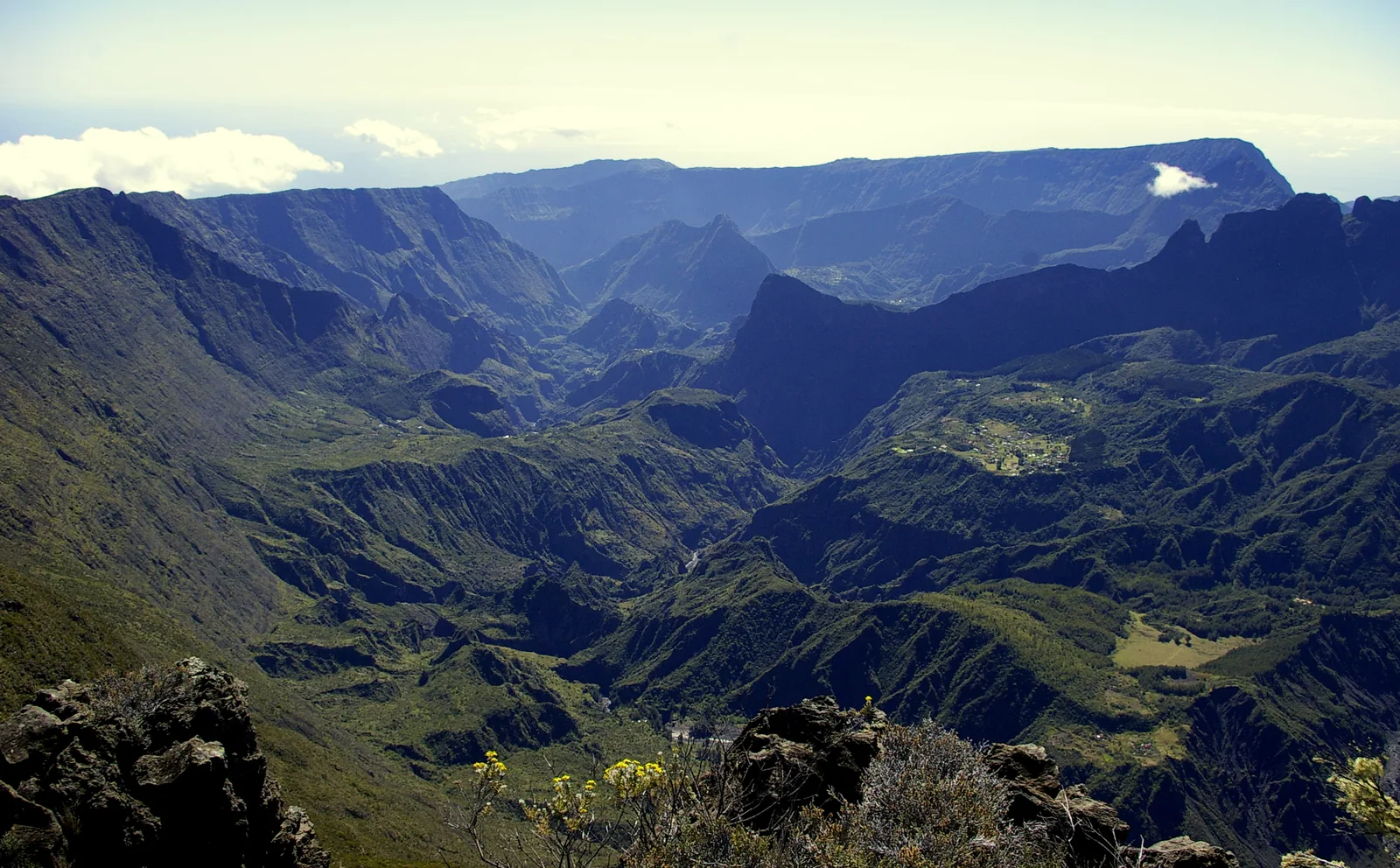
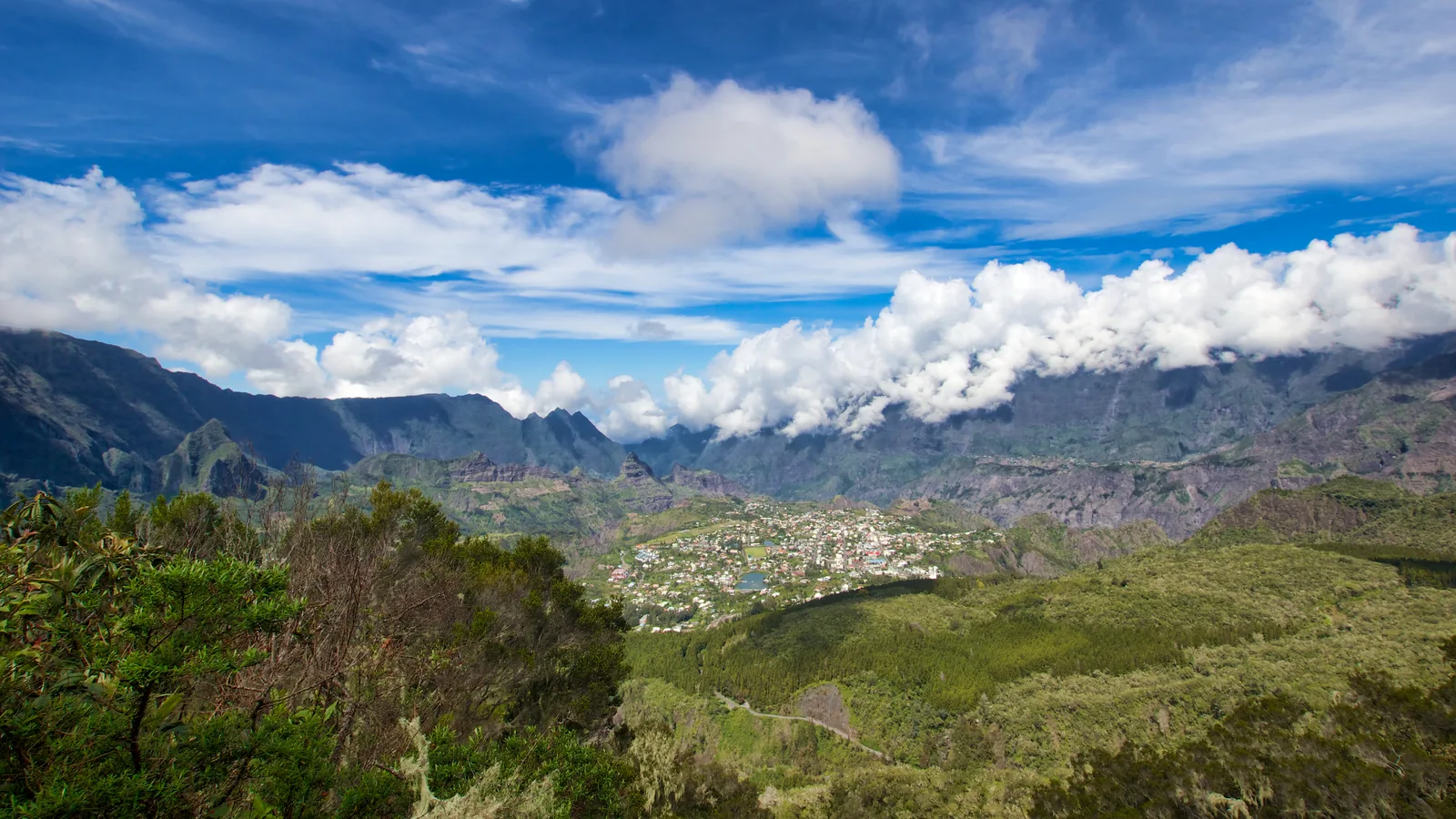
The second thing, and the one that reorganises everything, is that you cannot get to most of this island. Piton des Neiges is 3,070 metres and the highest point in the Indian Ocean, and when it collapsed it left three amphitheatres in its flanks. Two of them, Cilaos and Salazie, have roads — the road to Cilaos is thirty-five kilometres of about four hundred bends and single-lane rock tunnels. The third, Mafate, has no road at all. Several hundred people live in scattered hamlets down there. Their supplies and their post go in by helicopter.
Mafate from the Grand Bénare. Several hundred people live down there. Their supplies and their post go in by helicopter. Photo: Mamphi, CC BY-SA 3.0 via Wikimedia Commons
I keep coming back to that. Not as a curiosity — as the fact that decides your day. UNESCO inscribed Pitons, cirques et remparts in 2010 under the criteria for superlative natural phenomena and for habitats of outstanding biodiversity value, and the property runs to 105,838 hectares, over forty per cent of the island. On a nine-hour call you can reach a modest fraction of it by road, though not the part you would choose, and the fraction you cannot reach includes the best of it.
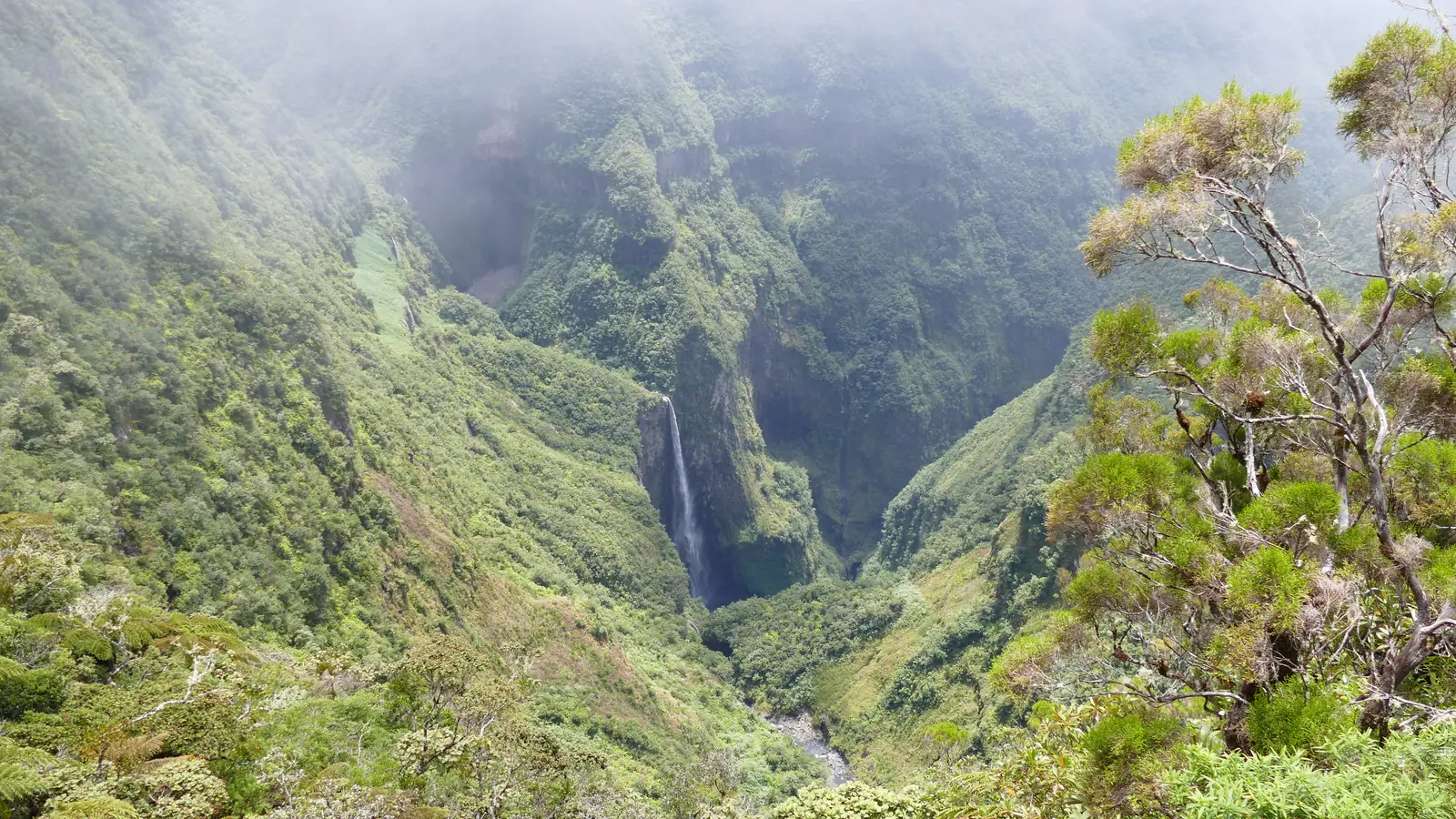
Which is how I ended up recommending a helicopter, something I would normally be sceptical of. Forty-five minutes from Saint-Gilles — eighteen minutes from the berth — puts all three cirques, the Trou de Fer gorge with its four waterfalls falling three hundred metres, Piton des Neiges and the volcano underneath you and gets you back aboard before lunch. It costs €305 to €350 a head, which is a great deal of money, and it is still the most sensible use of a port day here, because it is the only way to see the two things no road reaches and it removes the road-time risk that ruins everything else.
The Trou de Fer — four waterfalls into a gorge nearly 300 m deep. There is no adequate land viewpoint, which is half the argument for the flight. Photo: Jean-Louis Sicot, CC BY-SA 4.0 via Wikimedia Commons
The road-time risk is not theoretical, however tempting the map makes it look. The rule locals use is to divide the map distance by twenty-five or thirty kilometres an hour rather than sixty. Cilaos is two to two and a half hours each way from this berth. The volcano is the same. Every port-day plan I read that treated either as a casual add-on was written by someone looking at a map instead of a road.
There is one part of the research I want to set down plainly, because softening it would be a disservice. Swimming on this coast is regulated by prefectural order, and the regulation is enforced. Within three hundred metres of the shore, swimming and wave-powered activities are prohibited except in the lagoon and reef flats at Saint-Leu, L'Hermitage, La Saline, Saint-Pierre and Saint-Gilles, in netted enclosures, and in surveilled ZONEX zones. Maritime-brigade gendarmes conduct checks and issue fines. Since November 2025 there have been sixteen confirmed shark sightings along this coast; in one recent period thirty tiger and bull sharks were captured in these bays.
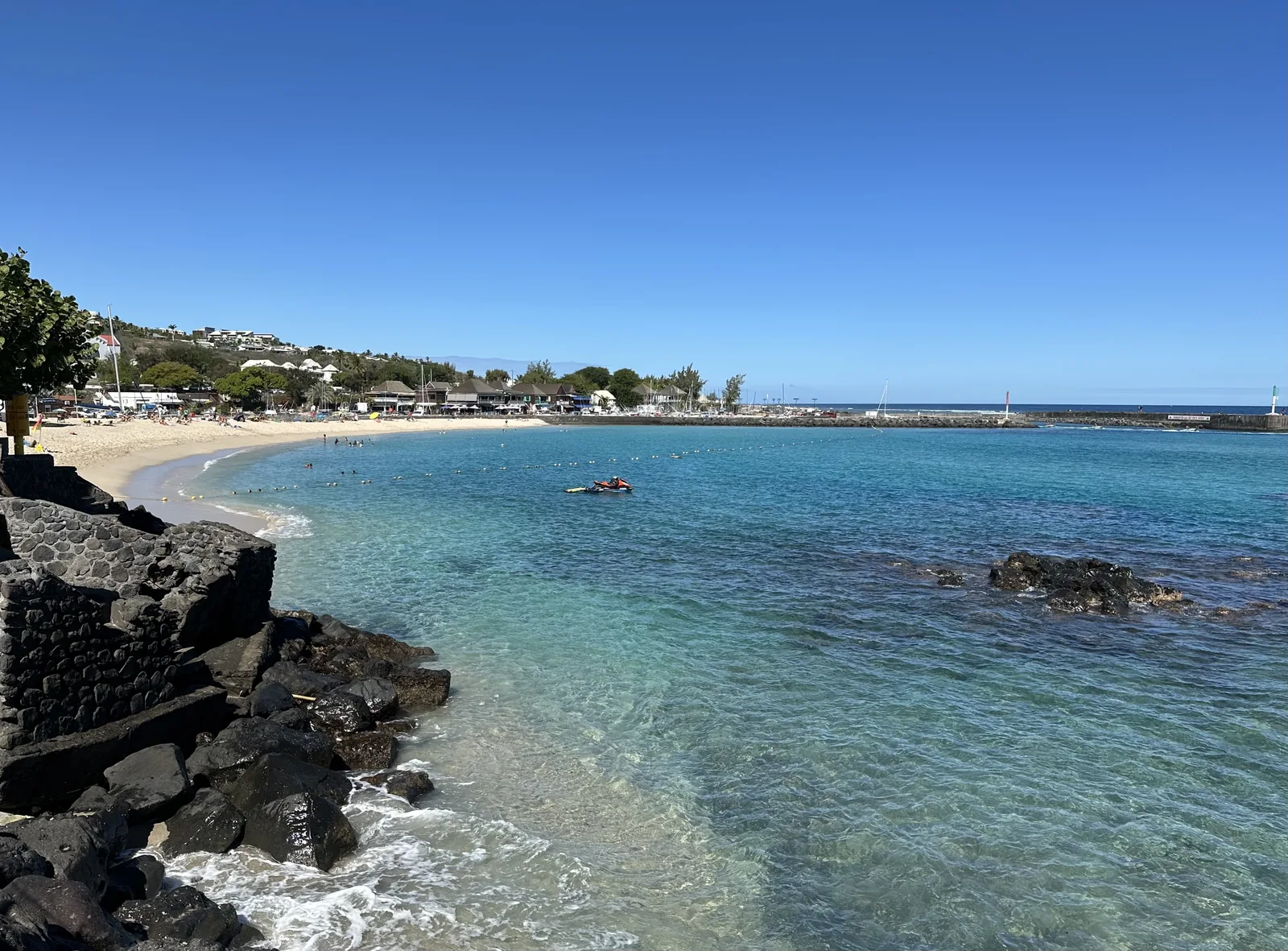
What protects the lagoon is not a net. It is the coral reef itself — a fringing reef that bull and tiger sharks do not come inside. The protection ends where the reef ends, and that is a short swim. The prefecture is blunt about the rest of it: public measures cannot eliminate the risk, and the absence of a sign does not imply permission. An empty beautiful beach on Réunion usually means a prohibited one. I keep hearing that as a warning read out over the sound of very warm, very quiet water, which is exactly the problem.
The lagoon at L'Hermitage. What protects it is the reef line you can see — and the protection ends exactly there. Photo: Leb Alex, CC BY-SA 4.0 via Wikimedia Commons
The history here runs differently from the rest of this voyage, and it is quite short. Réunion had no indigenous population — nobody lived here when Europeans arrived. Everything on the island is the product of settlement, slavery and indenture, layered in about three hundred and fifty years. Slavery was abolished on 20 December 1848, freeing around sixty-five thousand people, roughly sixty per cent of the island's entire population. That date is still the island's principal holiday, Fèt Kaf.
And then the detail that stopped me. On the very day of abolition — the same day — five hundred Indian indentured labourers disembarked. Between 1848 and 1860 some 47,285 more followed under five-year contracts, and the island's population doubled inside thirty-five years. The freedom and the replacement arrived on the same tide. My heart ached reading that, and I do not think it is possible to walk past a Tamil temple standing beside a Catholic church here without understanding that it is what that day built.
The music tells the same story. Maloya — inscribed by UNESCO on the intangible heritage list in 2009 — was made by Malagasy and African enslaved people on the sugar plantations, first for ancestral worship and then as a song of lament against slavery. It was suppressed and semi-clandestine into the 1970s. Its listing is a political fact as much as a cultural one, Music that was driven underground and then put on a world heritage list inside one lifetime is not really a cultural artefact; it is a verdict.
So the shape of the day, until I can tell you from experience: the first helicopter slot out of Saint-Gilles with a clear forecast, back down for lunch and an hour in the lagoon, inside the reef. If the sky is closed or the budget is not there, Salazie and Hell-Bourg instead — a real cirque, a real Creole village, and lunch, without the four hundred bends. What I realized, working through all of it, is that Réunion punishes ambition and rewards choosing one thing: the island is too big and too vertical to sample, and the people who try to see the volcano and a cirque on the same call see a windscreen.
Cruise Port Guide
Saint-Gilles-les-Bains, eighteen minutes south of the berth — the helicopter base, the lagoon, and the practical centre of a Réunion port day. Photo: Olaf Meister, CC BY-SA 4.0 via Wikimedia Commons
Réunion's single commercial port is the Grand Port Maritime de La Réunion at Pointe des Galets, in the commune of Le Port. It is unusual in France for combining five functions on one site: passenger terminal, commercial port, naval base, marina and fishing port. There are two basins about three kilometres apart — Port Ouest, the old harbour opened in 1886, and Port Est, opened in 1986, which is where you will be.
Cruise ships berth alongside at Port Est, at the gare maritime. There is no tendering. The access channel and turning circle were deepened from 13 to 16 metres and a 648 m quay built capable of working two 80,000-tonne vessels at once; ships over 290 m have berthed here. A 237 m ship drawing about 8 metres has a great deal of margin.
The terminal opens for cruise arrivals and departures and for the inter-island shuttle, and has free wifi. It is a working port rather than a cruise destination in its own right — everything you have come for is elsewhere on the island, and the drive times are the whole planning problem.
Getting Around Réunion
Cilaos, at the top of thirty-five kilometres and four hundred bends. Beautiful, and two and a half hours each way from the ship. Photo: Patrick Portes, CC BY-SA 4.0 via Wikimedia Commons
Book transport before you sail. This is the single most important practical sentence on this page. Île de La Réunion Tourisme runs shuttles to Le Port town, Saint-Gilles and Saint-Denis on some calls, but provision varies and it will not take you where the good things are.
Car hire is straightforward — French road law, drive on the right, EU, UK and US licences accepted for short visits, many local operators. The RN1 coastal motorway and the Nouvelle Route du Littoral, a twelve-kilometre viaduct partly built out over the sea, make the northern coastal run genuinely fast. Everything inland is slow.
The mountain-road reality, quantified, because this is where port days die. The RN5 to Cilaos climbs thirty-five kilometres and about four hundred bends from sea level to over 1,200 m through single-lane rock tunnels — one to one and a half hours from Saint-Louis alone, and Saint-Louis is already fifty kilometres from the berth. The volcano road runs via Bourg-Murat and takes about two and a half hours each way from here. Landslides and roadworks close sections, particularly in the wet season. Divide map distances by twenty-five to thirty kilometres an hour and you will not be surprised.
Réunion Port Map
Excursions & Experiences
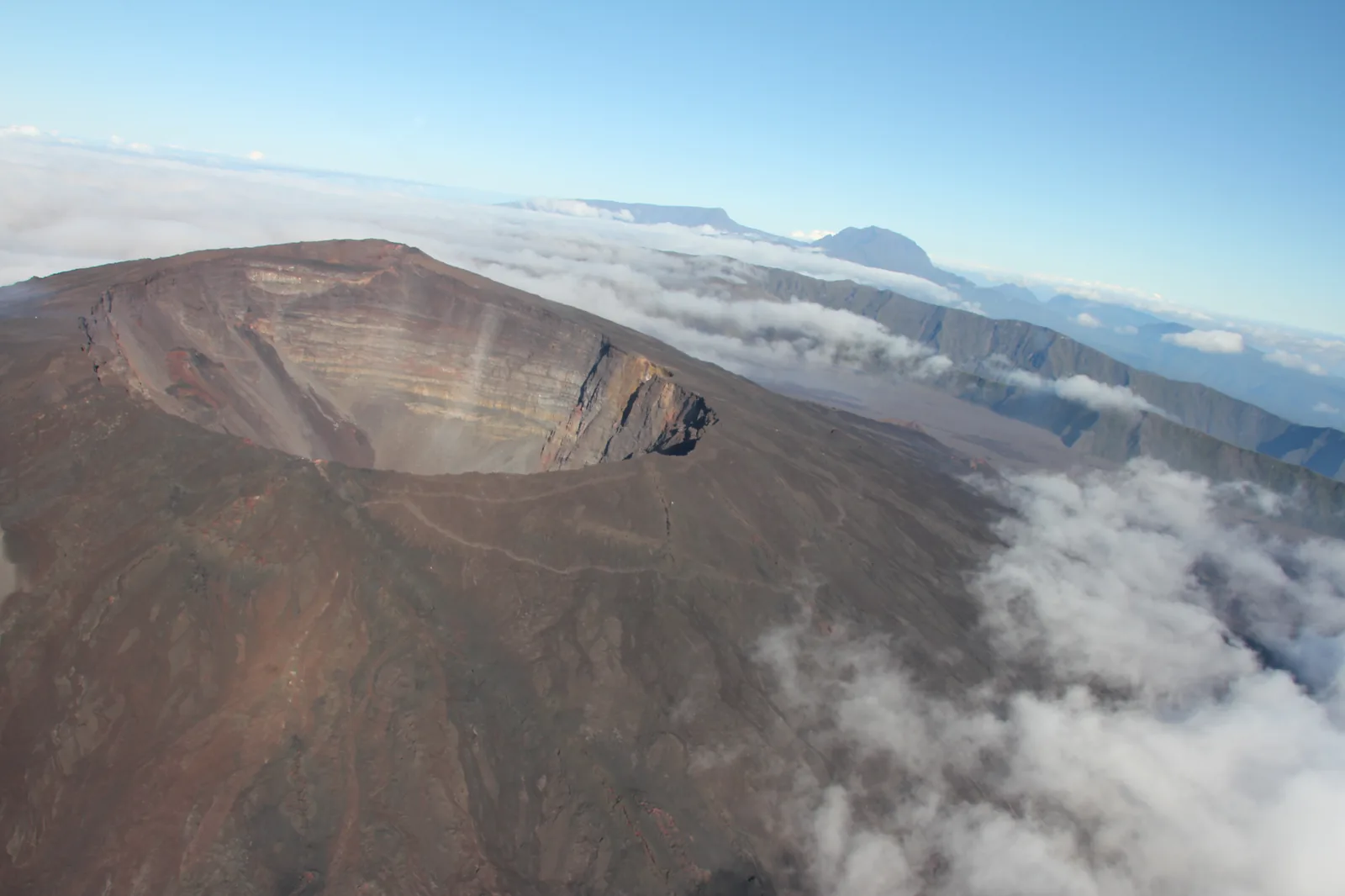
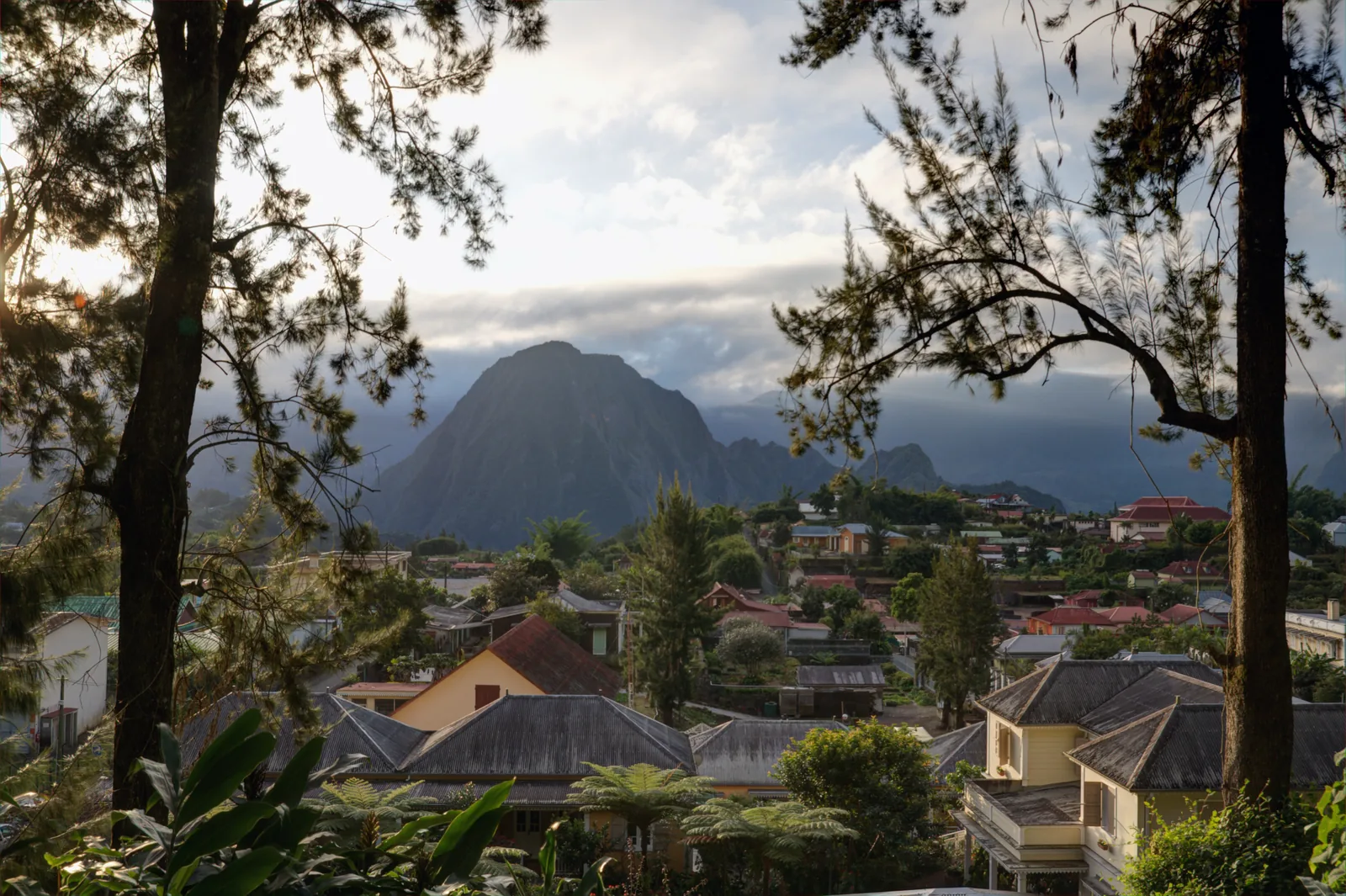
The volcano from the air — which is how most port-day passengers should see it, given that the road takes two and a half hours each way. Photo: Pouyot, CC BY-SA 4.0 via Wikimedia CommonsHell-Bourg in the Cirque de Salazie — listed among France's plus beaux villages, and the achievable cirque from this berth. Photo: Ekrem Canli, CC BY-SA 3.0 via Wikimedia Commons
Réunion punishes ambition. The island is too large, too vertical and too slow to sample, so the real decision is which single thing you are doing. Ranked for a roughly 08:00–18:00 call:
The one I would take
A helicopter flight from Saint-Gilles, earliest slot of the day. Eighteen minutes from the berth, 45 to 55 minutes airborne, aboard again by late morning. Corail Hélicoptères, Hélilagon and Mafate Hélicoptères all fly the circuit; the fare runs about €305 to €350 per person. It covers all three cirques, the Trou de Fer, Piton des Neiges and the volcano. Book the earliest slot — the interior clouds over through the morning and flights are curtailed or cancelled in poor visibility. Check which side of the aircraft gets the cirques on their routing, and be honest with yourself about motion sickness: the flying over the ramparts is not gentle.
By road, in order of sense
Cirque de Salazie and Hell-Bourg — the achievable cirque, about two hours each way. Up the RD48 through the gorge past the Voile de la Mariée waterfall, into Salazie and on to Hell-Bourg, listed among France's plus beaux villages for its restored Creole houses. View the Voile de la Mariée from the road: the trail to the base of the falls has been prohibited by municipal order since October 2014 and the commune posts continual rockfall warnings.
Le Maïdo — a belvedere at 2,200 m looking straight down into Mafate, and the best free view on the island. Go at dawn. It clouds over by mid-morning almost every day. Pair it with the west coast and the lagoon on the way back.
Piton de la Fournaise / Pas de Bellecombe — about two and a half hours each way, so five hours of driving for a caldera viewpoint. From the belvedere you see the enclos floor, the Formica Léo scoria cone and the Dolomieu summit; you do not see lava unless there is an eruption running. As of 30 July 2026 the enclos is partially reopened under prefectural order n° 2026-627 of 7 May 2026, with the Sentier Kapor still closed under the 2026 lava flow. Check the prefecture before committing, and accept that you may drive five hours to look at fog.
Cirque de Cilaos — the most beautiful road on the island and the least sensible port-day choice. Four hundred bends, two to two and a half hours each way, and closure-prone. Magnificent if you have three days; not on a nine-hour call.
Saint-Denis and the west coast, at leisure — Creole architecture on the rue de Paris, the Jardin de l'État, the Barachois seafront, a Tamil temple, lunch, and an hour in the lagoon at L'Hermitage. The low-stress option, genuinely pleasant, and the right answer for anyone with mobility limits, a late arrival, or a cyclone-season sky.
On booking.Book ahead for the helicopter — the early departures go first and they are the only ones worth having, and operators will not hold a seat for a walk-up off a ship. A ship excursion costs more than arranging it independently, but it comes with a guaranteed return to the vessel, which matters more here than at most ports because every inland option is two hours from the gangway. If you would rather travel independently, reserve a car or a driver before you sail: the shuttle will not take you anywhere the good things are, and improvising a vehicle at the terminal on a call day is how people end up spending the day in Le Port.
What not to attempt. Mafate on foot — it is a multi-day trek, not a walk. Cilaos and the volcano on the same day — the arithmetic does not close. And swimming anywhere that is not the lagoon, a netted beach or a flagged ZONEX zone, which is both illegal and dangerous.
On cost. The helicopter at €305–350 a head is the largest single excursion price on this voyage's Indian Ocean leg, and for a couple it is €600–700. Weigh it honestly against what else the day could buy. My view is that it is worth it here and at very few other ports, for the specific reason that forty per cent of this island has no road and this is the only way to see it.
History & Heritage
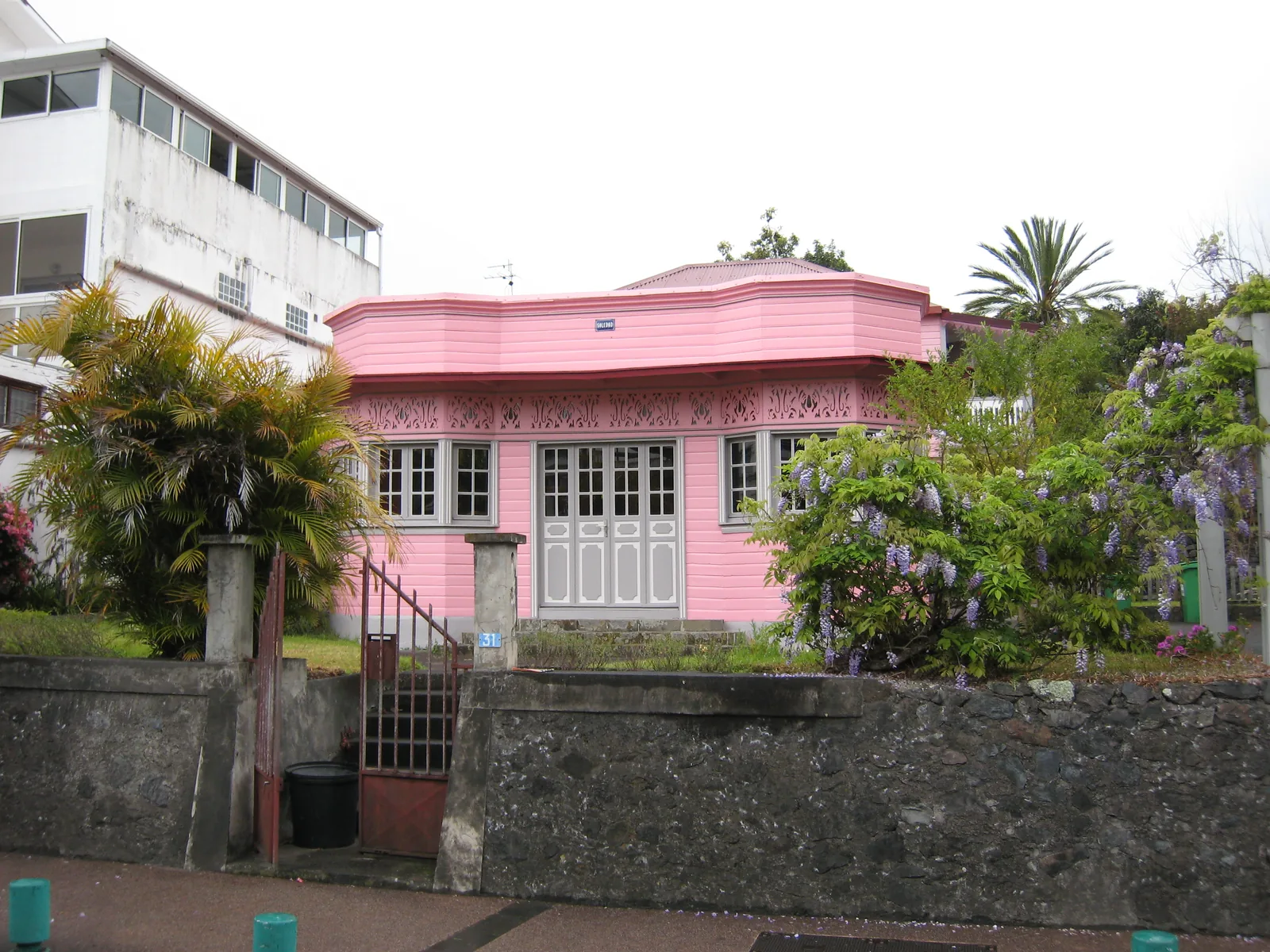
A Creole house at Cilaos. The architecture, like the population, is an assembly — Malagasy, African, Indian, Chinese and European, laid down in three hundred and fifty years. Photo: Matthieu Sontag, CC BY-SA 3.0 via Wikimedia Commons
Réunion had no indigenous population. Nobody lived here when Europeans arrived; the island was occupied by France in the early seventeenth century as Île Bourbon and permanently settled from the 1660s. Everything on it is the product of settlement, slavery and indenture, layered in about three hundred and fifty years, and there is no pre-colonial layer beneath.
Slavery was abolished here by the proclamation of Sarda Garriga on 20 December 1848, freeing around sixty-five thousand people — some sixty per cent of the island's total population. The date is still the island's principal public holiday, Fèt Kaf.
On the same day, five hundred Indian indentured labourers came ashore. Engagisme — renewable five-year contracts for workers recruited outside the colony — became the plantation economy's answer to abolition immediately. Some 47,285 indentured workers arrived between 1848 and 1860, and the island's population doubled inside thirty-five years.
That is why the population is Malagasy, East African, Indian — both Tamil Malbar and Gujarati Muslim Zarab — Chinese and European, and why a Tamil temple, a Catholic church and a mosque sit within sight of one another in most towns. Maloya, the music enslaved Malagasy and African people made on the sugar plantations, was inscribed on UNESCO's intangible heritage list in 2009; it was suppressed and semi-clandestine into the 1970s, so that listing is a political act as much as a cultural one.
Food & Drink Ashore
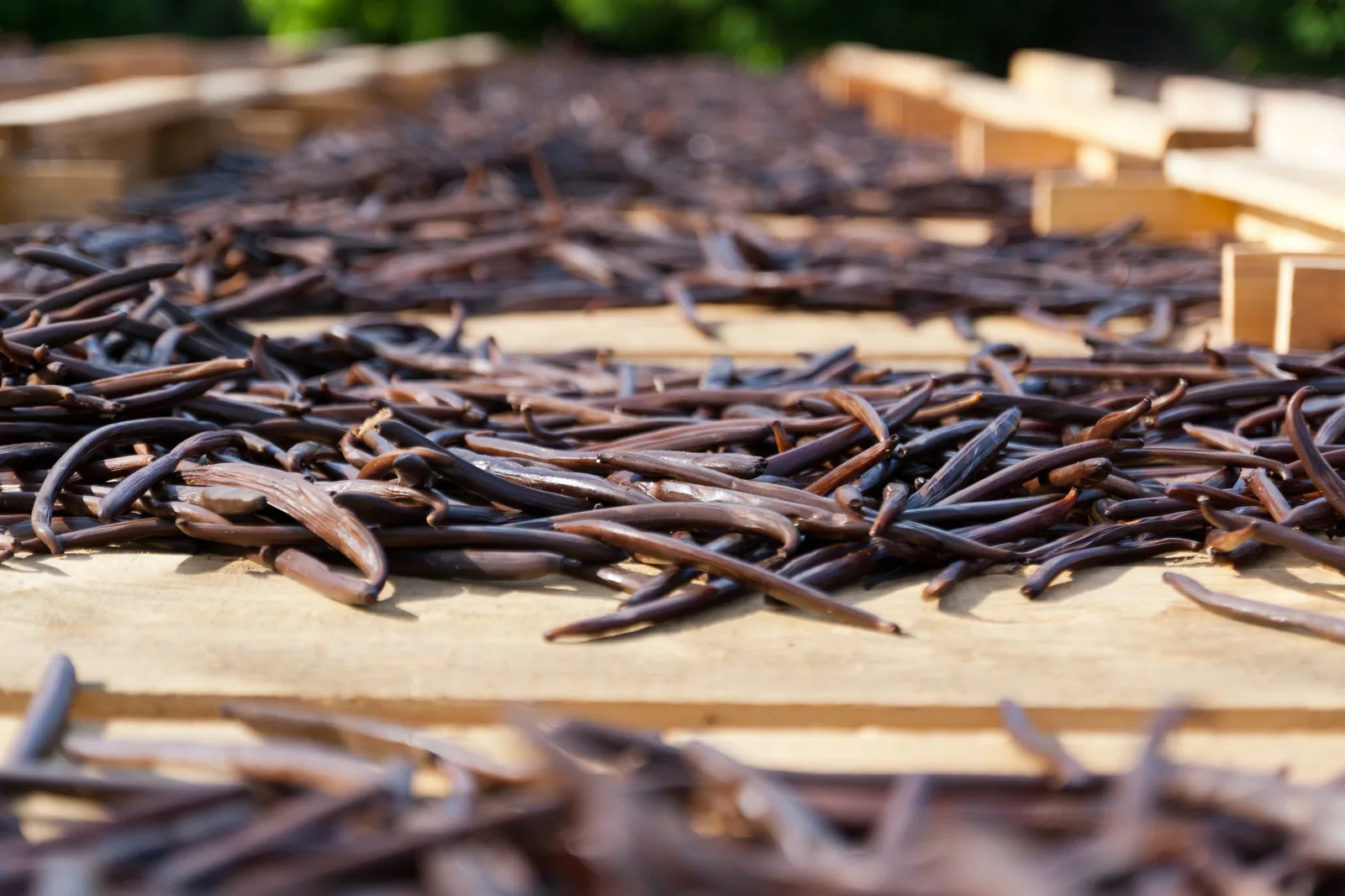
Vanille Bourbon drying at Bras-Panon. The hand-pollination method that made commercial vanilla possible anywhere was worked out here in 1841 by Edmond Albius, an enslaved boy of twelve. Photo: Ekrem Canli, CC BY-SA 3.0 via Wikimedia Commons
Cari is the base of everything — meat or fish cooked down with onion, garlic, turmeric, ginger and tomato, served with rice, grains (beans or lentils) and a rougail. The rougail itself is the side: crushed tomato, onion and chilli, sometimes with salt cod (rougail morue) or sausage (rougail saucisse, which has a decent claim to be the national dish).
Samoussas are the street snack everywhere, an inheritance from the indentured population. Lentilles de Cilaos, grown on the steep volcanic slopes of that cirque, are the classic partner to a cari. And vanille Bourbon is named for the island's old name: the hand-pollination technique that made commercial vanilla possible anywhere in the world was worked out here in 1841 by Edmond Albius, an enslaved boy of twelve.
Vin de Cilaos is worth ordering for the curiosity rather than the quality. Grown between 600 and 1,300 metres, it is France's highest vineyard, and has carried the vin de pays de Cilaos designation since 2004. Rhum arrangé — rum macerated with fruit, vanilla and spice — is the standard digestif and the standard thing to carry home.
Know Before You Go
Réunion is in the EU but NOT in the Schengen area, and this is the commonest paperwork failure at this port. A Schengen visa does not admit you. If your nationality needs a visa for France, the sticker must specifically read Valable pour la Réunion. Passengers who obtained a Schengen visa for a European segment of a world cruise have found it does not work here. EU, EEA, Swiss, Andorran and Monégasque citizens need only a national identity card.
Swimming is restricted by law, not by advice. Within 300 m of the coast, swimming and wave-powered activities are prohibited except in the lagoon and reef flats at Saint-Leu, L'Hermitage, La Saline, Saint-Pierre and Saint-Gilles; in netted enclosures; and in surveilled ZONEX zones such as Boucan Canot, Roches Noires and L'Étang-Salé. Gendarmes check and fine. Swimming with fins, mask and snorkel was re-authorised within the 300 m band in March 2025, with the official advice not to do it alone.
The lagoon's protection is the reef, not a barrier. Bull and tiger sharks do not come inside the fringing reef — and the protection ends where the reef ends, which is a short swim. The prefecture states plainly that public measures cannot eliminate the risk and that the absence of signage does not imply permission. Red flag means swimming forbidden; yellow-orange dangerous but supervised; green safe and supervised.
The volcano and its trails close, and not only for eruptions. Access to the enclos Fouqué is governed by prefectural order and is shut outright when the alert rises. As of 30 July 2026 the enclos is partially reopened under order n° 2026-627 of 7 May 2026, with the Sentier Kapor buried under the 2026 flow. A rockfall on the Pas de Bellecombe staircase separately closed the enclos and forced the evacuation of eight hikers. Check before you commit.
Cyclone season runs 15 November to 30 April — which covers a March or April world-cruise call. The 2025–26 season produced eleven named storms, six of them cyclones, though Réunion itself was spared. The realistic risk to your day is not a direct hit but a shortened or missed call: a raised alert closes roads, businesses and the port, and heavy rain closes the mountain roads independently.
Tipping is not expected. French law includes service in restaurant bills. Round up or leave a few euros for good service; there is no ten-to-twenty per cent convention, and tipping North American style reads oddly here.
Depth Soundings Ashore
Piton des Neiges — 3,070 m, the highest point in the Indian Ocean, and the collapsed volcano whose flanks are the three cirques. Photo: B.navez, CC BY-SA 3.0 via Wikimedia Commons
A few things about Réunion that only make sense once someone says them out loud:
The island grew by 8.5 hectares in 2026. The February-to-April eruption ran fifty-eight days and built a lava platform out into the sea. There is new ground on Réunion that did not exist when this voyage's itinerary was drafted.
People live in Mafate and there is no road to them. Several hundred, in scattered îlets — La Nouvelle is the largest — connected by more than 140 km of marked trails. Supplies and post arrive by helicopter. It is the only part of the French Republic like it.
Piton des Neiges is the highest point in the Indian Ocean, at 3,070 m — higher than anything on Madagascar, Mauritius or the Seychelles.
The west coast is the dry side. Le Port and Saint-Gilles sit in the rain shadow; the east coast and the interior are among the wettest places on Earth for multi-day rainfall records. You may leave the ship in sunshine and drive into a wall of water in an hour.
The prohibition on swimming is why the beaches look empty. Visitors read an empty beach as a find. On this coast it usually means a banned one.
Practical Information
Currency: the euro. Réunion is a French department; there is no currency change from mainland France, cards are near-universally accepted and contactless is standard. Carry some cash for mountain villages, gîtes and roadside stalls in Cilaos, Salazie and Hell-Bourg.
Language: French, and Réunion Creole in daily life. English is not widely spoken once you leave Saint-Denis and the Saint-Gilles tourist strip.
Connectivity: Réunion is part of the French mobile market and EU roaming rules apply to EU and EEA SIMs. UK and other non-EU SIMs roam at international rates. Coverage is good on the coast and patchy to absent inside the cirques and on the volcano road. The maritime terminal has free wifi.
Accessibility and stamina.Low energy: Saint-Denis, the Barachois seafront and the lagoon at L'Hermitage — flat, short drives on motorway, and the honest good option. Moderate: the helicopter, which is a short transfer and a seat, though boarding involves a step up and the flight is not smooth. High: anything inland — Salazie, Cilaos, Maïdo and the volcano all involve two to five hours in a vehicle on winding mountain roads, which is punishing for anyone prone to travel sickness and simply long for everyone.
Every image on this page comes from Wikimedia Commons under the license noted and is credited to its creator below. In the Wake does not claim authorship of these images; when we can add our own photographs from a future visit, we will.
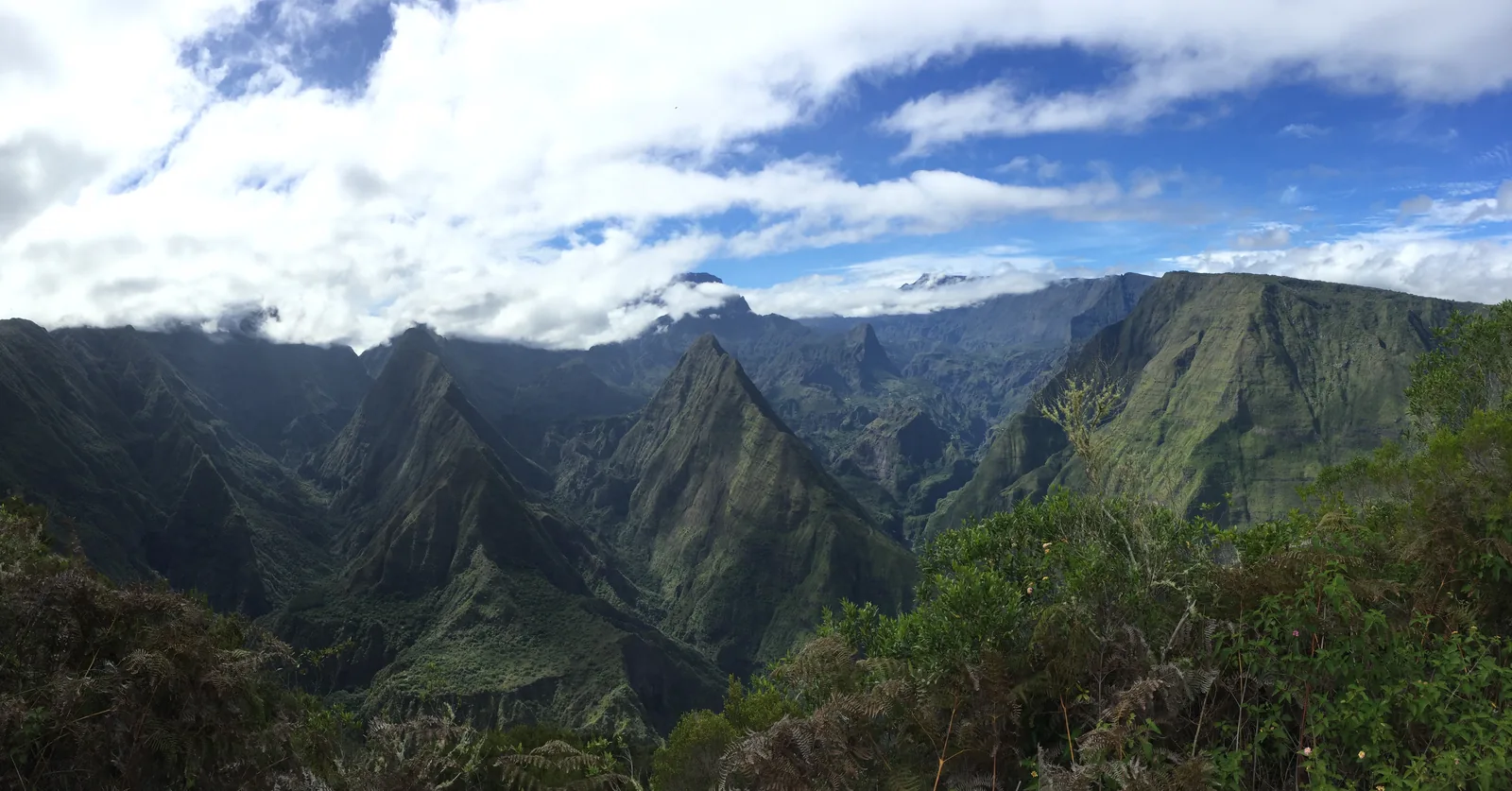
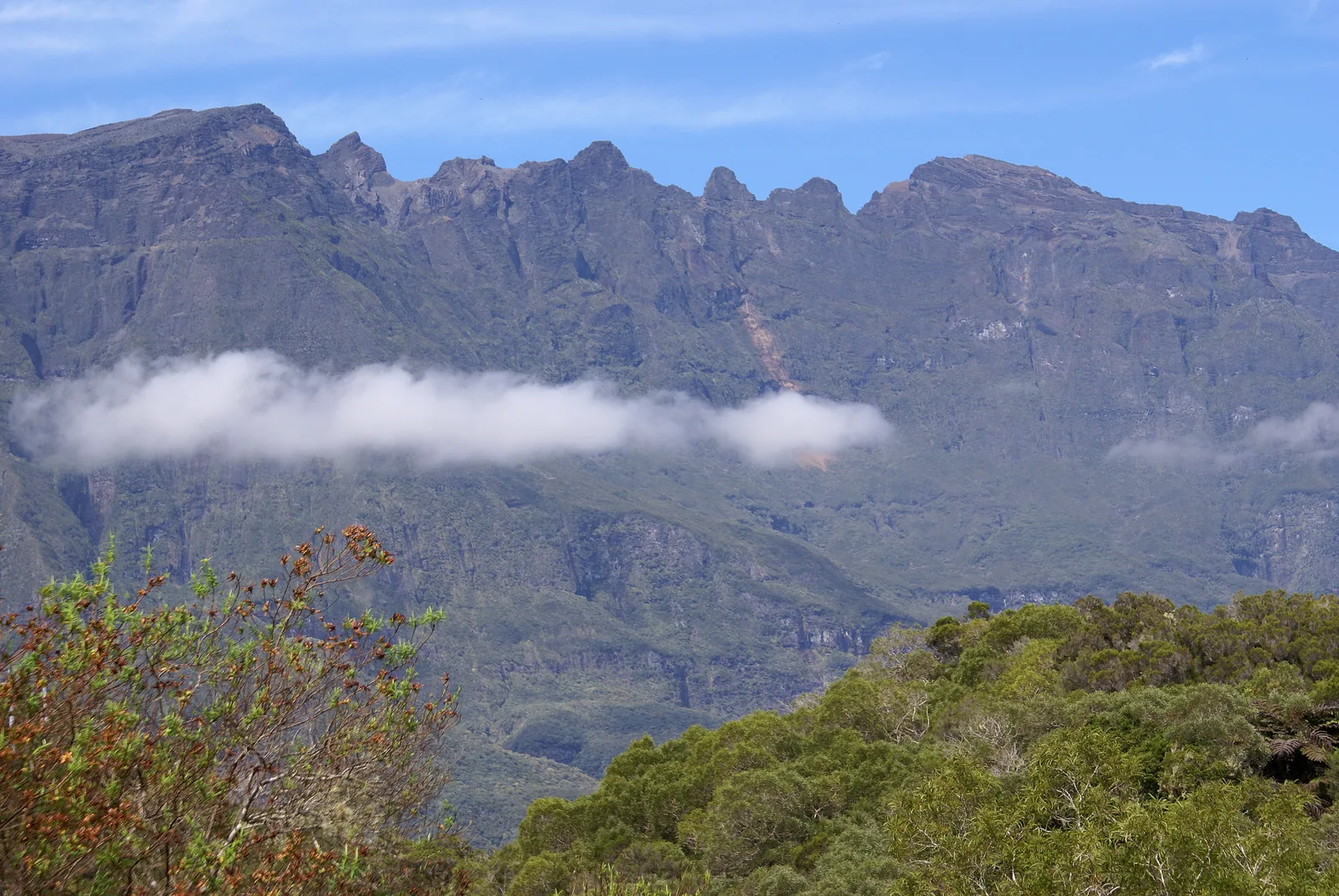
Cirque de Mafate from Cap Noir (page header image) — Air miasma, CC BY-SA 4.0
Le Port from the air — Ville du Port, CC BY-SA 4.0
Piton de la Fournaise in eruption — Martin Mergili, CC BY 3.0
Mafate from the Grand Bénare — Mamphi, CC BY-SA 3.0
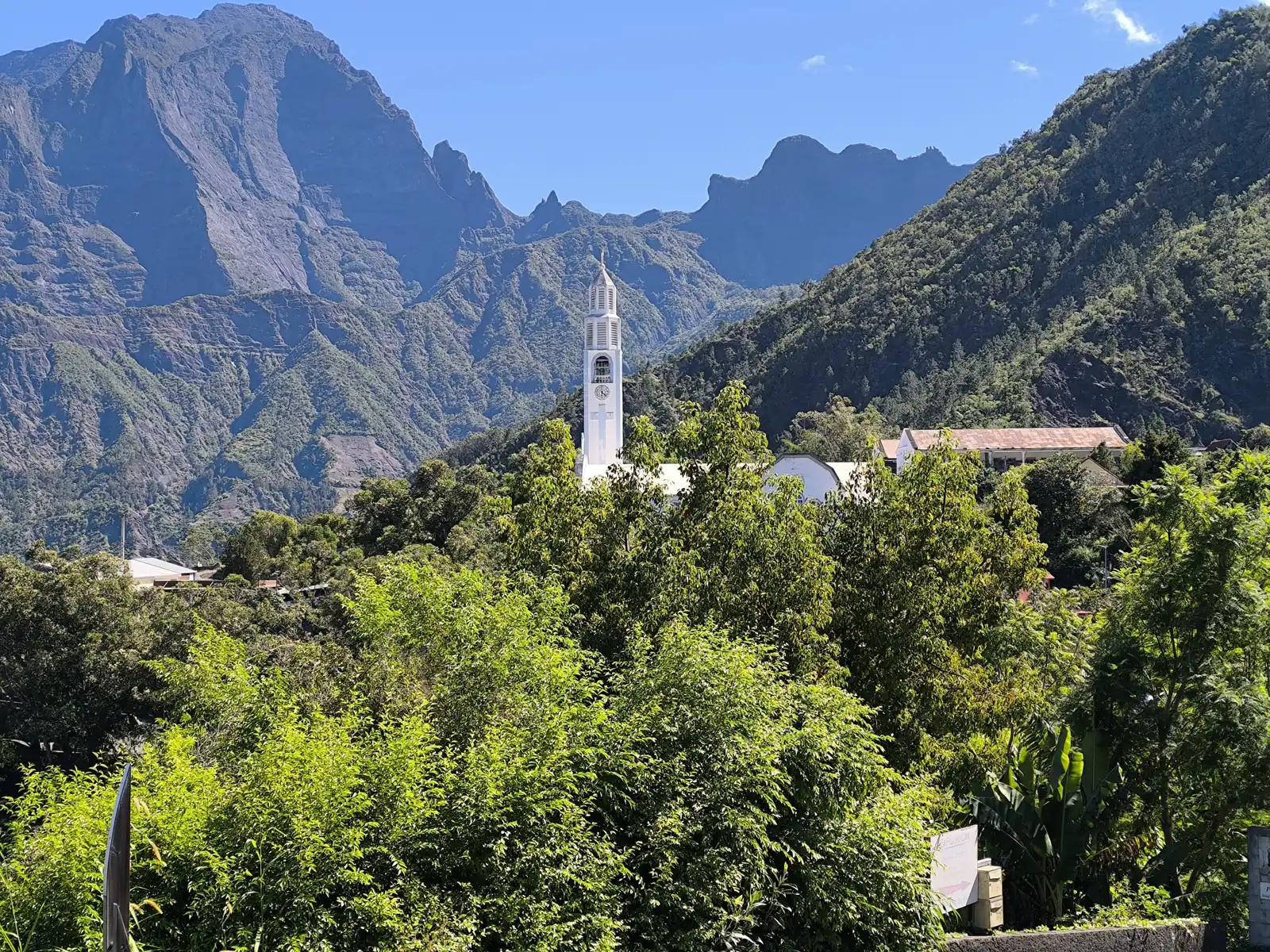
Notre-Dame des Neiges at Cilaos, under the rim — Clémenceau Lauret, CC BY-SA 3.0
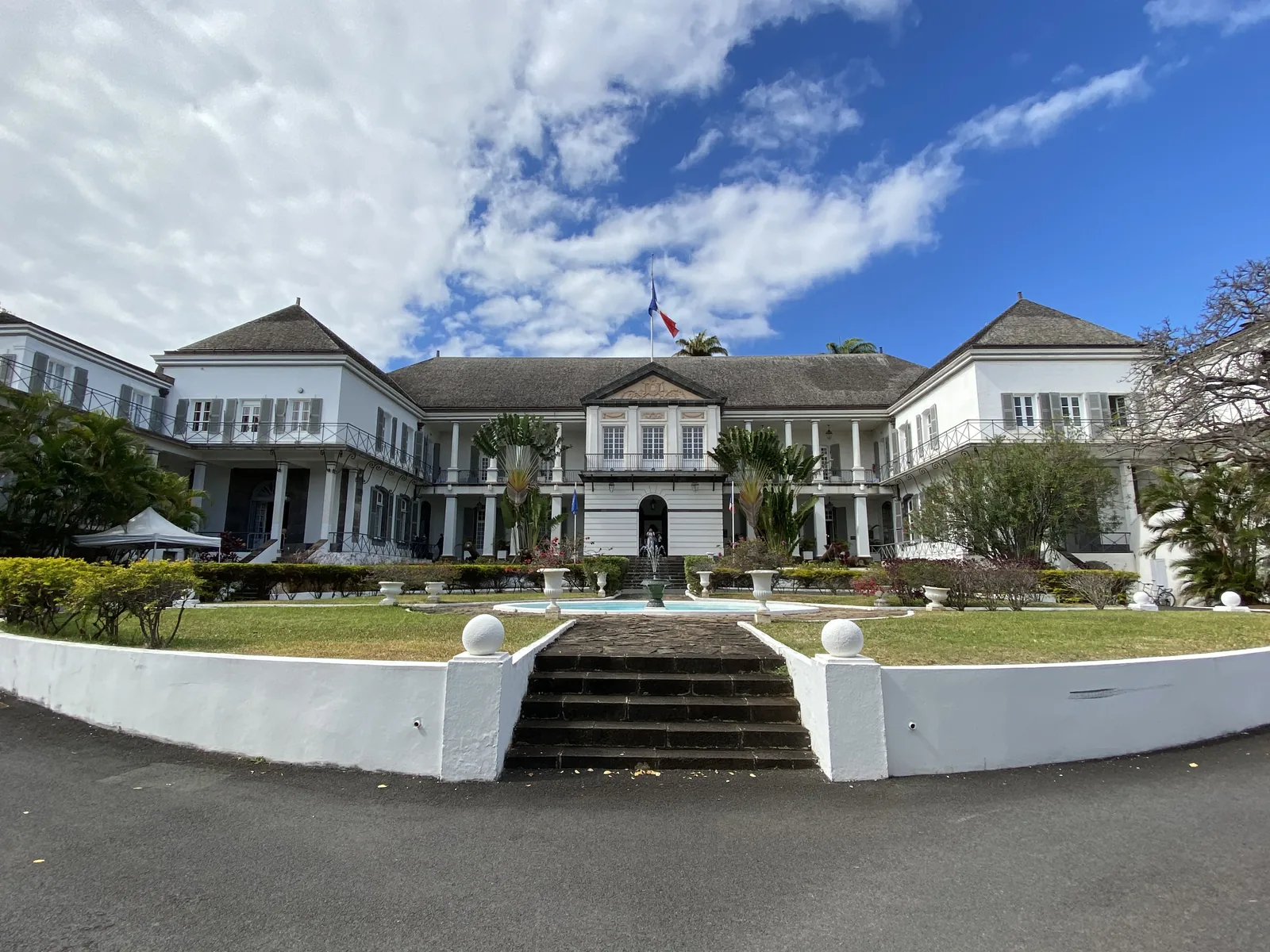
The Préfecture in Saint-Denis — ThomM8710, CC BY-SA 4.0
Frequently Asked Questions
What is the best time of year to visit La Réunion?
May to October — the cooler, drier austral winter — is the island's best window, with clearer interiors and the safest hiking. A world-cruise call, though, will fall in March or April, at the tail of the wet season and inside the cyclone season. Expect around 26–27 °C, real humidity, and afternoon cloud over the mountains almost every day. February is both the warmest month at 27.1 °C mean and the wettest at 280 mm.
What should I pack for Réunion's weather?
Light layers and a genuine waterproof, because the interior rains hard and without much warning. Add something properly warm if you are going inland — Cilaos sits at 1,200 m and the Plaine des Cafres is cold enough to surprise people who packed for a tropical island. Proper shoes with grip for anything off tarmac, reef-safe sunscreen and a hat, and motion-sickness remedies: the mountain roads and the helicopter both earn them.
Will rain ruin my Réunion port day?
It can reshape it, and on a March or April call that is a real possibility. The west coast where you berth sits in a rain shadow and is the driest part of the island, so the port itself is often fine while the interior is not. The interior clouds over through the morning nearly every day, which is why anything scenic — the helicopter, Le Maïdo, the volcano belvedere — is a dawn activity. Heavy rain also closes mountain roads outright through landslides.
Does La Réunion have a cyclone season, and could my call be cancelled?
Yes. The South-West Indian Ocean cyclone season runs 15 November to 30 April, which covers a typical world-cruise call. The 2025–26 season produced eleven named storms, six of which became cyclones, though Réunion itself was spared; Cyclone Garance struck the island directly the season before. The realistic risk is not a direct hit on your day but a shortened or missed call — a raised alert closes roads, businesses and the port, and a ship will not berth into one.
Do cruise ships tender at Réunion?
No. Ships berth alongside at Port Est, the deep-water basin opened in 1986, at the gare maritime. The channel and turning circle were dredged from 13 to 16 metres and the 648 m quay can work two 80,000-tonne ships at once; vessels over 290 m have berthed there. There is a great deal of margin for a world-cruise ship.
Is the helicopter flight worth €305–350?
At this port, unusually, yes. Forty per cent of Réunion is a UNESCO property and the two best things in it — the Cirque de Mafate and the Trou de Fer gorge — have no road and no adequate land viewpoint. A 45- to 55-minute flight from Saint-Gilles, eighteen minutes from the berth, covers all three cirques, the Trou de Fer, Piton des Neiges and the volcano, and has you back aboard by late morning. It also removes the road-time risk that wrecks every land excursion here. Book the earliest slot: the interior clouds over through the morning and flights are curtailed in poor visibility.
Can I get to the volcano on a port day?
Marginally, and only as an organised excursion leaving at first light. Pas de Bellecombe is about two and a half hours each way from Le Port — five hours of driving for a caldera viewpoint. From the belvedere you see the enclos floor, the Formica Léo cone and the Dolomieu summit, but you do not see lava unless an eruption is running. As of 30 July 2026 the enclos is only partially reopened, under prefectural order n° 2026-627 of 7 May 2026, with the Sentier Kapor still buried under the 2026 flow. Check the prefecture before committing, and accept you may drive five hours to look at fog.
Can I visit the Cirque de Mafate?
Not on a port day, except from the air. Mafate has no road into it — none. Several hundred people live there in scattered îlets, of which La Nouvelle is the largest, connected by more than 140 kilometres of marked trails, and their supplies and post arrive by helicopter. Walking in is a multi-day trek from Le Maïdo, Sans-Souci or Dos d'Âne. The realistic options are the helicopter, or the Maïdo belvedere at 2,200 m looking straight down into it — which is free, and which you should reach at dawn.
Where am I allowed to swim on Réunion?
This is regulated by prefectural order, not by advice, and it is enforced. Within 300 metres of the coast, swimming and wave-powered activities are prohibited except in three cases: in the lagoon and reef flats at Saint-Leu, L'Hermitage, La Saline, Saint-Pierre and Saint-Gilles; inside netted enclosures; and in surveilled ZONEX zones such as Boucan Canot, Roches Noires and L'Étang-Salé. Maritime-brigade gendarmes carry out checks and issue fines. Swimming with fins, mask and snorkel was re-authorised within the 300 m band in March 2025, with official advice not to do it alone.
How real is the shark risk?
Current, not historical. Since 4 November 2025 there have been sixteen confirmed shark sightings at Saint-Paul, Le Port, Saint-Leu and L'Étang-Salé, and in one recent period thirty tiger and bull sharks were captured in the bays along this coast. What protects the lagoon is the fringing coral reef itself, which those species do not enter — and the protection ends where the reef ends, which is a short swim. The prefecture states plainly that public measures cannot eliminate the risk and that the absence of signage does not imply permission. An empty, beautiful beach here usually means a prohibited one.
Do I need a visa for Réunion if I already have a Schengen visa?
Almost certainly yes, and this is the commonest paperwork failure at this port. Réunion is an EU outermost region but is <strong>not part of the Schengen area</strong>. A Schengen visa does not admit you: if your nationality requires a visa for France, the sticker must specifically read <em>Valable pour la Réunion</em>. Passengers who obtained a Schengen visa for a European segment of a world cruise have found it does not work here. EU, EEA, Swiss, Andorran and Monégasque citizens need only a national identity card. Verify against your own nationality rather than assuming from the Schengen list.
How much does a day in Réunion cost, and do I tip?
The euro is the currency and prices are French — not cheap. The helicopter is the big line at €305–350 a head; everything else is ordinary European cost. Cards are near-universally accepted and contactless is standard, but carry cash for mountain villages and roadside stalls in Cilaos, Salazie and Hell-Bourg. Tipping is not expected: French law includes service in restaurant bills. Round up or leave a few euros for good service. There is no ten-to-twenty per cent convention here and tipping American-style reads oddly.
Is Saint-Denis worth the trip?
It is pleasant and it is close — 15 to 25 minutes on the coastal motorway. Creole colonial architecture along the rue de Paris, the Jardin de l'État, the Grande Mosquée Noor-e-Islam, and the Barachois seafront with its cannons. But it is thoroughly French-provincial-with-palms, and for a first and only visit the interior beats the capital comfortably. Saint-Denis is the right answer for anyone with mobility limits, a late arrival, or a sky that has closed the mountains.




_Mafate_(version_am%C3%A9lior%C3%A9e).jpg)


.jpg)

