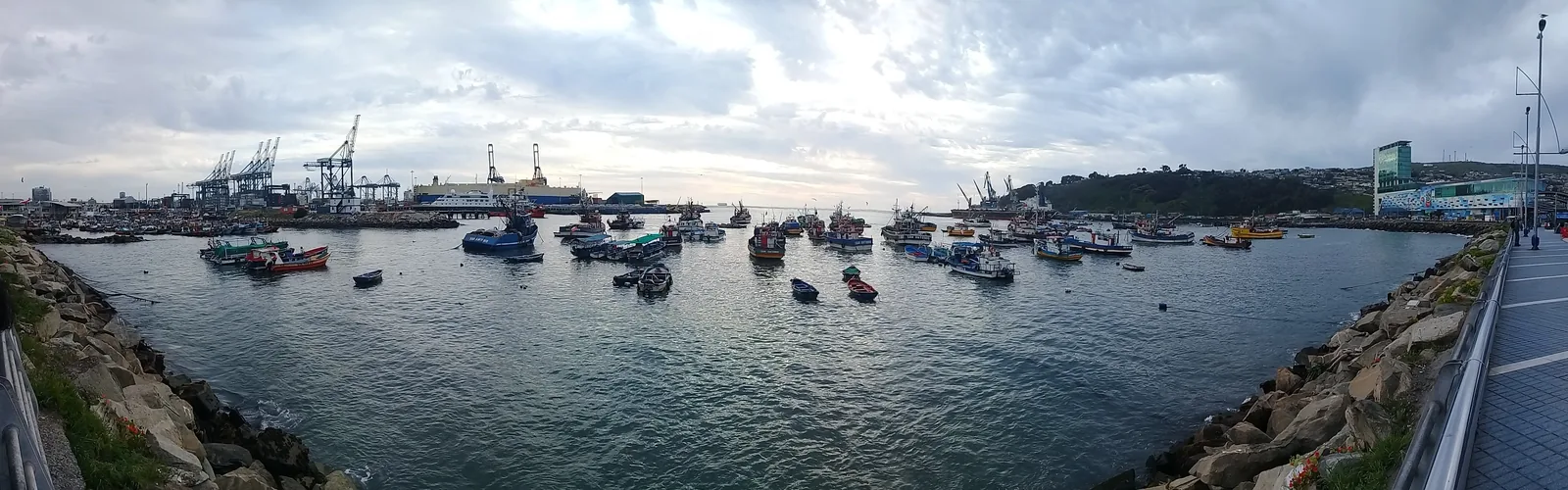
San Antonio is not a cruise port that also handles cargo. It is Chile's largest cargo port — 1,407,869 TEU in 2023 against Valparaíso's 788,970 — that happens to take cruise ships. The first one came in April 2017, when Norwegian Sun could not perform her scheduled Valparaíso call and berthed here instead. What began as a diversion became the default, and more than 430,000 passengers and crew have come ashore here since.
Cruise lines market the call as the gateway to Santiago, and Holland America literally names it "San Antonio (Santiago), Chile". That framing is not wrong so much as it is expensive: Santiago is 110 km away and the drive is an hour and a half to two hours in each direction. Thirty-one kilometres from the same berth, in the other direction, is the house Pablo Neruda loved most, facing the Pacific, with the poet and his wife buried in the garden. Most guides do not mention it.
Last reviewed: 30 July 2026
Weather & Best Time to Visit
Captain's Logbook
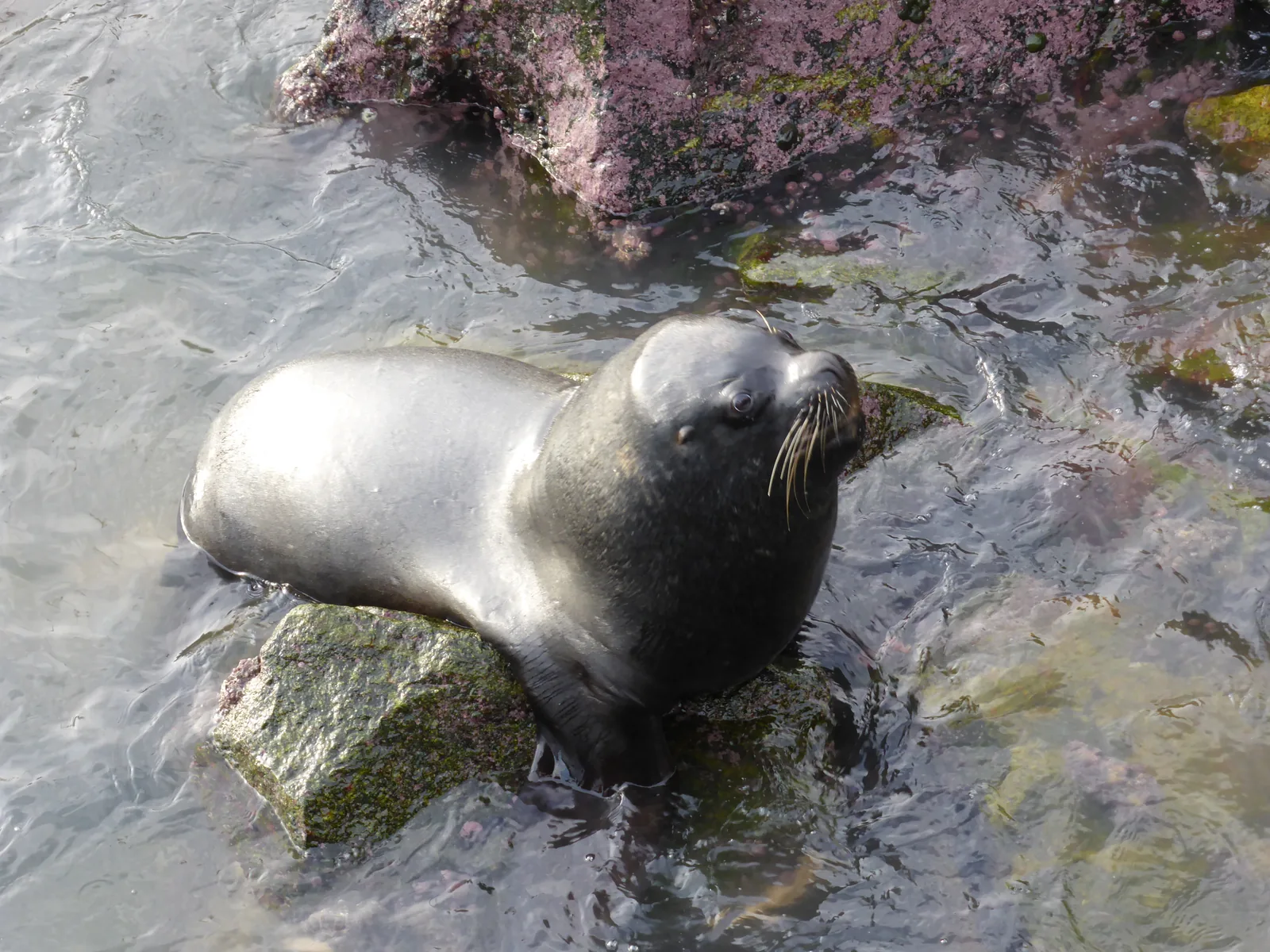
Sea lions at the fishing cove below the Paseo Bellamar. Ten minutes from the terminal gate, and most passengers drive straight past on their way inland. Photo: Carlos Teixidor Cadenas, CC BY-SA 4.0 via Wikimedia Commons
An honest note before I begin: I have not stood on the quay at San Antonio. What follows is read from the record — from the port company's own history, from Holland America's port page, from Chile's meteorological normals, from the Neruda Foundation, from UNESCO's inscription file, and from Chilean reporting on the funiculars. Soundings in another's wake, not my own footprints. When I sail here I will come back and log what I actually found.
The thing that strikes me about this call is that it is an accident that stuck. Cruise ships did not choose San Antonio; they were sent here. In April 2017 Norwegian Sun could not work her Valparaíso call and came in to Puerto Central instead, and that turned out to be easier than the alternative — more quay, more depth, fewer berthing conflicts, less exposure to labour disruption. Nine years later it is the standard Santiago call and over 430,000 people have walked off a ship here. The romance stayed at Valparaíso. The ships moved.
You feel that when you arrive, because you cannot walk anywhere. The terminal is inside a live container yard, and a container yard does not have pavements. Whatever you do today begins with getting into a vehicle. I want to be clear that this is not a complaint, though it does reshape the day — it is simply the shape of the place, and knowing it in advance is worth more than being disappointed by it.
What I keep turning over is the arithmetic. Holland America calls this port "San Antonio (Santiago)", and Santiago is 110 kilometres away. Their own figure for the almost identical run to the airport is 120 minutes. Two hours out, two hours back. On an eight-to-six call with an all-aboard at half past five, that is four hours in a vehicle and perhaps five in a capital city of seven million people — enough for a hurried loop of the Plaza de Armas, a market, and one museum if you are disciplined.
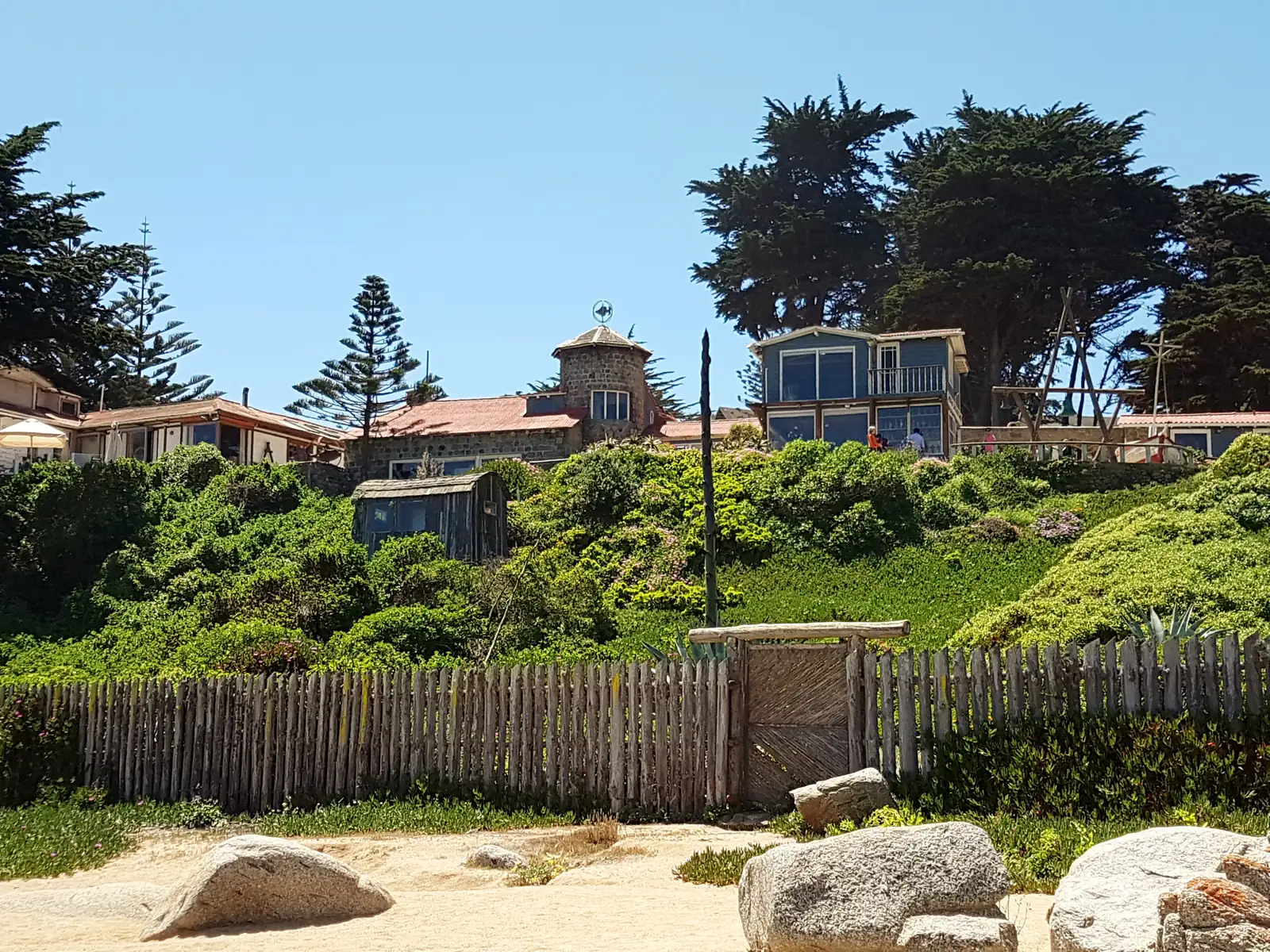
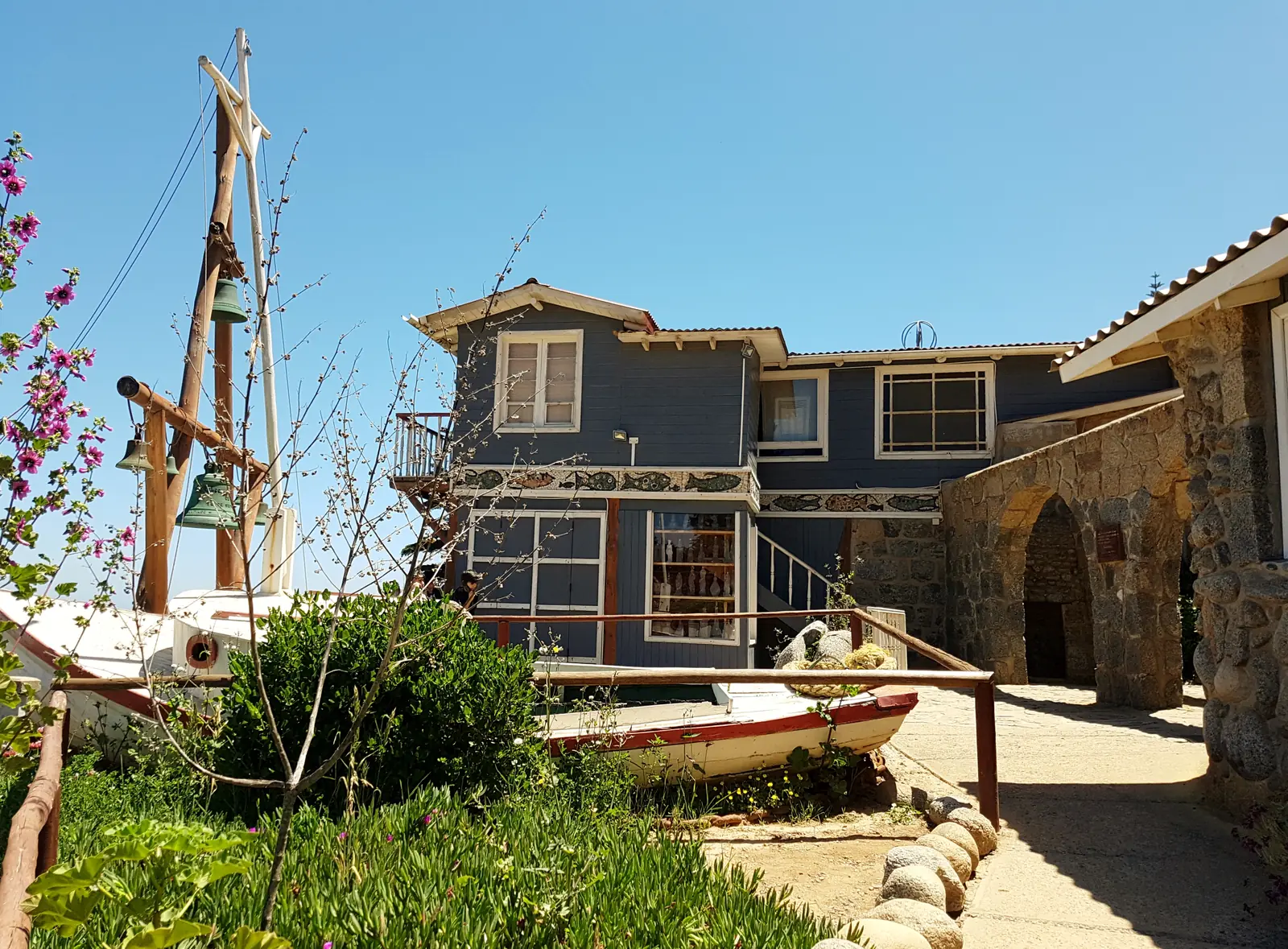
And thirty-one kilometres up the coast, about half an hour from the same gangway, is Isla Negra. Neruda bought a stone house facing the Pacific and spent the rest of his life filling it: ships' figureheads along the walls, bottles, narwhal tusks, shells, masthead carvings, a room built like a ship's cabin. He is buried in the garden with Matilde Urrutia, looking at the sea. The photographs I could find are nearly all of the outside — the stone, the sea, the boat in the garden — and the room full of figureheads I have only read described, which is its own kind of frustration. It is the house that explains him, and it is the single most rewarding thing within reach of this berth — and almost every guide to this port sends you inland instead.
Isla Negra: thirty-one kilometres from the berth, and the reason to come ashore here. Neruda is buried in the garden, looking at this. Photo: Rodrigo Fernández, CC BY-SA 4.0 via Wikimedia Commons
I do not think that is snobbery about capital cities. It is that a port day is a budget, and the currency is hours. Santiago is a fine city; but you are not going to see it in five hours, and pretending otherwise is how the day gets spent. Santiago costs four of them before you have seen anything, and it charges a risk premium on top: Ruta 78 and the approaches into the capital are congestion-prone, and a single incident turns a two-hour return into three. Independently, with nobody accountable for getting you back, that is a real way to miss a ship. Isla Negra costs one hour of driving, total, and carries almost none of that risk.
If Santiago is not the answer, Valparaíso half is. Ninety kilometres, an hour and a quarter, and what you find is smaller than the brochures suggest. The UNESCO listing is not "Valparaíso" — it is the Historic Quarter of the Seaport City of Valparaíso, inscribed in 2003 under a single criterion, and the protected core is 23.2 hectares. That is the amphitheatre: the port-side flats and the lower slopes of Cerro Alegre and Cerro Concepción. Most of what people photograph as Valparaíso is outside it.
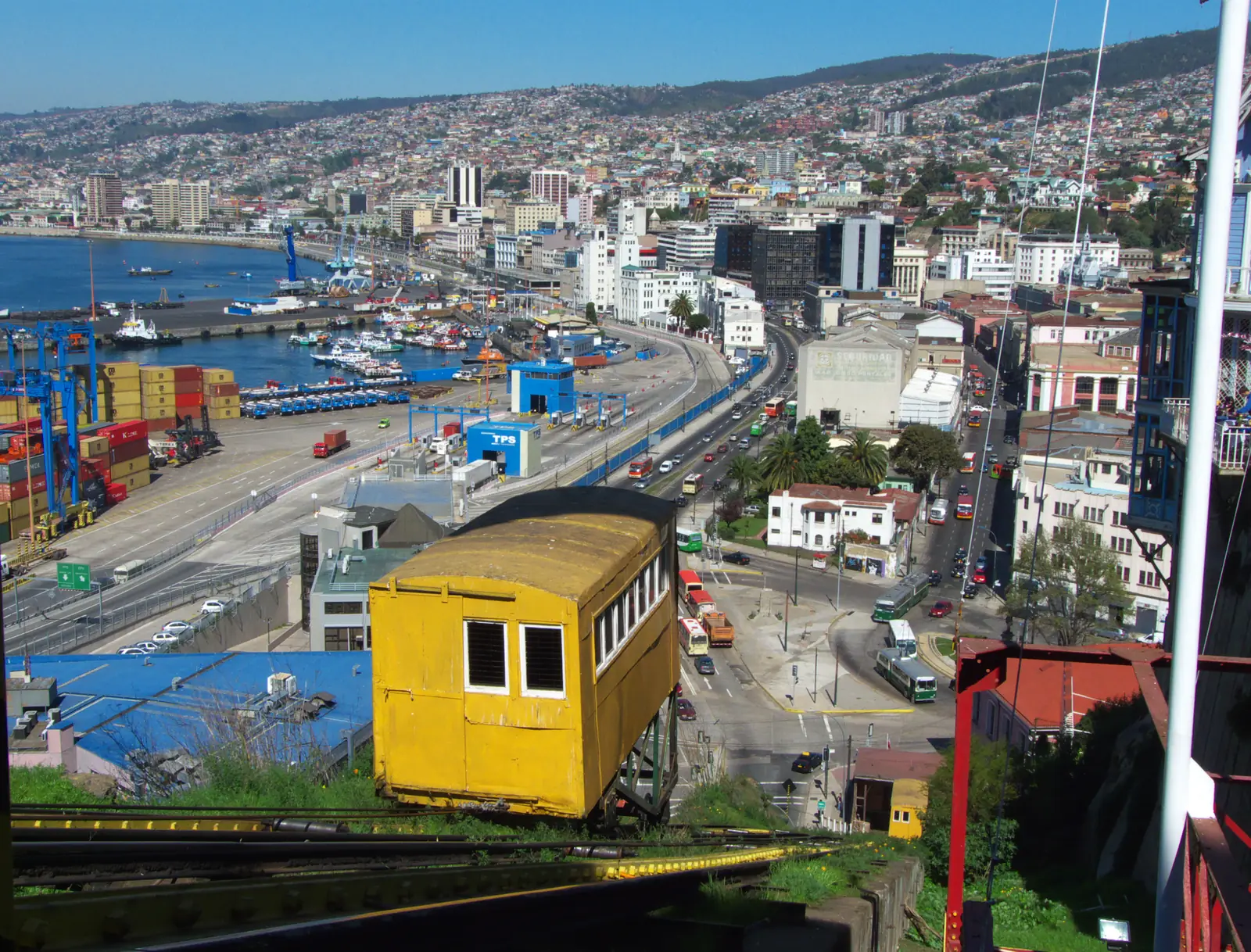
And the funiculars, which is where I found the thing that annoyed me most in the research. Nineteen ascensores were built between 1883 and 1916. Guide after guide tells you to ride the Artillería up to the Paseo 21 de Mayo. Artillería has not run since April 2021. It failed on a pin; a 2025 restoration tender collapsed when the only bid came in at nearly double the budget; a new tender opened in December 2025 and might have it running in 2027. Seven ascensores operate today, one of those only in trial running, so six is the number a visitor can count on. Writers keep copying the itinerary and nobody rides the lift.
Ascensor Artillería, which nearly every guide still tells you to ride. It has not run since April 2021. Photo: Javier Rubilar, CC BY-SA 2.0 via Wikimedia Commons
There is a small, sharp thing about this coast that I want to record, because it is the kind of detail that makes a place real rather than generic. In January the mean temperature on the coast here is 15.9 °C. In Santiago, 110 km inland, it is 21.9 °C — and the afternoon highs diverge far more than that. A passenger who dresses for the breeze on the promenade deck and then drives inland is dressed wrong by lunchtime, and wrong the other way coming home in the evening. The Humboldt Current runs cold up this whole shore. The beaches at Viña look Mediterranean and feel like the North Atlantic.
So the shape of the day I would want, until I can tell you from experience: off the ship early, up the coast to Isla Negra for the doors opening at ten — it is first-come, first-served and it fills — then back down for lunch at a caleta, and either the Maipo wetland or a Leyda vineyard on the way in. All of it inside sixty kilometres of the ship.
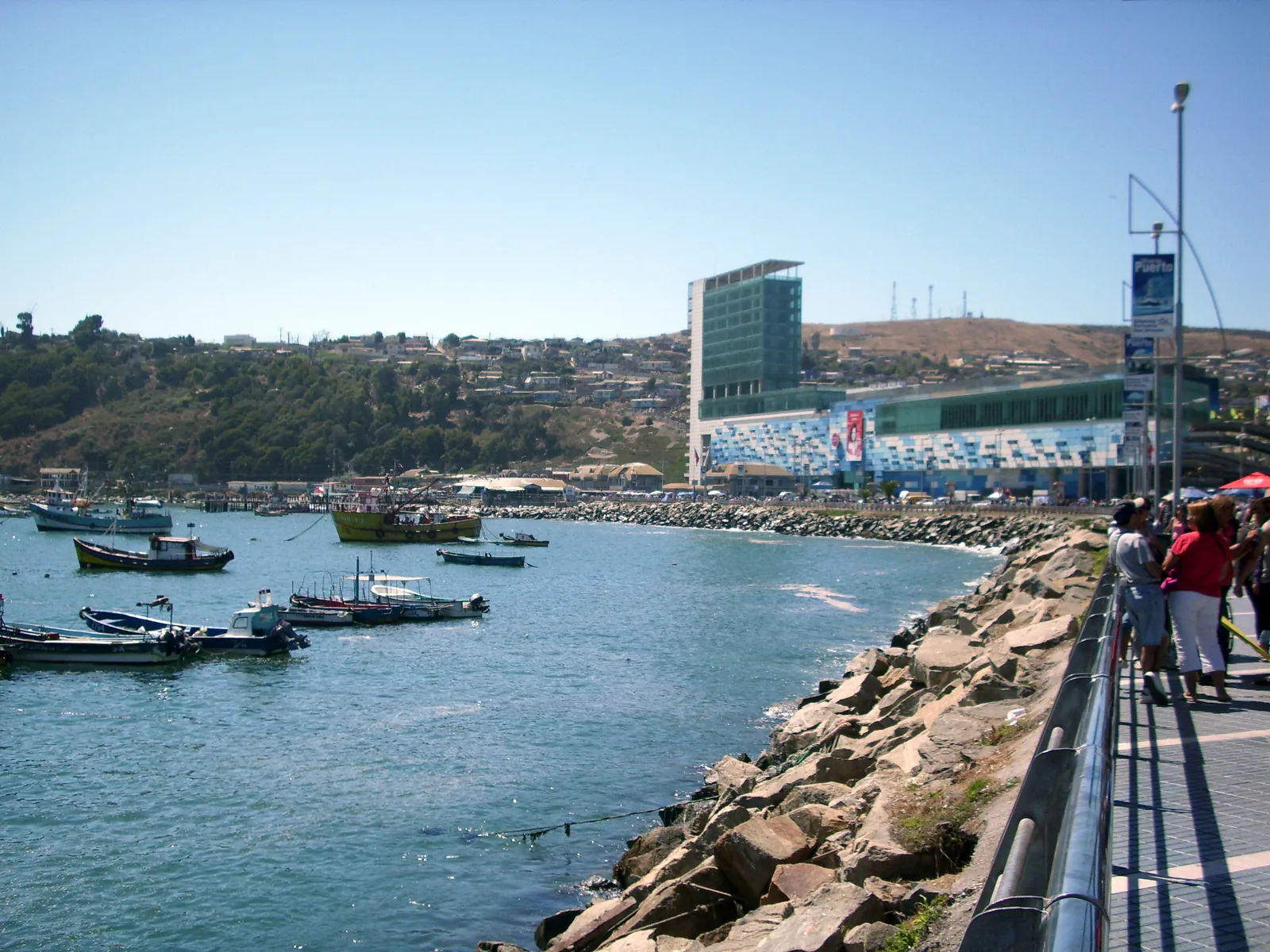
The Paseo Bellamar in San Antonio itself — modest, free, and about ten minutes from the terminal gate. Photo: Jorge Barrios Riquelme, CC BY-SA 3.0 via Wikimedia Commons
There is one detail from the record that stopped me, and I have not been able to put it down since. Neruda died on 23 September 1973, twelve days after the coup. His house was broken into and his papers and books taken or destroyed. And his funeral, held under a massive police presence, became the occasion mourners used to protest against a regime two weeks old — people reciting his poems aloud in the street because there was nothing else left to do with them. I read the account of that walk and my breath caught, which is not something I expected from a paragraph about a funeral fifty-three years old. There is a quiet grace in a crowd that answers soldiers with poetry. Forty years later a judge ordered him exhumed, in April 2013, to test whether he had been murdered; he was returned to the ground at Isla Negra in April 2016. I find I cannot read that as a literary anecdote. It is a country arguing about a poet's body for four decades because of what it would mean if the answer were yes.
What I realized, sitting with all of this, is that I had the whole port backwards when I started. I came to the research assuming San Antonio was a car park for Santiago, because that is what it is called and that is what every guide treats it as. What it actually is, is the doorstep of the coast a country's greatest poet chose over its capital — and the lesson I take from that is one I keep having to relearn: the thing a place is named for is rarely the thing worth crossing it to see. Ask what is thirty minutes away before you spend four hours in a van.
Cruise Port Guide
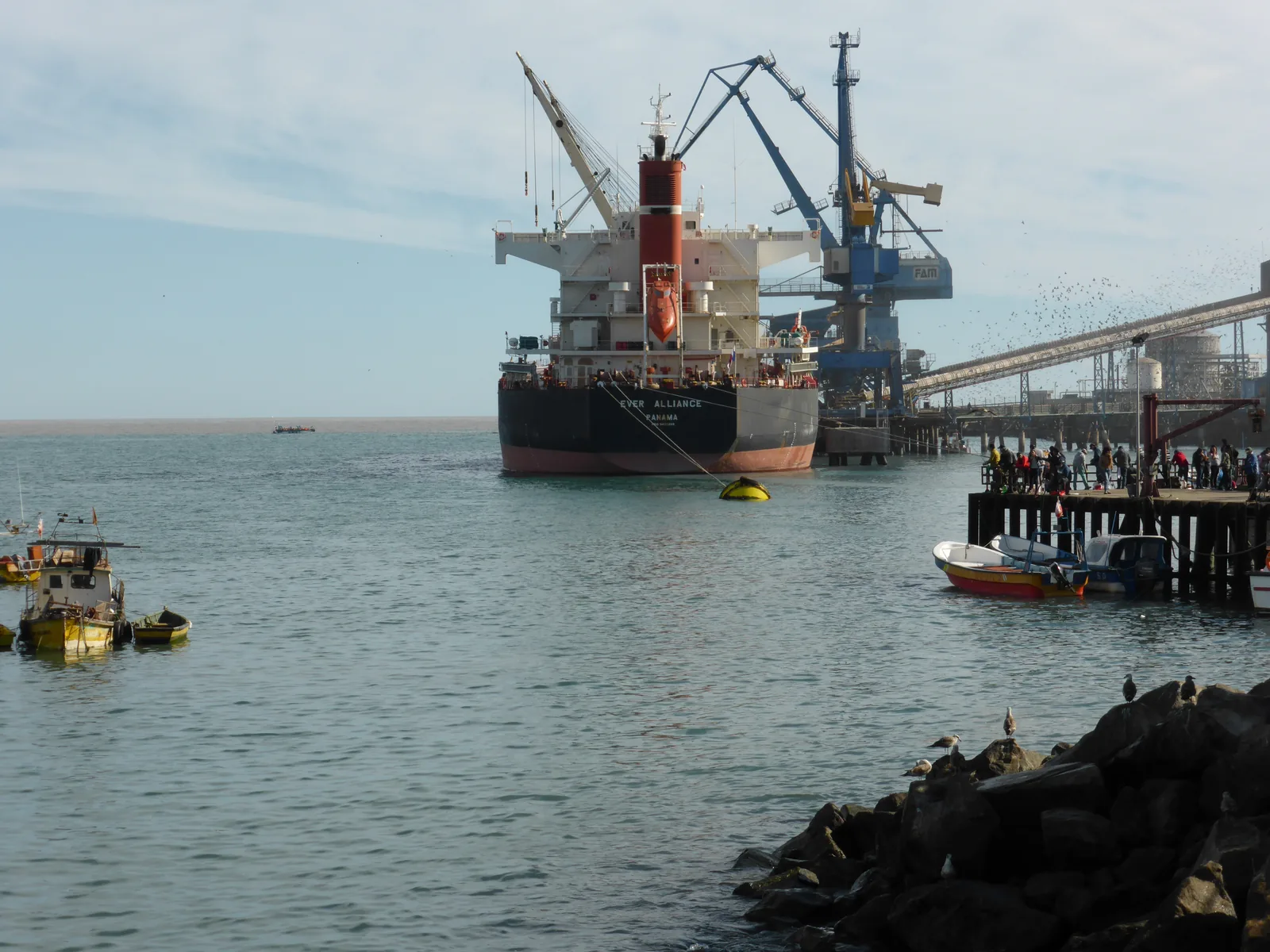
Alongside at San Antonio. The quay is not the problem here — beyond the terminal doors is container yard, and that is why nobody walks out. Photo: Carlos Teixidor Cadenas, CC BY-SA 4.0 via Wikimedia Commons
Cruise ships berth alongside at San Antonio — there is no tendering. The berths are in the Puerto Central / DP World part of the complex, which offers a 700 m continuous quay; the neighbouring STI terminal has 930 m across three docks at up to 14 m draft. A 237 m ship drawing 8.1 m has no dimensional problem here whatsoever.
Two berths cruise ships do not use are worth knowing about if you are watching the port: Sitio 9, the Terminal Policarpo Toro, caps out at 190 m length and 30,000 tonnes, and Sitio 8 is a dry-bulk grain berth. Anything world-cruise sized works the DP World or STI quays.
The passenger terminal is at Alan Macowan 240, roughly 250 m from the berth, about 3,600 m² and equipped with customs and SAG agricultural-inspection facilities. There is no public parking at the pier and no luggage storage. Beyond the terminal doors is container yard, so the walk-out option that exists at most ports does not exist here.
Getting Around San Antonio
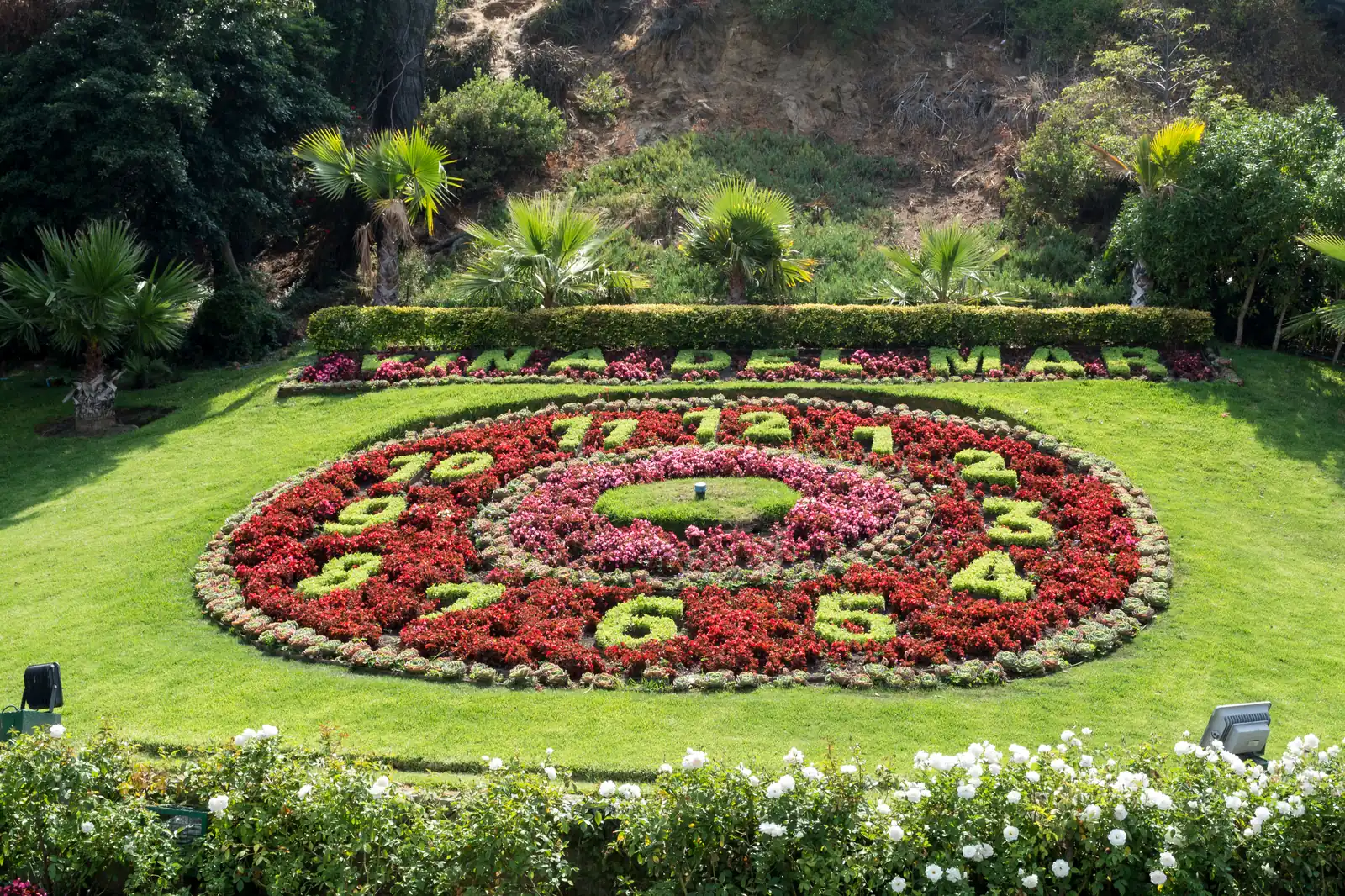
Viña del Mar's flower clock — 100 km and a hired vehicle away. Nothing at this port is reachable on foot. Photo: Carlos Figueroa, CC BY-SA 4.0 via Wikimedia Commons
Everything starts with a vehicle. Cruise lines typically run a shuttle from the terminal to a drop-off in San Antonio town, and taxis and pre-booked coaches wait at the terminal forecourt. Confirm your ship's specific arrangement on board — published accounts disagree about whether the intercity bus terminal is walkable from the drop-off, and given that nobody may walk across the port, they cannot both be right.
Taxis and rideshare. Uber operates and Holland America's own port page says so. The legal position settled recently: Chile's Law 21.553, the so-called Ley Uber, was enacted in April 2023, and its implementing regulation took force on 7 May 2025 — app companies must register nationally and drivers must hold professional licences. Rideshare here is legal, regulated and normal. Metered taxis are fine too; agree the route first.
For anything beyond the town, book the vehicle before you sail. This is the practical heart of a San Antonio day. A driver for the morning to Isla Negra and back costs a fraction of the anxiety of improvising, and if you are going as far as Santiago or Valparaíso the return leg is the whole risk — a ship's excursion means the ship waits for you, and a reputable private transfer with a written return-by time is the next best thing. An ordinary taxi to Santiago, with nobody accountable for bringing you back through Ruta 78 traffic, is the version that strands people.
San Antonio Port Map
Excursions & Experiences
The grounds at Isla Negra. Go at opening — entry is first-come, first-served and the house has a limited daily capacity. Photo: Rodrigo Fernández, CC BY-SA 4.0 via Wikimedia CommonsOne of the figureheads. Neruda collected them off ships and lined the house with them; this is the room that explains the man. Photo: Rodrigo Fernández, CC BY-SA 4.0 via Wikimedia Commons
The decision at San Antonio is a fork, and it is not the fork the marketing implies. It is not "Santiago or nothing". It is: do you spend four hours of the day driving to a capital, or do you spend one hour driving and see the thing that is actually here?
Close to the ship — the case for staying local
Casa Museo Isla Negra — 31 km, 30–35 minutes. Neruda's house on the rocks, stuffed with ships' figureheads, bottles and shells; he and Matilde Urrutia are buried in the garden above the sea. Tuesday–Sunday 10:00–18:00, extended to 19:00 in January and February, closed Mondays. Admission costs CLP 11,000 general, about $11, and CLP 4,500 reduced. No booking for individuals, but capacity is limited and it is first-come first-served, so go at opening.
San Antonio town — 3 km. The 600 m Paseo Bellamar promenade, sea lions on the rocks by the Grúa 82 national monument at the fishing cove, and the MUSA natural-science museum above the river mouth. Modest, but not the void that guides imply.
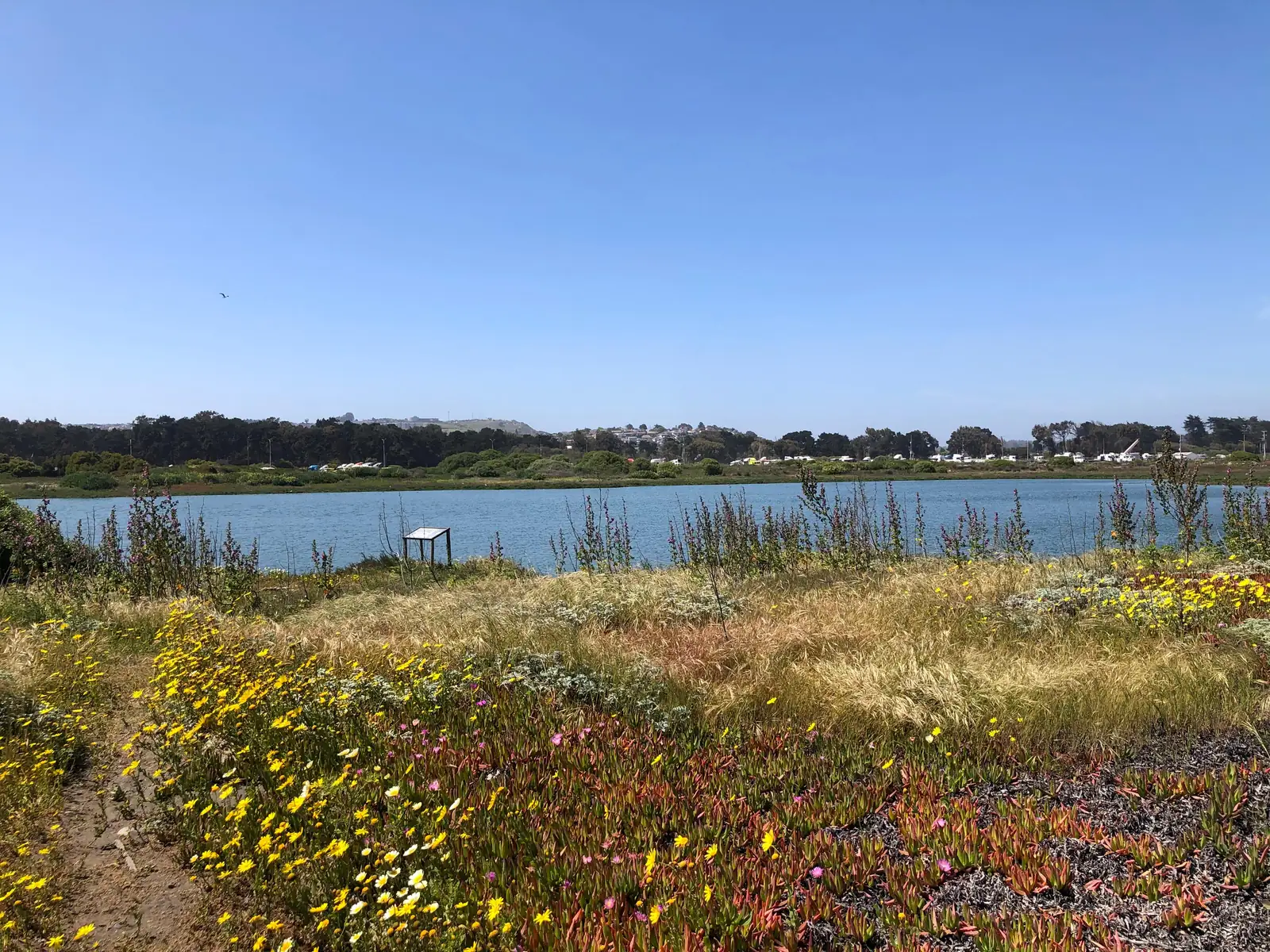
Humedal del Río Maipo — the wetland at the river mouth, about 140 hectares, 132 recorded bird species, and an Important Bird Area since 2010. Free, and a genuine alternative if the ship is full of people going inland.
Valle de San Antonio / Leyda — the wine valley named after this port, formalised as a designation of origin in 2002. Cool-climate coastal Sauvignon Blanc and Chardonnay, plus Syrah and Pinot Noir, from vineyards 4–12 km from the Pacific. Viña Leyda is essentially on the doorstep. Book ahead — Chilean wineries generally want a reserved appointment rather than walk-ins.
The long runs — Valparaíso and Santiago
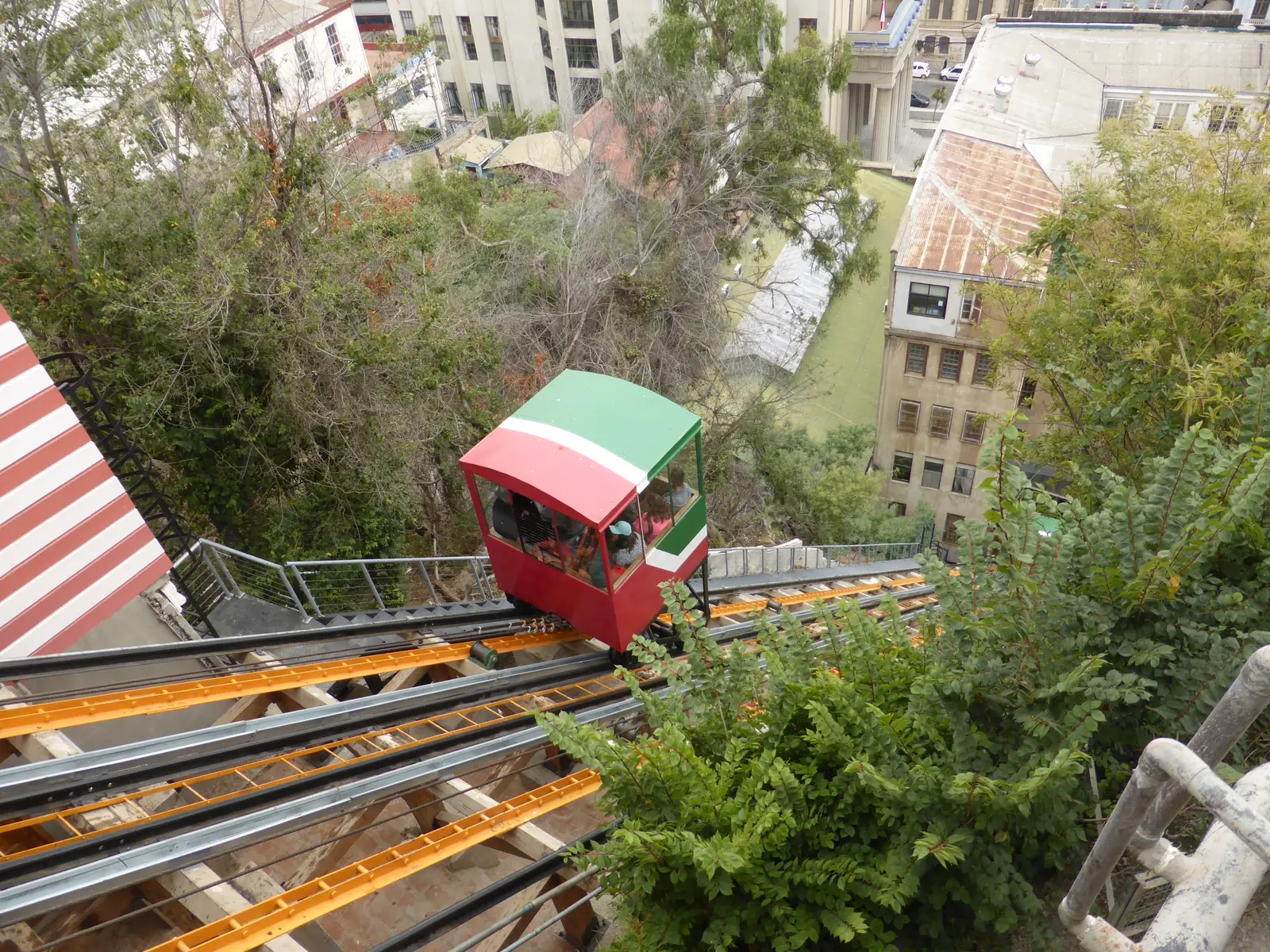
Valparaíso — 90 km, about 1 hour 15. The inscribed Historic Quarter is 23.2 ha (2003, criterion iii) covering the port-side flats and the lower slopes of Cerro Alegre and Cerro Concepción. Seven ascensores operate as of May 2026 — Barón, Concepción, Cordillera, El Peral, Reina Victoria, Espíritu Santo and San Agustín — though Espíritu Santo is only in trial running. The fare is CLP 200–300 for residents and CLP 1,000 — about $1 — for foreign tourists. Ascensor Artillería is closed and has been since April 2021, whatever your guidebook says.
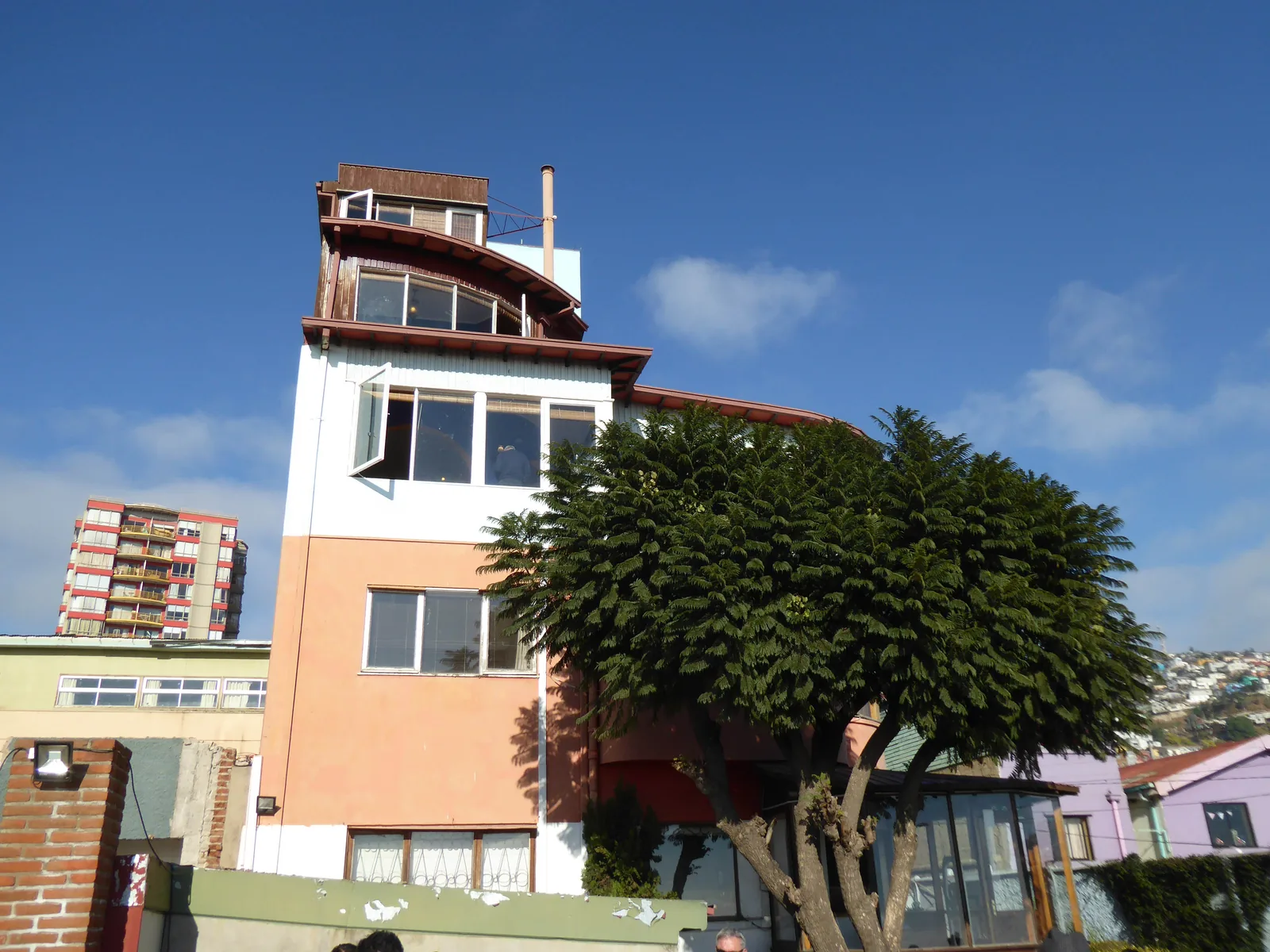
La Sebastiana — Neruda's Valparaíso house on Cerro Bellavista. Same regime as Isla Negra: Tue–Sun 10:00–18:00 (19:00 in Jan–Feb), CLP 11,000 / CLP 4,500, no reservation. The top-floor view is the best interior view in the city.
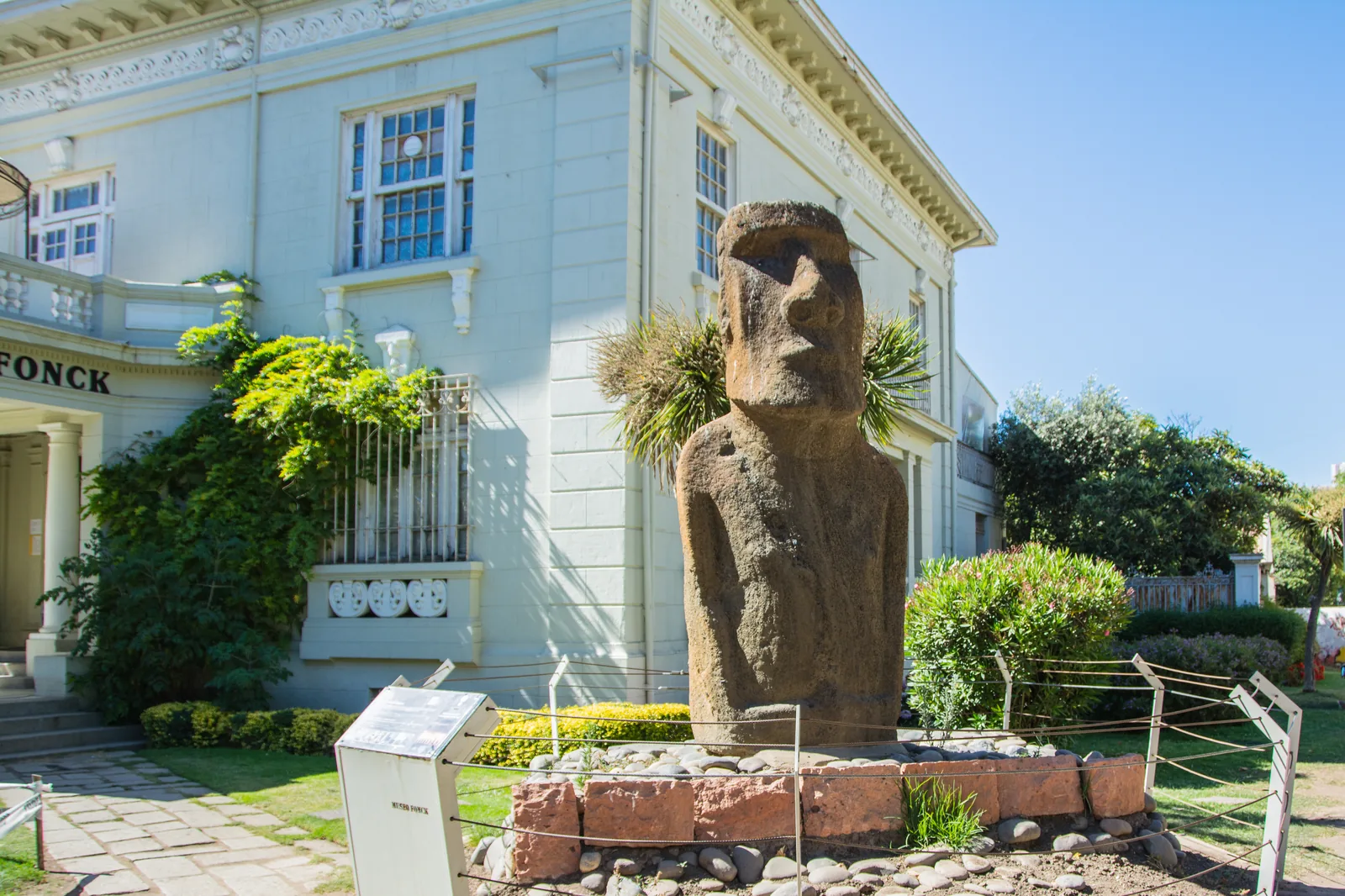
Viña del Mar and the Moai — ten minutes beyond Valparaíso. The Museo Fonck on 4 Norte holds an authentic moai from Rapa Nui, brought over in 1951 and the only original one on the Chilean mainland. It stands on the street side of the fence, so you can see and photograph it without going in, which is what most cruise visitors do.
Santiago — 110 km, 1½–2 hours each way. If you go: Plaza de Armas, Mercado Central, Barrio Lastarria, Cerro San Cristóbal by funicular, and the Museo de la Memoria y los Derechos Humanos (Tue–Sun 10:00–18:00, last entry 17:30, free), which is the one that makes the trip mean something rather than tick something. Give it ninety minutes. Note that it, La Chascona and most Chilean museums are closed on Mondays.
If you only take one recommendation from me, take this one: go to Isla Negra, and go at opening. Thirty minutes each way instead of four hours, no motorway-congestion return risk, and it is a singular thing rather than a hurried sample of a capital. A ship berthing at 08:00 and a car leaving at 08:30 puts you at the door at ten, which is exactly right.
On booking and risk. The further you go from this berth, the more the return leg matters. A ship's excursion costs more than arranging it yourself — reckon on a premium of $40–80 a head over a shared private car but the ship waits for it — and at a port where the road back runs through Chile's busiest motorway corridor, that is worth more than at most stops. If you would rather go independent, keep the radius small: Isla Negra, the town, the wetland and a Leyda vineyard are all inside an hour of the gangway and none of them will lose you the ship.
History & Heritage
Cerro Alegre in Valparaíso — inside the 23.2-hectare quarter UNESCO actually inscribed in 2003, which is a good deal smaller than the city people photograph. Photo: Carlos Figueroa Rojas, CC BY-SA 4.0 via Wikimedia Commons
San Antonio's rise is recent and entirely about freight. Through the twentieth century Valparaíso was Chile's passenger port and its principal harbour; in the twenty-first, cargo gravity moved 90 km south. San Antonio now handles close to twice Valparaíso's container volume and is the country's first port.
Cruise ships followed for practical reasons rather than romantic ones. The first call, in April 2017, was Norwegian Sun, diverted here when her Valparaíso call could not be performed. More quay, deeper water and fewer berthing conflicts turned a one-off into a pattern, and Puerto San Antonio now counts more than 430,000 cruise passengers and crew ashore since.
The coast either side of the port carries a different kind of history. This is the Litoral de los Poetas — the poets' coast — named for the writers who settled along it, of whom Pablo Neruda is the reason most visitors come. He bought the Isla Negra house in 1939 and rebuilt it facing the sea, and it is where he chose to be buried.
Ninety kilometres north, Valparaíso tells the older story. Its Historic Quarter was inscribed by UNESCO in 2003 as "an exceptional testimony to the early phase of globalisation in the late 19th century, when it became the leading merchant port on the sea routes of the Pacific coast of South America". The nineteen funicular railways built into its hills between 1883 and 1916 are the physical evidence of that boom — and the six or seven still running are what is left of it.
Food & Drink Ashore
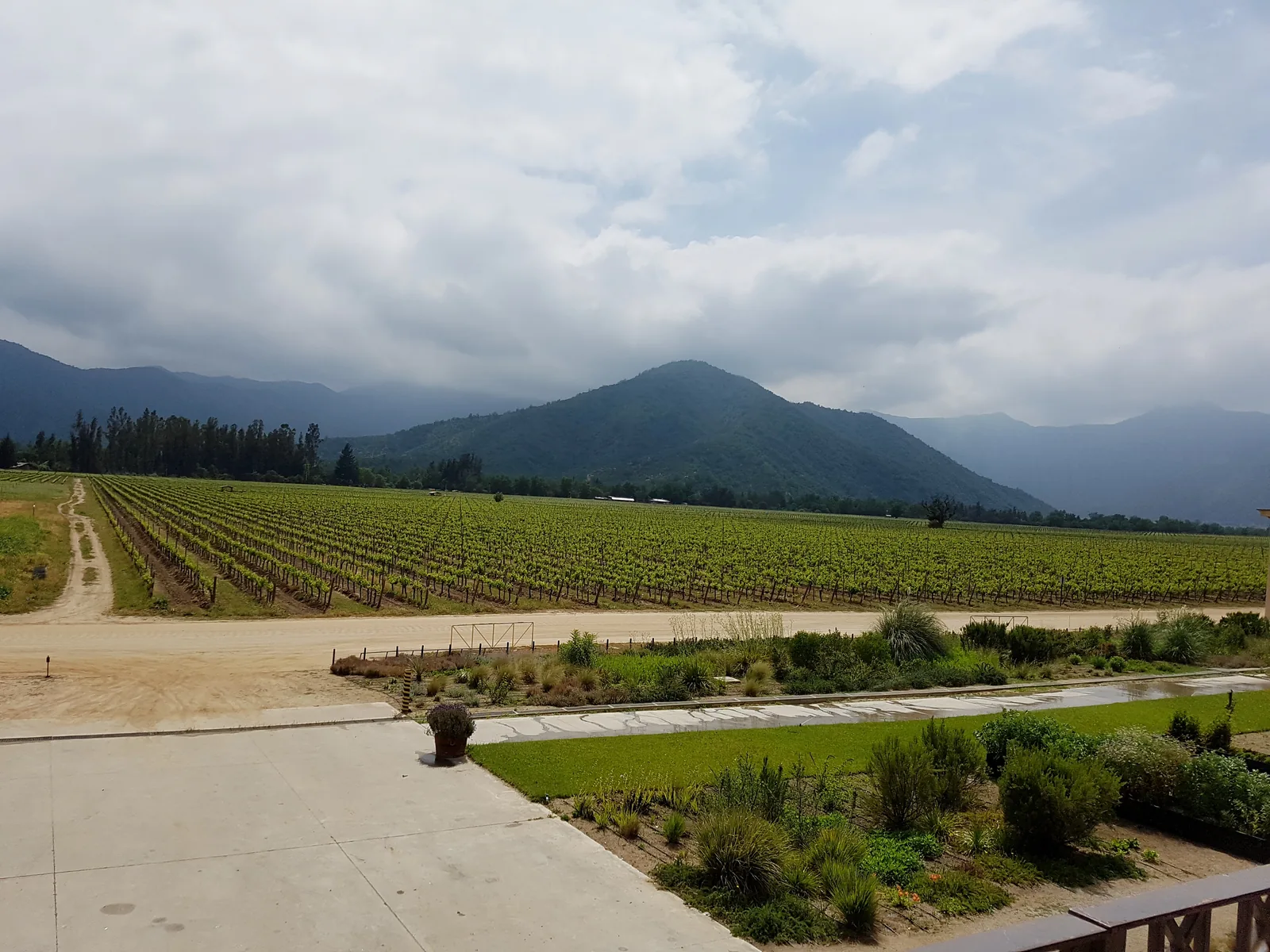
Casablanca. The cool-climate coastal valleys — Casablanca and Leyda, the latter named for this very district — are on the port's doorstep, unlike Chile's famous red valleys inland. Photo: Rodrigo Fernández, CC BY-SA 4.0 via Wikimedia Commons
Central Chile's coast eats from the Humboldt Current, and the current is cold, which is why the fish here is good. At the caletas — the working fishing coves, including the one below San Antonio's Paseo Bellamar — you get congrio, reineta, merluza and machas, usually fried or in a caldillo.
Look for machas a la parmesana (razor clams under grilled cheese), empanadas de mariscos, ceviche made with reineta rather than the Peruvian corvina, and chorrillana if you are hungry and unbothered — chips under beef, onion and fried egg, and a Valparaíso institution.
The wine is on your doorstep. The Leyda valley within the San Antonio designation makes cool-climate Sauvignon Blanc and Chardonnay from vineyards a few kilometres from the sea; Casablanca, immediately north, does the same at slightly more scale. Both are considerably closer than Chile's famous red valleys, which are inland beyond Santiago.
Know Before You Go
You cannot walk out of this port. The passenger terminal is inside an operating container yard. Plan on a vehicle from the moment you step off the gangway.
Chile's agricultural rules are enforced, and they apply to you. Everyone over 18 entering Chile must complete a SAG sworn declaration about products of plant, animal, biological or chemical origin — online at ingresoachile.cl or on paper, presented to the inspector. Fruit, seeds, plants, flowers, honey and handicrafts made from natural materials such as wood are prohibited. SAG has publicised fining a single passenger 30 UTM. Do not carry fruit off the ship, and think twice about wooden souvenirs.
Most Chilean museums close on Mondays — including all three Neruda houses and the Museo de la Memoria. Check your call's day of the week before you build a plan around any of them.
Santiago is a two-hour drive, not a one-hour one. Holland America's own figure for the equivalent airport run is 120 minutes. Budget four hours of driving and treat the return leg as the risk.
Petty crime is real and geographically specific. The UK Foreign Office records that muggings happen frequently in Santiago and Valparaíso, increasingly with weapons, and that distraction thefts are common in both city centres. In Valparaíso the tourist core on Cerro Alegre and Cerro Concepción is the safe part; risk rises sharply going down into the port streets. Stay on the hills, don't carry a visible camera bag into the lower city, and don't wander off the painted stairways looking for more murals.
The coast is much colder than Santiago. A 6 °C gap in the daily mean in January, and a wider one in afternoon highs. Dress in layers and take a windproof shell whichever way you are heading.
Costs, so you can judge before you commit. Any Neruda house — Isla Negra, La Sebastiana or La Chascona — costs CLP 11,000 general (about $11) and CLP 4,500 reduced. A Valparaíso funicular is CLP 200–300 for residents and CLP 1,000 for foreign visitors. There is no entry fee at the Museo de la Memoria in Santiago. The Maipo wetland, the Paseo Bellamar and the moai outside the Museo Fonck cost nothing. Holland America quotes a taxi from Santiago airport to the pier at about USD 124 / CLP 120,000, which is a useful yardstick for what a private car to the capital and back is worth.
Depth Soundings Ashore
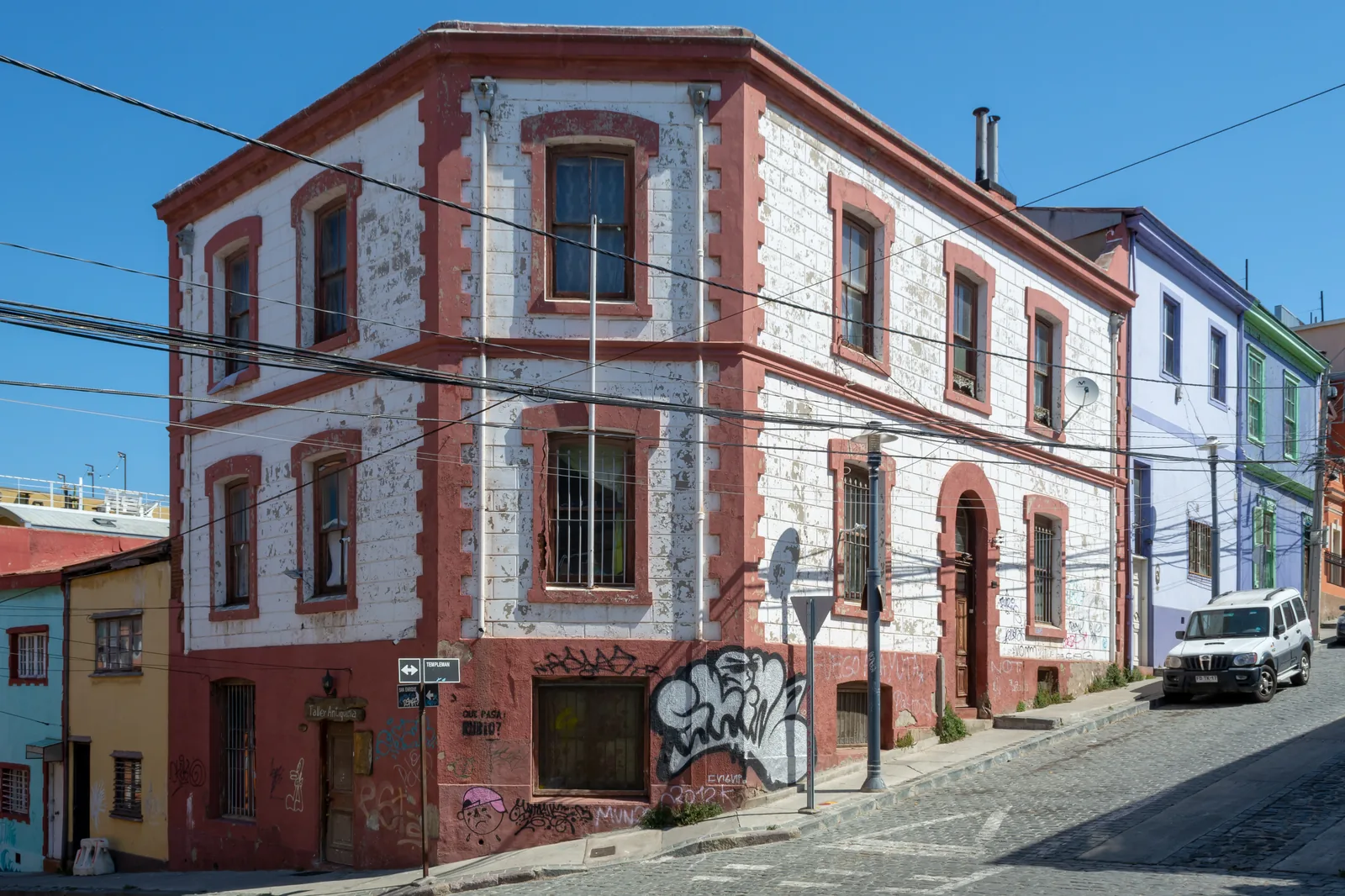
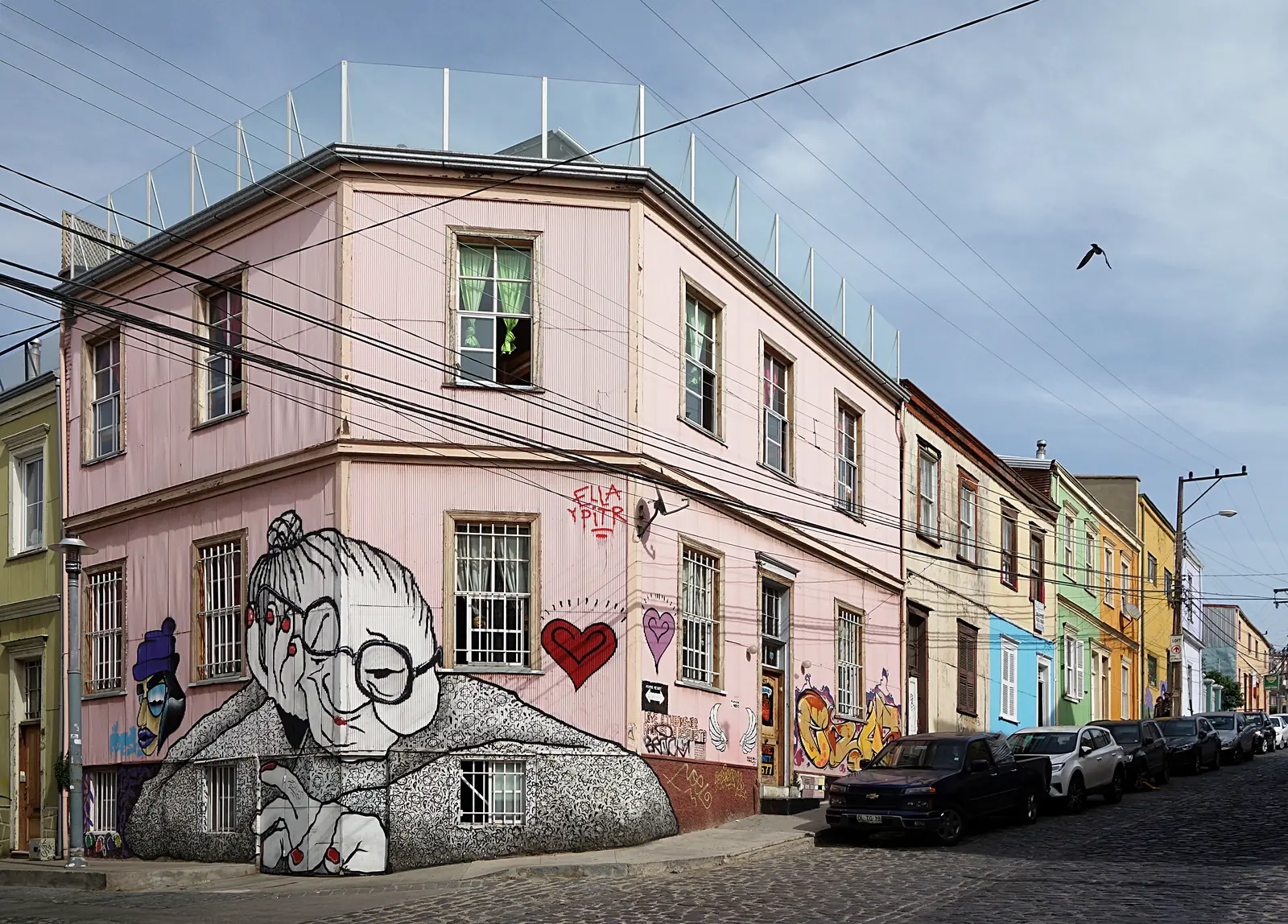
Valparaíso's murals are genuinely good and are also where visitors are most exposed to pickpocketing. Stay on the painted stairways of the two named hills. Photo: Velvet, CC BY-SA 4.0 via Wikimedia Commons
A few things about this port that only make sense once someone points them out:
The port name is a marketing decision. "San Antonio (Santiago)" tells you where the cruise line thinks you want to go, not where you are. Where you are is a container port on the Litoral de los Poetas, half an hour from the best writer's house in Chile.
The UNESCO listing at Valparaíso is 23.2 hectares. Not the city — the Historic Quarter, plus a 44.5 ha buffer. Knowing that changes how you spend three hours there: it is a small, dense, walkable area and you can do it properly rather than chasing the whole amphitheatre.
Six funiculars, not nineteen. Nineteen were built; seven run; one of those seven is on trial. The famous Artillería, which appears in almost every itinerary written about Valparaíso, has been shut since April 2021.
The water is cold and the sun is strong. The Humboldt Current keeps the sea at 14–17 °C in summer while the UV index runs high. The sea breeze disguises the burn. People come back from Viña sunburnt and surprised.
Chile's tipping rule is a law, not a custom. Table-service venues must suggest 10% on the bill and pass it to staff in full; it is voluntary and you may refuse it, but refusing reads as a complaint about the service. Where you tip by card the employer has seven business days to pass it on.
Practical Information
Currency: the Chilean peso (CLP). US dollars are not generally accepted outside hotels and some tour operators.
Cards and cash: cards are widely accepted in the cities. ATMs are branded Redbanc and are everywhere; note that Chilean banks generally add their own commission on foreign-card withdrawals on top of your own bank's, so take out larger amounts less often.
Language: Spanish, and Chilean Spanish is fast and idiom-heavy even for fluent speakers. English proficiency nationally is rated moderate and is not widespread outside tourism. Carry the ship's name, the berth and your all-aboard time written down.
Tipping: 10% suggested by law at table service, voluntary, shown on the bill. Pay it.
Accessibility and stamina. This is a coach-and-cobbles port, so plan by energy level. Low energy: the ship's shuttle into San Antonio, the Paseo Bellamar and a seafood lunch at the caleta — flat, short, and about ten minutes from the gate. Moderate: Isla Negra, which is a half-hour drive and a house tour with steps and narrow passages between rooms, but no distance. High: Valparaíso, which is steep, cobbled and stepped almost everywhere; the funiculars exist precisely because the hills defeat people, and a wheelchair user will find the inscribed quarter very hard going. There is no step-free walk out of this port in any case, so a vehicle is part of every plan.
San Antonio Photo Gallery
Ascensor El Peral, one of the six or seven funiculars a visitor can actually count on. Photo: Carlos Teixidor Cadenas, CC BY-SA 4.0 via Wikimedia Commons
La Sebastiana, Neruda's Valparaíso house. The top-floor view is the best interior view in the city. Photo: Mikel Santamaria, CC BY-SA 2.0 via Wikimedia Commons
The moai outside the Museo Fonck in Viña del Mar — brought from Rapa Nui in 1951 and the only original one on the Chilean mainland. It stands on the street side of the fence. Photo: Esin Üstün, CC BY 2.0 via Wikimedia Commons
The wetland country at Llolleo near the Maipo mouth — an Important Bird Area since 2010, and empty of cruise passengers. Photo: Tomás Esquivel, CC BY-SA 4.0 via Wikimedia Commons
Credits
Every image on this page comes from Wikimedia Commons under the license noted and is credited to its creator below. In the Wake does not claim authorship of these images; when we can add our own photographs from a future visit, we will.
Port of San Antonio (page header image) — Exorix Adfjk, CC BY-SA 4.0
Sea lions at the fishing cove below the Paseo Bellamar — Carlos Teixidor Cadenas, CC BY-SA 4.0
Isla Negra: thirty-one kilometres from the berth, and the reason to come ashore here — Rodrigo Fernández, CC BY-SA 4.0
Ascensor Artillería, which nearly every guide still tells you to ride — Javier Rubilar, CC BY-SA 2.0
The Paseo Bellamar in San Antonio itself — Jorge Barrios Riquelme, CC BY-SA 3.0
Alongside at San Antonio — Carlos Teixidor Cadenas, CC BY-SA 4.0
Viña del Mar's flower clock — Carlos Figueroa, CC BY-SA 4.0
The grounds at Isla Negra — Rodrigo Fernández, CC BY-SA 4.0
One of the figureheads — Rodrigo Fernández, CC BY-SA 4.0
Cerro Alegre in Valparaíso — Carlos Figueroa Rojas, CC BY-SA 4.0
Valparaíso's murals are genuinely good and are also where visitors are most exposed to pic — Velvet, CC BY-SA 4.0
Ascensor El Peral, one of the six or seven funiculars a visitor can actually count on — Carlos Teixidor Cadenas, CC BY-SA 4.0
La Sebastiana, Neruda's Valparaíso house — Mikel Santamaria, CC BY-SA 2.0
The moai outside the Museo Fonck in Viña del Mar — Esin Üstün, CC BY 2.0
The wetland country at Llolleo near the Maipo mouth — Tomás Esquivel, CC BY-SA 4.0
Frequently Asked Questions
What is the best time of year to visit San Antonio?
January through March is the window, and it is also when the South American cruise season runs. Central Chile has a Mediterranean climate — dry summers, wet winters — so those months are reliably rainless, with coastal daytime highs around 20–21°C and overnight lows near 11°C. June to August is cold, wet and windy and is not a cruise window at all. Whatever month you call, mornings on this coast often start grey.
What should I pack for San Antonio's weather?
Layers and a genuine windproof shell. The onshore sea breeze here is persistent and makes 20°C feel like 15. Add serious sun protection — the summer UV index in central Chile is high and the cool breeze disguises it, which is how people come back from Viña del Mar sunburnt and surprised. If Valparaíso is on the plan, bring shoes with grip: the hills are steep and the stairways are worn smooth. And pack for two climates if you are going inland, because Santiago runs about 6°C warmer in the daily mean and far more than that in the afternoon.
Will rain ruin my San Antonio port day?
Almost certainly not, if you are calling in the cruise season. Coastal rainfall in January and February is essentially nil and March is marginal — central Chile's rain falls between June and August, outside the cruise window. The more likely weather annoyance is the camanchaca, the coastal fog that forms under the Pacific anticyclone overnight and usually burns off during the morning. A grey 08:00 berthing here is not a forecast for the day.
Can I walk off the ship in San Antonio?
No. The passenger terminal sits inside an operating container yard and pedestrians are not permitted to cross the port. Everyone leaves in a vehicle — ship shuttle, excursion coach, or a taxi from the terminal forecourt. The terminal itself is about 250 m from the berth and roughly 3 km from San Antonio's town centre.
Do cruise ships tender at San Antonio?
No, ships berth alongside. The Puerto Central / DP World quays run to 700 m continuous and the neighbouring STI terminal offers 930 m at up to 14 m draft, so a world-cruise ship has no dimensional problem here.
Is Santiago realistic on a port day?
Only with the right arrangement. Santiago is 110 km away and the drive is one and a half to two hours each way — Holland America's own figure for the near-identical airport run is 120 minutes. That is four hours of driving, leaving five or six hours in the city. The outbound leg is fine; the return is the risk, because Ruta 78 and the capital's approaches are congestion-prone. Take a ship's excursion, which the ship waits for, or a private transfer with a written return-by time. An ordinary taxi is how people miss ships.
What is the best thing to do from San Antonio?
Pablo Neruda's house at Isla Negra, 31 km and about half an hour up the coast. He filled it with ships' figureheads, bottles, shells and narwhal tusks, and he and Matilde Urrutia are buried in the garden above the sea. Against Santiago it wins on every axis that matters on a port day: one hour of driving instead of four, almost no return risk, and a singular thing rather than a hurried sample of a capital.
What does Isla Negra cost, and do I need to book?
Admission is CLP 11,000 general and CLP 4,500 reduced for students under 17, accredited students and over-60s. Individuals do not book — entry is first-come, first-served — but the house has a limited daily capacity and Isla Negra in particular can build a queue. Open Tuesday to Sunday 10:00 to 18:00, extended to 19:00 in January and February, closed Mondays. Go at opening.
Is Valparaíso worth the drive from San Antonio?
For most people, yes — and more so than Santiago. It is 90 km and about an hour and a quarter, so the round trip costs about two and a half hours of driving rather than four. What you find is smaller than expected: the UNESCO-inscribed Historic Quarter is 23.2 hectares with a 44.5-hectare buffer, covering the port-side flats and the lower slopes of Cerro Alegre and Cerro Concepción. That is a walkable morning done properly.
Which of Valparaíso's funicular railways actually run?
Nineteen ascensores were built between 1883 and 1916. As of May 2026 seven operate — Barón, Concepción, Cordillera, El Peral, Reina Victoria, Espíritu Santo and San Agustín — and Espíritu Santo is only in trial running, so six is the number a visitor can count on. Fares run CLP 200 to 300 for residents and CLP 1,000 for foreign tourists, with services roughly 07:00 or 08:00 to 21:30.
Is the Ascensor Artillería open?
No, and this is the single most common error in Valparaíso guides. Artillería has not run since April 2021, when it failed on a key pin. A 2025 restoration tender was declared void after the only bid came in at nearly double the budget; the Ministry of Public Works reopened tendering in December 2025 with award scheduled for July 2026 and the lift possibly running again in 2027. Ascensor Polanco is also out of service.
What can I not bring ashore or back aboard in Chile?
Chile's agricultural service, SAG, requires everyone over 18 entering the country to complete a sworn declaration about products of plant, animal, biological or chemical origin — online at ingresoachile.cl or on paper. Fruit, seeds, plants, flowers, honey and handicrafts made from natural materials such as wood are prohibited. This is enforced: SAG has publicised fining a single passenger 30 UTM. Do not carry fruit off the ship, and be careful with wooden souvenirs coming back.
How safe is San Antonio and the region for a day visitor?
The port and San Antonio town are unremarkable. The risk is concentrated in the two big cities: the UK Foreign Office records that muggings happen frequently in Santiago and Valparaíso, increasingly with weapons, and that distraction thefts are common in both centres. In Valparaíso the tourist core on Cerro Alegre and Cerro Concepción is the safe part and risk rises sharply descending into the port streets. Stay on the hills, keep a bag closed and in front of you, and don't wander off the painted stairways.
Do I tip in Chile?
Yes, and it is regulated rather than customary. Table-service restaurants, bars and cafés must suggest a 10% tip on the bill and pass it to staff in full. It is voluntary and you may refuse it, but refusing reads as a complaint about the service, so pay it. The 10% suggestion does not apply to fast food or delivery. Where you tip by card, the employer has seven business days to pass it on.
What is the weather like, and how different is Santiago?
January to March is the best window — dry, with coastal daytime highs around 19 to 21 °C and overnight lows of 10 to 11. The catch is inland. The coastal mean in January is 15.9 °C and Santiago's is 21.9 °C, and the gap in afternoon highs is far larger; Santiago routinely runs high-20s to low-30s while the coast stays cool under an onshore breeze. Dress in layers. Mornings here often start grey under the camanchaca fog, which usually clears before midday.
Does San Antonio have a storm season or a real risk the call is cancelled?
Not in the way an exposed anchorage does. This is a deep, sheltered, alongside berth in a major commercial port, and central Chile's summer — the South American cruise season — is its dry season, with coastal rainfall in January and February close to nil. Winter, June to August, is wet and windy but falls outside the cruise window. The realistic threats to your day here are traffic and timing, not weather.



,_en_San_Antonio_(Chile).jpg)


.jpg)
