


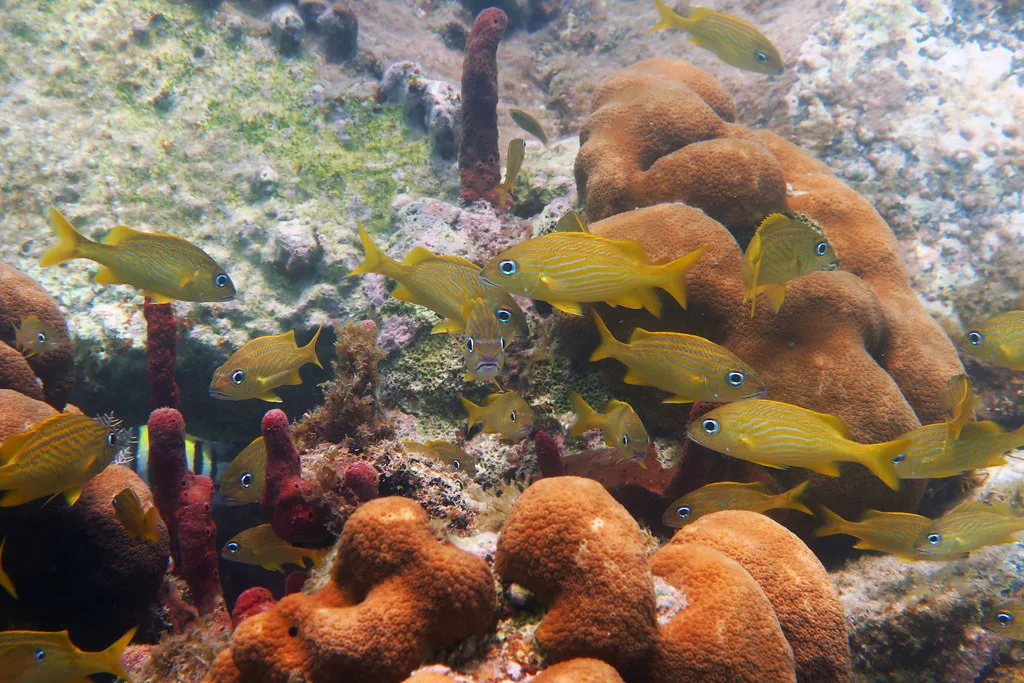
Photo: Wikimedia Commons (CC BY-SA)
Captain's Logbook
St. John USVI
Two-thirds of this island is national park. Let that sink in. While neighboring islands sprouted resorts and cruise terminals, St. John took a different path — one paved by Laurance Rockefeller, who fell in love with its pristine beaches in the 1950s and donated the land that became Virgin Islands National Park. Today, the island of 4,000 residents remains what the Caribbean once was: forested hillsides dropping to white sand crescents, reefs teeming with life, ruins of sugar plantations reclaimed by jungle, and a pace of life that resists the modern world's relentless acceleration.
Getting here requires intention. Cruise ships don't dock at St. John — they dock at St. Thomas, its more developed neighbor. You must take a taxi to Red Hook, then a ferry across Pillsbury Sound. The 20-minute crossing is worth every minute. As Cruz Bay's small harbor comes into view, the contrast with Charlotte Amalie's cruise ship bustle becomes immediately clear. This is a place that has chosen preservation over profit, and it shows in every unspoiled cove and undeveloped hillside.
The ferry deposited us at the Cruz Bay dock, and I stepped onto the concrete pier into a world that smelled of sea grape leaves and coconut oil. Cruz Bay is small enough to walk in ten minutes, but I lingered, drawn to the colorful storefronts and the sound of steel drums drifting from somewhere I could not quite locate. On the road out of town, we passed our first wild donkeys — three of them standing in the shade of a flamboyant tree, their ears twitching at the safari taxi rumbling past. Our driver explained they were descendants of animals brought by the Danish planters centuries ago, now free to roam the island as they please. I watched one amble across the road with the unhurried confidence of someone who knows the island belongs to them.
At Trunk Bay, I waded into water so clear I could count the grains of sand beneath my feet. The underwater snorkel trail stretched before me — a path of interpretive signs bolted to the seafloor, each one describing the coral formations and marine life hovering around it. I floated face-down, my breath loud in my own ears, watching a spotted eagle ray glide beneath me with the effortless grace of a creature that has never known hurry. A parrotfish crunched on coral nearby, the sound surprisingly loud underwater, and a school of blue tang surrounded me briefly before vanishing into the reef. The national park boundary markers were visible even here, reminding me that this reef exists because someone decided it was worth protecting.
I surfaced from the snorkel trail and pulled the mask from my face, blinking against the sudden brightness. The beach curved away in both directions — a crescent of white sand so perfect it looked staged, framed by green hillsides dropping steeply to the water's edge. No high-rises. No boardwalk. No jet skis screaming across the bay. Just the beach, the hills, the water, and the quiet understanding that this is what the entire Caribbean looked like before we decided to improve it. Something shifted in my chest — not sadness exactly, but a recognition that beauty preserved is a different thing entirely from beauty discovered. Trunk Bay is beautiful because someone chose to leave it alone, and standing there dripping saltwater onto the sand, I felt grateful in a way that surprised me with its intensity.
We dried off and caught a safari taxi further along the North Shore Road to the Annaberg Sugar Plantation ruins. The road itself was an experience — narrow switchbacks climbing through dense tropical forest, the canopy closing overhead like a green tunnel, then suddenly opening to reveal a vista of sapphire water and scattered islands that made the entire taxi go silent. At Annaberg, stone walls and crumbling arches rose from the hillside above Leinster Bay, the remains of an 18th-century sugar operation that once enslaved hundreds of workers. I walked the self-guided trail past the horse mill, the factory building, and the slave quarters, reading the interpretive signs that gave names and stories to people who had been deliberately erased from the historical record. The windmill tower stood at the highest point, and from its base I could see across the water to the British Virgin Islands, so close they seemed to belong to the same world — which, of course, they once did, connected by the brutal economics of sugar and slavery.
Standing among the Annaberg ruins, I found myself thinking about Laurance Rockefeller in a way I had not expected. The man who preserved this island also preserved its history — not just the beaches and the reefs, but the plantation ruins and the stories they hold. The national park does not sanitize St. John's past or pretend the island's beauty exists apart from its history. The sugar mill ruins sit within the same protected boundaries as Trunk Bay, because both are part of what this place is. I had come for the snorkeling, but it was the ruins that stayed with me longest, their broken walls holding a silence that felt earned rather than empty.
On the way back to Cruz Bay, we stopped at Cinnamon Bay, where the beach stretched longer and quieter than Trunk Bay. A few kayakers paddled near the shore, and a family built sandcastles at the water's edge, but the beach felt unhurried, almost private. I waded in and floated on my back, staring up at the green ridgeline and the clouds building above it. The water held me like a hammock, warm and impossibly buoyant, and for ten minutes I did nothing at all — just floated, breathed, and listened to the small waves lapping against the shore. A pelican dove into the water thirty feet away with a splash that startled me into laughter, and I realized I had not thought about the ship, the schedule, or anything beyond this bay for longer than I could remember.
Cruz Bay welcomed us back with the smell of grilling meat and the sound of reggae from an open-air restaurant. I ordered a Painkiller — the rum cocktail that claims these waters as its birthplace — and sat at a wooden table overlooking the ferry dock, watching the boats come and go. The drink was creamy and strong, the nutmeg grated fresh on top, and it tasted like the afternoon felt: warm, unhurried, and suffused with the particular sweetness of a day spent well.
Weeks later, I find myself returning to St. John in my mind more often than any other port. Not because it was the most exciting or the most photogenic — though it was certainly beautiful — but because it offered something increasingly rare: a place that has chosen not to become something else. The national park is not just a boundary on a map; it is a philosophy made physical, a commitment to the idea that some places are worth more unbuilt than developed. I think about that spotted eagle ray at Trunk Bay, gliding through water that remains clear because the hillside above it remains forested, and I understand that the ray and the forest and the beach and the ruins are all part of the same decision — the decision to protect a place not just from harm, but from the slow erosion of becoming ordinary. St. John resists the ordinary with every undeveloped hillside and every protected reef, and for a few hours on a Tuesday afternoon, it let me resist it too.
Weather & Best Time to Visit
The Cruise Port
St. John is a tender port by proxy — no cruise ships dock here at all. Your ship will be berthed at St. Thomas, either at the Crown Bay or Havensight cruise terminals in Charlotte Amalie. Getting to St. John requires a two-step journey: first a taxi from the St. Thomas cruise pier to Red Hook on the island's east end ($15 per person, approximately 30 minutes depending on traffic), then a passenger ferry across Pillsbury Sound to Cruz Bay ($7.50 each way, departures roughly every hour, 20-minute crossing).
The Cruz Bay ferry dock is the heart of St. John's only real town. You step off the ferry directly into a compact waterfront area with restaurants, shops, the National Park visitor center, and the safari taxi stand. There is no cruise terminal infrastructure here — no porters, no tour desk, no duty-free gauntlet. Just a small Caribbean town that happens to be the gateway to one of America's most pristine national parks. The visitor center is worth a quick stop: free trail maps, current beach conditions, and ranger-led program schedules are all available. Plan to arrive at Cruz Bay early — the first ferries are the least crowded, and morning light at Trunk Bay is unmatched.
Getting Around
Open-air safari taxis are the primary transportation on St. John. These converted trucks with bench seating and canvas canopies run set routes from Cruz Bay to the North Shore beaches. Expect to pay $8-10 per person each way to Trunk Bay or Cinnamon Bay, and $12-15 to more distant destinations like Coral Bay on the island's quieter east end. Drivers announce their destination at the Cruz Bay taxi stand — just hop on the one heading where you want to go. They run frequently during cruise ship hours but become scarce in the late afternoon, so confirm return options before heading out.
Rental Jeeps are available from Cruz Bay agencies at $80-120 per day and offer maximum flexibility for exploring the island's hiking trails, remote beaches, and the road to Coral Bay. However, driving on St. John is not for the faint-hearted: traffic flows on the left side of the road, the roads are steep, narrow, and winding with minimal guardrails, and some stretches are unpaved. If you are comfortable with these conditions, a Jeep opens up the entire island. If not, the safari taxi system covers all the major beaches and attractions perfectly well for a day visit.
Ferries from St. Thomas run from Red Hook to Cruz Bay approximately every hour from 6:30 AM. The last return ferry typically departs Cruz Bay at 11 PM, but verify the schedule for your travel date — missing the last ferry creates a genuine problem. Car ferries also operate from Red Hook if you have rented a vehicle on St. Thomas, though this is rarely practical for a cruise day trip.
Booking Guidance
Ship excursions to St. John handle all the logistics — taxi, ferry, beach transport, and guaranteed return to the vessel — which provides real peace of mind given the multi-step journey. For independent travelers, the route is straightforward but time-sensitive: budget at least 90 minutes each way for the taxi-ferry-taxi chain, and set a firm return deadline that gets you back to Red Hook with a comfortable buffer. Local operators in Cruz Bay offer snorkel trips, kayak tours, and hiking excursions at competitive rates. Book ahead during peak season (December through April) when safari taxis and popular tours fill early. Whether ship or independent, confirm all departure times before heading out.
Excursions & Activities
Booking guidance: Ship excursion options provide guaranteed return to port and are worth considering for first-time visitors. For those who prefer to explore independently, local operators often offer competitive rates — book ahead during peak season to secure your preferred times. Whether you choose a ship excursion or go independent, confirm departure times and meeting points before heading out.
Trunk Bay Underwater Snorkel Trail ($5 park entrance): St. John's signature experience. The 225-yard underwater trail features interpretive signs mounted on the seafloor that identify coral species and marine life as you swim above them. The beach itself consistently ranks among the world's best — powdery white sand, calm turquoise water, and a backdrop of green national park hillsides. Snorkel gear rentals are available on-site ($6-8). Arrive before 10 AM to beat the crowds; by midday the beach can feel busy during peak season. Facilities include restrooms, a snack bar, and lifeguards.
Cinnamon Bay: A longer, quieter beach than Trunk Bay with excellent shore snorkeling, kayak and paddleboard rentals, and the trailhead for the Cinnamon Bay Loop Trail that passes through sugar mill ruins reclaimed by the forest. The ruins of the Cinnamon Bay sugar factory sit just steps from the sand, a haunting juxtaposition of Caribbean beauty and colonial history. Watersports rentals run $20-40 per hour.
Annaberg Sugar Mill Ruins: The best-preserved plantation ruins in the national park, perched on a hillside above Leinster Bay with sweeping views of the British Virgin Islands. A self-guided interpretive trail ($5 park fee if not already paid) walks through the windmill tower, horse mill, factory building, and slave quarters. Rangers occasionally lead guided programs — check at the Cruz Bay visitor center for the schedule. The adjacent Leinster Bay Trail leads to excellent secluded snorkeling at Waterlemon Cay.
Hiking Trails: Virgin Islands National Park maintains over 20 trails ranging from easy coastal walks to strenuous ridge climbs. The Reef Bay Trail (2.5 miles downhill, moderate difficulty) passes through tropical forest and pre-Columbian petroglyphs before ending at a beach — the National Park Service runs guided hikes with a boat return to Cruz Bay ($30). The Lind Point Trail from Cruz Bay to Honeymoon Beach offers an easy 1-mile walk to a quiet cove.
Coral Bay: On St. John's quieter eastern side, Coral Bay offers a glimpse of old Caribbean life — a handful of restaurants, a general store, and a harbor full of sailboats. The drive from Cruz Bay takes 25-30 minutes through spectacular scenery. Skinny Legs bar and restaurant is a local institution. Hurricane Hole, nearby, provides kayaking through protected mangroves. Only visit Coral Bay if you have a full day and want to escape the North Shore beach crowds.
Depth Soundings
Booking guidance: Ship excursion options provide guaranteed return to port and are worth considering for first-time visitors. For those who prefer to explore independently, local operators often offer competitive rates — book ahead during peak season to secure your preferred times. Whether you choose a ship excursion or go independent, confirm departure times and meeting points before heading out.
Money: The local currency is US Dollar. ATMs are generally available near the port area, though fees vary. Credit cards are widely accepted at tourist-oriented establishments, but carry some local cash for markets, street food, and smaller vendors. Your ship's exchange rate is typically unfavorable — withdraw from a bank ATM instead. Budget $30–$80 per person for a comfortable day including lunch, transport, and a few entry fees.
Timing: Start early if your ship arrives at dawn — the first hours offer pleasant conditions and smaller crowds. Allow at least 30 minutes buffer before all-aboard time. Set a phone alarm as backup. Most port visits allow 8–10 hours on shore, which is enough to see the highlights without rushing if you prioritize well.
Safety: Standard port-town awareness applies — keep valuables close and stick to well-traveled areas during daylight. Your ship's ID card is your most important item — losing it creates a genuine headache at the gangway.
Communication: Wi-Fi is often available at cafés and restaurants near the port. Consider downloading offline maps before disembarking — cellular data roaming charges can be substantial and surprising. Google Maps offline mode or Maps.me work well for navigation without data.
Food & Water: Tap water safety varies by destination — ask locally or buy bottled water to be safe. The best food often comes from busy local restaurants rather than tourist-facing spots near the port. Lunch at a popular local place typically costs $8–$20 per person. Street food can be excellent value if you choose busy stalls with high turnover.
Photo Gallery

Last reviewed: February 2026
St. John: The Caribbean's Protected Paradise
Frequently Asked Questions
Do cruise ships dock at St. John?
No. Cruise ships dock at St. Thomas. Getting to St. John requires a taxi to Red Hook ($15/person) and ferry to Cruz Bay ($7.50 each way, 20 minutes). Book a ship excursion for seamless transport, or go independently for flexibility.
Do I need a passport for St. John?
No. St. John is a U.S. territory — U.S. citizens travel as they would domestically. U.S. dollars are the currency, and no customs/immigration applies.
Is Trunk Bay worth the hype?
Yes. The underwater snorkel trail, pristine beach, and protected waters live up to the reputation. Go early to beat the crowds. $5 park entrance fee includes facilities.
Should I rent a car on St. John?
Only if you're comfortable driving on the left, on narrow and steep roads. Safari taxis run to all major beaches and are adequate for most day visits. Jeep rentals run $80-120/day.
Q: What is the best time to visit St. John USVI?
A: Cruise season runs December through April — drier months and year-round tropical temperatures (72-89°F). September is the month to avoid (peak hurricane risk). St. John is a national park island.
Q: Is St. John USVI suitable for passengers with mobility challenges?
A: Accessibility varies by area. The port vicinity and main commercial streets are generally manageable, but older historic districts may feature cobblestones, stairs, and uneven surfaces. Consider booking an accessible ship excursion if you have concerns. The ship's shore excursion desk can advise on specific accessibility options for this port.
Q: Do I need to exchange currency before arriving?
A: The local currency is US Dollar. Most tourist-facing businesses accept major credit cards. ATMs near the port offer competitive exchange rates. Carry some local cash for small purchases, markets, and tips. Avoid exchanging money on the ship — the rates are typically unfavorable compared to local bank ATMs.
Q: Can I explore independently or should I book a ship excursion?
A: Both options work well. Ship excursions guarantee return to the vessel and handle logistics, making them ideal for first-time visitors. Independent exploration costs less and allows more flexibility — just keep track of time and allow a 30-minute buffer before all-aboard. Many passengers combine approaches: an organized morning tour followed by free afternoon exploration.
Q: Does St. John have a hurricane or storm season?
A: Yes — Atlantic hurricane season runs June 1 through November 30, with peak risk in September and October. September is the month to avoid. Cruise season concentrates in the drier December–April window.
Q: What should I pack for St. John's weather?
A: Reef-safe sunscreen — enforced in park. Water shoes for reef. Hiking shoes for Reef Bay Trail. Reusable water bottle.
Q: Will rain ruin my port day in St. John?
A: Drier January through May; wetter August through November. Cruise season concentrates in the drier December–April window.
Beyond Trunk Bay
St. John rewards exploration. Cinnamon Bay offers a longer beach with camping facilities and watersports rentals. Maho Bay provides easy shore snorkeling directly from the beach — sea turtles frequently graze in the shallows. Salt Pond Bay, at the island's quieter southeastern end, requires a short hike but offers solitude that Trunk Bay cannot.
The Annaberg Sugar Plantation ruins provide a sobering reminder of the island's history — a partially restored 18th-century sugar mill and slave quarters where the National Park offers interpretive programs. The views over Leinster Bay are stunning; the history is important.
Cruz Bay itself deserves an hour. Small restaurants, local shops, and the Mongoose Junction shopping area offer lunch options and souvenirs. The frozen "Painkiller" cocktail originated in these waters — sample one at Woody's or another waterfront spot before catching your ferry back.
Port Map
Tap markers to explore St. John
The Cruise Port
St. John has no cruise pier — ships anchor in Cruz Bay harbor and tender passengers to the public dock. The tender ride is short but can be choppy in rough weather. Once ashore, you step into Cruz Bay's compact waterfront, with shops, restaurants, and the National Park Service visitor center all within walking distance.
The terminal area is minimal — essentially the public ferry dock shared with inter-island ferries from St. Thomas. There is no dedicated cruise terminal building. Taxis (open-air safari style) queue nearby for beach runs. The relaxed, small-town atmosphere is part of St. John's charm — this is not a built-for-tourists port, and that's precisely the point.
Top Excursions & Things to Do
Trunk Bay Beach
Consistently rated among the world's most beautiful beaches, Trunk Bay features a 650-foot underwater snorkeling trail through coral reef, powdery white sand, and crystal-clear water. Entry is $5 per person (National Park fee). Snorkel gear available to rent on-site. Arrive early — the beach fills quickly on cruise ship days.
Virgin Islands National Park Hiking
The park covers roughly two-thirds of St. John. The Reef Bay Trail (moderate, 2.5 miles one-way) descends through tropical forest past Taino petroglyphs to a pristine beach. The Lind Point Trail from Cruz Bay offers easy hiking with panoramic views. The park visitor center in Cruz Bay has trail maps and current conditions.
Snorkeling Tours
Half-day and full-day boat trips visit pristine snorkel spots around St. John and nearby cays — Waterlemon Cay, Whistling Cay, and the reef systems along the island's north shore. Expect $65-$120 per person depending on duration, with gear and often lunch included.
Ship excursion packages handle the St. Thomas-to-St. John logistics and guarantee your return to the vessel — important since you must tender back and then ferry/taxi to the cruise pier. Independent travelers can book ahead with Cruz Bay operators for better prices and flexibility, but must carefully manage the return journey. Allow generous buffer time for the ferry crossing and taxi back.
This guide reflects firsthand experience from a 2024 visit, drawn from research and the accounts of fellow travelers. This guide draws from published accounts, fellow cruisers, and careful research — but it does not yet carry the weight of my own anchor.