


Captain's Logbook
Tauranga: Where Middle-earth Meets Maori Heartland
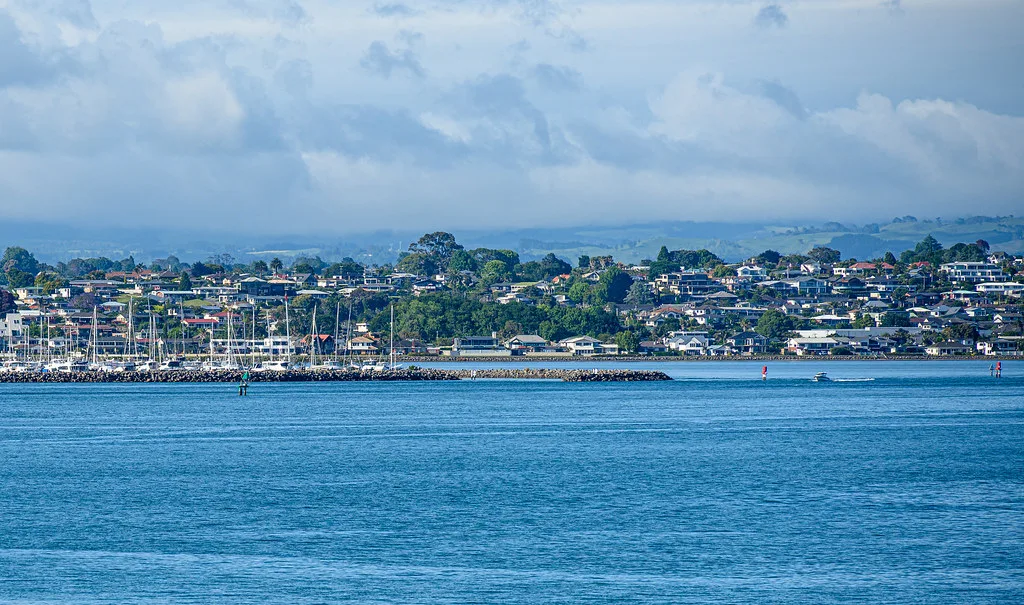
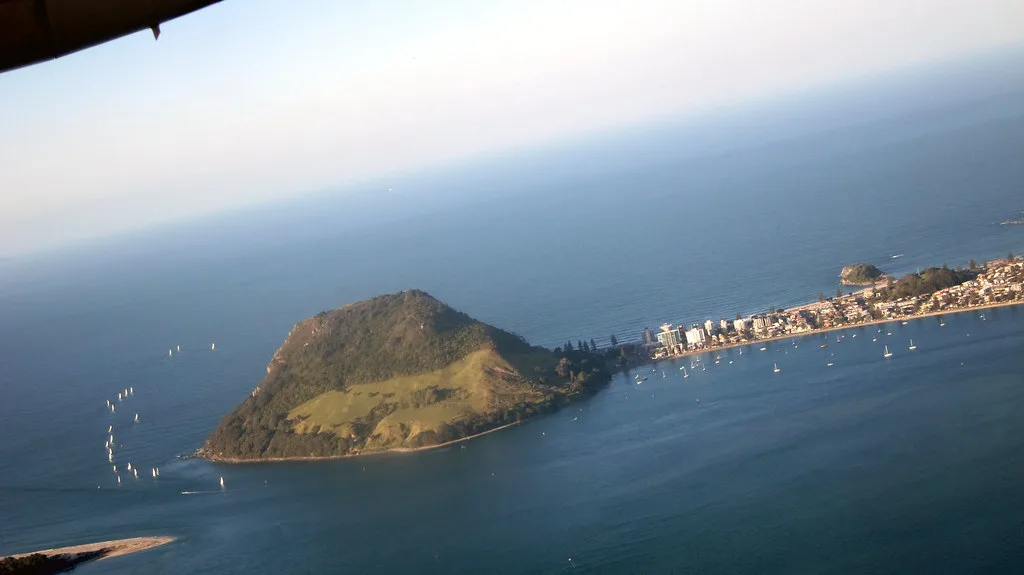
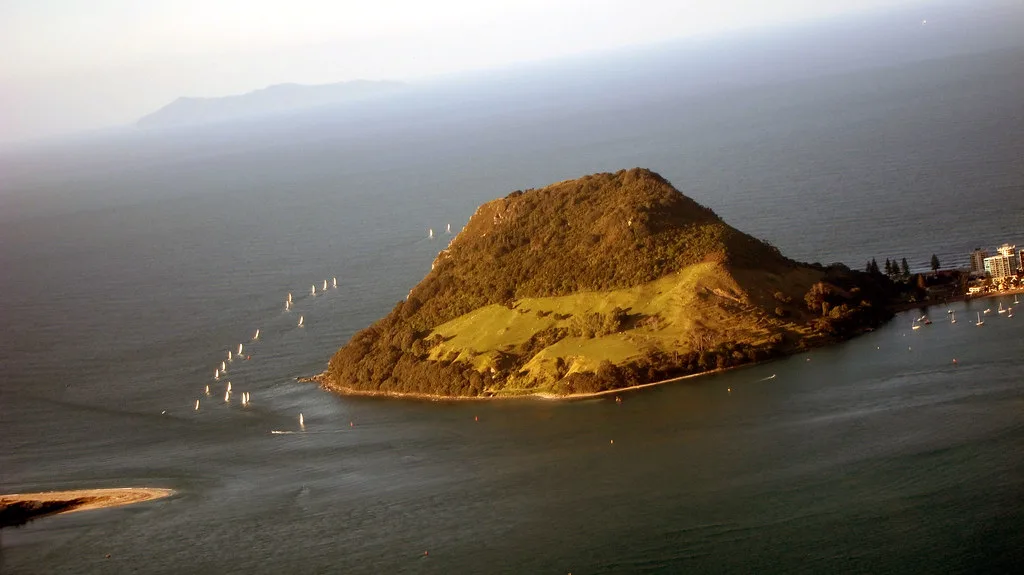
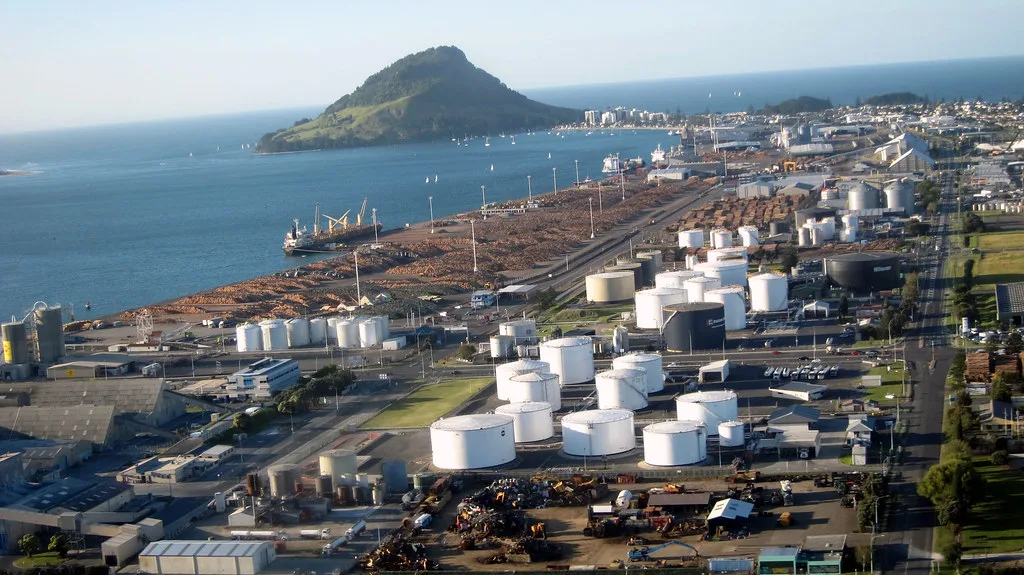
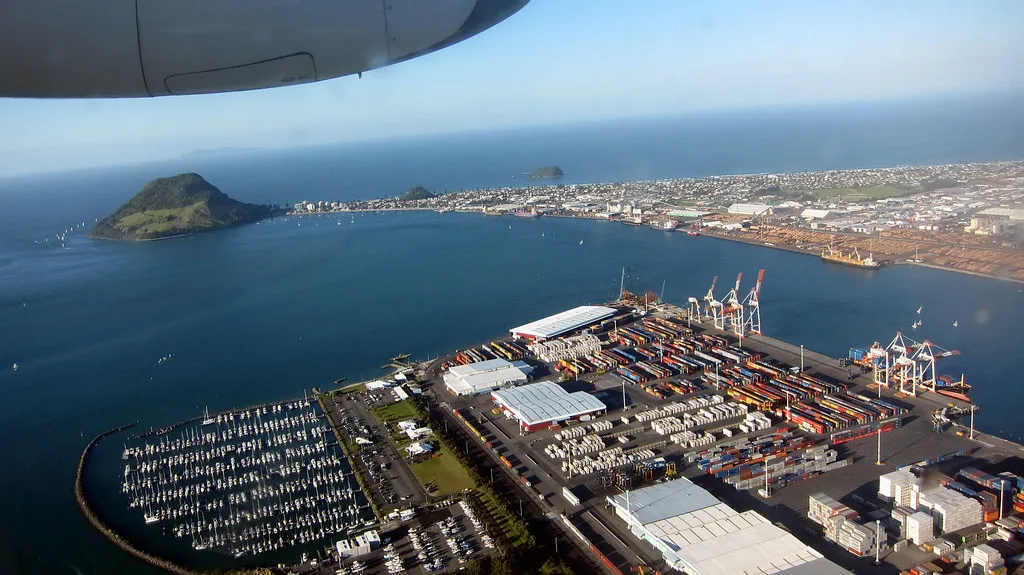
The name whispers its own purpose: Tauranga — "safe anchorage for canoes" in te reo Maori. Standing on the wharf at Salisbury, watching my ship tie up just a kilometer from Mount Maunganui township, I understood why the ancestors chose this harbor. The great volcanic cone of Mauao rises like a protective sentinel to the east, its 232-meter bulk sheltering the bay from Pacific swells. Behind me, seven kilometers inland, Tauranga city sprawled across hills that Captain James Cook surveyed in the 18th century, naming this fertile crescent the "Bay of Plenty" — and plenty it remains, with endless kiwifruit orchards and avocado groves painting the landscape in ordered green rows.
This anchorage welcomed its first navigators in the 1100s when the great waka Takitimu brought Maori settlers to these shores. They found thermal wonders inland, forests thick with native birds, and fishing grounds generous enough to sustain generations. By the 1830s, European missionaries and settlers arrived, bringing their own ways. The collision of cultures turned violent during the New Zealand Wars — the Battle of Gate Pa in 1864 saw fierce fighting just beyond town — but today's Tauranga has woven both traditions into something distinctly Kiwi: relaxed, welcoming, and deeply connected to the land.
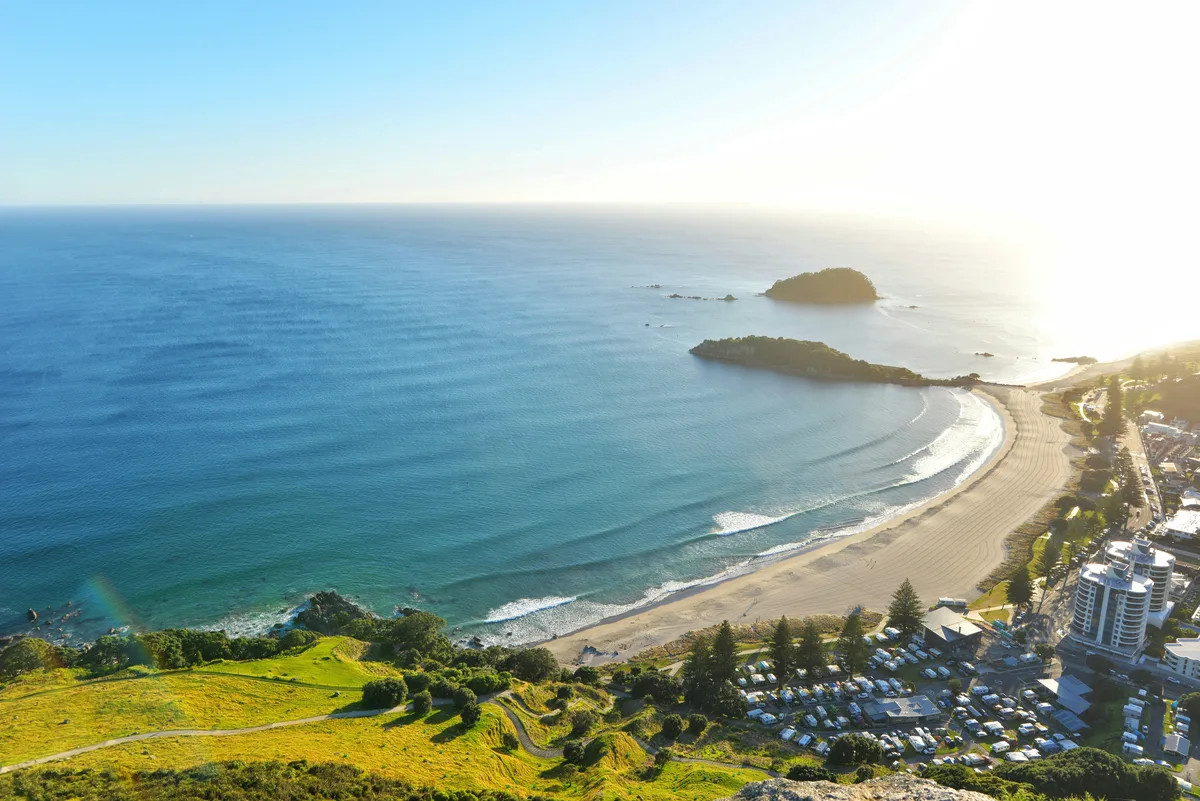
I decided to start my morning with the climb up Mount Maunganui. The trail begins just steps from the golden beach, winding through pohutukawa trees whose gnarled roots grip the volcanic rock like ancient fingers. I passed joggers and dog walkers and elderly couples who clearly did this every morning of their lives. The track steepened and my calves burned, but I kept climbing because every switchback revealed a wider view — the harbor stretching south, the Pacific spreading east into blue infinity, container ships at the port below looking small as toys. At the summit, 232 meters above sea level, I stood in wind that smelled of salt and eucalyptus and felt the particular satisfaction that comes from having earned a view. The beach curved away below me in a perfect crescent of white sand, surfers dotting the break line like scattered punctuation marks. I stayed longer than I should have, reluctant to descend from something so close to perfect.
I will be honest: Tauranga itself will not captivate you for long. It is pleasant enough, with good cafes and tidy streets, but the real treasures wait inland. An hour's drive through pastoral countryside brought me to Rotorua, where the earth remembers it is alive. Mud pools simmered like cauldrons, the Pohutu Geyser at Whakarewarewa thermal village launched skyward every hour, and sulfur hung thick in the air above boiling hot springs. The Maori village at Whakarewarewa is not a museum — families still live here, cooking their food in thermal vents, bathing in hot pools their great-grandparents used. Watching an elder weave flax in a carved meeting house while steam rose from the ground beside her, I sensed how deeply this people understands their volcanic homeland.
At Hell's Gate geothermal reserve, I walked boardwalks over bubbling mud pools that hissed and spat like living things. The sulfur stung my nostrils and the ground beneath my feet radiated warmth that felt almost threatening — a reminder that the thin crust I stood on was all that separated me from forces I could not comprehend. The mud baths there are genuinely therapeutic, the mineral-rich clay leaving my skin feeling oddly renewed, though the smell clung to my clothes for hours afterward. I watched a mother and daughter laughing as they plastered each other with grey mud, and I thought about how the earth here does not merely exist beneath your feet — it participates in your day, demanding attention, offering its heat and minerals as gifts that come with a faint whiff of brimstone.
The moment that stopped me came at the Whakarewarewa cultural performance. A young Maori woman performed the poi dance — the weighted balls spinning in patterns so fast they blurred, her movements precise and fluid, her voice rising in a waiata that I could not understand but felt in my chest nonetheless. When she finished, there was a silence before the applause, and in that silence I heard something I had not expected: my own breathing, caught. I had come expecting spectacle and found instead something deeply human — a tradition carried forward not for tourists but because it matters, because the songs hold stories that would otherwise be lost, because the dance is a language spoken with the body when words fall short. On the drive back to the port, passing through corridors of kiwifruit vines heavy with fruit, I asked my driver about the land disputes that still shape New Zealand politics. He spoke carefully, honestly, about Treaty settlements and the slow work of reconciliation. The landscape outside the window — so green, so ordered, so peaceful — held layers of history I was only beginning to glimpse. I realized that the Bay of Plenty is not just a name Cook gave to describe abundant food. It is a place where abundance and loss coexist, where volcanic soil nourishes orchards planted on land that was once contested, where Maori and Pakeha are still learning how to share a story that belongs to both of them.Looking back on my day in Tauranga, I find myself thinking not about the geysers or the hobbit holes or the summit views — remarkable as they were — but about the quiet moments between them. The elder weaving flax. The poi dancer's caught breath. The driver's careful honesty about his country's unfinished business. New Zealand markets itself as pure and clean and adventure-ready, and it is all of those things. But what surprised me, what I carry with me still, is how willingly this country shows you its complexity alongside its beauty. Tauranga is not just a safe anchorage for canoes. It is a place where the earth itself reminds you that beneath every surface — every green hill, every calm harbor, every friendly smile — there are deeper currents at work, shaping the land and its people in ways that a single port day can only begin to reveal.
The Cruise Port
What you need to know before you dock.
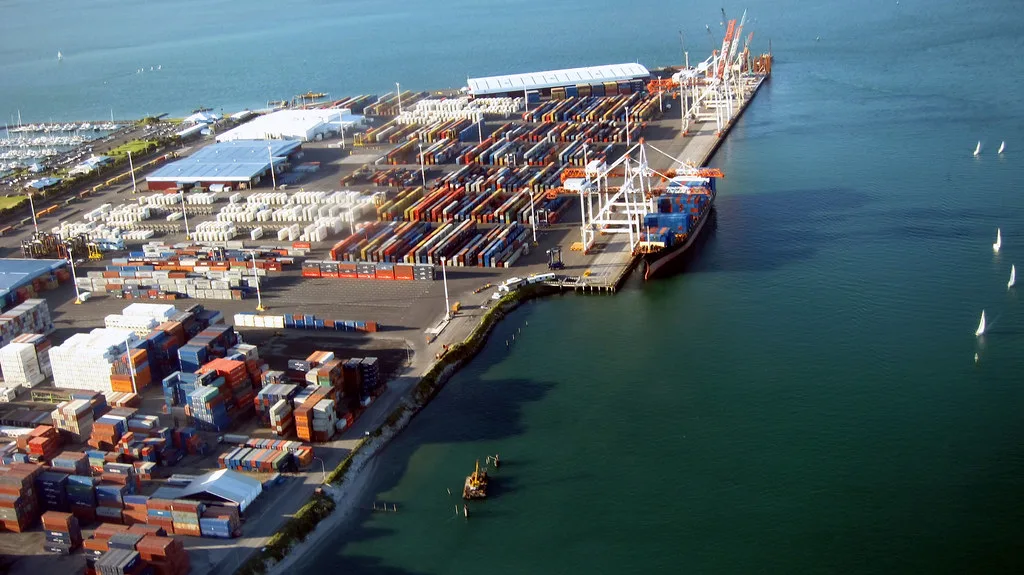
- Terminal: Salisbury Wharf at Mount Maunganui — New Zealand's busiest port; 1 km from Mount Maunganui township, 7 km from Tauranga city center
- Distance to Rotorua: 85 km / 1 hour drive through pastoral countryside lined with kiwifruit and avocado orchards
- Distance to Hobbiton: 75 km / 1 hour drive into the rolling farmland of the Waikato
- Tender: No — ships dock directly at Salisbury Wharf
- Currency: New Zealand Dollar (NZD); credit cards widely accepted; ATMs available in town
- Language: English and Te Reo Māori (both official languages)
- Driving: Left side; roads excellent and scenic; car rental available but organized tours recommended for Rotorua and Hobbiton
- Best Season: November–March (Southern Hemisphere summer); warmest December–February; Transitional Seasons offer fewer crowds
- Local Pride: Bay of Plenty produces most of New Zealand's kiwifruit — you'll see orchards everywhere
Getting Around
- Shuttle Buses from Port: Free or low-cost shuttle buses typically operate on cruise ship days, running between Salisbury Wharf and both Mount Maunganui township and Tauranga city center. These shuttles depart every 15-20 minutes and are the easiest way to reach shops, cafes, and the base of Mount Maunganui. Check with your ship's port desk for the day's shuttle schedule, as routes and frequency vary by operator and ship line. The ride to Mount Maunganui township takes roughly 5-10 minutes; to Tauranga city center, approximately 15-20 minutes.
- Taxis and Rideshare: Taxis queue at the wharf on cruise days. Expect to pay approximately NZ$15-20 to Mount Maunganui center and NZ$25-35 to Tauranga downtown. Uber operates in the region but availability can be limited. For Rotorua or Hobbiton day trips, organized tours are more practical than taxis given the distance (60-75 minutes each way).
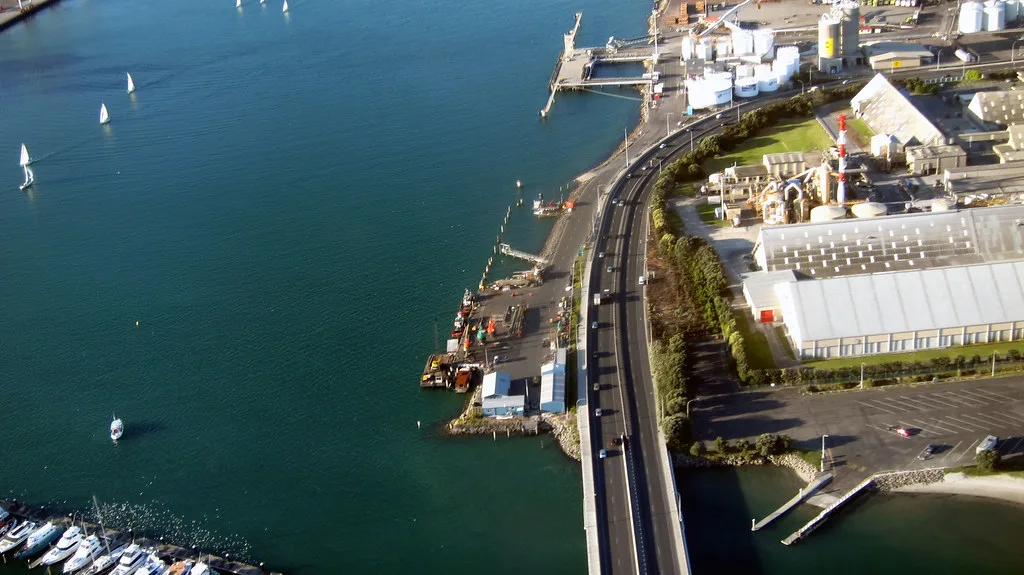
- Walking to Mount Maunganui Beach: The walk from Salisbury Wharf to Mount Maunganui's main beach and township is approximately 1 km along flat, paved pathways — a pleasant 15-minute stroll suitable for most fitness levels. The route passes through the port area and along Marine Parade, with the volcanic cone of Mauao growing larger as you approach. Footpaths are well-maintained and mostly level, though the summit track itself is steep and uneven. Accessibility note: the flat base track around Mount Maunganui (3.4 km) is suitable for wheelchairs and mobility scooters, though some sections near the ocean may be exposed to wind. The summit track is not wheelchair accessible due to steep grades and steps.
- Car Rental: Available in Tauranga city but generally not recommended for a single port day — organized tours handle the logistics of Rotorua and Hobbiton excursions more efficiently, and parking at popular attractions can be limited during cruise season.
- Accessibility: Mount Maunganui's main beach has accessible ramp access at several points. The Tauranga i-SITE visitor center near the waterfront can advise on accessible attractions and transport options. Whakarewarewa and Te Puia in Rotorua have accessible pathways for most of the geothermal areas, though some boardwalks may be narrow. Hobbiton's terrain includes grassy slopes that may be challenging for wheelchair users — contact them directly for accessibility arrangements.
Tauranga Area Map
Interactive map showing cruise terminal, Mount Maunganui, Rotorua, Hobbiton, and Bay of Plenty attractions. Click any marker for details and directions.
Excursions & Activities
Booking guidance: Ship excursion options provide guaranteed return to port and are worth considering for first-time visitors. For those who prefer to explore independently, local operators often offer competitive rates — book ahead during peak season to secure your preferred times. Whether you choose a ship excursion or go independent, confirm departure times and meeting points before heading out.
How I'd spend my time.
Booking guidance: Ship excursions to Rotorua and Hobbiton offer guaranteed return to the vessel — critical here since both are 60+ minutes from port. Independent bookings are cheaper but risky with tight all-aboard times. Book ahead for Hobbiton (sells out daily) and Whakarewarewa cultural experiences. Mount Maunganui is an easy independent walk from the pier.
Whakarewarewa Thermal Village & Te Puia
This isn't a reconstructed village or theme park — families have lived at Whakarewarewa for generations, using geothermal vents to cook their food and heat their homes. Watch the Pohutu Geyser erupt up to 30 meters high every hour, steam rising from boiling mud pools that bubble like porridge on a stove. At Te Puia you'll witness traditional haka performances that shake the floor of carved meeting houses, see artisans weave flax using techniques passed down through centuries, and understand why this volcanic landscape is sacred ground. The hangi feast — meat and vegetables slow-cooked underground with heated stones — tastes like nothing you've had before: smoky, tender, earth-flavored. Full-day excursion, 1 hour drive from port. ~$80-120 per person including cultural performance.
Rotorua's Geothermal Parks
Beyond Whakarewarewa, Rotorua offers Wai-O-Tapu's Artist's Palette of mineral-colored pools and Hell's Gate's bubbling mud cauldrons. Walking through these volcanic valleys, sulfur sharp in your nose, ground warm beneath your feet, you feel like you're walking on a living planet. The thermal activity isn't gentle — it's violent, primal, mesmerizing. Some pools boil at temperatures that would cook you in seconds. Others glow emerald or orange from minerals that stain the rocks like watercolor paintings. Don't skip this. ~$40-60 entry per park.
Hobbiton Movie Set
An hour's drive through pastoral countryside brings you to farmland that could have been lifted straight from Tolkien's imagination. Peter Jackson left 44 hobbit holes standing after filming, and the Alexander family maintains them like they're real homes. Smoke curls from chimneys. Gardens overflow with vegetables. The Party Tree spreads its ancient limbs over Bag End. Standing at Bilbo's green door — the actual door from the films — watching sheep graze hills that rolled beneath Gandalf's cart, I felt transported in a way few movie sets manage. The Green Dragon Inn serves proper beer. The guides know every filming anecdote. Worth every penny of the ~$90 NZD ticket. Book weeks ahead — it sells out daily.
Mount Maunganui Summit & Base Walk
Mauao rises 232 meters from golden sand, a dormant volcano that's been sleeping for two to three million years. The summit track takes an hour and earns you panoramic views from Coromandel to the volcanic peaks of the interior — on clear days you can see forever. The base track is gentler, winding past saltwater hot pools where locals soak while watching waves roll in. Both tracks feel like medicine after days at sea: salt air, seabird calls, the Pacific spreading blue to the horizon. The beach itself curves for miles, sand so fine it squeaks, surf cold but swimmable in summer. Just a kilometer from where you dock.
Whakarewarewa Redwood Forest
Just outside Rotorua, 5,600 hectares of California redwoods tower over fern-carpeted trails like a cathedral built by giants. These trees were planted over a century ago and now soar so high you strain your neck looking up at their canopy. The forest floor stays soft and quiet underfoot, dappled with green-gold light filtered through branches three stories above. Walking these trails feels sacred somehow — the kind of quiet that makes you want to whisper. Free entry. Various trails from 20 minutes to several hours. If you need peace, you'll find it here.
Kiwifruit & Avocado Country
Bay of Plenty is New Zealand's kiwifruit and avocado capital — the orchards stretch for miles, ordered rows of trellised vines heavy with fuzzy brown fruit. Orchard tours walk you through cultivation techniques, harvest seasons, and the difference between green (tart, classic), gold (sweet, tropical), and red (berry-flavored) varieties. You'll taste them all, learning why New Zealand dominates global kiwifruit exports. It's agricultural tourism done right: educational, delicious, and surprisingly fascinating. Half-day tours ~$60-80. Sometimes includes avocado tastings too.
McLaren Falls Park
Twenty minutes from port, this park offers lake swimming, small waterfalls, native forest walks, and a glow worm dell that sparkles like stars at dusk. Free entry. Low-key and peaceful. Perfect if you want something gentle and close by, or if traveling with family who need different paces. The glow worms are genuinely magical — thousands of bioluminescent larvae hanging from banks and trees, glowing blue-green in the gathering dark.
Local Food & Drink
- Kiwifruit: You're in the world capital — Bay of Plenty grows most of New Zealand's crop, and New Zealand grows a third of the world's supply. Gold kiwifruit (especially the SunGold variety) tastes nothing like the green ones you know: sweeter, tropical, almost mango-like. Red kiwifruit have berry notes. Orchards sell them roadside for pennies. Buy a bag and understand why this fuzzy fruit conquered the world.
- Hangi: Traditional Māori cooking method using heated stones buried in an earth oven. Meat and vegetables emerge hours later smoky, fall-apart tender, infused with earth and smoke. It's not just food — it's connection to the land. Most cultural experiences include hangi feasts. Don't pass it up.
- Avocados: Bay of Plenty also grows exceptional avocados. Cafés serve them on everything — toast, burgers, salads. They're creamy, buttery, picked ripe from local orchards. Avocado smash on sourdough has become the quintessential Kiwi breakfast.
- Hokey Pokey Ice Cream: Vanilla studded with crunchy honeycomb toffee chunks. Simple, perfect, addictive. Every ice cream shop stocks it. Order a scoop and understand why Kiwis eat more ice cream per capita than almost anyone.
- Pavlova: Crispy-outside, marshmallow-inside meringue piled with whipped cream and fruit. Kiwis insist they invented it (Australia claims the same). The argument continues, but everyone agrees it's delicious — light, sweet, summer on a plate.
- Flat White: New Zealand's coffee culture is serious business. The flat white — espresso with velvety microfoam milk — was perfected here in the 1980s. Every café takes pride in their version. Order one and taste why Kiwis scoff at most American coffee.
- Sauvignon Blanc: New Zealand's signature wine. Marlborough produces bottles that defined the category worldwide — grassy, citrusy, crisp. Also try Pinot Noir from Central Otago. Wine shops and restaurants carry excellent local bottles at prices that make you weep compared to home.
Depth Soundings
Money: The local currency is NZD. ATMs are generally available near the port area, though fees vary. Credit cards are widely accepted at tourist-oriented establishments, but carry some local cash for markets, street food, and smaller vendors. Your ship's exchange rate is typically unfavorable — withdraw from a bank ATM instead. Budget $30–$80 per person for a comfortable day including lunch, transport, and a few entry fees.
Timing: Start early if your ship arrives at dawn — the first hours offer pleasant conditions and smaller crowds. Allow at least 30 minutes buffer before all-aboard time. Set a phone alarm as backup. Most port visits allow 8–10 hours on shore, which is enough to see the highlights without rushing if you prioritize well.
Accessibility: The port terminal is wheelchair accessible with ramp access to shuttle buses. Mount Maunganui's base walk is flat and paved, suitable for limited mobility; the summit track is steep and unsuitable for wheelchairs. Rotorua's Te Puia has accessible pathways to most viewing areas. Hobbiton's rolling terrain has some gravel paths — check with operators for mobility assistance.
Safety: Standard port-town awareness applies — keep valuables close and stick to well-traveled areas during daylight. Your ship's ID card is your most important item — losing it creates a genuine headache at the gangway.
Communication: Wi-Fi is often available at cafés and restaurants near the port. Consider downloading offline maps before disembarking — cellular data roaming charges can be substantial and surprising. Google Maps offline mode or Maps.me work well for navigation without data.
Food & Water: Tap water safety varies by destination — ask locally or buy bottled water to be safe. The best food often comes from busy local restaurants rather than tourist-facing spots near the port. Lunch at a popular local place typically costs $8–$20 per person. Street food can be excellent value if you choose busy stalls with high turnover.
Photo Gallery
Key Facts
- Country
- New Zealand
- Region
- Pacific
- Currency
- New Zealand Dollar (NZD); credit cards widely accepted; ATMs available in town
- Language
- English and Te Reo Māori (both official languages)
Frequently Asked Questions
Q: Where exactly do cruise ships dock?
A: Salisbury Wharf at Mount Maunganui — about 1 km from the Mount's township center and 7 km from Tauranga city. You can walk to the beach and Mount Maunganui base easily. Shuttle buses and taxis available for Tauranga city center.
Q: Should I choose Rotorua or Hobbiton?
A: The eternal question. Both are full-day excursions in opposite directions (about an hour each way). If you love geothermal wonders, Māori culture, and landscapes that feel genuinely alien, choose Rotorua. If you're a Tolkien devotee or want pastoral farmland beauty, choose Hobbiton. I'd pick Rotorua — it's utterly unique. But my heart still smiles remembering Bag End's green door. Book an overnight pre- or post-cruise if you can manage both.
Q: Can I visit Rotorua independently without a tour?
A: Yes, but it's complicated. The drive takes an hour through lovely countryside. But coordinating thermal park entry times, cultural performance schedules, and return timing to make your ship requires precision. Tours handle logistics and often include multiple sites. Unless you're confident navigating independently in limited time, I'd book a tour.
Q: Is Mount Maunganui worth visiting if I'm doing Rotorua?
A: If you have energy before or after Rotorua, the summit walk is genuinely wonderful — views, sea air, that sense of having climbed something. But Rotorua should be your priority. The Mount is lovely; Rotorua is unforgettable.
Q: How far ahead should I book Hobbiton?
A: Weeks to months, especially during cruise season (November-March). Tours sell out nearly every day. Book directly through the Hobbiton Movie Set website or through your cruise line. Don't gamble on day-of availability — you'll be disappointed.
Q: What does Tauranga mean, and how do I pronounce it?
A: Tauranga (TAU-rung-ah) means "safe anchorage" or "resting place for canoes" in te reo Māori. The name tells you everything: this has been a sheltered harbor for nearly a thousand years, from the first waka arrivals to today's cruise ships.
Q: What is the best time to visit Tauranga?
A: The seasonal panel above lists Peak Season as "Oct, Nov, Dec, Jan, Feb, Mar," Transitional Season as "Apr, Sep," and Low Season as "May, Jun, Jul, Aug." The avoidance note flags "Jul, Aug, Sep" for "(monsoon/typhoon season)." Note Tauranga sits in the Southern Hemisphere (North Island, New Zealand), so the panel's Northern-Hemisphere month labelling may not reflect local rhythms; use the live weather widget for current conditions.
Q: What is Tauranga's storm season?
A: The Weather Hazards panel above labels Tauranga's heavy-weather window as "Heavy Weather (Winter & Ex-Tropical)" with "Season: Jun – Aug (winter); occasional ex-tropical Jan – Mar" and "Peak risk: Jul, Aug." The hazard-note explains: "Cold southerly fronts can bring strong winds, heavy rain, and swell during the southern winter. Downgraded ex-tropical cyclones occasionally track south from the Coral Sea in summer (Jan-Mar), bringing rain and swell to the upper North Island. Ships rarely reroute, but tender and shore-excursion timing can shift on storm days." Tauranga sits in the Bay of Plenty on NZ's North Island at ~37°S — south of the main South Pacific cyclone basin but close enough to receive downgraded ex-tropical systems in summer. The live weather widget in the seasonal panel above is the primary source for current conditions on a specific sailing date.
Q: What should I pack for Tauranga's weather?
A: The Packing Tips section in the seasonal panel above lists: "Sunscreen and sunglasses — essential year-round"; "Light layers for variable temperatures"; "Comfortable walking shoes for exploring"; and "Rain jacket or compact umbrella." Specific Tauranga temperature ranges are not detailed on this page — the glance Temperature entry reads "Varies by season — check forecast."
Q: Will rain ruin my Tauranga port day?
A: The seasonal panel does not give Tauranga-specific rainfall data — the Rain entry reads "Seasonal variation — check forecast" — and the seasonal-month assignments on this page appear to follow a Northern-Hemisphere template that may not fit Southern-Hemisphere Tauranga. The live weather widget in the seasonal panel above is the source for short-term forecasts on a specific sailing date.
Getting Around
Port of Tauranga to Mount Maunganui is walkable (1 km). For downtown Tauranga, shuttle or taxi ($10-15 NZD). Rotorua (60 km) and Hobbiton (80 km) both require organized transport — neither is accessible by public transit in cruise-ship timeframes.