The port that only recently stopped being a tender call
Until very recently, a ship the size of a world-cruise vessel could not come alongside at Townsville. The entrance channel was 92 metres wide and the limit was 238 metres, so the larger ships anchored off Magnetic Island and ferried their passengers in. A $251 million upgrade widened the channel to 180 metres and lifted the limit to 300 metres. Queen Elizabeth, at 294 m, came alongside on 14 January 2025, and the tender regime that tourism sites still describe was over.
It matters more than a piece of port trivia usually does, because Volendam at 237.6 m would have been marginal under the old rules — her 32.3 m beam against a 32.2 m limit. The reason this call works at all is dredging finished in 2024. Everything else on this page follows from being able to walk off a gangway at half past eight in the morning.
Last reviewed: 30 July 2026
Weather & Best Time to Visit
Captain's Logbook
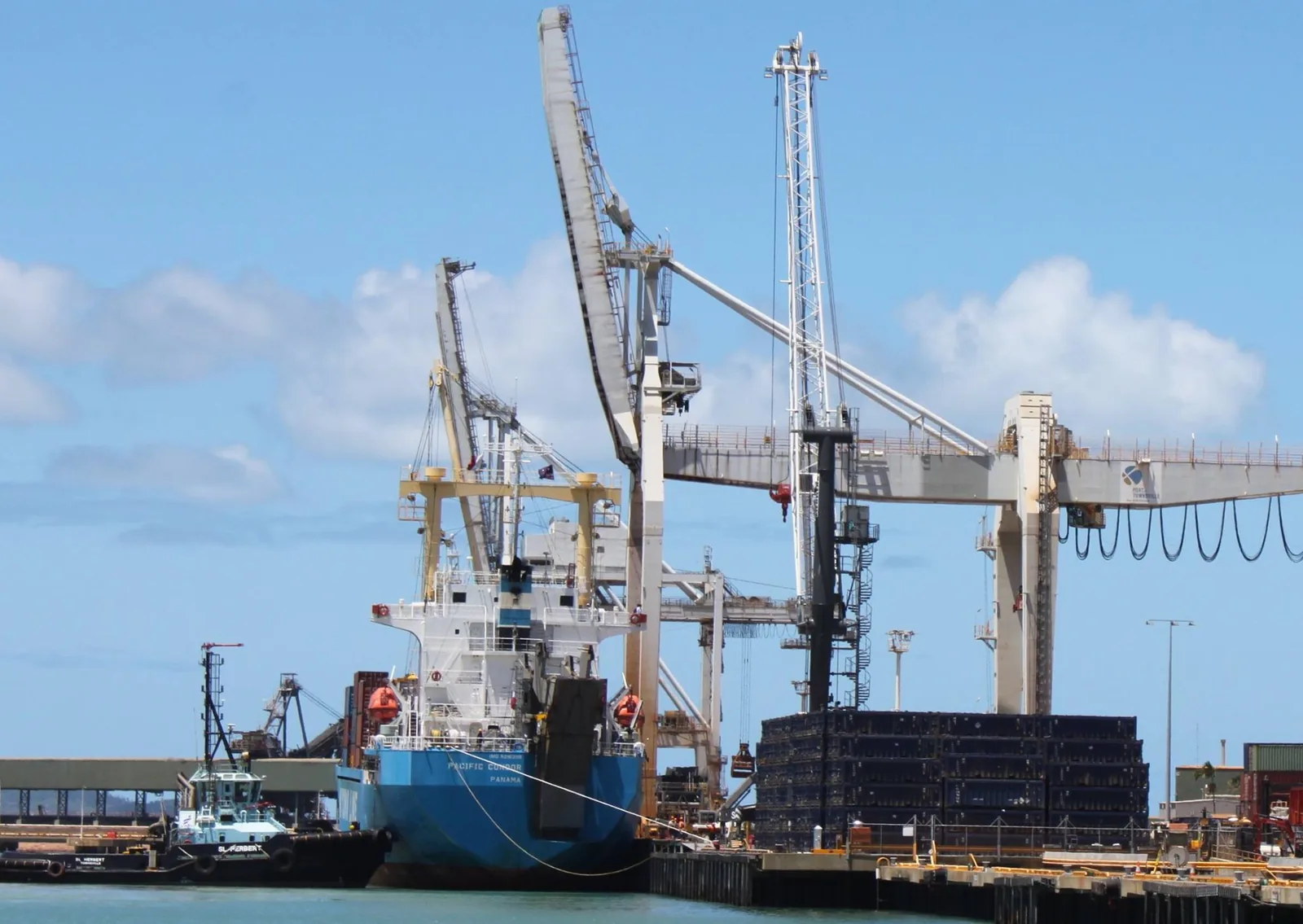
Alongside at the Port of Townsville. Until the channel was widened in 2024 a ship of world-cruise size could not do this here. Photo: Sharon Hoops, CC BY-SA 4.0 via Wikimedia Commons
An honest note before I begin: I have not stood on the quay at Townsville. What follows is read from the record — from the Port of Townsville's own material, from the Great Barrier Reef Marine Park Authority, from Townsville City Council, from the Bureau of Meteorology and from SeaLink's published timetable. Soundings in another's wake, not my own footprints. When I sail here I will come back and log what I actually found.
The first thing I found about Townsville was a closed door, and the fact that almost nobody has noticed it is the reason this page exists. The Great Barrier Reef Aquarium — Reef HQ, the thing every guide sends you to — has been shut since February 2021. It is being rebuilt with $180.1 million of Australian Government money and the operator's own site says it is working towards reopening in 2029. Wikipedia says 2026 and says the building was demolished; the aquarium's own myth-busting page lists the demolition claim as myth number one. Lonely Planet still carries it as a Top Choice.
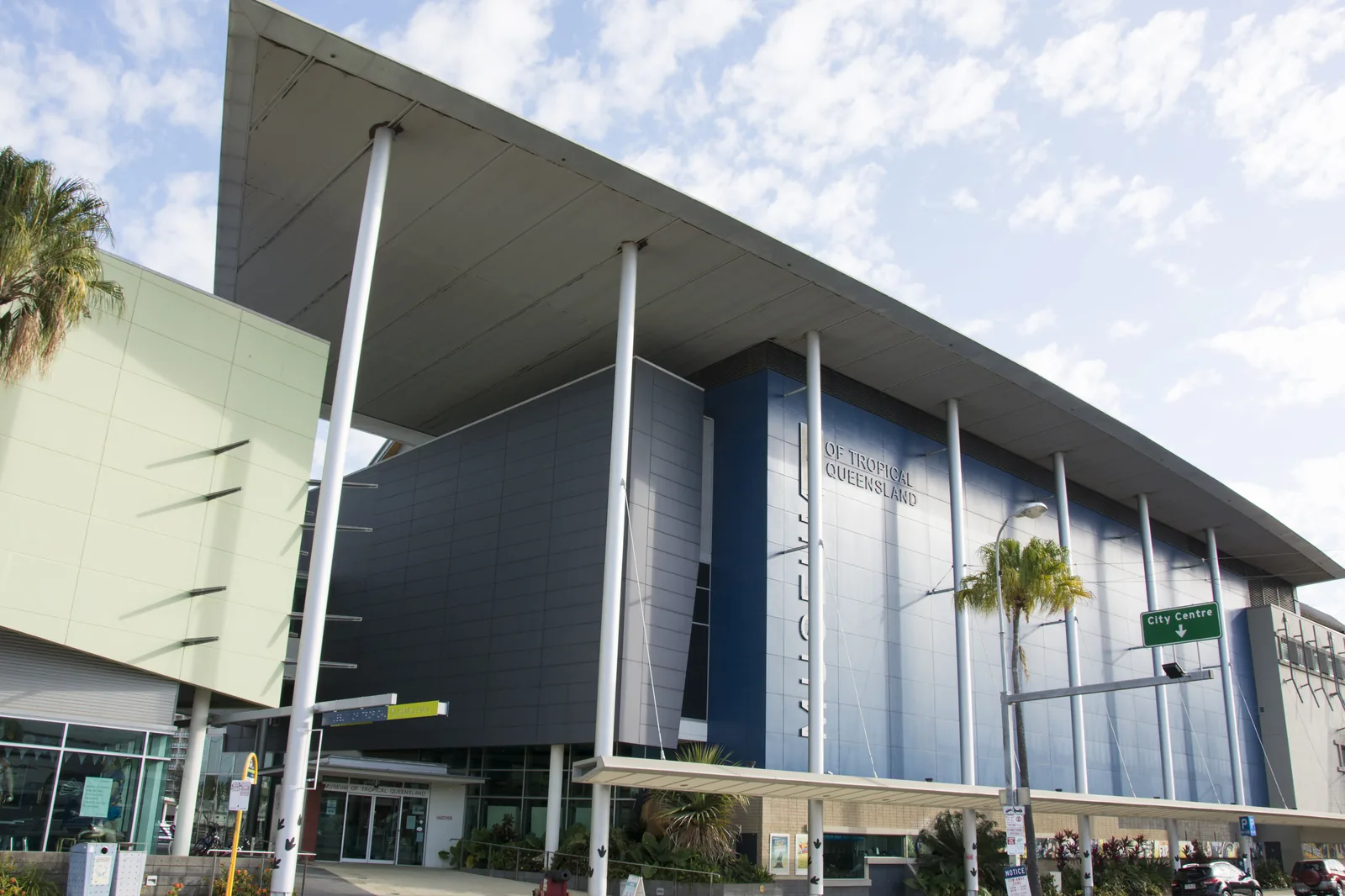
Queensland Museum Tropics on Flinders Street — renamed, free to enter, and holding the HMS Pandora collection. Guides still list it under the old name at the old price. Photo: Rabs003, CC BY-SA 4.0 via Wikimedia Commons
A 2028 call arrives a year before the target reopening. I want to be plain about what that means: a guide that sends a passenger to Reef HQ is not merely unhelpful, it costs them the one attraction that would otherwise have been Townsville's best answer to a wet day or a short call. It took me a while to accept that a fact this checkable had gone this stale in this many places.
The second thing is happier and also recent. Until 2024 a ship this size could not come alongside here at all. The entrance channel was ninety-two metres wide, the limit was 238 metres, and larger ships anchored off Magnetic Island and ferried people in. A $251 million dredging programme widened the channel to a hundred and eighty metres and lifted the limit to three hundred. Queen Elizabeth came alongside at 294 metres in January 2025.
Volendam is 237.6 metres, which sounds comfortably inside the old limit until you look at her beam — 32.3 metres against a 32.2-metre restriction. She would have been marginal. This call works because of a dredger, and I find something quietly satisfying in the fact that the reason you can walk down a gangway here at half past eight is a decade of engineering nobody wrote a brochure about.
So what do you do with the day? You get on the ferry. Magnetic Island is eight kilometres offshore, fifty-two square kilometres, three quarters national park, and it has somewhere over eight hundred koalas — the northern limit of the species' entire geographic range. The crossing is twenty to twenty-five minutes, there are up to seventeen return sailings a day, and the fare is about forty dollars. Nothing else in this port comes close.
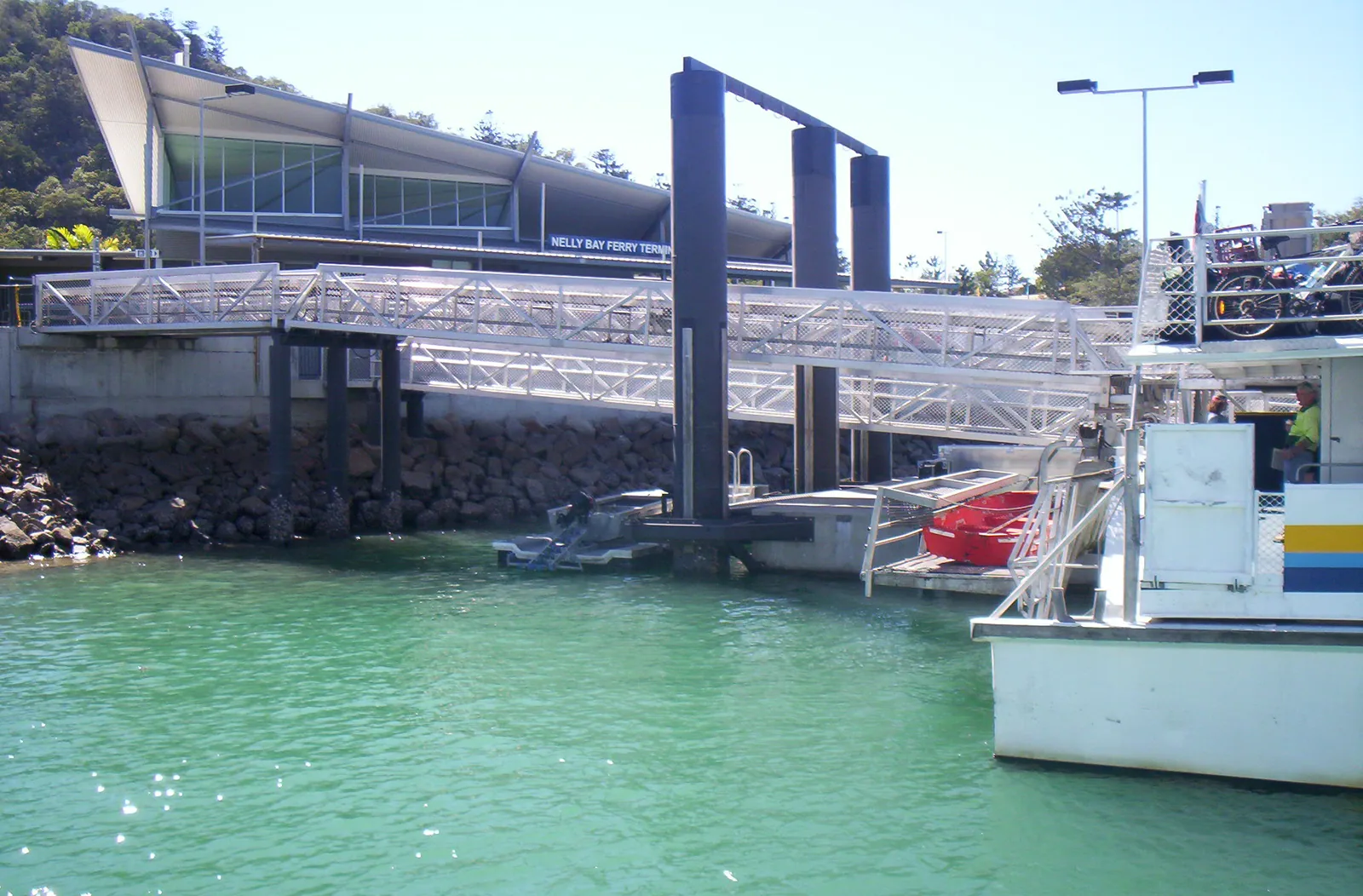
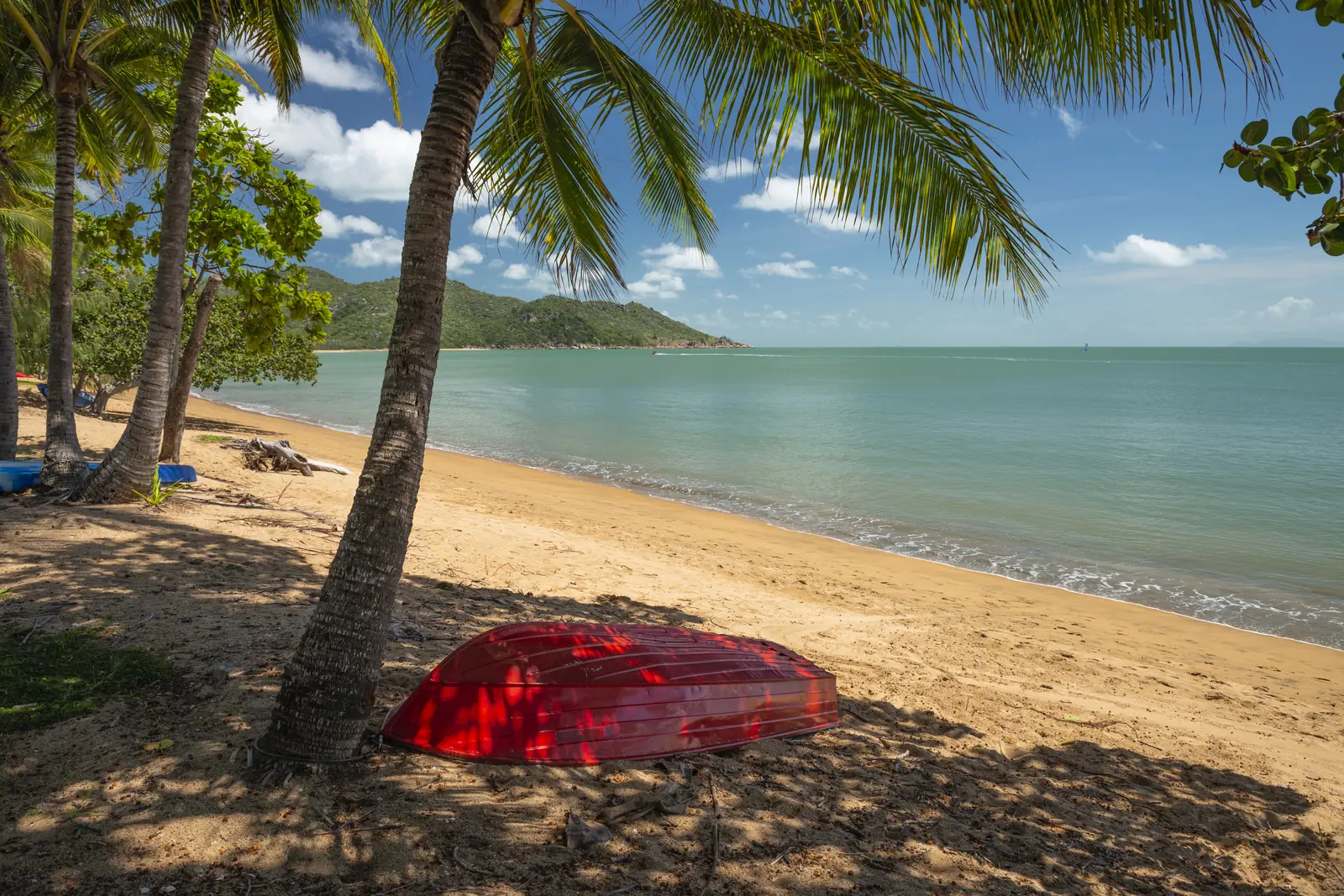
Nelly Bay, where the ferry lands. Twenty to twenty-five minutes from Townsville, up to seventeen sailings a day. Photo: John Robert McPherson, CC0 via Wikimedia Commons
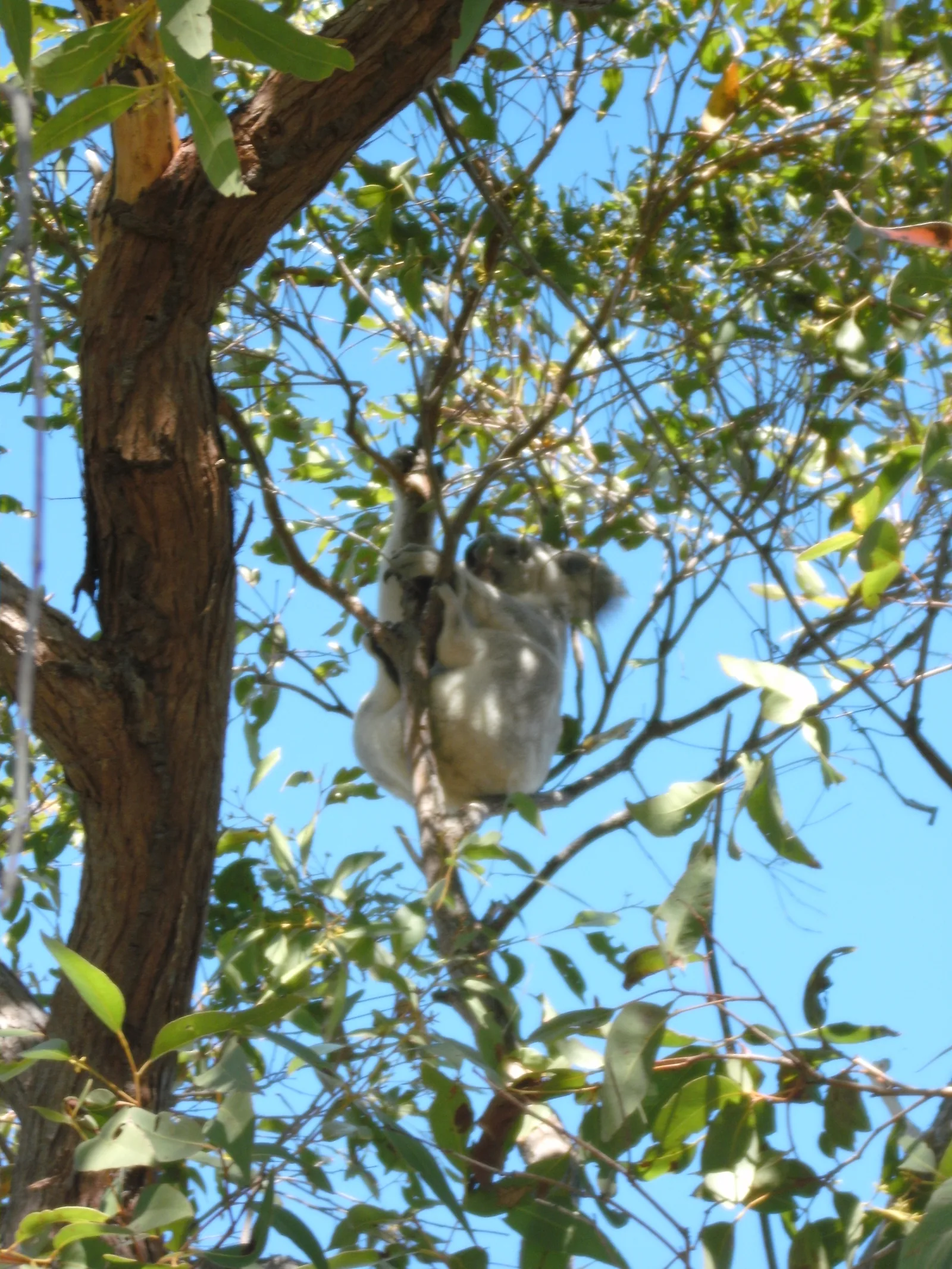
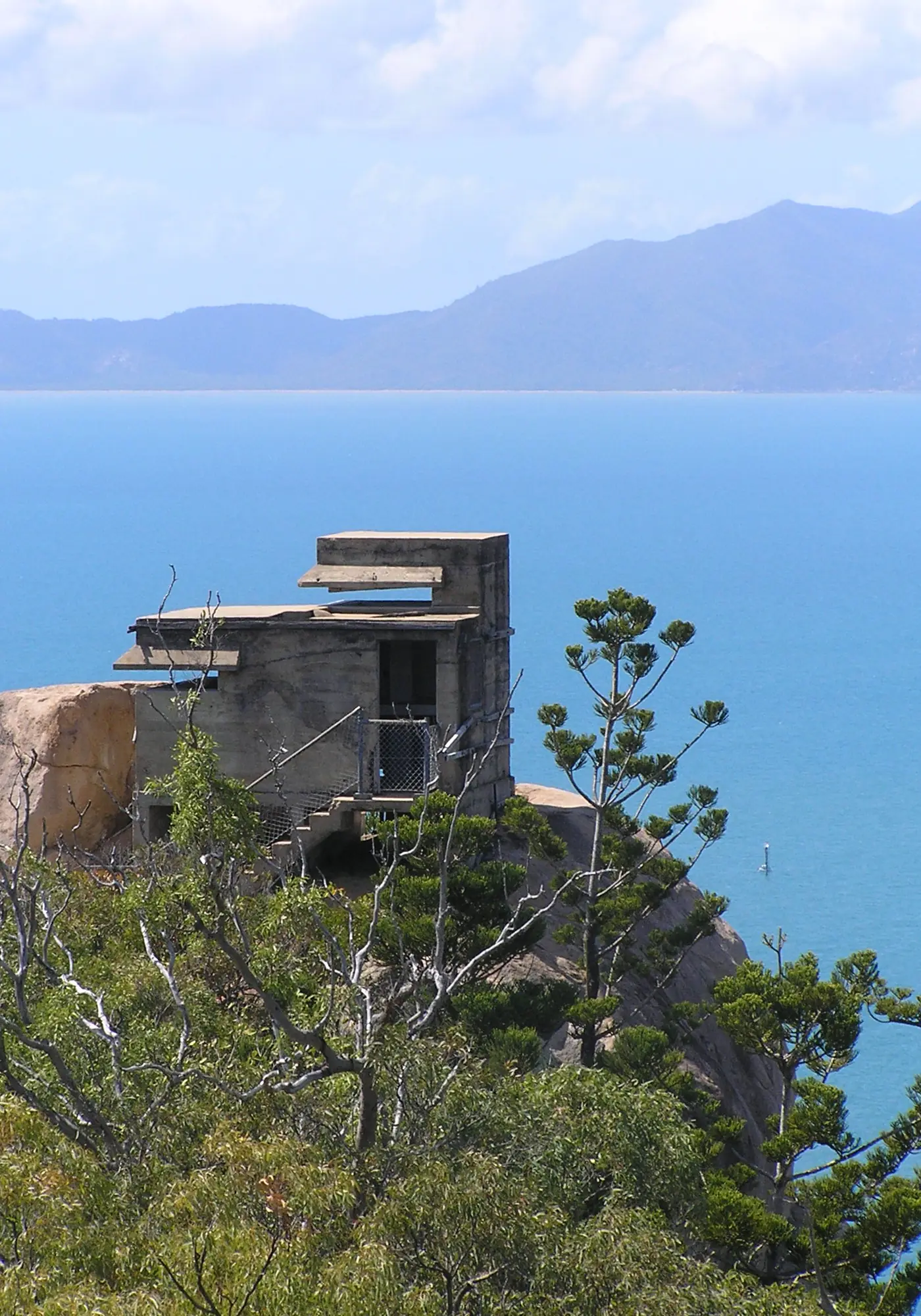
The walk to do there is the Forts Walk, and it delivers three things that rarely coincide: wild koalas in the eucalypts overhead, the concrete remains of a Second World War command post on the ridge, and a view over the bays. In the photographs the koalas are hard to pick out at all — grey against grey bark, high up, usually asleep — which tells you something useful about what looking for one actually involves. It is a Grade 3 walk with a hundred and eighty-three metres of climbing in tropical heat, and I would not pretend otherwise — but the koalas are genuinely wild, which is a different thing from a sanctuary, and I suspect it is the only part of this port a well-travelled passenger will still be describing a year later.
A wild koala above the Forts Walk. Magnetic Island is the northern limit of the species' entire geographic range, with over 800 of them on 52 square kilometres. Photo: Manuel, CC BY-SA 2.0 via Wikimedia Commons
Which brings me to the thing I want to say most carefully. Captain Cook named this island Magnetical Island in 1770, believing it interfered with his compass. No magnetic anomaly has ever been substantiated. But the island has a name that is older than his by a very long way — Yunbenun — and it belongs to the Wulgurukaba people, who in July 2012 received parcels of it back by freehold title and deed. Cook's mistake got two and a half centuries on the charts. The correct name has had fourteen years.
On the water itself: this coast is Croc Country, and from roughly November to May it is stinger season — box jellyfish and Irukandji both. The Council puts enclosures in at the Strand, Pallarenda, Magnetic Island and Balgal Beach, and here is the part I most want people to read: those nets are built to keep out box jellyfish, which are large. Irukandji are about the size of a thumbnail and go through the mesh. I could not find that stated in the Council's own release, which says only that the nets play a crucial role — so I am flagging it as standard Queensland public health advice rather than as a quotation. Either way, the seawater rockpool on the Strand is the safest swim in the city and it is safe all year
The other correction worth carrying ashore is cheerful. The old Museum of Tropical Queensland has been renamed Queensland Museum Tropics, and admission is now free; guides quoting fifteen or sixteen dollars are out of date. It is air-conditioned, it is open daily nine to four, it is on Flinders Street in the middle of town, and it holds material recovered from HMS Pandora — the ship the Admiralty sent to catch the Bounty mutineers, which found fourteen of them and then wrecked on the Barrier Reef coming home. Fourteen men in a cage on the deck as she went down, and four of them drowned in it.
The four who drowned have names: George Stewart, John Sumner, Richard Skinner and Henry Hillbrandt. Pandora struck the reef on 29 August 1791 and went down the following morning, taking thirty-five men in all. Edwards ordered the prisoners' irons struck off as she sank; for those four it came too late and they went down still shackled in the cage. My breath caught at the names, which I had not expected — the story is usually told as an ironic footnote to the Bounty, and four men is not a footnote. That collection is free to walk into, in the middle of town, and most passengers off a cruise ship will never know it is there.
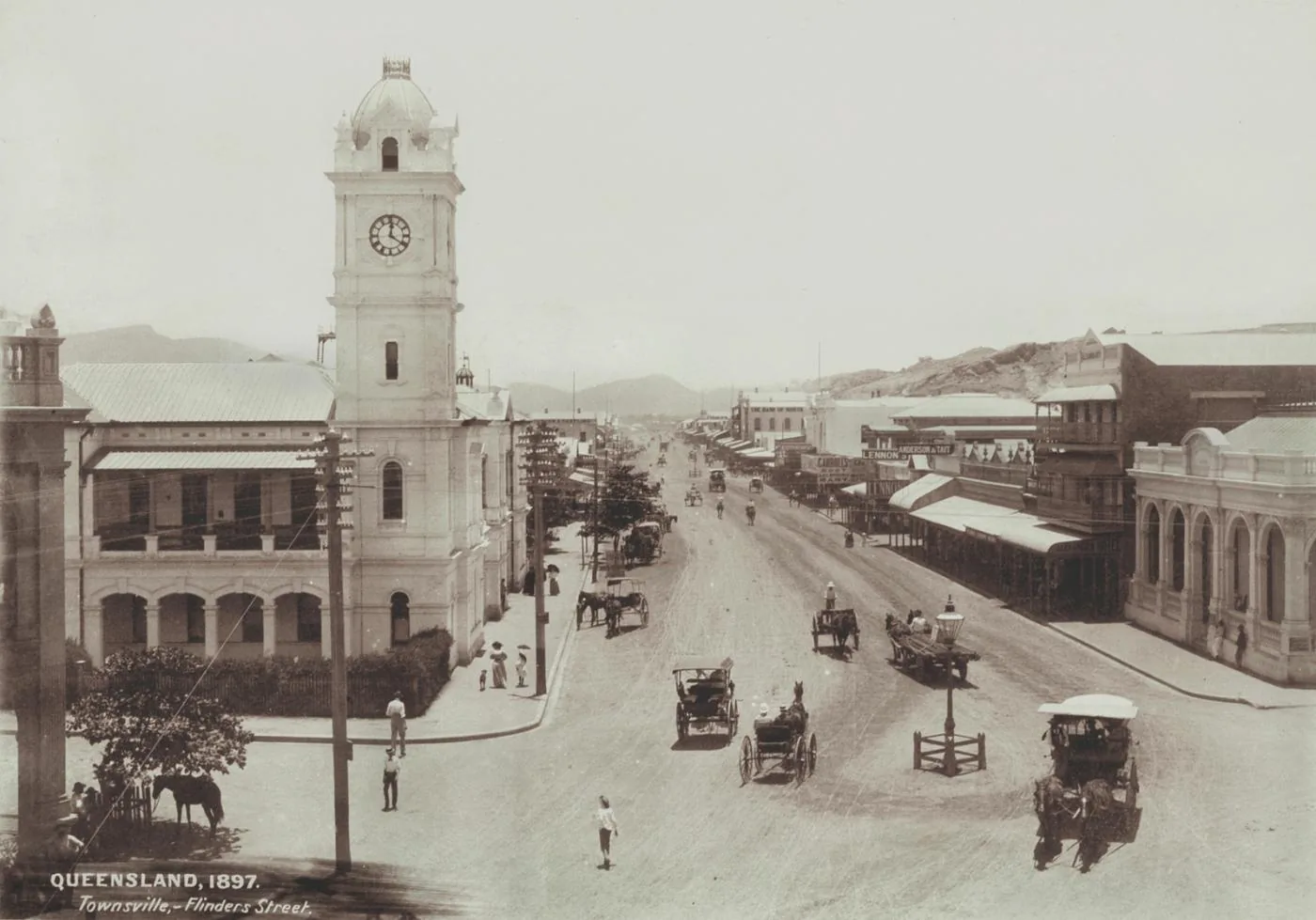
Flinders Street in 1897. The 1886 Post Office in this frame is still standing, and the heritage walk past it is free and takes twenty minutes. Photo: Unknown authorUnknown author, CC BY 4.0 via Wikimedia Commons
What I realized, working through all of it, is that Townsville is a port where the published advice and the reality have come apart, and nobody has reconciled them. The aquarium is shut and still recommended. The reef trip is ninety kilometres and nine hours and still listed as a highlight. The museum is free and still priced. The berth changed and the tender warnings remain. The lesson I take is simple enough and it generalises: at any port, check the thing everyone recommends before you build a day on it. It is exactly the claim nobody re-checks.
Cruise Port Guide
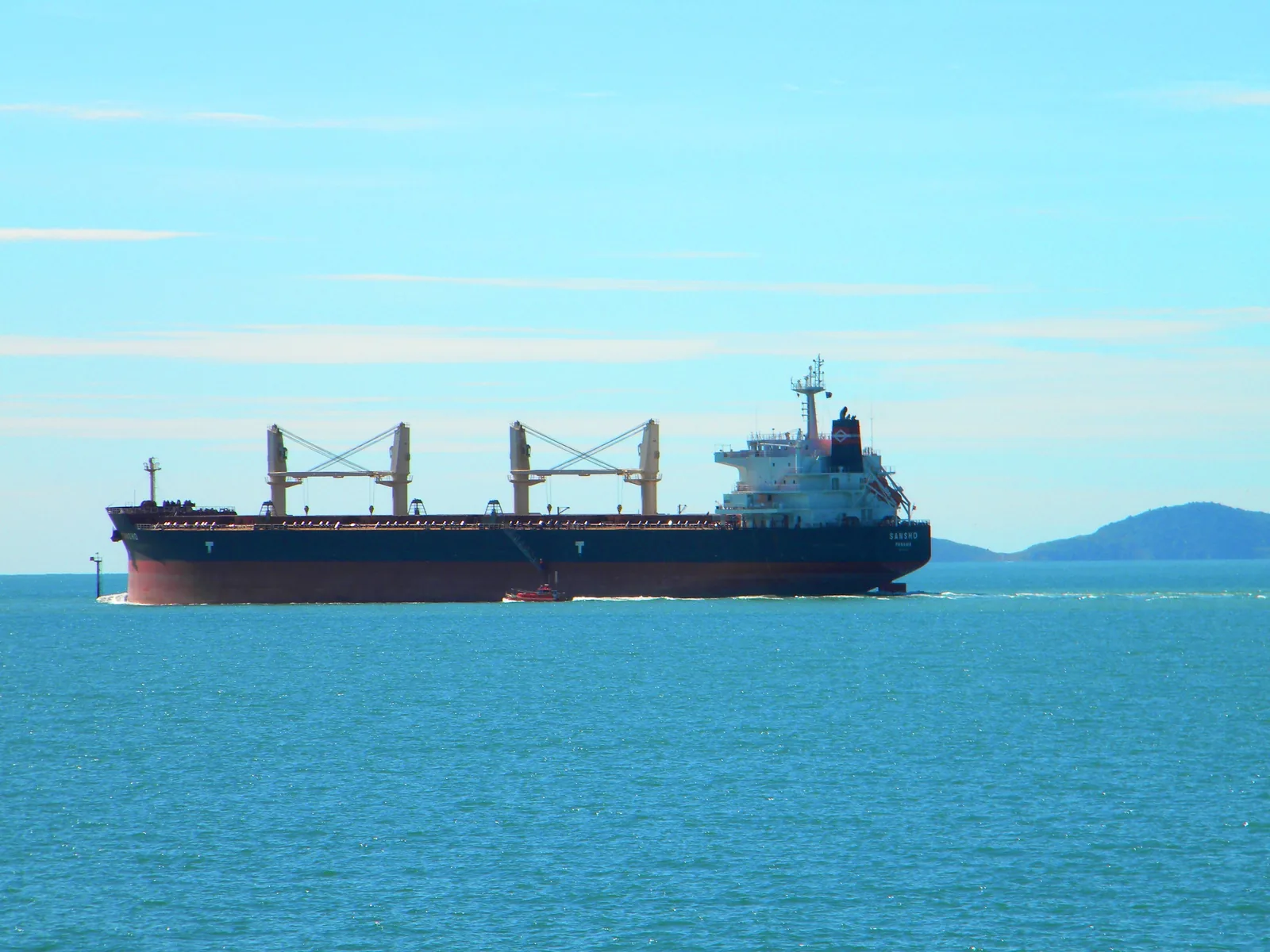
A bulk carrier with the pilot alongside. Townsville is a working commercial port; the cruise berth is one of eleven. Photo: Lobster1, CC BY-SA 3.0 via Wikimedia Commons
Cruise ships berth alongside at Berth 10, at the Quayside Terminal on Lennon Drive in South Townsville. There is no tendering. The terminal opened in 2013 and had a $5.9 million upgrade for the 2024–25 season which took the coach bay from four vehicles to twelve.
The reason a ship this size can be here at all is the Channel Upgrade — a $251 million dredging and reclamation project, not a terminal build, which widened the entrance channel from 92 to 180 metres and raised the maximum vessel length from 238 to 300 metres. It was marked by Queen Elizabeth, 294 metres, coming alongside on 14 January 2025. Tourism sites that still describe larger ships anchoring off Magnetic Island and ferrying passengers in are describing the pre-2024 regime.
Getting out of the port is the one soft spot in this call. Some sources describe a free shuttle to the City Bus Exchange; others describe the CBD and Palmer Street as within walking distance — and the sources are explicit that the cruise line decides both the drop-off point and whether passengers pay. Confirm on board, and do not build a morning that depends on being able to stroll off.
Getting Around Townsville
The crossing. Twenty-five minutes, and the single most important transfer of your day here. Photo: Ridiculopathy, CC0 via Wikimedia Commons
The ferry is the plan. SeaLink's fast passenger service to Magnetic Island leaves from Breakwater Terminal on Sir Leslie Thiess Drive, on the north side of Ross Creek by the marina. The crossing is 20 to 25 minutes and there are up to seventeen return services daily, with the first from Townsville at 05:30 and the last back from Nelly Bay at 22:00 — a timetable dense enough to be genuinely forgiving of a slow morning.
Fares, with a health warning. The published adult return was $40.50 walk-up and $38.00 online as at mid-2026. SeaLink raised fares on 1 February 2026 and added a temporary fuel surcharge from 1 June 2026, so the effective fare may be higher. Treat "about $40 return" as the planning figure and check before you sail. Concession and student rates need Australian ID, so overseas passengers pay the adult fare whatever their age.
Buses in Townsville are a flat 50 cents under the Queensland fare trial — any guide quoting three to five dollars is out of date. On Magnetic Island a bus service connects Nelly Bay with the other bays; taxis and hire scooters ('mokes') operate on the island too. For Castle Hill, take a taxi: the summit is reachable by sealed road, which makes that 360-degree view one of the few in tropical Queensland available to someone who cannot manage a climb.
Townsville Port Map
Excursions & Experiences
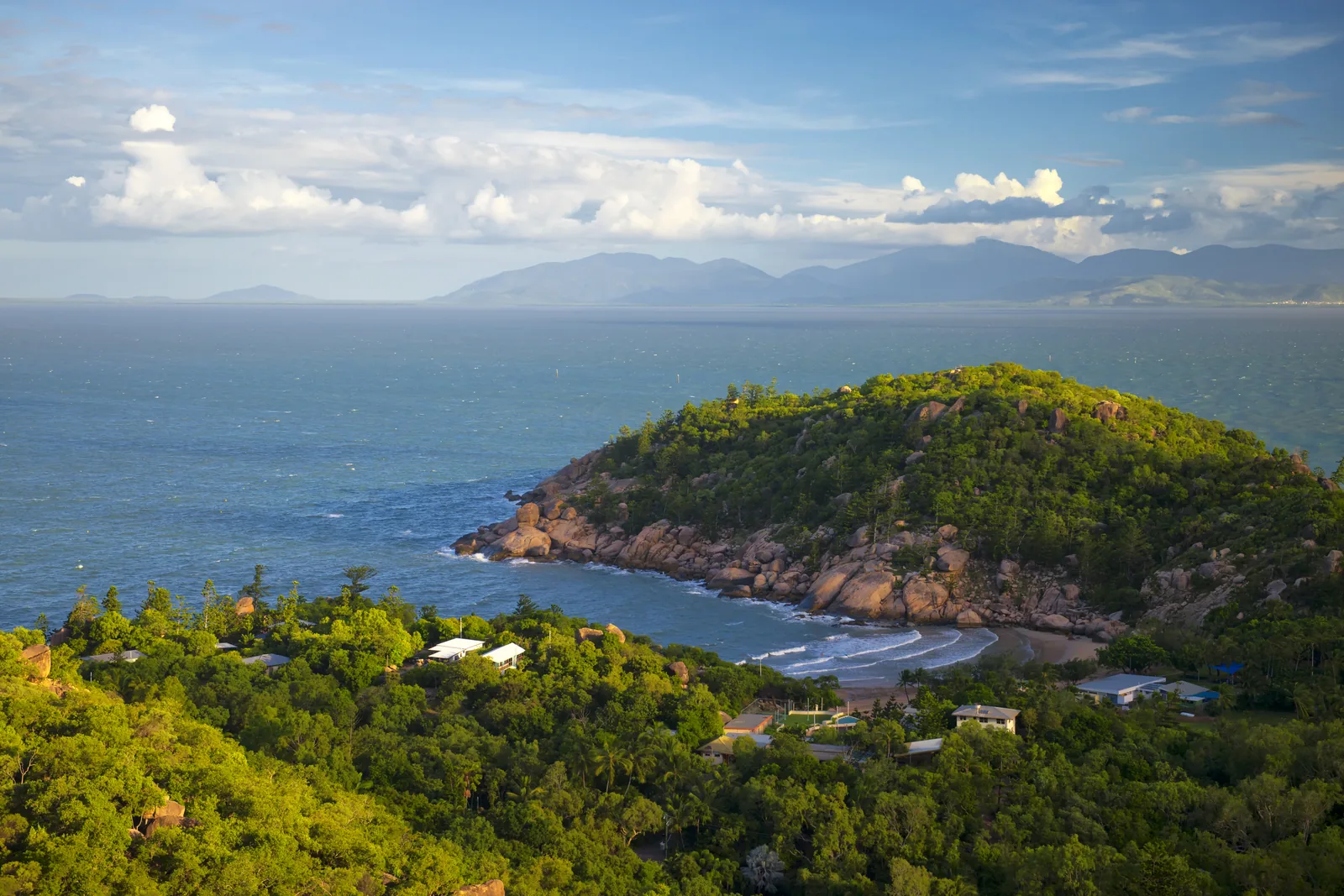
The command post at the top of the Forts Walk, built to defend the harbour in the Second World War. Photo: Twistie.man, CC BY-SA 3.0 via Wikimedia CommonsHorseshoe Bay, the largest on the island and the obvious place to end the walk. Photo: Joshua Tagicakibau, CC BY-SA 4.0 via Wikimedia Commons
Townsville is a port with a very clear right answer and two very clear traps. The right answer is the ferry. The traps are an aquarium that has been closed for five years and a reef trip that does not fit inside your call, and both are still recommended in print.
Do this
Magnetic Island: the Forts Walk and a bay. Twenty to twenty-five minutes on the SeaLink ferry from Breakwater Terminal, about $40 return, up to 17 sailings a day. The Forts Walk gives you wild koalas — the northern limit of the species' range, with over 800 on the island — a WWII command post on the ridge, and the view. Published honestly: it is a Grade 3 walk with 183 m of ascent in tropical heat, and going independently means the ship will not wait for you. Add Horseshoe Bay or Arcadia afterwards.
Queensland Museum Tropics — and it is free. Renamed from the Museum of Tropical Queensland, so guides still list it under the old name at the old $15–16 price. Open daily 9am–4pm on Flinders Street, air-conditioned, and holding the HMS Pandora collection — the ship sent to catch the Bounty mutineers, wrecked on the Barrier Reef coming home. The best wet-weather and short-call answer in the city now that the aquarium is shut.
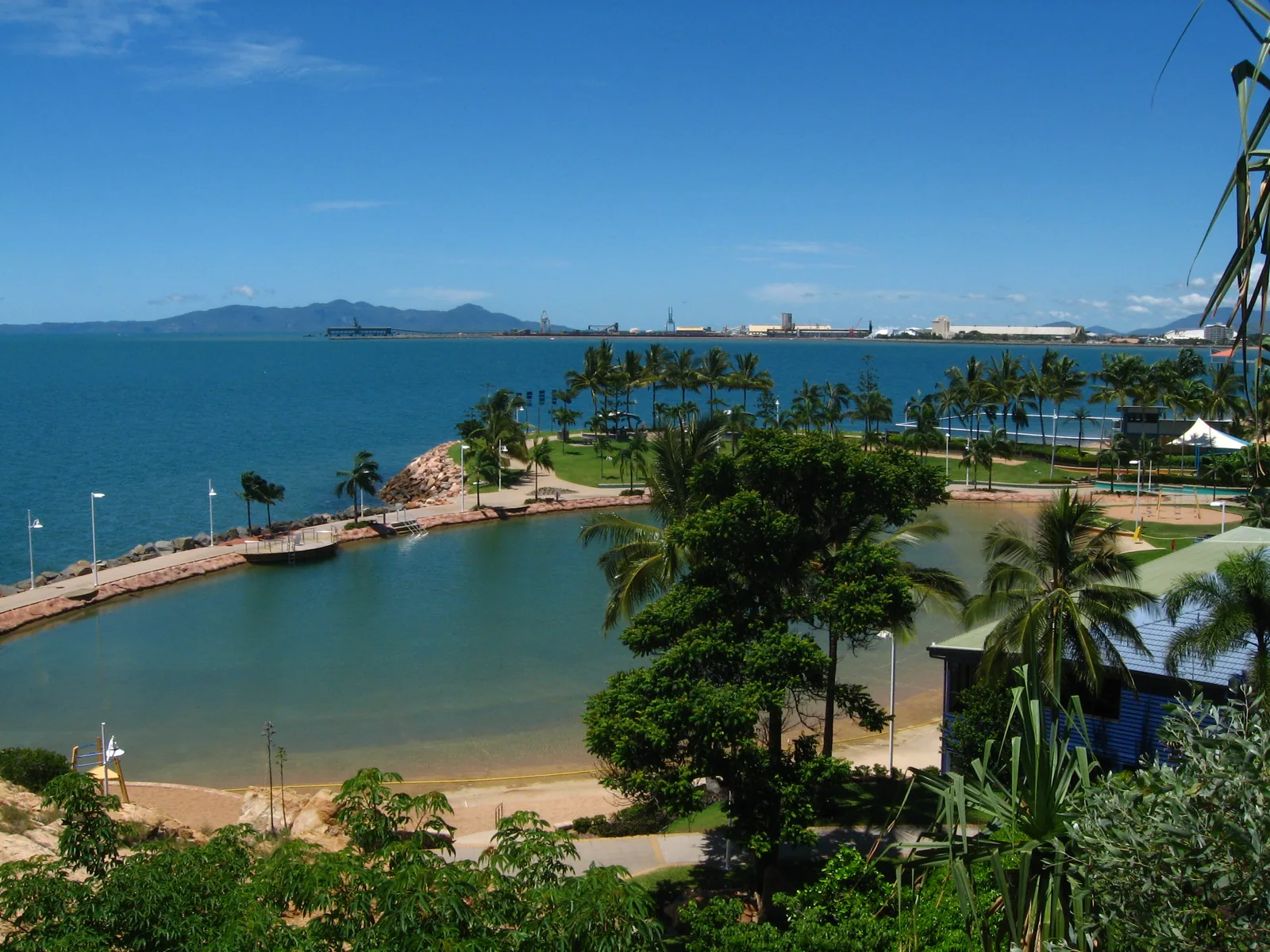
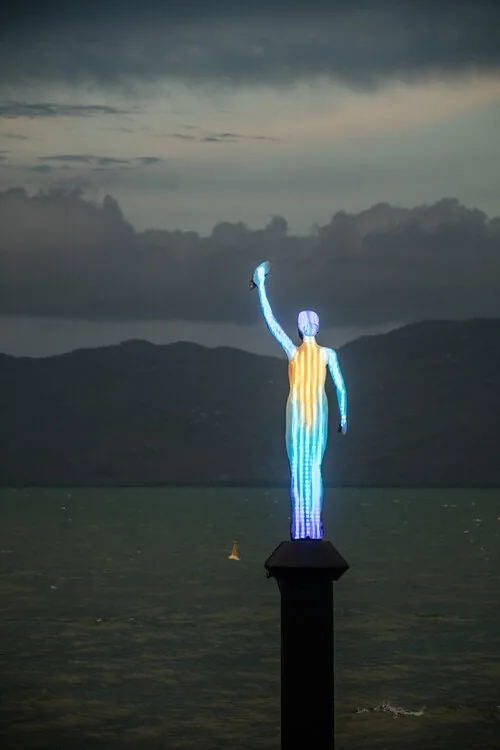
The Strand. 2.2 km of well-made seafront with a seawater rockpool that is the safest swim in Townsville year-round, the Ocean Siren sculpture standing on a pile off the shore, Jezzine Barracks and the Army Museum of North Queensland, and the Tobruk Memorial Baths. If your call falls in stinger season, swim inside an enclosure or in the rockpool.
Worth it if it suits you
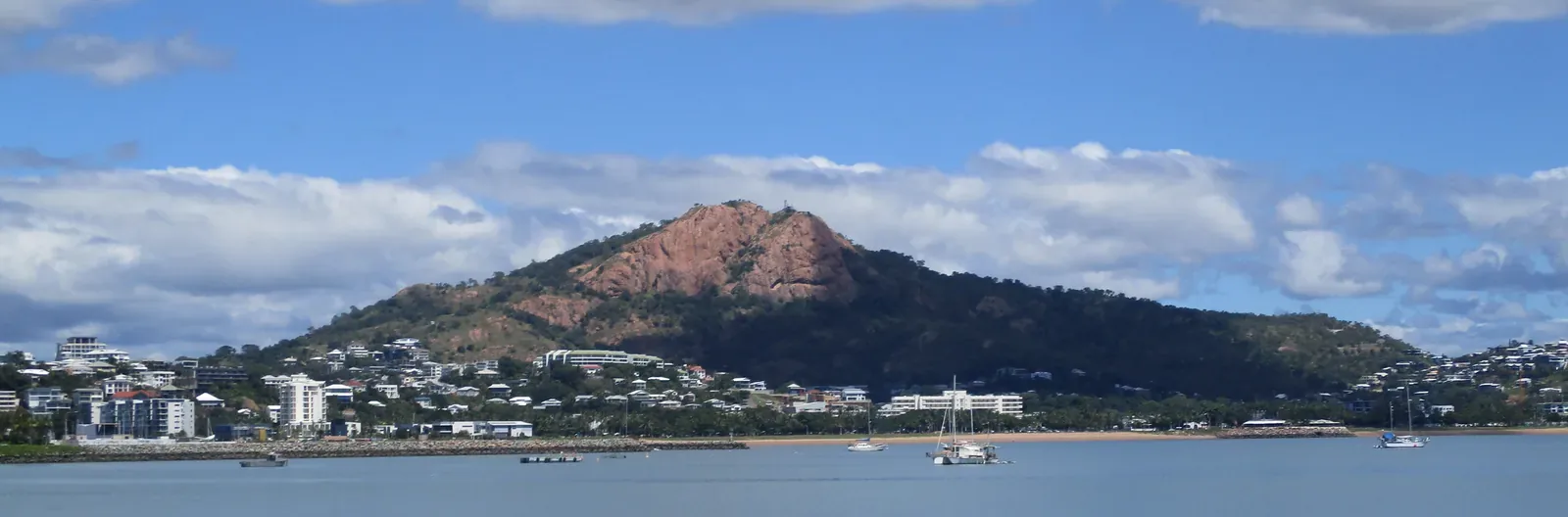
Castle Hill — 286 m of pink granite in the middle of the city with a genuine 360-degree panorama, and a sealed road to the top. Take a taxi up. One of very few great views in tropical Queensland that does not require legs.
Billabong Sanctuary — 17 km south, open daily, about $54 adult. The honest trade-off: the Forts Walk might give you a wild koala for the price of a ferry ticket; Billabong will definitely give you one, in an enclosure, for rather more. If a guaranteed koala is the priority, this is the answer.
The Flinders Street heritage walk — free, about twenty minutes, and it pairs with the museum. The 1886 Post Office, the 1887–88 Australian Joint Stock Bank, Tattersalls Hotel of 1864 and the Great Northern Hotel of 1901.
Do not attempt these
The Great Barrier Reef Aquarium (Reef HQ) is CLOSED. Shut since February 2021, under a $180.1 million redevelopment, and the operator's own site says it is working towards reopening in 2029 — a year after this voyage calls. It has not been demolished, whatever you read; the building is intact and being rebuilt. Do not walk there.
A Great Barrier Reef day trip does not fit. The reefs off Townsville are 40 to 90 km offshore, roughly two hours each way, on a trip that runs about nine hours and costs from $394 — and it may operate only Fridays and Saturdays. It cannot be done inside a normal call. Townsville is not a reef port in the way Cairns and Airlie Beach are, and a guide that implies otherwise is setting you up to miss the ship.
The SS Yongala is irrelevant unless you dive. It is one of the world's great wreck dives, and it is 90 km offshore with the wreck starting 15 m down, certified divers only, on 07:00 departures. Entirely out of reach on a port day.
On booking. If Magnetic Island is your plan and you want certainty, a ship excursion costs more than the $40 ferry but carries a guaranteed return to the vessel. Going independent here is genuinely straightforward — the ferry timetable is dense and the crossing short — but the ship will not wait for a late sailing, so book ahead if you want the risk carried for you, and give yourself a sailing's worth of margin if you do not.
The shape of a good day. Ashore and at Breakwater by about a quarter to nine, across on an early sailing, the Forts Walk in the cooler part of the morning, a swim or lunch at Horseshoe Bay, and back on an afternoon ferry with time for the museum or the Strand before all-aboard. That is a full, unhurried day and it costs about $40 plus lunch.
History & Heritage
Magnetic Island looking back at the mainland. Cook called it Magnetical in 1770 for a compass anomaly nobody has since found; its older name is Yunbenun. Photo: Joshua Tagicakibau, CC BY-SA 4.0 via Wikimedia Commons
Townsville stands on the Country of the Wulgurukaba and Bindal peoples. Magnetic Island — Yunbenun — is Wulgurukaba, and in July 2012 parcels of it were granted to the Wulgurukaba Yunbenun Aboriginal Corporation by freehold title and deed.
Captain James Cook named the island Magnetical Island in 1770, believing it interfered with his ship's compass. No magnetic anomaly has ever been substantiated. The name stuck anyway, which is a reasonable summary of how a great deal of this coastline came to be labelled.
The city takes its name from Robert Towns, who financed its founding in 1864. Its defining modern chapter is the Second World War, when Townsville became one of the principal Allied bases in the South West Pacific — the Forts on Magnetic Island, whose concrete command post still stands on the ridge, were built to defend the harbour and its shipping.
Cyclones are part of the record here. Althea struck in 1971 and Yasi in 2011; the monsoon flood of 2019 inundated large parts of the city. Kirrily crossed the coast near Townsville in January 2024 — and it made landfall as a Category 1, not the Category 3 that several secondary sources report. The Bureau of Meteorology is the authority on that.
Food & Drink Ashore
The Strand rockpool — seawater, enclosed, and the safest swim in Townsville at any time of year. Photo: Hector Garcia, CC BY-SA 2.0 via Wikimedia Commons
North Queensland eats tropical and casual. Barramundi is the fish to order; reef fish, mud crab and Moreton Bay bugs turn up on most menus, and mangoes, lychees and pawpaw come from up and down this coast.
Palmer Street in South Townsville is the dining precinct and it is the closest to the berth, which makes it the obvious lunch recommendation — with one caveat worth stating rather than glossing: weekday midday trading there is not something I could establish, and a precinct that fills at dinner is not necessarily open at noon. Check before you walk.
On Magnetic Island, Horseshoe Bay and Arcadia both have beachfront cafés and pubs, and eating on the island is part of the day rather than an interruption to it.
Know Before You Go
Reef HQ / the Great Barrier Reef Aquarium is closed and has been since February 2021. The target for reopening is 2029. It has not been demolished — the building is intact and under a $180.1 million rebuild — but you cannot go in. Guides that still recommend it, including some very well-known ones, are five years out of date.
Stinger season runs roughly November to May and a world-cruise call is likely to fall inside it. Two hazards: box jellyfish, which are large and potentially fatal, and Irukandji, which are about the size of a thumbnail and cause delayed-onset systemic illness. Council installs enclosures at the Strand, Pallarenda, Magnetic Island and Balgal Beach.
The stinger nets are built to exclude box jellyfish and are not a reliable barrier against Irukandji, which pass through the mesh. Stated here as standard Queensland public-health advice — the Council release available to us says only that the nets play a crucial role, so treat this as the safe assumption rather than a quotation. Swim between the flags on a patrolled beach, or use the Strand's seawater rockpool, which is the safest swim in the city year-round.
This is Croc Country. Saltwater crocodiles are present in the region's waterways, including the Ross River, where they are trapped and removed. Do not swim, wade or clean fish at the water's edge in any creek, river or estuary, and obey the warning signage.
Townsville is the dry tropics and that is a measurable thing, not a slogan: about 1,162 mm of rain a year against Cairns' 2,026 mm — 1.74 times as much, at near-identical temperatures, 350 km up the coast.
Anzac Day 2028 falls on Tuesday 25 April, and the museum closes. If the call lands on it, expect a dawn service, reduced trading and a very different city.
Depth Soundings Ashore
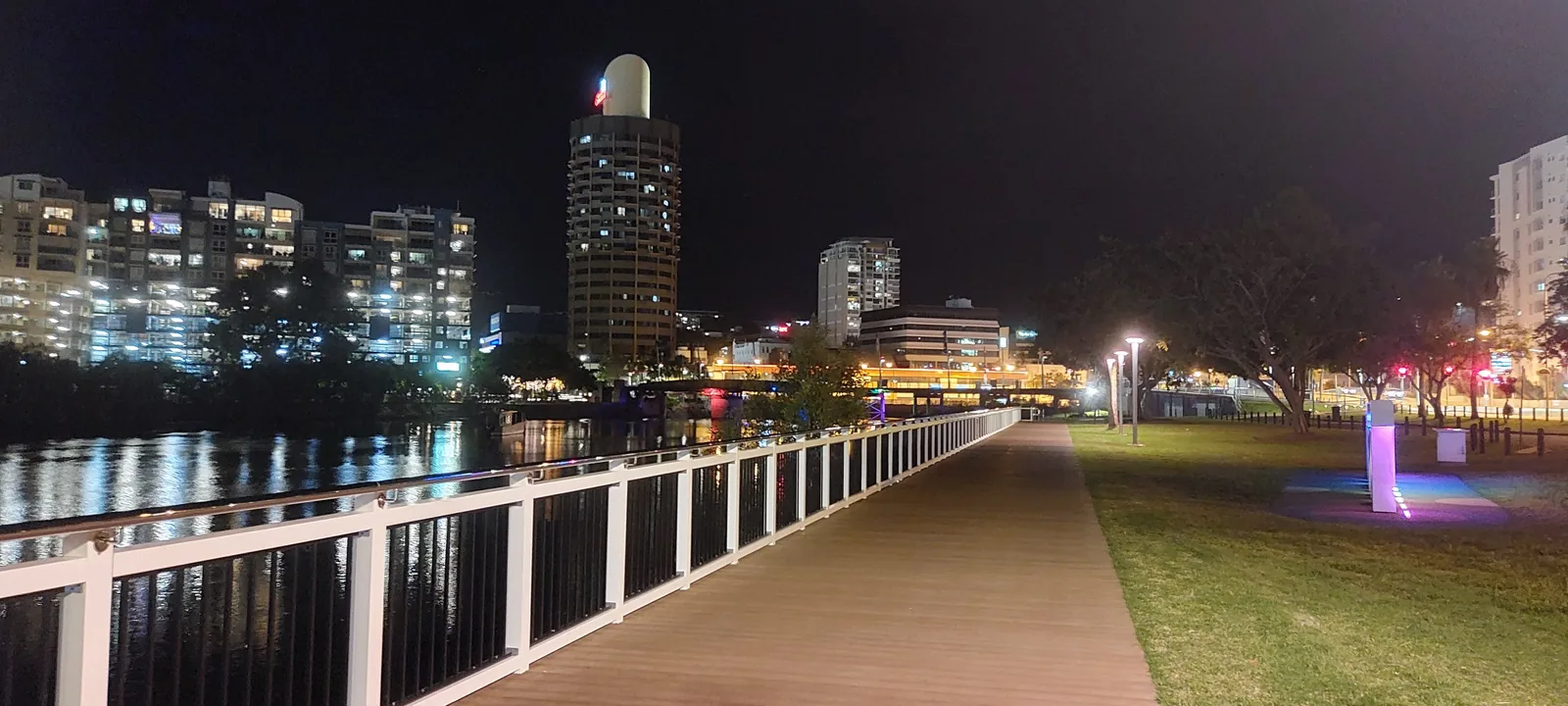
The Ross Creek boardwalk at night. The Breakwater ferry terminal and the marina are both on this stretch, which makes it the walk you will do if you are heading for Magnetic Island. Photo: Greditdesu, CC BY-SA 4.0 via Wikimedia Commons
Things about Townsville that only make sense once someone says them:
This stopped being a tender port in 2024. The channel went from 92 m to 180 m wide and the vessel limit from 238 m to 300 m. Advice telling you that big ships anchor off Magnetic Island and ferry passengers in describes a regime that ended.
Magnetic Island is the northern limit of the koala's entire range. Over 800 of them, on an island three-quarters national park. That is why the Forts Walk is worth the climb and why a sanctuary is the fallback rather than the main event.
Cook was wrong about the magnetism. He named it Magnetical Island in 1770 for compass interference that has never since been substantiated. The island's older name is Yunbenun.
The museum is free and almost nobody knows. The rename from Museum of Tropical Queensland to Queensland Museum Tropics took the old name — and the old price — out of circulation everywhere except the guides.
Buses are fifty cents flat. Queensland's fare trial makes public transport here effectively free at the point of use. Guides quoting three to five dollars predate it.
Practical Information
Currency: the Australian dollar. Cards are universal, contactless is standard and cash is barely necessary. Tipping is not expected in Australia — round up if the service was good, and nothing more.
Entry: most nationalities need an electronic travel authority or visa before arrival in Australia, and biosecurity is taken seriously. Do not take fruit, seeds or plant material ashore or back aboard.
Sun: the UV index in North Queensland is extreme. A hat, high-factor sunscreen and shade are not optional, and the sea breeze on the Strand will hide the burn until it is done.
Accessibility and stamina.Minimal walking: Queensland Museum Tropics is free, flat, air-conditioned and fully wheelchair accessible; the Strand's seafront path and rockpool are level; and Castle Hill's summit is reached by sealed road, so a taxi puts the best view in the city within reach of someone with real mobility limits — rare in tropical Queensland. Moderate walking: the ferry to Magnetic Island and a bay. The terminals at both ends are step-free, the crossing is short, and the island bus reaches Horseshoe Bay. High energy: the Forts Walk, which is Grade 3 with 183 m of ascent in tropical heat and is genuinely strenuous in the middle of the day. Note also that this is no longer a tender port, which removes the transfer that most often defeats limited-mobility passengers elsewhere on this voyage.
Ocean Siren — Jason deCaires Taylor's tidal-lit figure of Takoda Johnson, standing above the water off the Strand. The submerged works of the Museum of Underwater Art are out on John Brewer Reef. Photo: MOUAAustralia, CC BY-SA 4.0 via Wikimedia Commons
Credits
Every image on this page comes from Wikimedia Commons under the license noted and is credited to its creator below. In the Wake does not claim authorship of these images; when we can add our own photographs from a future visit, we will.
Castle Hill across the harbour (page header image) — TheDinosaurMan08, CC BY-SA 4.0
Alongside at the Port of Townsville — Sharon Hoops, CC BY-SA 4.0
Queensland Museum Tropics on Flinders Street — Rabs003, CC BY-SA 4.0
Nelly Bay, where the ferry lands — John Robert McPherson, CC0
A wild koala above the Forts Walk — Manuel, CC BY-SA 2.0
Flinders Street in 1897 — Unknown authorUnknown author, CC BY 4.0
A bulk carrier with the pilot alongside — Lobster1, CC BY-SA 3.0
What is the best time of year to visit Townsville?
May to September — the dry season — is Townsville at its best: warm days around 25 °C, low humidity, little rain and no stingers in the water. December to March is the wet season and the cyclone season together, hot and humid. A world-cruise call will most likely land in the Australian summer or autumn, which means inside stinger season; plan the swimming accordingly.
What should I pack for Townsville's weather?
High-factor sunscreen, a proper hat and sunglasses first — the UV in North Queensland is extreme and the sea breeze on the Strand hides the burn completely. Light breathable clothing and more water than you expect to need. Walking shoes with grip if the Forts Walk is on the plan. And if you intend to swim between November and May, a full-body lycra stinger suit, which is widely hired locally.
Will rain ruin my Townsville port day?
Less often than people expect, because Townsville is genuinely the dry tropics — about 1,162 mm of rain a year against Cairns' 2,026 mm, 350 km up the same coast at near-identical temperatures. The rain that does fall is concentrated in December to March. The wet-weather fallback used to be the aquarium; now that it is closed, it is Queensland Museum Tropics, which is free and air-conditioned.
Does Townsville have a cyclone or storm season?
Yes. The cyclone season overlaps the wet season, roughly November to April. Althea struck in 1971 and Yasi in 2011, the 2019 monsoon flooded much of the city, and Kirrily crossed the coast near here in January 2024 — as a <strong>Category 1</strong> at landfall, not the Category 3 that several secondary sources report; the Bureau of Meteorology is the authority. A cyclone warning ends the port day rather than complicating it.
Do cruise ships tender at Townsville?
Not any more, and this is a recent change many guides have missed. Ships berth alongside at Berth 10, Quayside Terminal. Until 2024 the entrance channel was 92 m wide with a 238 m vessel limit, so larger ships anchored off Magnetic Island and ferried passengers in. A $251 million dredging programme widened the channel to 180 m and raised the limit to 300 m; <em>Queen Elizabeth</em> came alongside at 294 m on 14 January 2025.
Is Reef HQ / the Great Barrier Reef Aquarium open?
No. It has been closed since <strong>February 2021</strong> and the operator states it is working towards reopening in <strong>2029</strong> under a $180.1 million Australian Government redevelopment. It has <em>not</em> been demolished — the aquarium's own myth-busting page lists that claim first, and the building is intact. Wikipedia says 2026 and repeats the demolition claim; several major guidebooks still list it as a top attraction. A 2028 call arrives a year before the target reopening.
Can I get to the Great Barrier Reef from Townsville on a port day?
Realistically, no — and this is the clearest 'don't' at this port. The reefs off Townsville are 40 to 90 km offshore, roughly two hours each way, on a trip that runs about nine hours and costs from $394, and it may operate only Fridays and Saturdays. It does not fit a normal call. Townsville is not a reef port in the way Cairns and Airlie Beach are, whatever the brochures imply. The SS <em>Yongala</em> wreck is similarly out of reach: 90 km offshore, certified divers only, 07:00 departures.
Is Magnetic Island doable on a port day?
Comfortably, and it is the whole point of the call. SeaLink's fast ferry from Breakwater Terminal takes 20 to 25 minutes with up to 17 return services a day — the first leaves Townsville at 05:30 and the last leaves Nelly Bay at 22:00, which is a forgiving timetable. Ashore by about a quarter to nine puts you on an early sailing with the whole day ahead. Note there is a second, slower vehicle barge from Ross Street; as a foot passenger you want SeaLink.
How much is the Magnetic Island ferry?
About $40 AUD adult return as at mid-2026 — the published table gave $40.50 walk-up and $38.00 online. Treat that as a planning figure rather than a 2028 price: SeaLink raised fares on 1 February 2026 and added a temporary fuel surcharge from 1 June 2026. Concession and student rates require Australian ID, so overseas passengers pay the adult fare regardless of age. Figures of $30 and $42 circulate online and are a promotional rate and a rounded post-surcharge figure respectively.
Will I actually see a koala on Magnetic Island?
You have a real chance, which is different from a guarantee. The island holds over 800 koalas and is the <strong>northern limit of the species' entire geographic range</strong>; the Forts Walk is the recognised place to look, in the eucalypts overhead. If you want certainty rather than a chance, Billabong Sanctuary 17 km south of the city has them in enclosures for about $54. The honest trade: the Forts Walk might give you a wild one for the price of a ferry ticket.
How hard is the Forts Walk?
It is a Grade 3 walk with about 183 metres of ascent, on a formed track, in tropical heat. That is not a stroll and it should not be attempted casually by anyone who is not confident on a hill in the sun. Take more water than you think you need and go in the cooler part of the morning. At the top there is a concrete Second World War command post and the view over the bays.
Is it safe to swim in Townsville?
In the right places, yes. Stinger season runs roughly November to May, with two hazards: box jellyfish, which are large and potentially fatal, and Irukandji, which are about the size of a thumbnail. Council installs enclosures at the Strand, Pallarenda, Magnetic Island and Balgal Beach — but those nets are designed to exclude box jellyfish and are <strong>not</strong> a reliable barrier against Irukandji, which pass through the mesh. Swim between the flags on a patrolled beach, or use the Strand's seawater rockpool, which is the safest swim in the city year-round.
Are there crocodiles?
Yes — this is Croc Country and the signage means it. Saltwater crocodiles are present in the region's rivers, creeks and estuaries including the Ross River, where they are trapped and removed. Do not swim, wade, or clean fish at the water's edge in any waterway. This has no bearing on the patrolled beaches and the rockpool, which are where you should be swimming anyway.
What does a day in Townsville cost?
Very little, if you plan it well. The ferry is about $40 return, Queensland Museum Tropics is free, the Strand and its rockpool are free, the Flinders Street heritage walk is free, and city buses are a flat 50 cents under the Queensland fare trial. The optional costs are a taxi up Castle Hill and Billabong Sanctuary at about $54. Tipping is not expected in Australia.