


Photo: Wikimedia Commons (CC BY-SA)
Captain's Logbook
Victoria BC
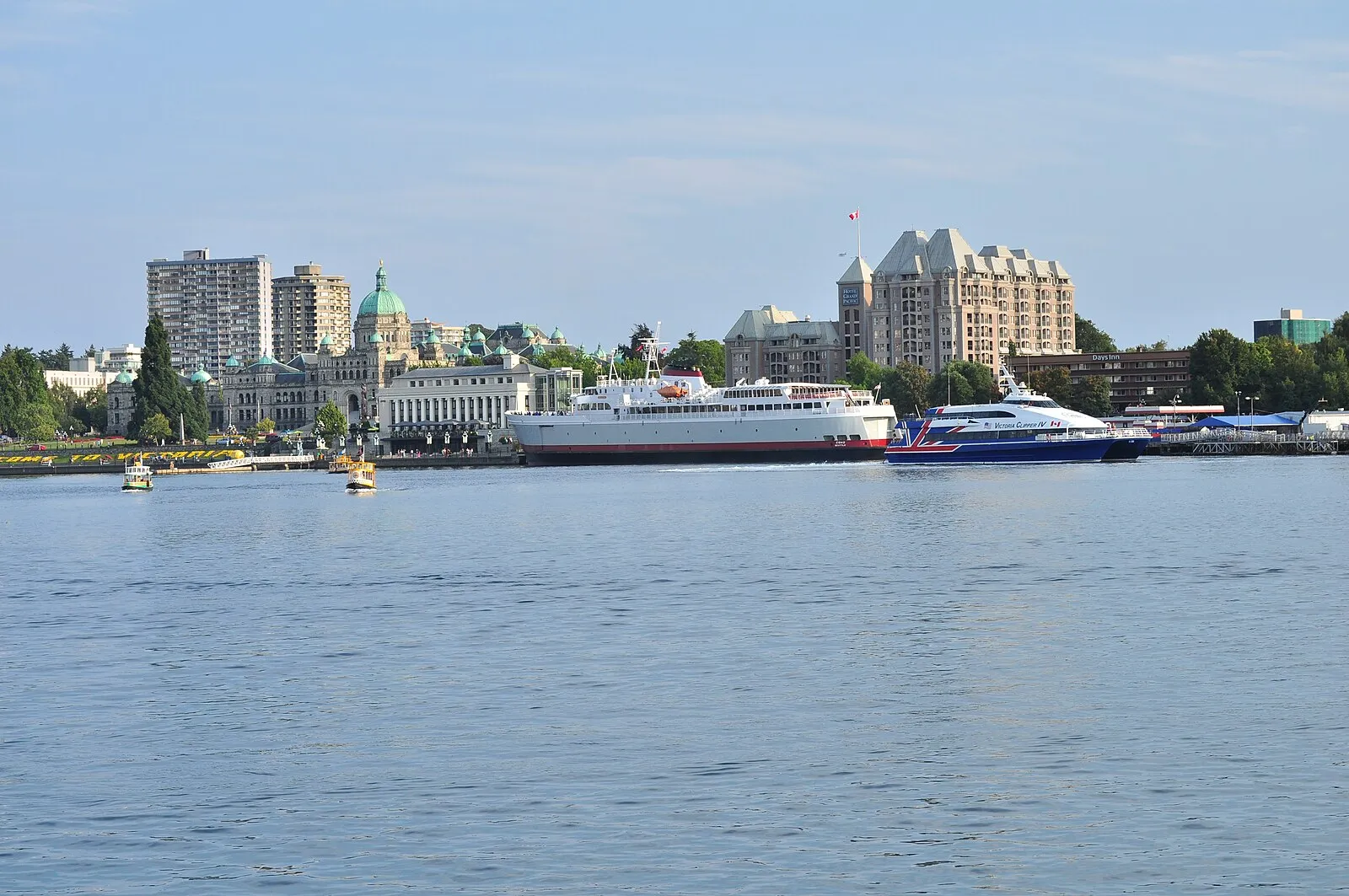
We arrived at 6 p.m. and Victoria was pure magic in evening light. Standing at the rail as we glided past the Inner Harbour, I thought about the Lekwungen people — the Songhees and Esquimalt Nations — who've known these waters for thousands of years before James Douglas stepped ashore on March 14, 1843 to plant Fort Camosack for the Hudson's Bay Company. Three months later they renamed it Fort Victoria in honor of the young Queen, and by January 1849 all of Vancouver Island became a Crown colony.
Our shuttle traced the old roads out to Butchart Gardens, which began in 1904 when Jennie Butchart looked at her husband's exhausted limestone quarry and saw possibility instead of ruin. Now: sunken garden, rose garden, Japanese garden all lit with fairy lights, the air thick with flowers and woodsmoke. I wandered paths carved from industry's bones and marveled at redemption.
Then high tea at the Fairmont Empress — scones with clotted cream, tiny sandwiches, 15 teas to choose. Felt like royalty in a city that grew from fur-trade outpost to Gold Rush boomtown after 1858, bursting so fast that by November 1864 they'd demolished the old fort to make room for commerce. Yet they never forgot: in 1924 the site became a National Historic Site, memory preserved even as the city reached upward.
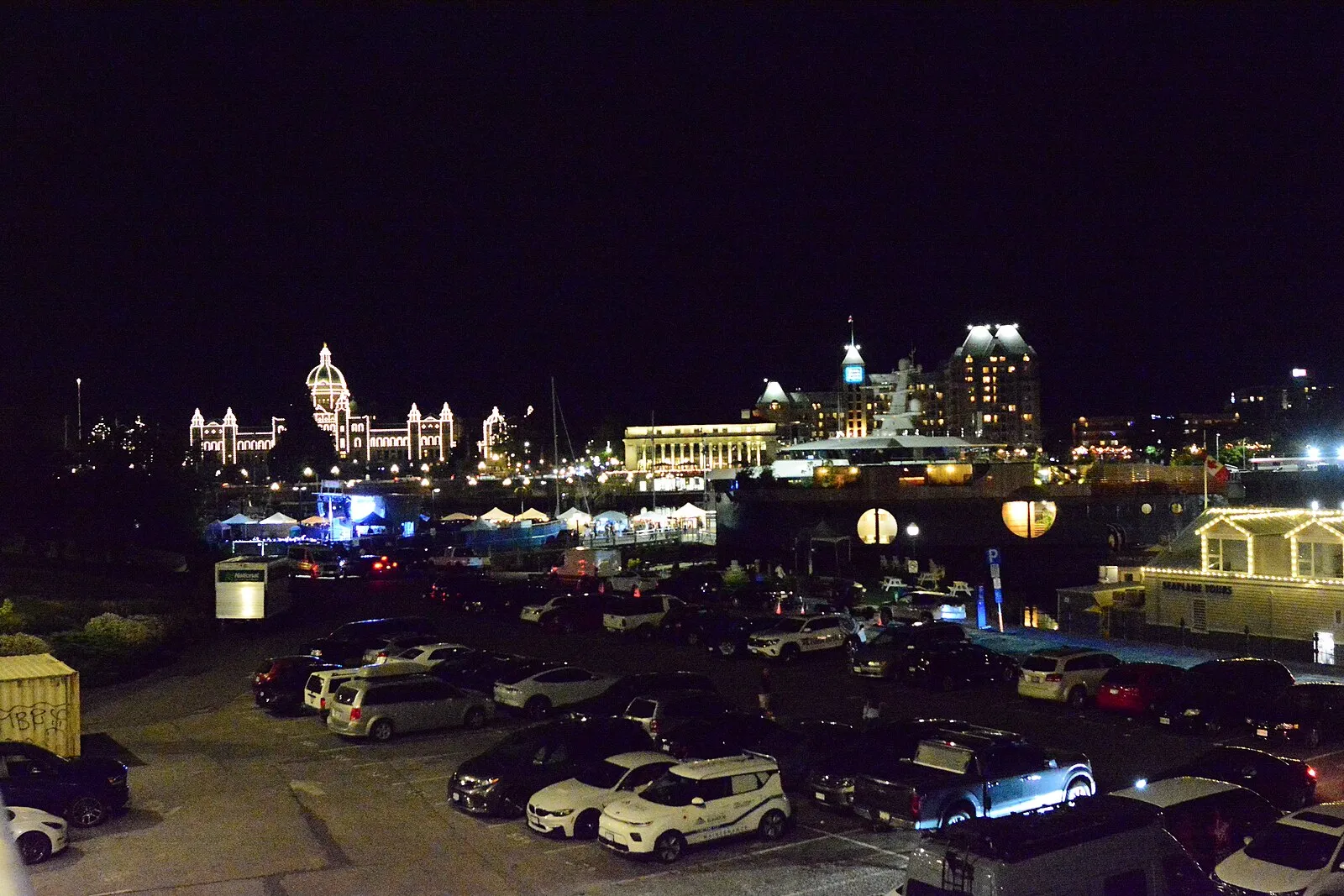
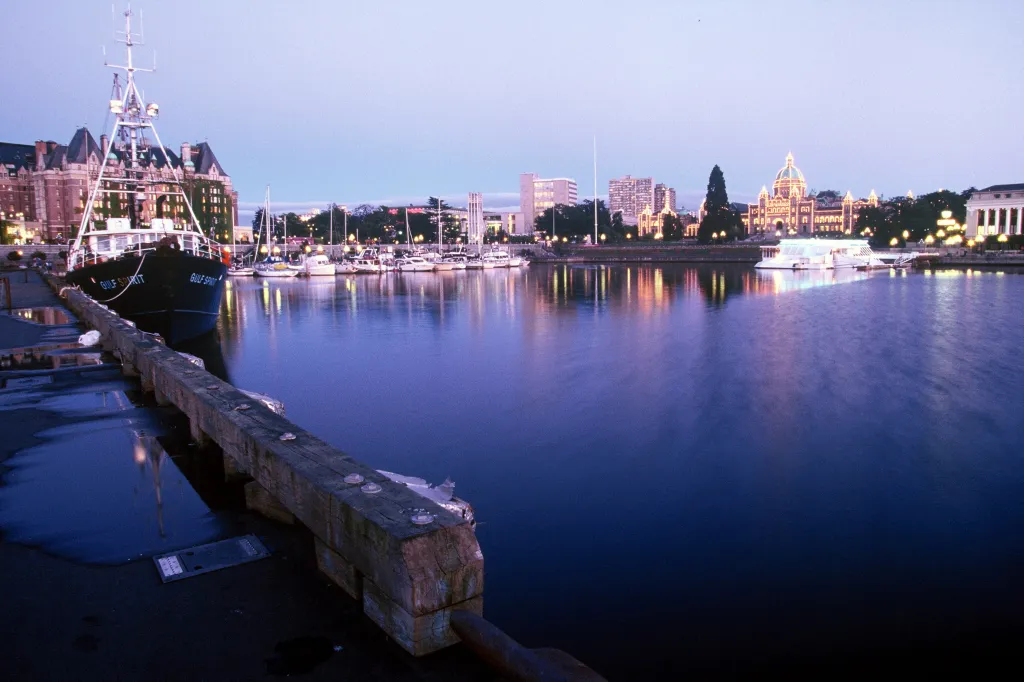
Walked Inner Harbour at night with Parliament glowing gold and buskers playing bagpipes. The buildings stood where the fort once guarded, where Indigenous peoples fished and traded long before European sails appeared on the horizon. History layered like sediment beneath my feet.
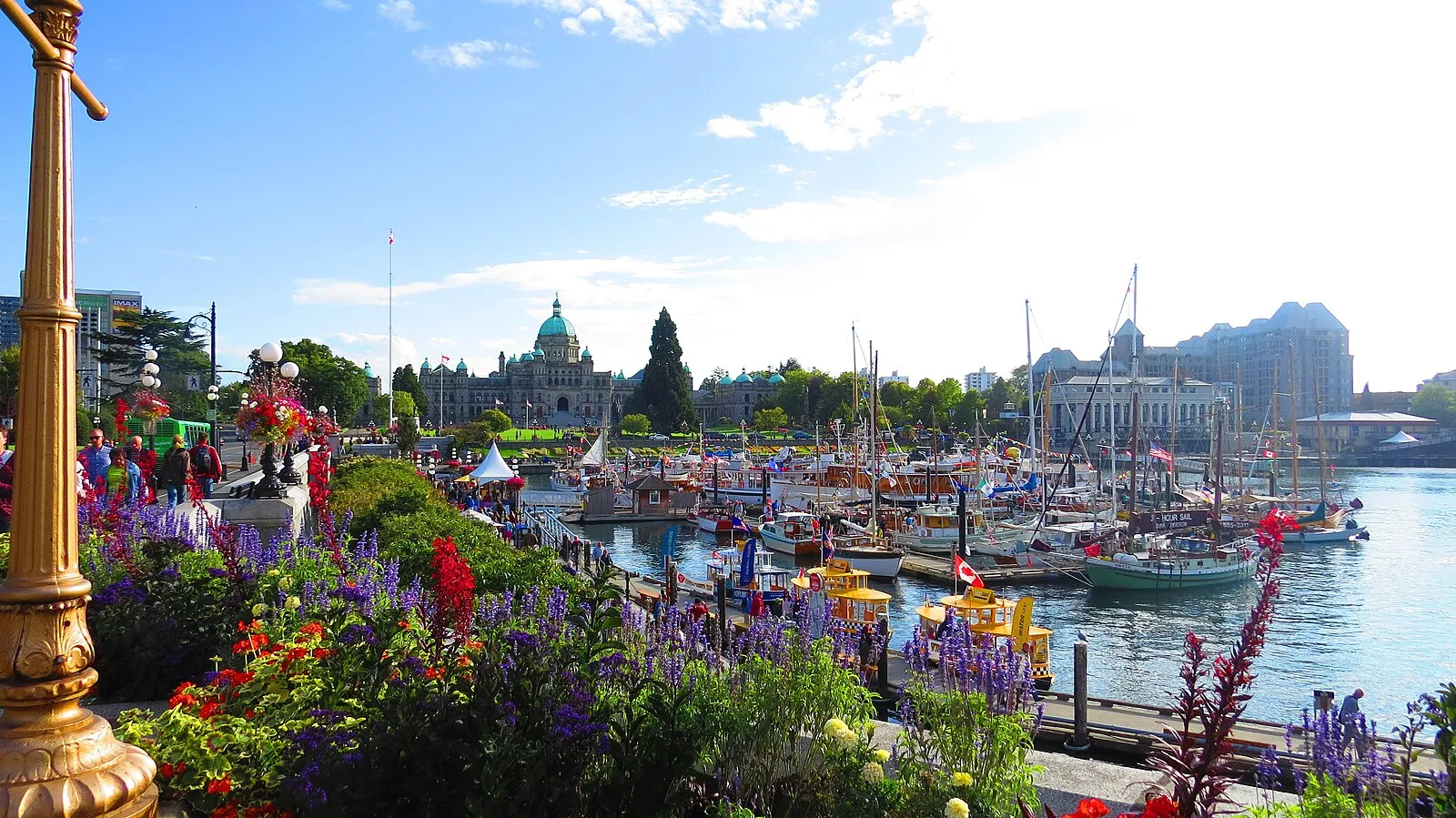
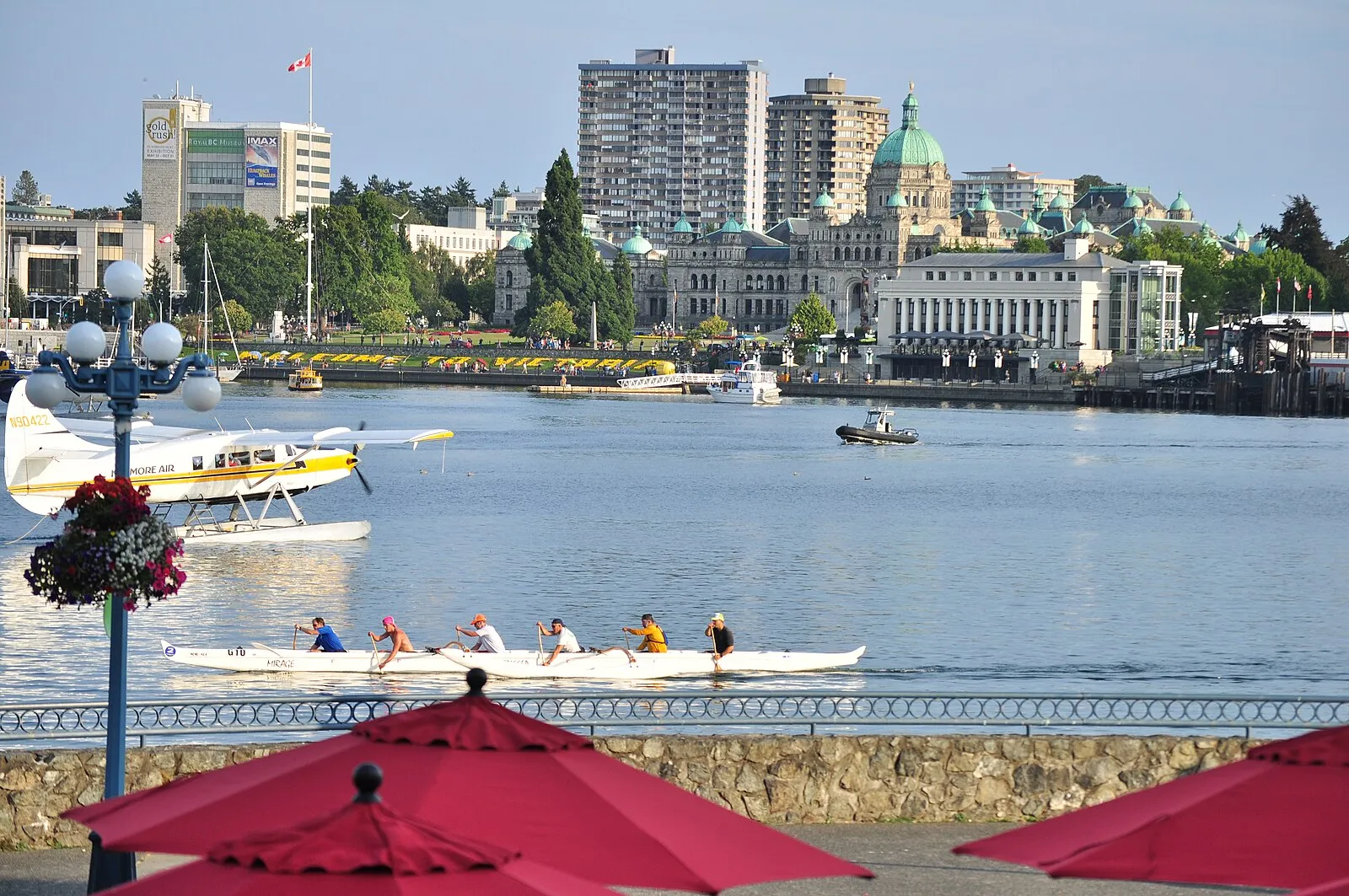
A few practical details worth noting: the shuttle to Butchart Gardens ran about forty-five Canadian dollars round trip and took roughly thirty minutes each way through pleasant suburban roads. High tea at the Fairmont Empress cost about eighty-five dollars per person and required reservations made weeks in advance — worth every penny and every minute of planning, though I would recommend the afternoon sitting when the light through the lobby windows is warmest. The Inner Harbour walkway from Ogden Point cruise terminal into town took about twenty-five minutes on flat, well-paved ground and offered views of float planes landing on the water and kayakers paddling beneath the harbor walls. I noticed the air smelled of sea kelp and fresh-cut flowers from the hanging baskets that line the causeway — Victoria takes its garden reputation seriously, and even the lamp posts bloom. The Royal BC Museum near the harbour is worth a stop if you have time, with its First Nations galleries offering a powerful counterpoint to the colonial architecture outside. I bought a small jar of local lavender honey from a vendor near Fisherman's Wharf for about twelve dollars, and the taste — floral, almost perfumed — brought back the entire evening every time I opened it at home.
What I remember most vividly about Victoria is the evening itself. After tea and gardens and museums, we walked the waterfront as the sun dropped behind the Olympic Mountains across the strait, and the Parliament buildings lit up like a cruise ship made of stone — over three thousand light bulbs outlining every dome and arch, reflected perfectly in the still harbour water. Street performers had set up along the causeway: a violinist, a First Nations carver working a cedar mask with quiet focus, a man painting watercolors of the harbour for twenty dollars each. We stopped at a fish and chips shop on the wharf — wild Pacific halibut in crisp batter for about sixteen dollars — and ate on the dock with our legs dangling over the water, watching the float planes make their last landing runs of the day. The harbor seals surfaced nearby, curious and unhurried, and a bald eagle crossed overhead so low I could see the yellow of its eye. Victoria has a way of layering the wild and the civilized so seamlessly that you stop noticing the boundary, and that is perhaps the most British Columbian thing about it. As our ship pulled away near midnight, I stood at the stern watching those Parliament lights shrink to a golden line on the horizon and felt that Alaska's final port had given us exactly the farewell the voyage deserved. Victoria taught me that the end of a journey matters as much as the beginning — that a city of gardens and afternoon tea and illuminated Parliament buildings can close an Alaska adventure not with a bang but with a grace note, the kind that lingers in your memory long after the luggage is unpacked and the photos are sorted.
Weather & Best Time to Visit
The Cruise Port
Victoria's Ogden Point cruise terminal sits on a breakwater about 3 kilometres southwest of the Inner Harbour — a flat, scenic 20-minute walk along Dallas Road with views across Juan de Fuca Strait to the Olympic Mountains. The terminal handles ships up to 350 metres long and berths two vessels simultaneously. Most Alaska-bound and Alaska-returning ships call here for a single day.
The terminal building is modern and straightforward: washrooms, a small gift shop, and a visitor information desk with free city maps. Taxis and shuttle buses queue right outside the terminal. The Canadian dollar (CAD) is the local currency, and ATMs are available at the terminal entrance and throughout downtown. Most shops and restaurants accept major credit cards, but carry some cash for small vendors at Fisherman's Wharf and street performers along the causeway.
Getting Around
On foot: Victoria's compact downtown is one of the most walkable port towns in the Pacific Northwest. The 20-minute waterfront path from Ogden Point to the Inner Harbour is flat and wheelchair-accessible, with benches and viewpoints along the way. Most major attractions — Parliament, the Empress Hotel, the Royal BC Museum — cluster within a 10-minute walk of the harbour.
Shuttle bus: Several shuttle operators meet ships at Ogden Point and run continuous loops to downtown for $5-8 CAD round trip. These are useful if you want to save time or energy for Butchart Gardens later.
Taxi and rideshare: Taxis line up at the terminal. A ride to downtown costs about $12-15 CAD. Uber operates in Victoria but availability can be limited compared to Vancouver. The ride to Butchart Gardens runs $45-55 CAD one way.
Public transit: BC Transit Route 31 runs from near Ogden Point to downtown ($2.50 CAD). For Butchart Gardens, Route 75 departs from downtown and takes about 75 minutes — affordable but slow for a port day.
Mobility note: The waterfront walk to downtown is level and accessible. Downtown sidewalks are generally smooth, though some heritage blocks have uneven surfaces. Butchart Gardens offers wheelchair and scooter rentals ($5 CAD) with most paths paved and graded for accessibility.
Victoria Area Map
Interactive map showing cruise terminal and Victoria attractions. Click any marker for details.
Top Excursions & Attractions
Ship excursions guarantee your return to the vessel — independent exploration offers flexibility and savings. Book ahead for popular tours, especially whale watching and Butchart Gardens shuttles.
Butchart Gardens
Victoria's most famous attraction, this 22-hectare garden on a former limestone quarry draws over a million visitors per year. The Sunken Garden, Japanese Garden, and Rose Garden are breathtaking in summer. Admission is $41 CAD for adults. Independent visitors can take the CVS shuttle from downtown ($50 CAD round trip including admission) or a taxi ($45-55 CAD one way — arrange return pickup). Ship excursions to Butchart typically cost $90-130 USD and include transport and admission. The gardens are partially wheelchair accessible with paved main paths but some steep sections. Allow 2-3 hours minimum. Book ahead during July and August — ship excursion buses fill quickly.
Whale Watching
Victoria sits in prime orca territory, and whale watching tours depart from the Inner Harbour year-round. Operators like Eagle Wing and Prince of Whales run 3-hour zodiac or covered boat tours for $120-150 CAD per person. Sightings of resident and transient orcas, humpback whales, and grey whales run about 90% success rate in summer months. Ship excursions for whale watching typically cost $150-200 USD. Independent visitors should book ahead — morning departures are more popular and fill first.
Inner Harbour & Parliament Buildings
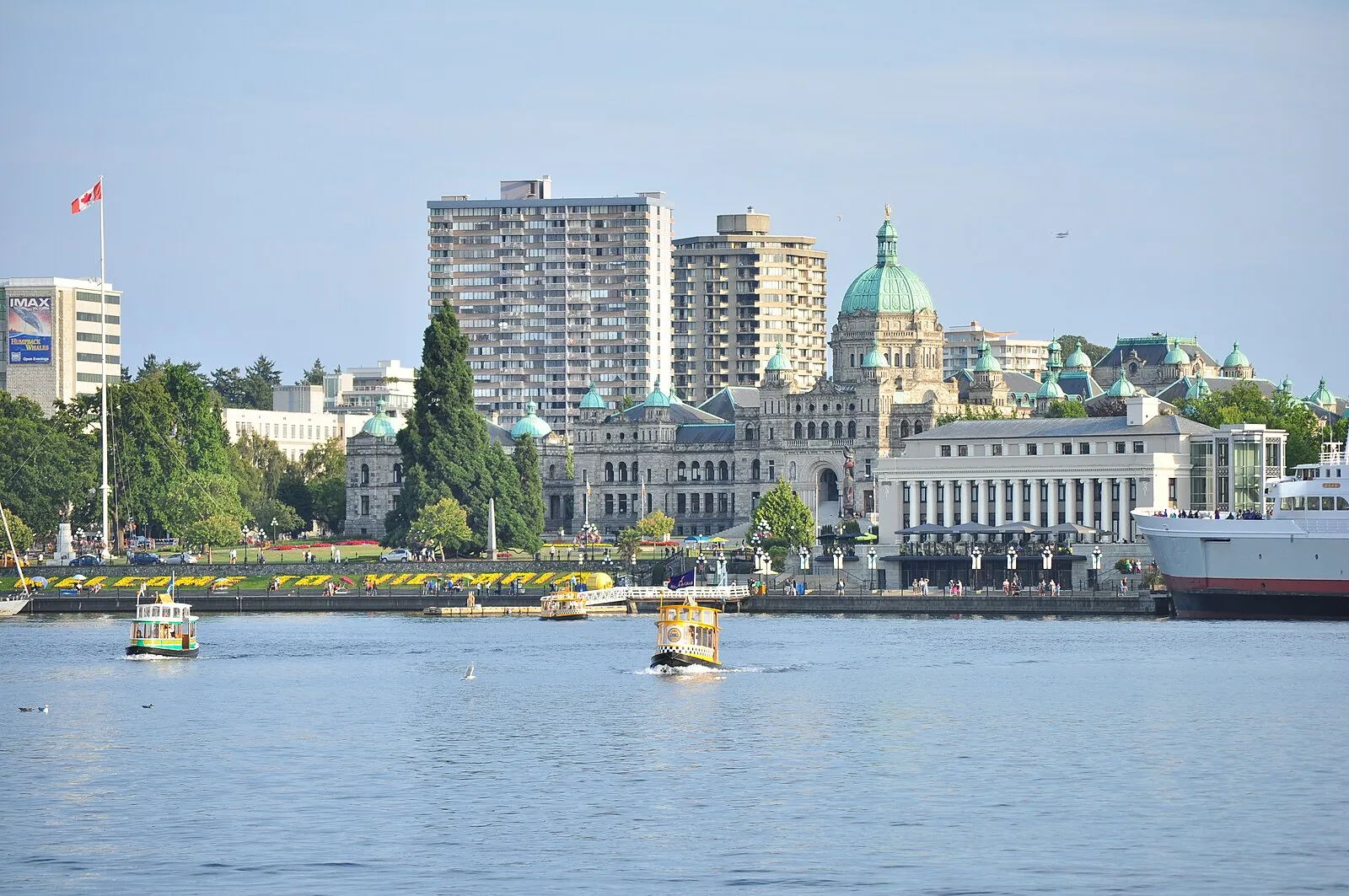
The Inner Harbour is the heart of Victoria's waterfront — a 10-minute walk from the shuttle drop-off. The British Columbia Parliament Buildings (free guided tours, 30 minutes) are stunning inside with stained glass, murals, and the gold-topped dome. The Fairmont Empress Hotel sits across the harbour — even if you skip the famous afternoon tea ($89 CAD per person, book weeks ahead), the lobby is worth a walk-through. Fisherman's Wharf, a floating village of colourful houseboats and food stalls, is a 15-minute walk south along the harbour — try a fish taco for $8-10 CAD. No booking needed for independent harbour exploration.
Royal BC Museum
One of Canada's finest museums, the Royal BC Museum sits beside the Parliament Buildings. The First Peoples Gallery and natural history exhibits are outstanding. Admission is $27 CAD for adults. The IMAX theatre next door shows nature documentaries ($13 CAD or $35 CAD combo). Allow 2 hours for a thorough visit. Fully wheelchair accessible with lifts to all floors.
Craigdarroch Castle
This Victorian-era mansion built by coal baron Robert Dunsmuir sits 2 kilometres from downtown — a pleasant 25-minute walk uphill or a $10 CAD taxi ride. Admission is $19 CAD. The 39-room castle features original stained glass, period furnishings, and views across Victoria from the tower. Not wheelchair accessible due to narrow staircases. Allow 1-1.5 hours.
Depth Soundings Ashore
Practical tips before you step off the ship.
High tea reservations fill months ahead — book the second your cruise is confirmed.
Money: The local currency is Canadian Dollar (CAD). ATMs are generally available near the port area, though fees vary. Credit cards are widely accepted at tourist-oriented establishments, but carry some local cash for markets, street food, and smaller vendors. Your ship's exchange rate is typically unfavorable — withdraw from a bank ATM instead.
Timing: Start early if your ship arrives at dawn — the first hours offer pleasant conditions and smaller crowds. Allow at least 30 minutes buffer before all-aboard time. Set a phone alarm as backup.
Safety: Standard port-town awareness applies — keep valuables close and stick to well-traveled areas during daylight. Your ship's ID card is your most important item — losing it creates a genuine headache at the gangway.
Communication: Wi-Fi is often available at cafés and restaurants near the port. Consider downloading offline maps before disembarking — cellular data roaming charges can be substantial and surprising.
Photo Gallery

Frequently Asked Questions
Q: Is Victoria worth it?
A: Perfect elegant finish to Alaska wilderness.
Q: Best attraction?
A: Butchart Gardens at twilight.
Q: How long at gardens?
A: 2–3 hours.
Q: Can you walk from port?
A: Yes to Inner Harbour, shuttle to gardens.
Q: What is the best time to visit Victoria BC?
A: Cruise season runs May through September — mild Pacific Northwest climate (35-67°F). There are no months to avoid for weather. Victoria is one of the mildest cities in Canada — rarely freezing.
Q: Is Victoria BC suitable for passengers with mobility challenges?
A: Accessibility varies by area. The port vicinity and main commercial streets are generally manageable, but older historic districts may feature cobblestones, stairs, and uneven surfaces. Consider booking an accessible ship excursion if you have concerns. The ship's shore excursion desk can advise on specific accessibility options for this port.
Q: Do I need to exchange currency before arriving?
A: The local currency is Canadian Dollar (CAD). Most tourist-facing businesses accept major credit cards. ATMs near the port offer competitive exchange rates. Carry some local cash for small purchases, markets, and tips. Avoid exchanging money on the ship — the rates are typically unfavorable compared to local bank ATMs.
Q: Can I explore independently or should I book a ship excursion?
A: Both options work well. Ship excursions guarantee return to the vessel and handle logistics, making them ideal for first-time visitors. Independent exploration costs less and allows more flexibility — just keep track of time and allow a 30-minute buffer before all-aboard. Many passengers combine approaches: an organized morning tour followed by free afternoon exploration.
Q: Does Victoria BC have a hurricane or storm season?
A: Victoria is not in a hurricane zone. Winds are light because the location is sheltered. There are no months specifically to avoid.
Q: What should I pack for Victoria BC's weather?
A: Layers — it's mild but can be cool even in summer. Light rain jacket for April and October. Comfortable walking shoes. Sunscreen for summer. Warmer layers for whale watching boats.
Q: Will rain ruin my port day in Victoria BC?
A: Wet October through March; very dry July and August. Cruise season concentrates in the drier May–September window.
Last reviewed: February 2026
Victoria: My Elegant Alaska Finish
Key Facts
- Country
- Canada (British Columbia)
- Region
- Pacific
- Currency
- Canadian Dollar (CAD)
- Language
- English