

My Visit to Royal Beach Club Paradise Island
Quick Answer: Royal Beach Club Paradise Island is Royal Caribbean's premium private beach destination in Nassau — think pristine powder-sand beaches, swim-up bars, overwater cabanas, and Bahamian cultural experiences without the cruise port crowds. At $99-$129 per person, it's expensive but delivers a genuinely exclusive Caribbean beach day.
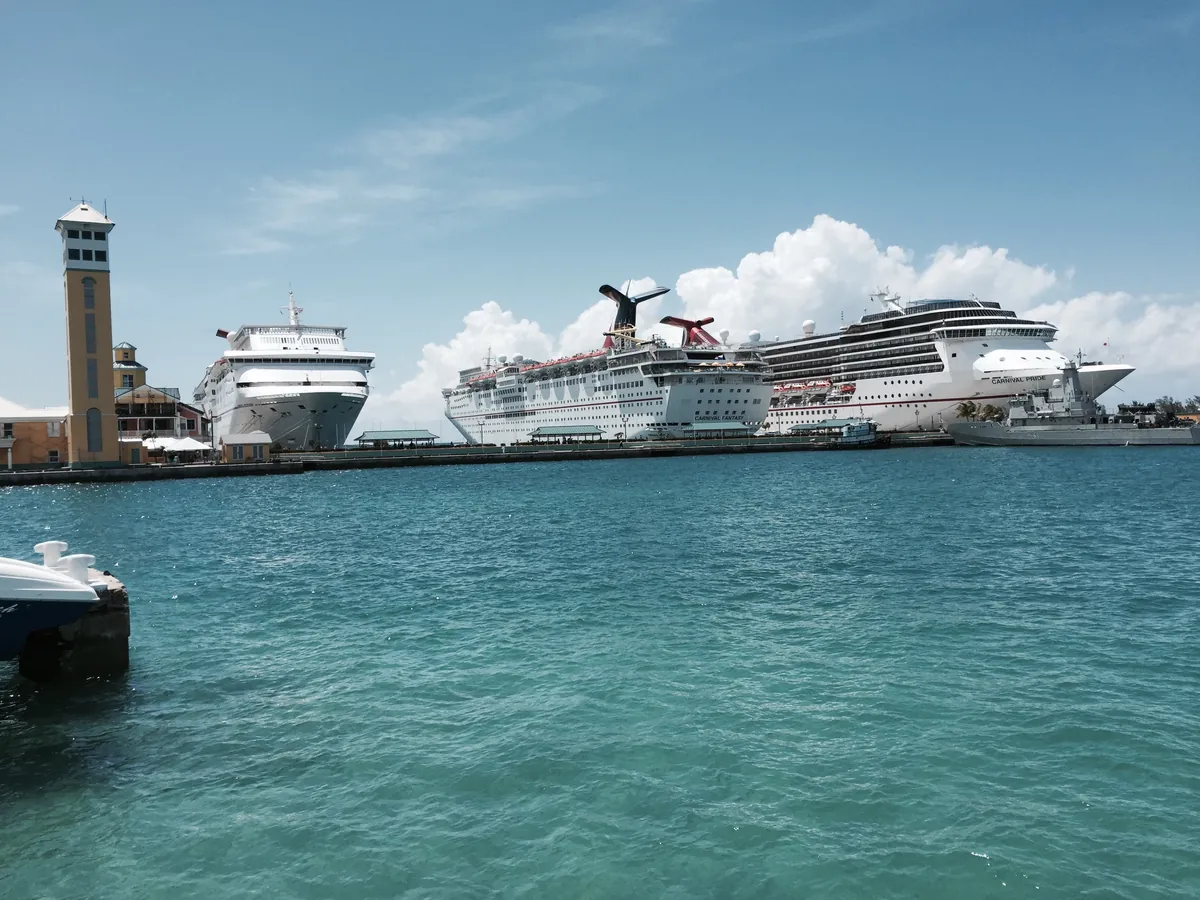
I've visited Nassau seventeen times, and I'll be honest — the main cruise port area can feel overwhelming. Between four mega-ships disgorging thousands of passengers simultaneously and the aggressive t-shirt vendors on Bay Street, it's not always the Caribbean paradise experience you imagined. That's precisely why I was skeptical when Royal Caribbean announced their Royal Beach Club Paradise Island. Another private beach destination? Haven't we seen this before with CocoCay and Labadee?
But I was wrong. Stepping off the dedicated ferry after our 25-minute ride from the Nassau terminal, I immediately understood what Royal Caribbean was attempting here. This isn't a theme park masquerading as a beach. This is a genuine Bahamian beach experience elevated to premium standards — the kind of place where the sand actually squeaks when you walk on it because it's that fine and that clean.
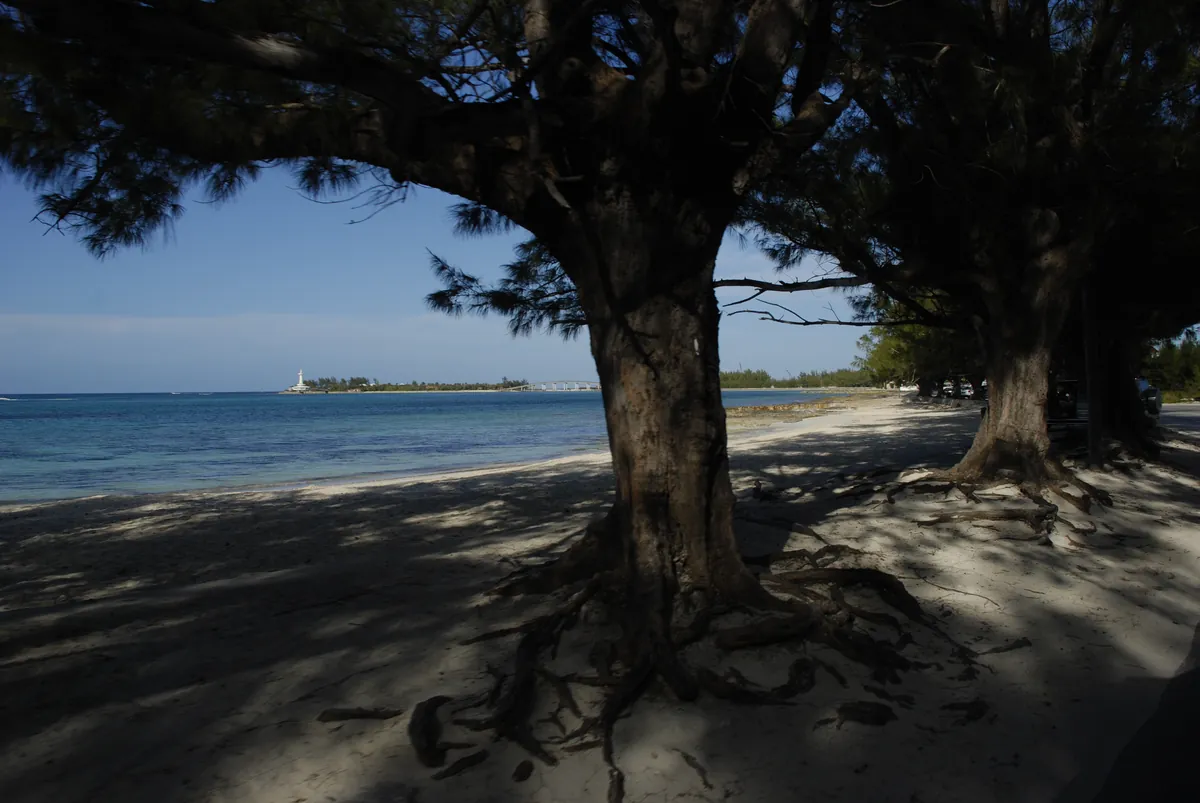
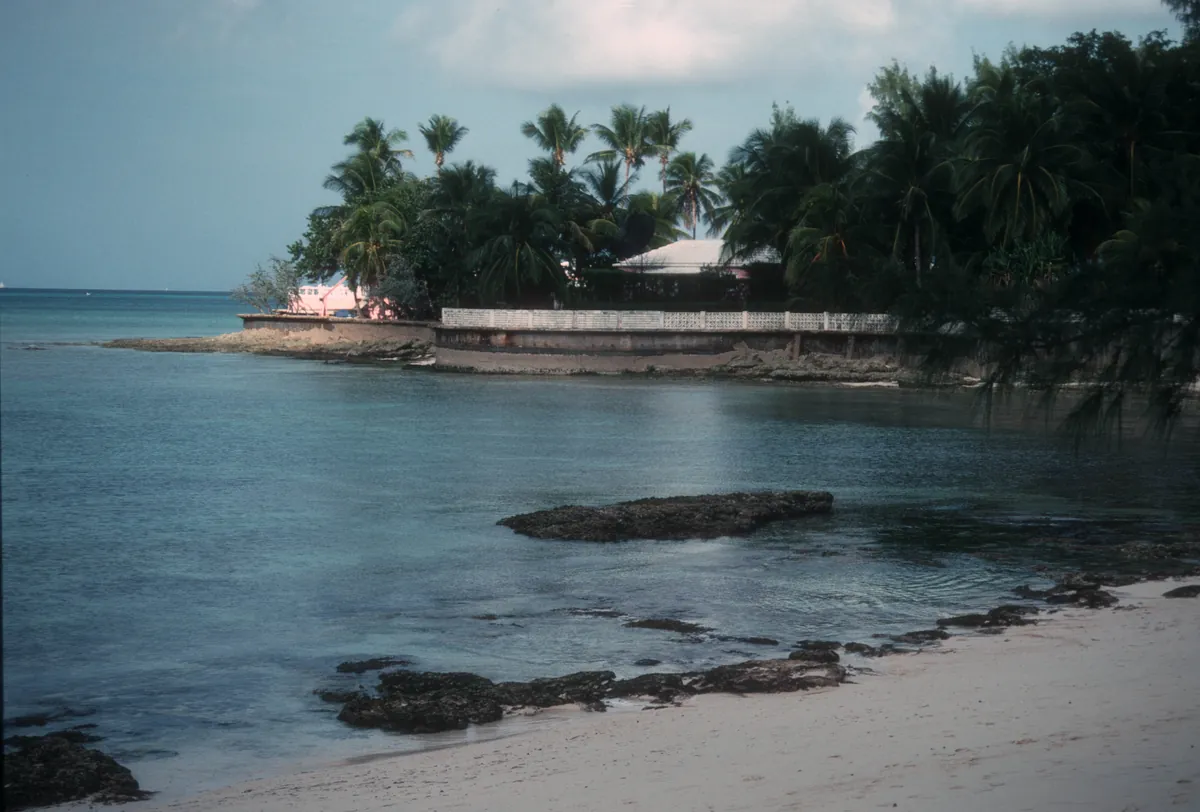
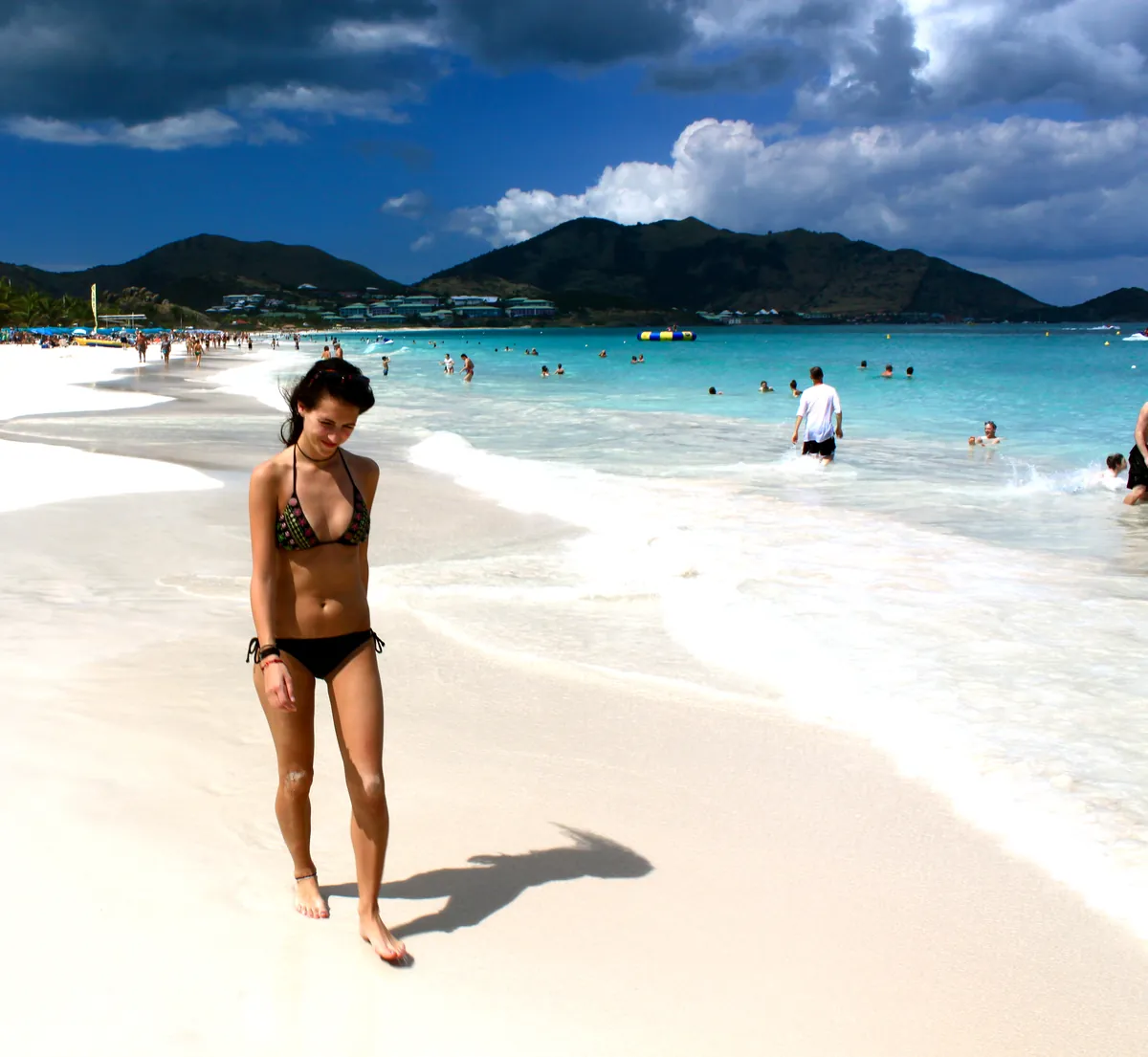
My first impression was the space. Royal Caribbean caps daily attendance here, and you can actually feel it. Where Cable Beach might have sun loungers crammed shoulder-to-shoulder, Royal Beach Club's beach chairs are spaced generously along a half-mile stretch of protected coastline. The powder-white sand extends from the shoreline back to clusters of palm trees and sea grape, and the water — my god, the water. That specific shade of turquoise that makes you question whether your eyes are functioning properly. I've seen it at Grand Cayman and Turks & Caicos, but there's something about the way the sun hits Paradise Island's shallow sandbars that makes the blues particularly vivid.
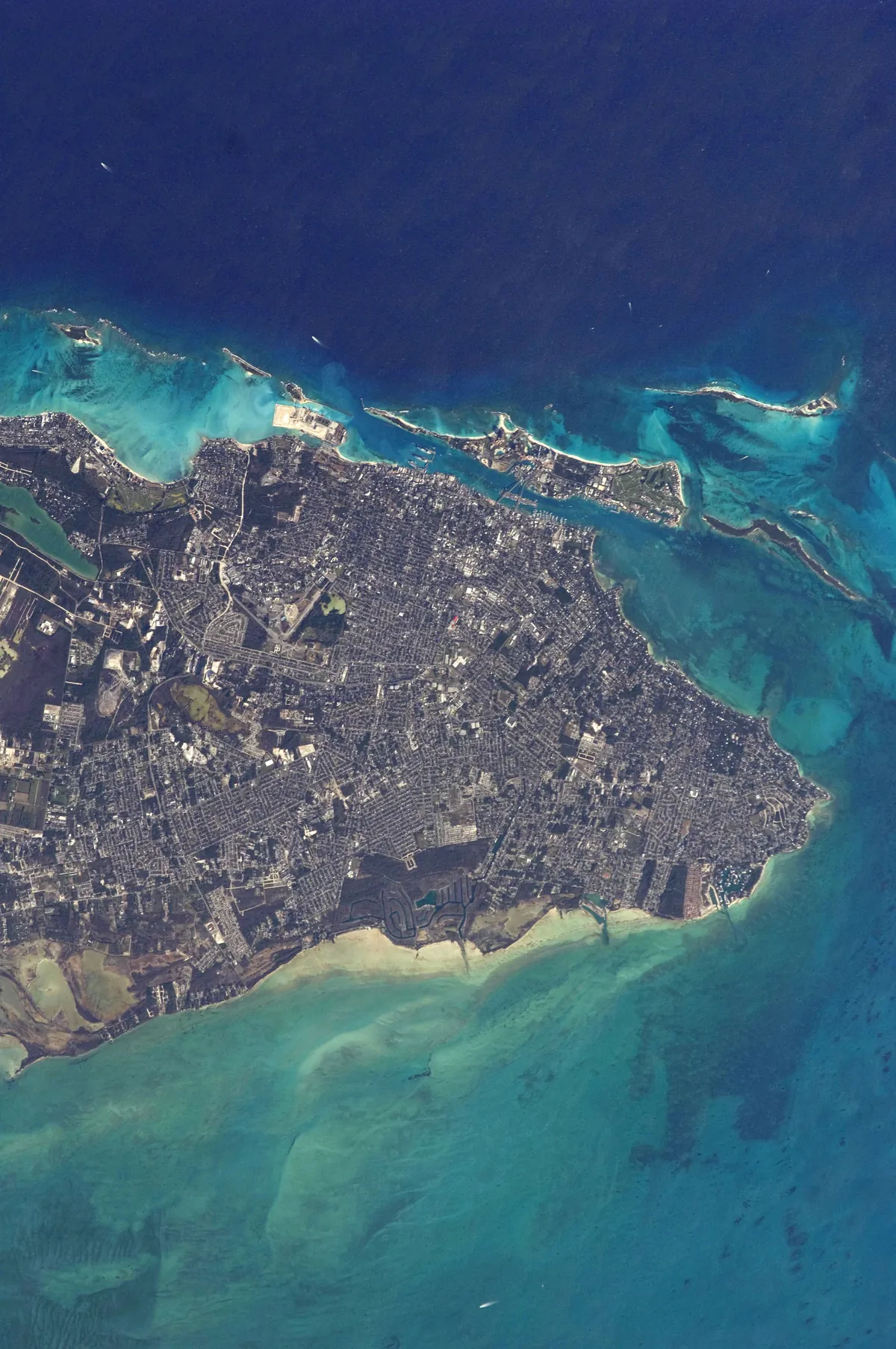
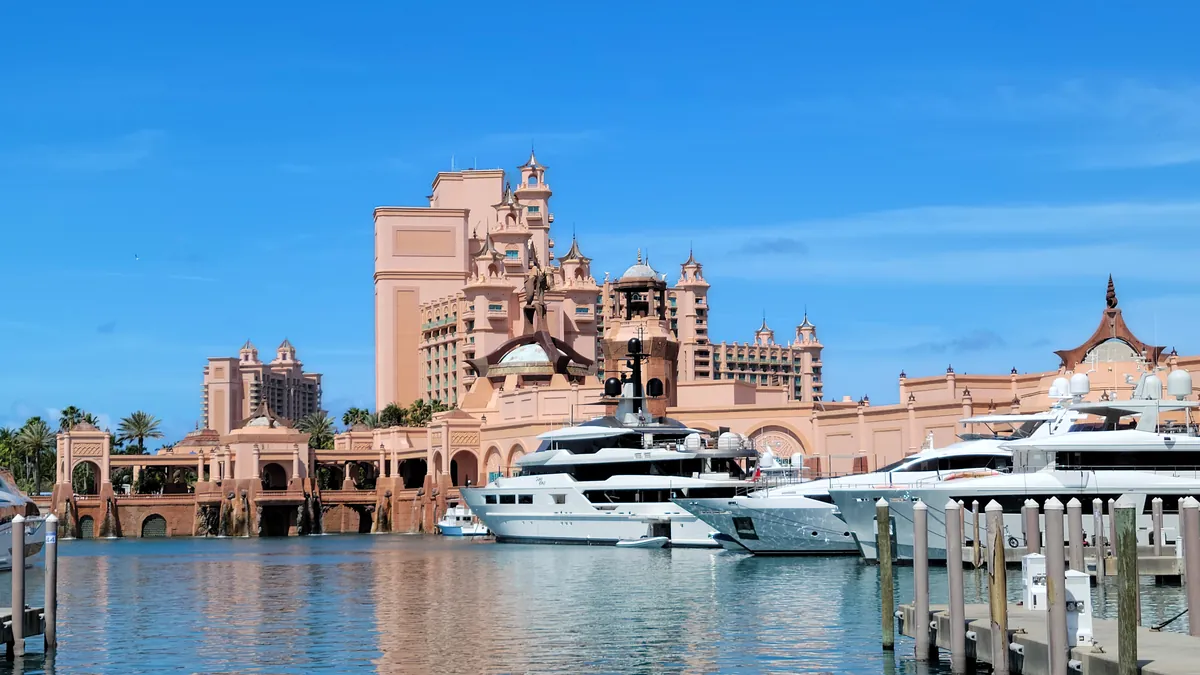
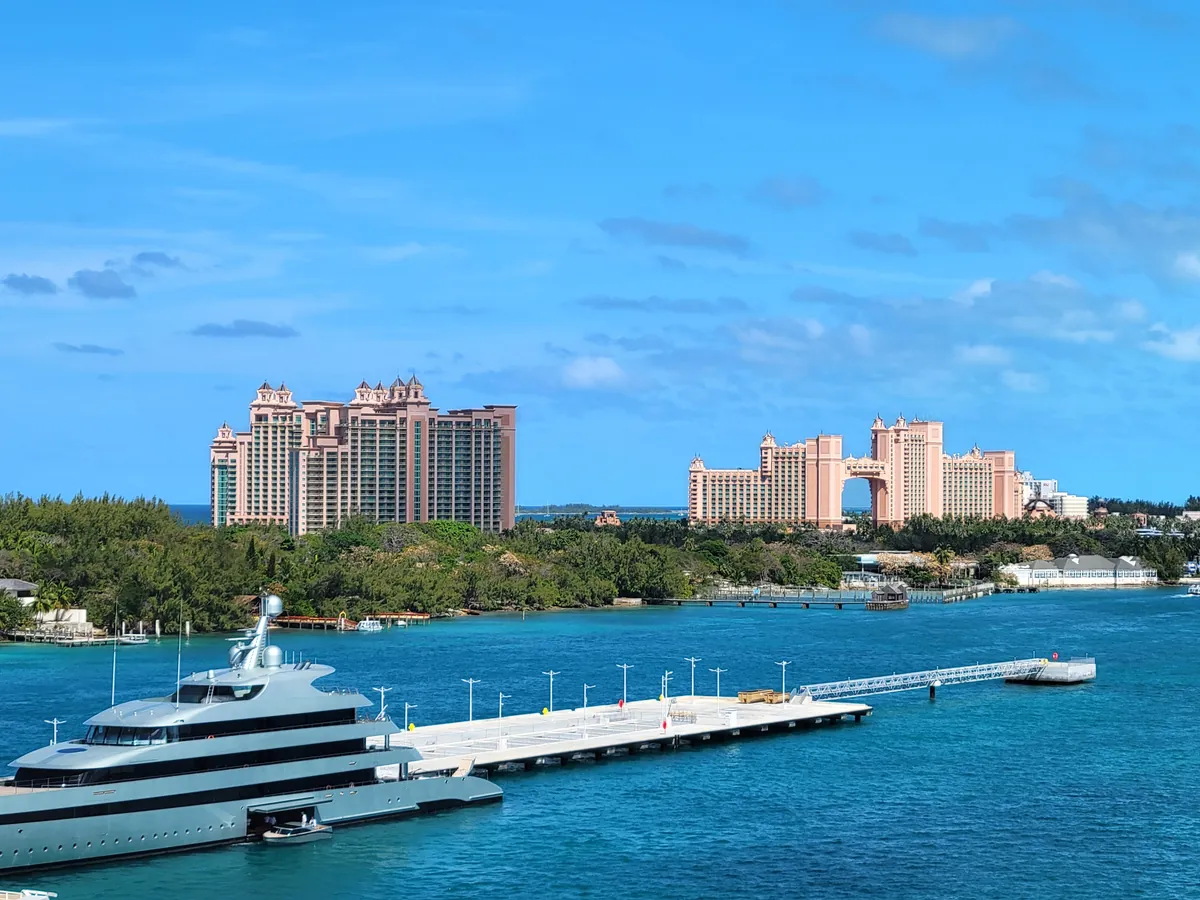
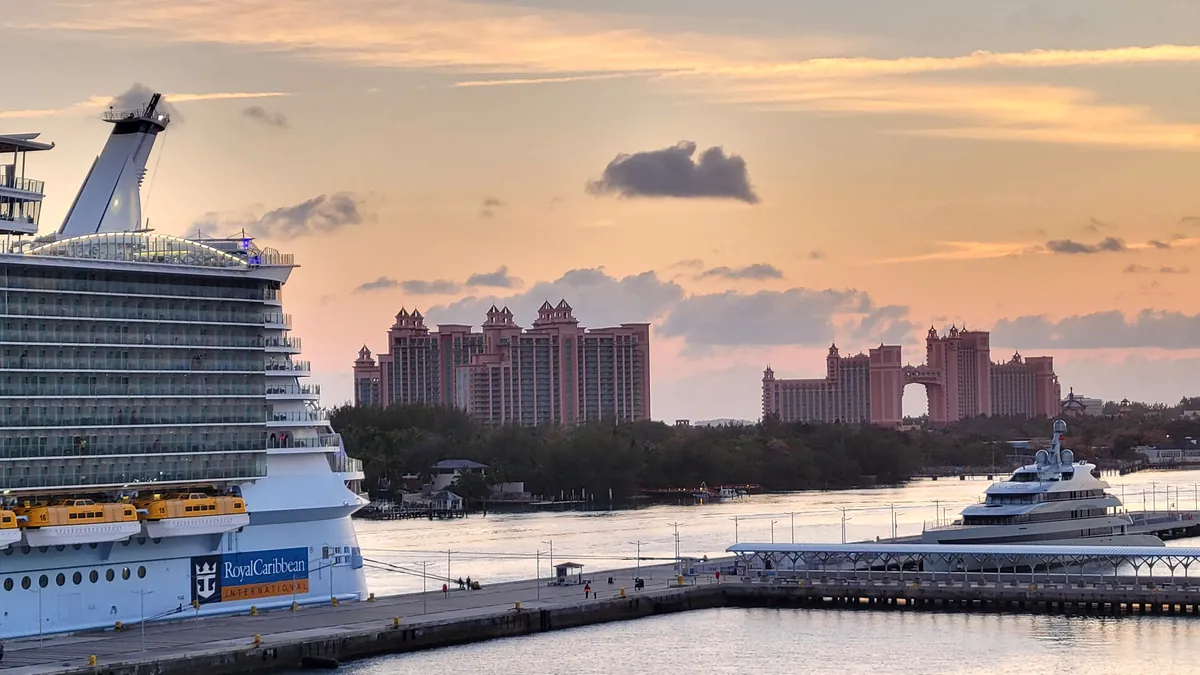
The beach club occupies the western end of Paradise Island, tucked away from the Atlantis mega-resort that dominates the eastern shore. Royal Caribbean invested heavily in preserving the natural Bahamian character while adding premium infrastructure — thatched-roof palapas built in traditional Bahamian style, locally-sourced materials throughout, and deliberate nods to Nassau's maritime heritage in the design aesthetic. The main pavilion features artwork from Bahamian artists depicting junkanoo traditions, and the restaurant menus lean heavily into authentic Bahamian cuisine rather than generic cruise ship fare. It feels intentional, thoughtful, and — surprisingly — respectful of place.
We splurged on an overwater cabana for our day ($399 for up to six people), and despite the eye-watering price tag, I'd do it again. These aren't the fabric-sided beach cabanas you find at public resorts. These are substantial structures built on pilings over the water with your own private deck, ladder access for swimming, cushioned daybeds, ceiling fans, mini-fridge stocked with water and soft drinks, Bluetooth speaker, and dedicated waitstaff. My family of four had space to spread out, the kids could jump directly into calm, crystalline water from our private ladder, and we had genuine privacy. For families with young children or anyone who values personal space, the cabana math actually works out reasonably when you factor in what you'd spend on umbrellas, food, and drinks at a public beach.
The complimentary amenities are generous by cruise shore excursion standards. Your base admission ($99-$129 depending on season) includes your beach chair setup with umbrella, fresh towels (as many as you need — I counted six before I stopped asking), access to the freshwater pools, and unlimited non-alcoholic beverages including flavored waters, sodas, iced tea, and fresh fruit punch. The beach club also includes multiple shower facilities, spotless restrooms, changing rooms with lockers, and a central pavilion with shaded seating for those moments when you need a break from direct sun.
The food situation requires some budget planning. While beverages are included in your base admission, food is à la carte and not cheap. The main restaurant — Coco's Kitchen — serves Bahamian specialties including conch fritters ($14), cracked conch ($28), grilled mahi-mahi ($32), and jerk chicken ($24). The portions are cruise-ship generous and the quality is legitimately good — I'd put the conch fritters on par with what you'd find at Arawak Cay's fish fry in downtown Nassau, which is high praise. There's also a casual grill serving burgers, hot dogs, and sandwiches in the $12-$18 range. Budget at least $40-$60 per person if you're planning lunch, more if you're drinking alcohol. The rum punch is $12 but strong and authentic.
For thrill-seekers and water sports enthusiasts, Royal Beach Club offers the full menu: kayaking, paddleboarding, snorkeling gear rental, banana boat rides, and parasailing. However, these are all additional charges ranging from $20 for snorkel gear to $89 for parasailing. If you're budget-conscious, the swimming and beach lounging are absolutely sufficient entertainment. The water is calm, warm (averaging 78-82°F year-round), and so clear you can see your toes at shoulder depth. My kids spent four hours doing nothing but swimming, building sand structures, and hunting for tiny crabs in the shallows — and that's exactly what a beach day should be.
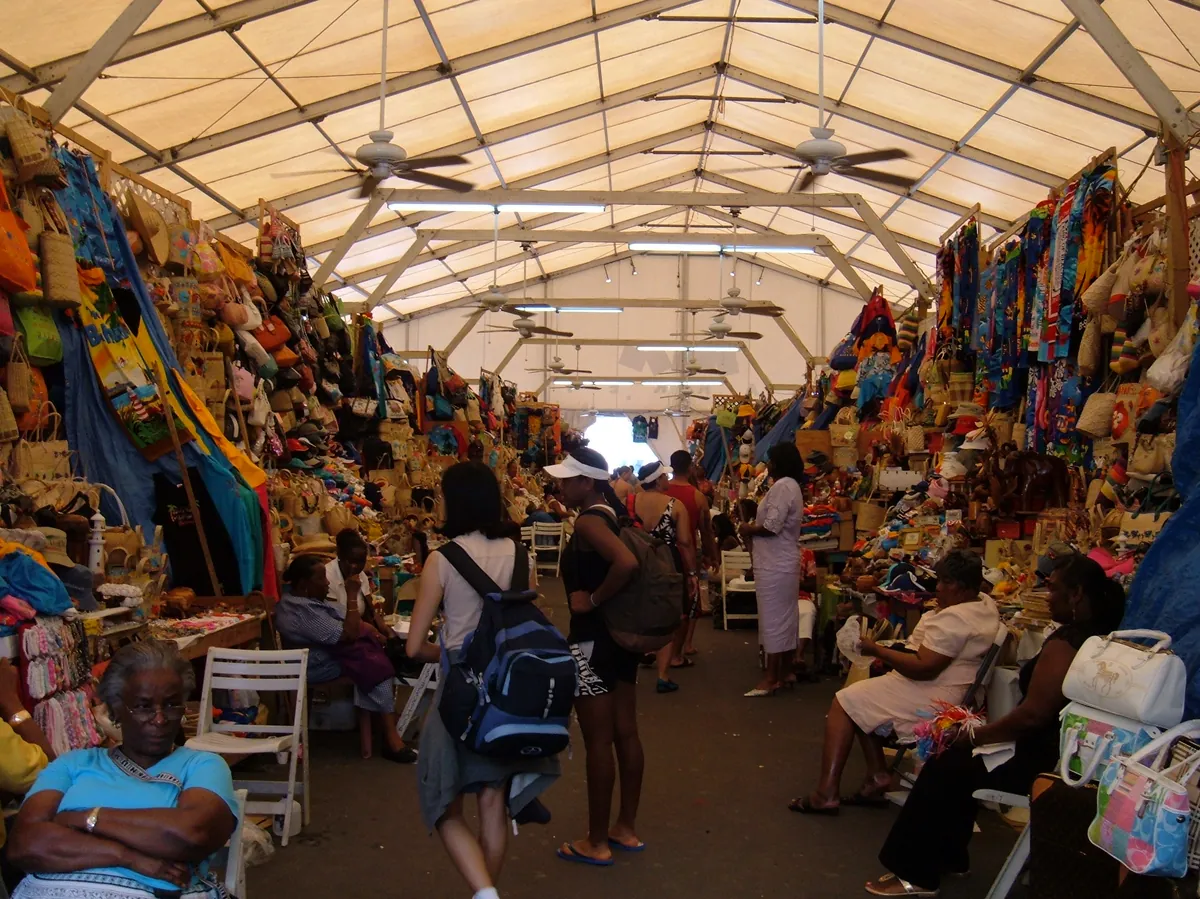
What genuinely surprised me was the cultural programming. The aroma of conch fritters drifting from Coco's Kitchen mixed with the scent of coconut sunscreen and salt air — it smelled like an honest Caribbean afternoon. Throughout the day, local Bahamian performers showcase junkanoo music, rake-and-scrape bands play traditional folk songs, and craft vendors from Nassau set up under the palm trees selling authentic straw goods, wood carvings, and local artwork. This isn't Disney-fied Caribbean theming — these are actual Nassau artisans given space to share their culture and sell their work directly to cruise guests. I bought a hand-woven straw hat from a woman who explained the traditional Bahamian plaiting techniques while my daughter watched, fascinated. That connection to place is something you don't always get at private cruise destinations.
The accessibility situation is solid but not perfect. The ferry from Nassau is wheelchair accessible with crew assistance, and the main beach club facilities include accessible restrooms, ramps to the beach, and beach wheelchairs available for loan. The overwater cabanas require navigating stairs, so they're not suitable for guests with mobility challenges. However, the beachfront cabanas (on sand) are accessible and offer similar privacy and amenities without the overwater premium pricing.
Compared to other Nassau beach options, Royal Beach Club sits in an interesting position. You're paying 10x what you'd spend to taxi to Junkanoo Beach or Cable Beach (both free, both excellent), but you're getting guaranteed quality, controlled crowds, included amenities, and zero hassle with transportation or safety concerns. For cruise passengers with limited time and high expectations, that trade-off makes sense. For budget travelers or adventurous souls who enjoy exploring on their own terms, Nassau's public beaches offer comparable natural beauty without the entry fee. It's not about one being "better" — it's about knowing what experience you're paying for.
The guaranteed return to your ship is the underrated benefit here. While I've never personally missed a ship departure, I've watched enough panicked passengers sprinting up gangways to appreciate Royal Caribbean's controlled transportation system. The ferries run on published schedules throughout the day with the final departure timed to get you back to the ship with an hour buffer before all-aboard. No negotiating taxi fares, no getting lost, no stress about cutting it close. For anxious travelers or first-time cruisers, that peace of mind alone may justify the admission price.
Looking back, I realized that what makes Royal Beach Club special isn't the fancy cabanas or the swim-up bars — it's the gift of unhurried time with the people you love. In a world that moves too fast, sometimes you need a place that forces you to slow down, dig your toes into warm sand, and simply be present. That's the real lesson this beach taught me.
Weather & Best Time to Visit
The Cruise Port & Terminal
Royal Beach Club Paradise Island is accessible exclusively via Royal Caribbean's dedicated ferry service from the Nassau cruise terminal. You cannot drive there, taxi there, or arrive independently — this is a closed, private destination available only to Royal Caribbean cruise guests who have booked the beach club shore excursion.
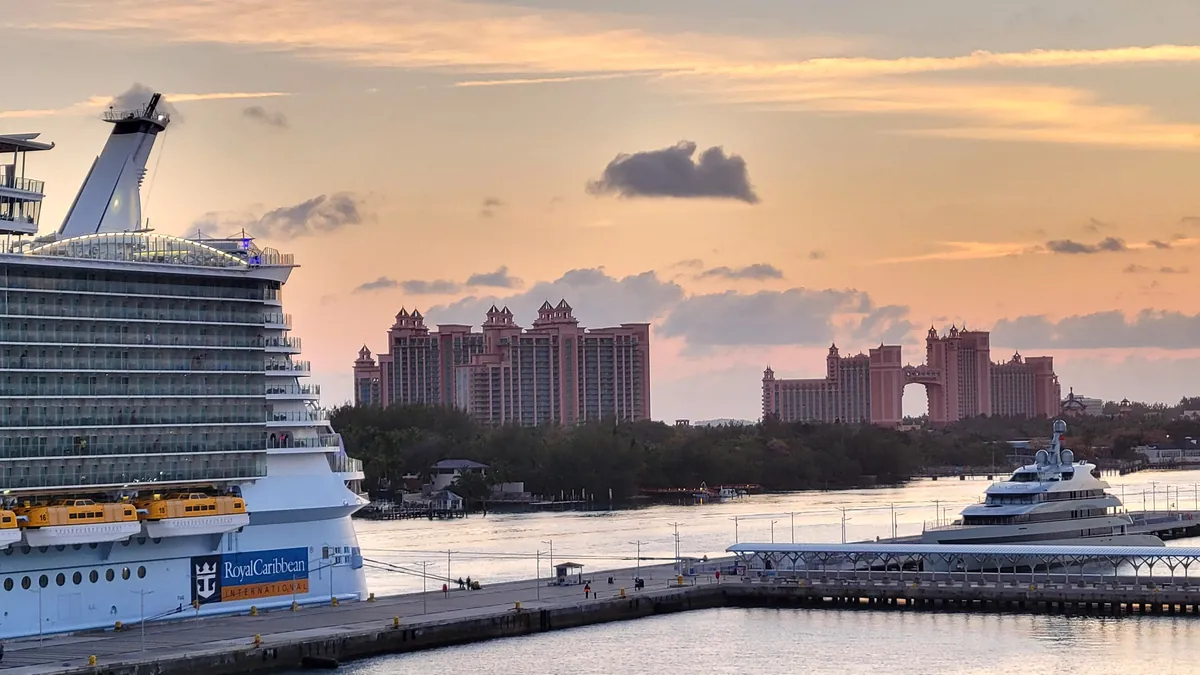
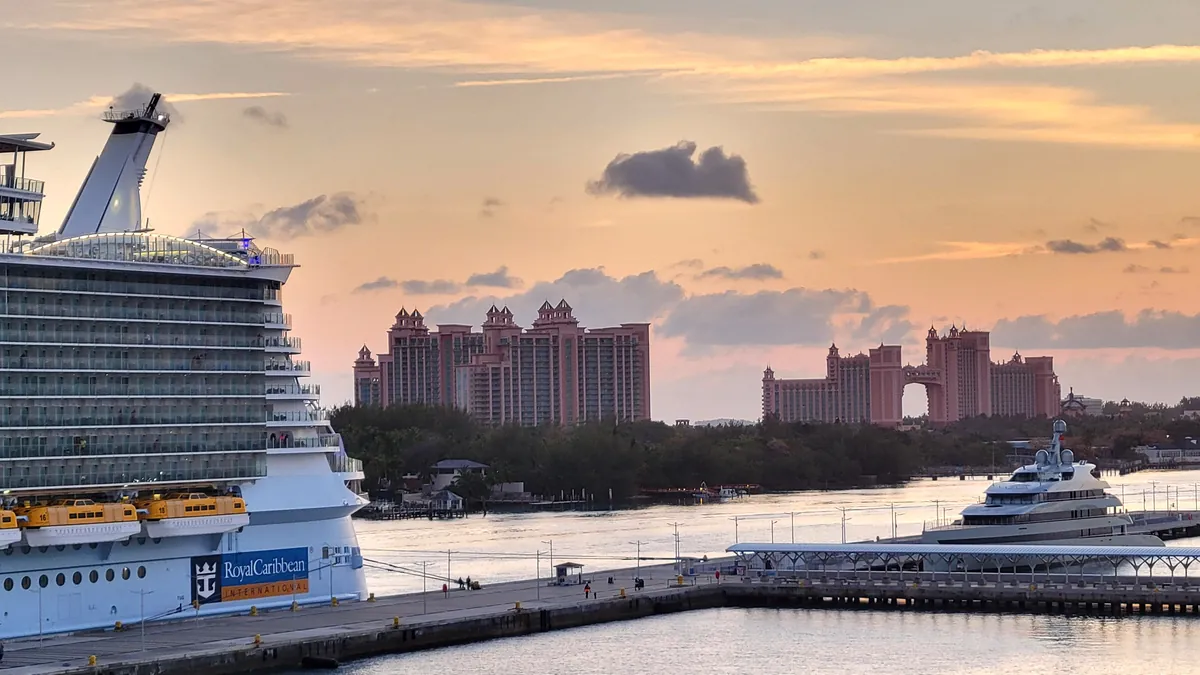
The ferry boarding area is clearly marked at the Nassau cruise terminal with dedicated Royal Caribbean staff directing guests. Boarding begins approximately 30 minutes after your ship's official clearance, with ferries departing every 30-45 minutes throughout the morning. The boat ride takes about 25 minutes and offers spectacular views of Nassau harbor, Paradise Island, and the Atlantis resort. The ferries are modern, air-conditioned, and equipped with restrooms. Seating is first-come, first-served, but the boats rarely feel crowded given the beach club's attendance caps.
Return ferries operate on a published schedule starting around 1:00 PM and running until approximately 4:00 PM (exact times vary by ship's all-aboard time). The final ferry departure is scheduled to return you to the ship with at least 60-90 minutes before the ship's scheduled departure, providing a comfortable safety margin. Staff at the beach club announce ferry departure times throughout the day, and digital signs display the schedule prominently near the main pavilion.
Getting Around Royal Beach Club
The Royal Beach Club campus is compact and entirely walkable. From the ferry dock to the furthest overwater cabana is perhaps a five-minute stroll along paved, shaded pathways. Everything is clearly signposted with directional signs in both English and pictographs, making navigation intuitive even for first-time visitors.
Main Areas:
- Ferry Dock & Welcome Center: Your arrival point with check-in desks, information booth, and initial orientation. Staff here can direct you to your pre-booked cabana or help you claim a beach chair location.
- Main Beach: The half-mile stretch of white sand beach with loungers, umbrellas, and beachside service. Walk from one end to the other in about 10 minutes at a leisurely pace.
- Central Pavilion: The heart of the beach club housing Coco's Kitchen restaurant, casual grill, main bar, restrooms, showers, and lockers. Centrally located for easy access from any beach position.
- Overwater Cabanas: Located on the northern edge of the property, accessible via wooden boardwalk extending over the water. Each cabana is numbered and assigned at check-in.
- Pool Complex: Two freshwater pools (one adults-only, one family pool) located adjacent to the central pavilion with swim-up bar access. About a 2-minute walk from the main beach.
- Cultural Village: Small area near the welcome center where Bahamian artisans set up daily craft stalls and cultural demonstrations occur throughout the day.
Everything is within a 5-minute walk of everything else. There are no internal transportation systems — nor do you need any. The entire property is designed for barefoot beach strolling with smooth pathways, beach showers to rinse sand before entering pavilion areas, and strategically placed towel stations so you're never more than 30 seconds from a fresh towel.
Accessibility: Paved pathways throughout with ramps where needed. Beach wheelchairs available at no charge from the welcome center (first-come, first-served, recommend requesting early). Accessible restrooms and changing facilities in the main pavilion. Beachfront cabanas are wheelchair accessible; overwater cabanas require stairs and are not accessible.
Royal Beach Club Map
Interactive map showing beach areas, facilities, dining, and key landmarks within Royal Beach Club Paradise Island.
Activities & Add-On Experiences
While the beach itself is the main attraction, Royal Beach Club offers numerous activities and upgrades for guests seeking more than beach lounging and swimming. All activities are bookable in advance online or onboard your ship, with limited same-day availability at the beach club's activity desk near the welcome center.
Premium Cabanas
The overwater cabanas are the marquee upgrade experience. Priced at $399-$599 depending on season and demand, these accommodate up to 6 guests and include: private overwater structure with deck and ladder access to water below, cushioned daybeds and seating, ceiling fans, mini-fridge stocked with water and sodas, Bluetooth speaker, dedicated server, priority towel service, and exclusive cabana-only menu items. The beachfront cabanas ($249-$399) offer similar amenities without the overwater location. Both sell out quickly — book as early as possible if this is a priority for your day.
Is it worth it? For large families or groups splitting the cost, absolutely. For a couple, it's harder to justify unless privacy and premium service are non-negotiable priorities. The standard beach experience is genuinely excellent without a cabana upgrade.
Water Sports & Activities
The beach club's water sports operation offers the full Caribbean menu with Royal Caribbean's typical attention to safety and organization:
- Snorkeling gear rental: $20 per person for the day. Includes mask, snorkel, fins, and safety vest. Gear is well-maintained and properly sanitized between uses.
- Kayaking: $25 per hour for single kayak, $35 for tandem. Guided 90-minute kayak tours ($45) explore the coastline with stops at small cays and mangrove channels.
- Paddleboarding: $25 per hour. The calm water makes this ideal for beginners.
- Banana boat rides: $20 per person for 15-minute ride. Maximum 8 riders. Exactly as silly and fun as you remember from childhood.
- Parasailing: $89 per person for single flight, $149 for tandem. 10-12 minute flight time with spectacular aerial views of Paradise Island and Nassau.
- Jet ski tours: $95 per person for 30-minute guided tour along the coast. Must be 18+ to drive, 12+ to ride as passenger.
All water sports require signed waivers and basic swimming ability. Children under 18 require parent/guardian signature. Life jackets provided and required for most activities.
Cultural Experiences
Throughout the day, the Cultural Village near the main pavilion hosts rotating demonstrations and performances:
- Junkanoo demonstrations: 11:00 AM and 2:00 PM daily. Local performers showcase traditional junkanoo costumes, music, and dance with audience participation encouraged.
- Bahamian craft workshops: Learn traditional straw weaving, wood carving, or conch shell art from Nassau artisans. Free to attend; materials for take-home projects $10-$25.
- Rake-and-scrape music: Live traditional Bahamian folk music performed throughout the day using saw, goatskin drum, and accordion.
- Conch salad demonstrations: Watch Bahamian chefs prepare fresh conch salad using traditional methods. Samples available for purchase.
Booking Guidance: Ship Excursion vs. Independent
This is straightforward: Royal Beach Club is accessible only through Royal Caribbean's shore excursion system. You cannot visit independently, cannot arrive by taxi, and cannot book through third-party tour operators. You must book directly with Royal Caribbean either:
- Online through the Cruise Planner before your sailing (recommended — better availability and pricing)
- Onboard your ship through the Shore Excursions desk (subject to availability)
- Same-day at the Nassau terminal (very limited availability, not recommended)
Pricing varies by season: $99-$109 per person during off-peak periods (May-October), $119-$129 during peak season (November-April). Children under 3 are complimentary. The ferry transportation is included in this base price.
Important: Because this is a Royal Caribbean shore excursion, you have guaranteed return to ship protection. If the ferry is delayed or any Royal Caribbean transportation issue causes you to be late, the ship will not leave without you. This peace of mind is valuable and one of the key arguments for ship-booked excursions over independent exploration.
Paradise Island's History
Paradise Island — originally known as Hog Island for the pigs once raised there — has transformed dramatically over the past century. The island remained largely undeveloped until the 1960s when it was purchased by developer Huntington Hartford, who renamed it Paradise Island and built the island's first luxury resort, the Ocean Club. That vision of Paradise Island as an exclusive retreat for the wealthy shaped its development for decades.
The western end of the island, where Royal Beach Club now sits, remained one of the last undeveloped parcels until Royal Caribbean's acquisition and development in the early 2020s. Unlike the massive Atlantis resort development that dominates the eastern shore, Royal Caribbean designed their beach club to maintain a more natural, low-profile integration with the existing landscape — preserving native vegetation, protecting sea turtle nesting sites, and incorporating traditional Bahamian architectural elements.
The waters surrounding Paradise Island have been crucial to Bahamian maritime history for centuries. Nassau's harbor served as a haven for pirates in the early 1700s — Blackbeard, Charles Vane, and Calico Jack Rackham all used these protected waters as their base of operations during piracy's golden age. Later, during American Prohibition in the 1920s, Nassau became a smuggling hub for rum-runners, with Paradise Island's secluded coves serving as transfer points for illegal alcohol bound for Florida.
Shopping at Royal Beach Club
The beach club's retail offerings are minimal by design — this is meant to be a beach day, not a shopping excursion. However, the Cultural Village does host a rotating selection of Nassau-based artisans selling authentic Bahamian crafts, and the main pavilion includes a small retail shop with essentials and souvenirs.
Cultural Village Vendors: Prices here are comparable to or slightly higher than what you'd find at Nassau's Straw Market but with less haggling expected. Straw hats range from $20-$45 depending on size and complexity. Woven baskets $30-$80. Wood carvings $25-$200. Original paintings and prints $50-$500. Cash and credit cards accepted by most vendors.
Beach Club Retail Shop: Swimwear, sunscreen, beach toys, Royal Caribbean logo merchandise, and Bahamian souvenirs. Pricing is resort-level (expect $12 for sunscreen, $35-$55 for swimsuits). If you forgot essentials, they're available here, but you'll pay premium prices.
For serious shopping, you're better off exploring downtown Nassau's Bay Street or the Straw Market on your own before or after your beach club visit, or on a separate Nassau port call.
Dining Options
Food and alcoholic beverages are not included in the base beach club admission price, but the quality of the dining options justifies the additional cost for most guests.
Coco's Kitchen (Main Restaurant)
The signature restaurant serves authentic Bahamian specialties in an open-air pavilion with ocean views. The menu emphasizes fresh seafood and traditional preparations:
- Conch fritters: $14 for generous portion with spicy aioli
- Cracked conch: $28 — pounded, breaded, fried conch served with peas and rice
- Grilled mahi-mahi: $32 with mango salsa and coconut rice
- Bahamian rock lobster tail: $42 (when available, seasonal)
- Jerk chicken: $24 with festival bread and coleslaw
- Conch chowder: $12 — rich, tomato-based with vegetables and conch
Beach Grill (Casual)
Located near the pool complex, serving burgers, hot dogs, chicken sandwiches, and salads in the $12-$18 range. Quality is better than typical cruise ship buffet food with fresh ingredients and made-to-order preparation.
Bars
Multiple bar locations throughout the property including swim-up pool bar, beach bar, and main pavilion bar. Bahama Mama and rum punch both $12. Kalik beer $8. Frozen drinks $10-$14. Wine by the glass $12-$18. Premium spirits $10-$16 per pour.
Budget Planning: Plan on $40-$60 per person for lunch and a couple of drinks. Family of four should budget $200-$250 for the day if eating lunch and having alcoholic beverages. You can save money by eating light (conch fritters and a beer) or waiting to eat back on the ship.
Important Information & Notices
- Booking Required: Royal Beach Club is not a walk-up destination. You must book in advance through Royal Caribbean's shore excursion system. Same-day bookings are extremely limited and not guaranteed.
- Age Requirements: All ages welcome. Children under 3 are complimentary but must be registered on your booking. All minors must be accompanied by an adult 18+.
- Weather Policy: Beach club operates rain or shine. Refunds are not provided for weather conditions, though Royal Caribbean may offer re-booking options if your ship makes multiple Nassau calls.
- What to Bring: Sunscreen (reef-safe preferred), hat, sunglasses, swimsuit, cash for tipping artisan vendors (credit cards widely accepted but small vendors may prefer cash), waterproof phone case, camera.
- What NOT to Bring: Beach towels (provided), beach chairs/umbrellas (provided), coolers (outside food/drinks not permitted), drones (prohibited), fishing equipment, glass containers.
- Accessibility: Wheelchair accessible with beach wheelchairs available. Overwater cabanas require stairs and are not accessible. Beachfront cabanas are accessible alternatives.
- Safety: Lifeguards on duty during operating hours. First aid station at main pavilion. Security staff present throughout property. Emergency contact with ship maintained at all times.
Depth Soundings Ashore
Practical wisdom before you commit that credit card.
Here's the honest truth about Royal Beach Club: it's expensive, and whether it's worth the money depends entirely on what you value in a beach day. If you're budget-conscious and comfortable navigating Nassau independently, you can have an equally beautiful beach experience at Junkanoo Beach or Cable Beach for free plus $10-$20 in taxi fare. The water and sand at those public beaches are just as stunning as what you'll find at Royal Beach Club.
But — and this is important — Royal Beach Club delivers something those public beaches cannot: controlled quality, guaranteed convenience, and zero stress. You're paying for curated crowds, immediate beach chair access, included beverages, clean facilities, attentive service, and most crucially, guaranteed transportation back to your ship on Royal Caribbean's schedule. For many cruise passengers, especially families with young children or first-time visitors to Nassau, that peace of mind is worth every dollar.
The base admission ($99-$129) is reasonable compared to similar private beach destinations in the Caribbean. However, the costs escalate quickly once you add lunch, alcoholic drinks, cabana rentals, and activities. A family of four can easily spend $400-$600 for the day when you factor in all expenses. That's not cruise line price gouging — it's premium beach club economics, and it's comparable to what you'd pay at any upscale beach resort in the Bahamas. Just go in with realistic budget expectations and you won't experience sticker shock.
My recommendation: If this is your first Nassau visit and you want a stress-free beach day with young kids, book Royal Beach Club and don't look back. If you've been to Nassau multiple times and want to explore beyond the cruise line bubble, skip the beach club and take a taxi to Clifton Heritage Park or the western beaches for a more authentic, independent Bahamian experience. Both choices are valid — they're just different kinds of vacation days.
And whatever you do, apply reef-safe sunscreen early and reapply often. That Caribbean sun is no joke, and nothing ruins a beach day faster than a sunburn that keeps you awake all night.
Photo Gallery
Frequently Asked Questions
Is Royal Beach Club Paradise Island worth the cost?
Yes, if you value premium beach experiences with minimal crowds. The entry fee ($99-$129 depending on season) includes beach chair, umbrella, towels, and access to pristine beaches that feel worlds away from the main Nassau cruise port crowds. The overwater cabanas and swim-up bars justify the premium pricing for many guests. However, if you're budget-conscious and comfortable navigating Nassau independently, the public beaches offer similar natural beauty for free.
How do I get to Royal Beach Club from my cruise ship?
Royal Caribbean provides dedicated ferry transportation from the Nassau cruise terminal directly to the beach club. The 25-minute boat ride is included in your beach club admission. Ferries run on a timed schedule throughout the port day with guaranteed return to ship. You cannot drive there or arrive by taxi — it's exclusively accessible via Royal Caribbean's ferry service.
What's included in Royal Beach Club admission?
Standard admission includes beach chair and umbrella setup, beach towels (unlimited), access to pools and beach areas, complimentary non-alcoholic beverages (water, sodas, iced tea, fruit punch), restrooms and changing facilities with showers, and round-trip ferry from Nassau cruise terminal. Food, alcoholic drinks, cabanas, and water sports equipment are additional charges.
Can I visit Royal Beach Club as an independent traveler?
No, Royal Beach Club Paradise Island is exclusively for Royal Caribbean cruise guests. You must book through Royal Caribbean's shore excursion system, either pre-cruise online or onboard your ship. This is not a public beach accessible to independent visitors or guests from other cruise lines.
Is Royal Beach Club better than other Nassau beaches?
It depends on your priorities. Royal Beach Club offers premium amenities, pristine conditions, controlled crowds, and guaranteed ship return — but at significant cost ($99-$129 per person). Public beaches like Cable Beach, Junkanoo Beach, and Saunders Beach offer similar sand and water quality for free, though with more crowds and fewer amenities. For families wanting guaranteed quality and convenience, the beach club delivers. For adventurous travelers on a budget, Nassau's public beaches are excellent alternatives.
Are there age restrictions at Royal Beach Club?
All ages are welcome. Children under 3 are complimentary (but must be registered on your booking). All minors must be accompanied by an adult 18 or older. Some water sports activities have minimum age requirements (typically 12+ with adult supervision, 18+ to operate jet skis).
What should I bring to Royal Beach Club?
Bring reef-safe sunscreen, hat, sunglasses, swimsuit, cash for tipping artisan vendors, waterproof phone case, and camera. Do NOT bring beach towels (provided), outside food or drinks (not permitted), coolers, glass containers, or drones (prohibited). Credit cards are widely accepted for purchases, but small cash amounts are helpful for artisan vendors.
Is Royal Beach Club wheelchair accessible?
Yes, the ferry, main facilities, and beach areas are wheelchair accessible. Beach wheelchairs are available for loan at no charge (first-come, first-served — request early). Accessible restrooms and changing facilities in main pavilion. Note: Overwater cabanas require stairs and are not accessible, but beachfront cabanas offer similar amenities with wheelchair access.
Last reviewed: February 2026
The Beach Experience
The main beach at Royal Beach Club is a half-mile crescent of powder-white sand facing northwest toward Nassau's harbor. The sand quality is exceptional — fine Caribbean coral sand that stays relatively cool underfoot even at midday and produces that satisfying squeak when you walk on it. The beach slopes gradually into calm, protected water averaging 3-5 feet deep for the first 50 yards offshore — ideal for children and nervous swimmers.
Beach chairs are set up in rows with approximately 6-8 feet of spacing between each chair, far more generous than typical resort beaches. Each setup includes a cushioned lounger, umbrella, and small side table. Beach attendants circulate regularly offering fresh towels, taking drink orders, and ensuring umbrellas are properly positioned as the sun moves. The service is attentive without being intrusive.
The water is spectacularly clear with visibility often exceeding 40-50 feet. The bottom is sandy with occasional patches of turtle grass and small coral formations. We saw multiple stingrays gliding through the shallows, schools of sergeant majors, and even a small reef shark cruising past about 75 yards offshore (completely harmless nurse shark, but thrilling nonetheless). Snorkeling is possible directly from the beach, though the coral coverage is sparse. For serious snorkeling, you're better off at Clifton Heritage Park or booking a dedicated snorkel excursion.
The beach vibe is upscale-casual. You'll see families with young children building sandcastles alongside couples enjoying quiet beach reading. The atmosphere is relaxed, unhurried, and notably quieter than you'd expect given the proximity to Nassau's urban center. Royal Caribbean's attendance caps mean you'll never feel the beach is overcrowded, even on peak days when multiple ships are in port.
Bahamian Culture at the Beach Club
Royal Caribbean made deliberate efforts to incorporate authentic Bahamian culture into the beach club experience rather than creating generic Caribbean theming. The architecture draws from traditional Bahamian construction — pastel-painted buildings with white trim, tin roofs, wooden shutters, and wide verandas designed for tropical ventilation. The landscaping emphasizes native species: coconut palms, sea grape, buttonwood, and the distinctive casuarina pine that lines Bahamian coasts.
The cultural programming gives Nassau artisans direct access to cruise guests — a meaningful economic opportunity that benefits local communities. The craft vendors are all Nassau-based artists and craftspeople selling authentic Bahamian goods: hand-woven straw work using traditional techniques passed through generations, wood carvings from local mahogany and lignum vitae, and paintings depicting Bahamian life and landscapes. This is a significant upgrade from the typical cruise port shopping experience dominated by international retailers selling mass-produced goods.
The food and beverage program emphasizes Bahamian specialties: conch (pronounced "conk" in Bahamian Creole) prepared multiple ways, Bahamian rock lobster, fresh grouper and snapper, peas and rice made with pigeon peas, traditional guava duff dessert, and Kalik beer — the Bahamian national brew. While prices are elevated above what you'd pay at a local Nassau restaurant, the quality is authentic and respectful of Bahamian culinary traditions.
Image Credits & Attributions
All images used under Creative Commons licenses or with permission. Hero image and select gallery images courtesy Royal Caribbean International. Additional photography sourced from Wikimedia Commons contributors. Full attribution details provided in individual image captions throughout this page.
Frequently Asked Questions
Q: What is the best time to visit Royal Beach Club Paradise Island?
A: Spring and early autumn tend to offer the most comfortable conditions for sightseeing — mild temperatures, manageable crowds, and pleasant light for photography. Summer brings the warmest weather but also peak cruise traffic and higher prices. Winter visits can be rewarding for those who prefer quiet streets and authentic atmosphere, though some attractions may have reduced hours.
Q: Is Royal Beach Club Paradise Island suitable for passengers with mobility challenges?
A: Accessibility varies by area. The port vicinity and main commercial streets are generally manageable, but older historic districts may feature cobblestones, stairs, and uneven surfaces. Consider booking an accessible ship excursion if you have concerns. The ship's shore excursion desk can advise on specific accessibility options for this port.
Q: Do I need to exchange currency before arriving?
A: The local currency is Bahamian Dollar / USD. Most tourist-facing businesses accept major credit cards. ATMs near the port offer competitive exchange rates. Carry some local cash for small purchases, markets, and tips. Avoid exchanging money on the ship — the rates are typically unfavorable compared to local bank ATMs.
Q: Can I explore independently or should I book a ship excursion?
A: Both options work well. Ship excursions guarantee return to the vessel and handle logistics, making them ideal for first-time visitors. Independent exploration costs less and allows more flexibility — just keep track of time and allow a 30-minute buffer before all-aboard. Many passengers combine approaches: an organized morning tour followed by free afternoon exploration.
Q: What should I bring on a port day?
A: Comfortable walking shoes are essential — you will walk more than you expect. Sunscreen, a hat, and a refillable water bottle help in warm weather. Carry your ship card (or a photo of it), a small amount of local cash, and one credit card. Leave jewelry and unnecessary valuables on the ship. A lightweight daypack beats a purse or tote for all-day comfort.