


Tender Port
Most cruise ships call at Salerno (a piered port) and passengers reach the Amalfi Coast villages by ferry or bus along the SS163 cliff road. A few smaller ships tender directly to Amalfi or Positano. The famous villages — Amalfi, Positano, Ravello — are not large-ship piered ports.

Photo: Wikimedia Commons (CC BY-SA)
Captain's Logbook: Amalfi
The author visited Amalfi in 2019 aboard Mediterranean cruise itinerary. Observations reflect personal experience; verify current conditions before travel.
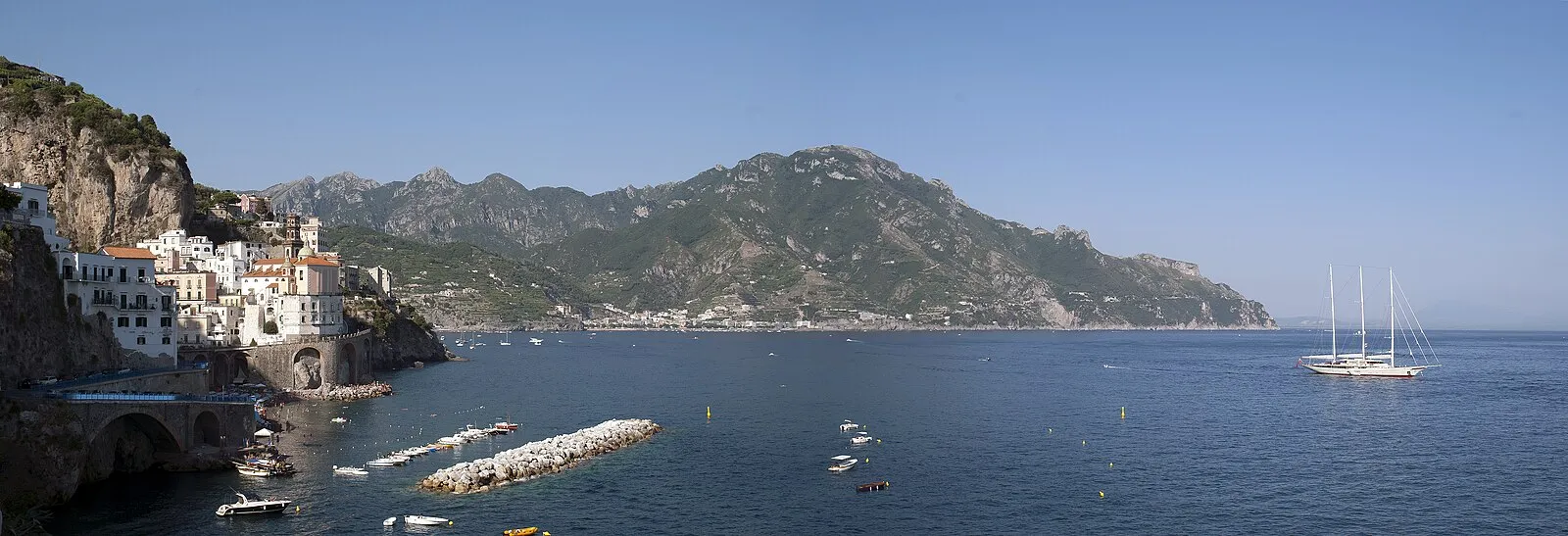
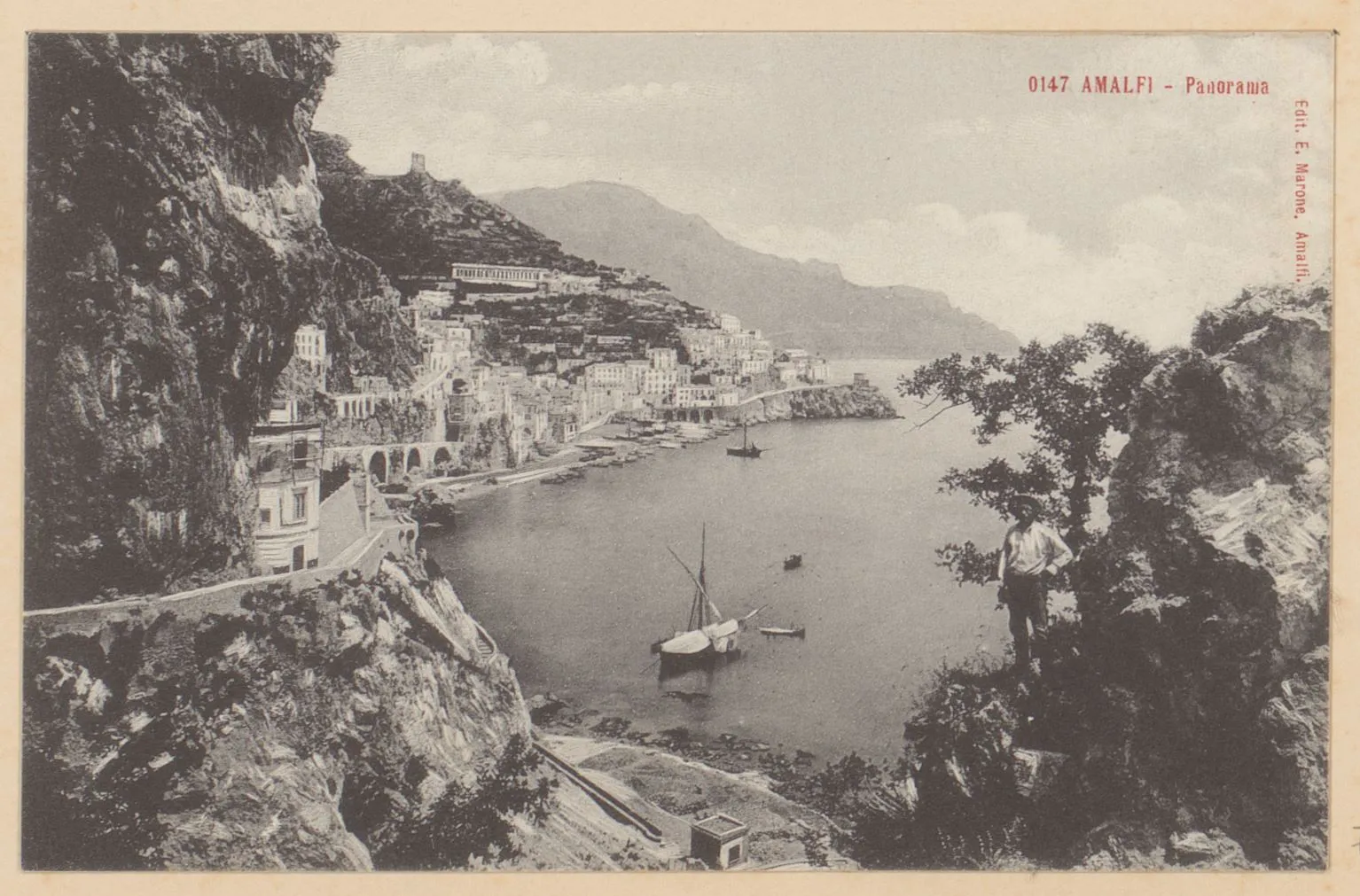
I stood on deck watching our ship anchor in the Gulf of Salerno, thinking about how Amalfi once commanded these same waters — the greatest naval fleet in all the Mediterranean during the 11th and 12th centuries. We tender ashore now to what was once a maritime republic so powerful, so innovative, that some accounts credit it with inventing the magnetic compass itself. Hard to believe, looking at this jewel-box village tucked into its cliff, that it once rivaled Venice and Genoa for Mediterranean dominance. The morning sun caught the terraced lemon groves, turning them gold against the green mountainside.
The tender ride felt like crossing centuries. By the time we reached Amalfi's harbor, the modern world had fallen away, replaced by pastel facades stacked like a child's building blocks against impossible slopes. The air tasted of salt and citrus — that particular Amalfi sweetness you can't quite describe but never forget. I heard the slap of small waves against stone, the distant hum of Vespa motors winding up the coastal road, and church bells marking the hour somewhere above.

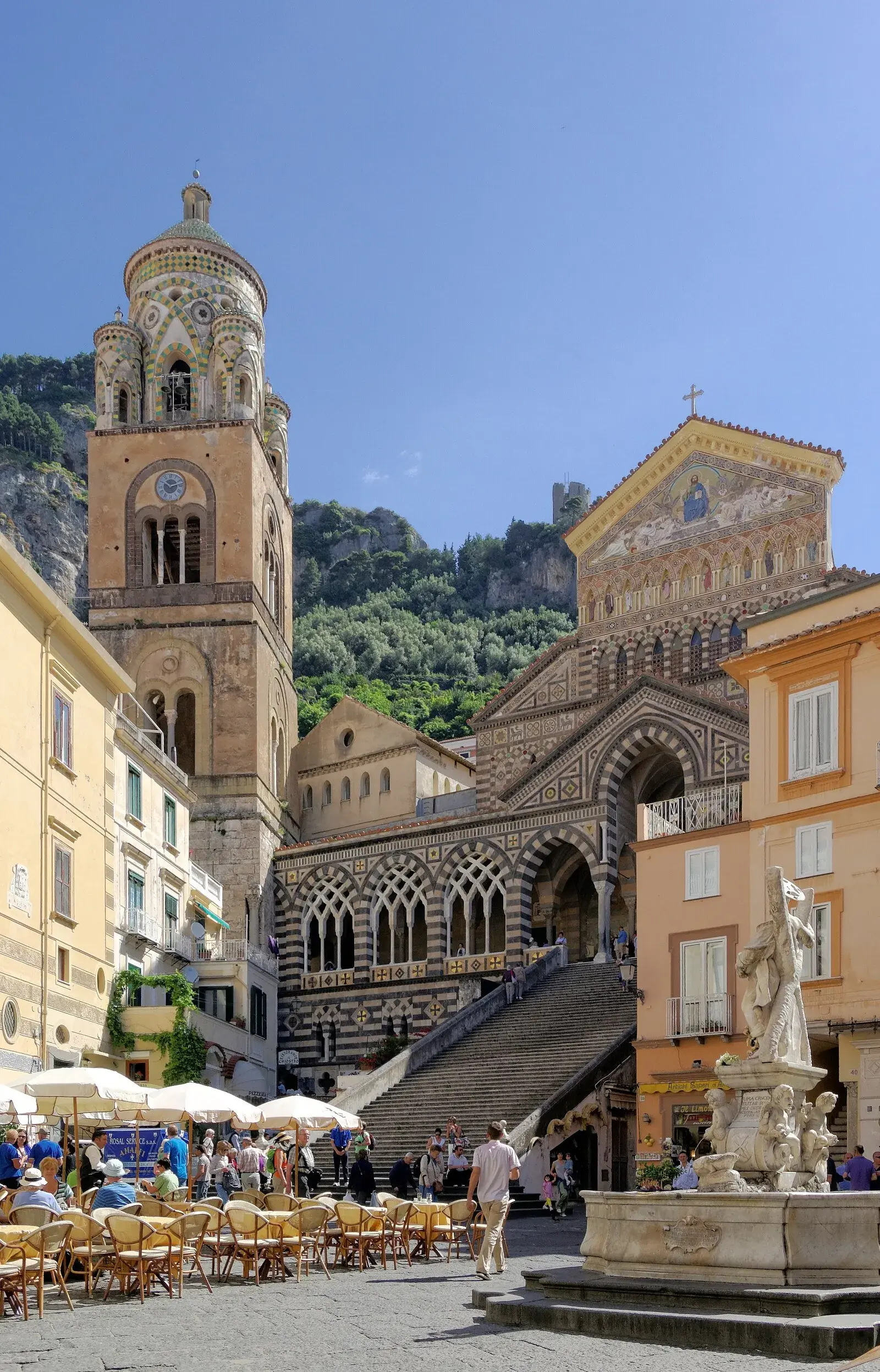
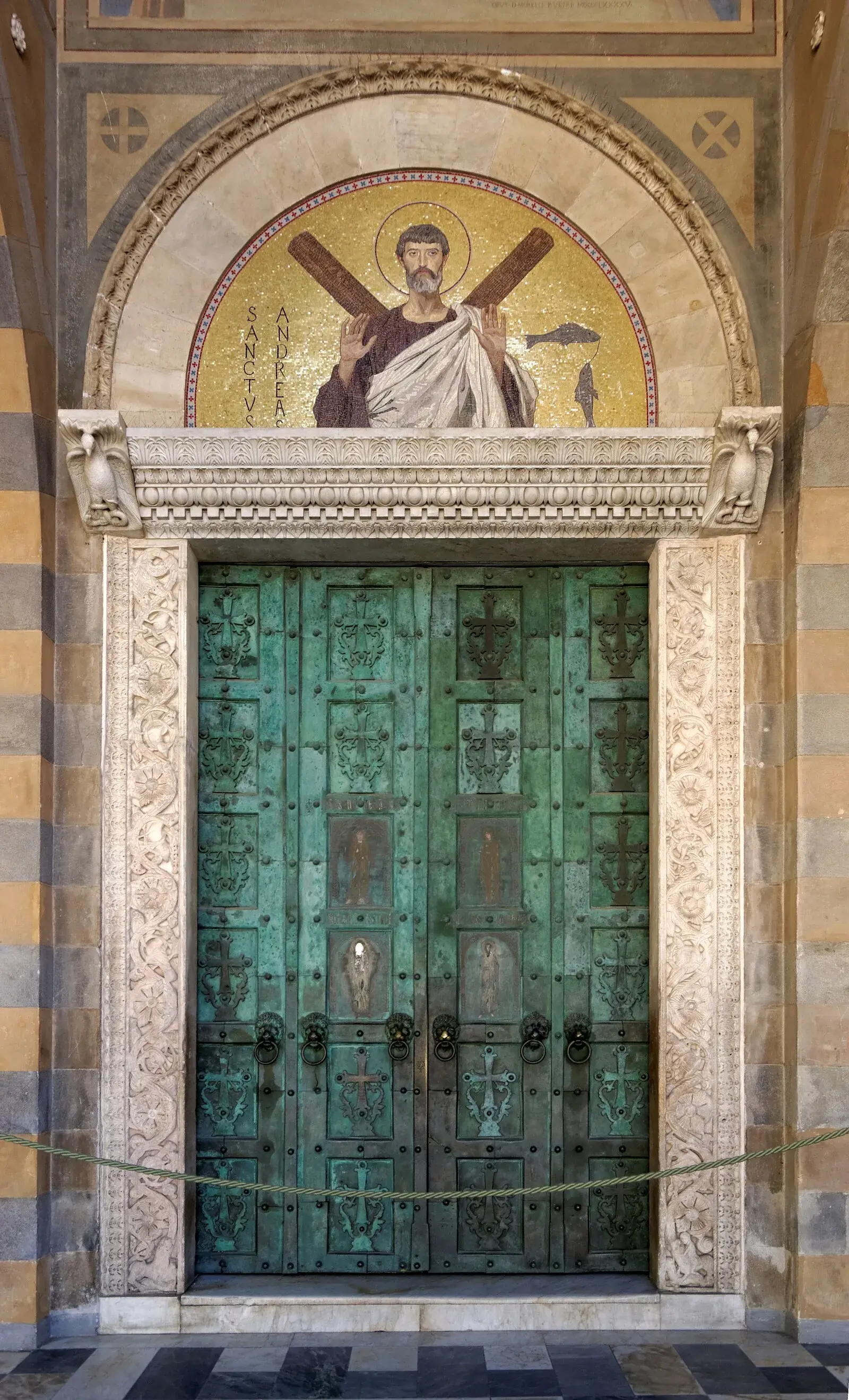
I climbed the broad steps to the Duomo di Sant'Andrea ($3 EUR entry), and the cathedral stopped me cold. This isn't some quaint village church — this is a 9th-century monument to power and faith, dressed in an Arab-Norman facade that glitters in the Mediterranean sun. The striped arches whisper of Amalfi's trading networks that once stretched from North Africa to Constantinople. Inside, the bronze doors actually came from Constantinople itself — imagine the journey they made, by ship, across the sea, carried as treasure to this cliffside cathedral. I ran my fingers along cool stone worn smooth by centuries of pilgrims.
But the true sanctuary, the place that quieted my restless mind, was the Cloister of Paradise — Chiostro del Paradiso ($3 EUR entry included with cathedral). It lives up to its name. Arab-influenced arches frame a garden courtyard where light falls in patterns that shift through the day like prayers. I sat on a stone bench among ancient columns and palm fronds, listening to fountain water and footsteps echo softly on marble. The scent of jasmine drifted on warm air. I understood why medieval monks chose this particular word: Paradise. It feels removed from time, a pocket of stillness carved from stone and shade.
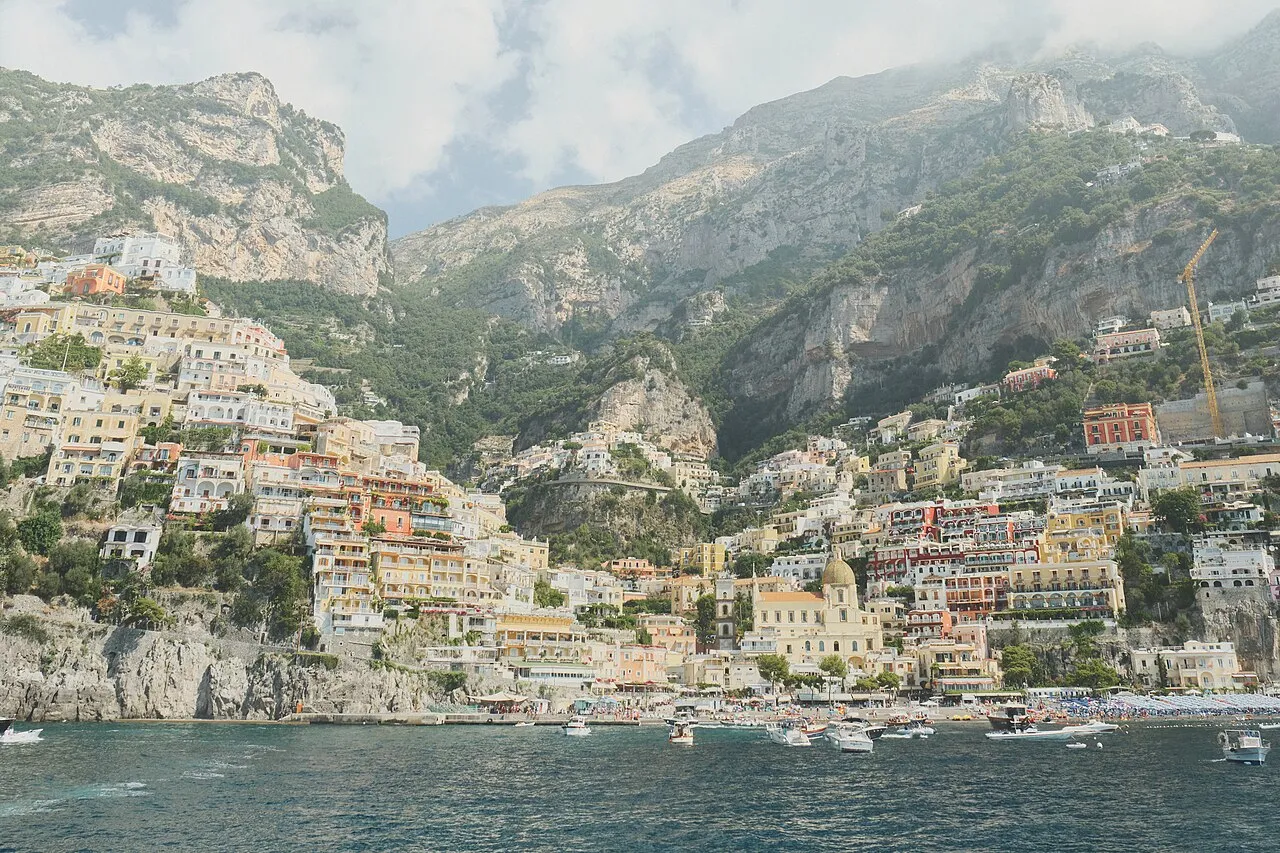
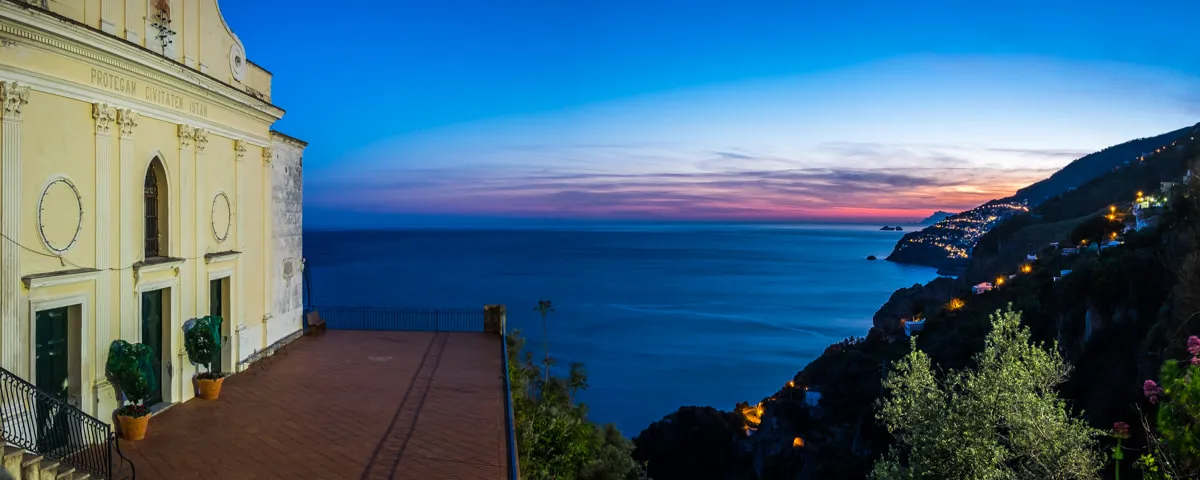
We took the coastal ferry from Amalfi to Positano ($8 EUR one-way) — my favorite way to travel this coast. From the sea, you understand why everyone falls in love with this place: vertical villages clinging to cliffs, bougainvillea cascading in riots of magenta and white, fishing boats bobbing in turquoise coves that seem painted rather than real. The salt spray touched my face as the ferry rounded headlands, revealing view after impossible view. I've seen photographs of this coast all my life, but nothing prepared me for the actual scale and drama of it.

In Positano, I had spaghetti alle vongole at a cliffside terrace while sailboats drifted below like white petals on blue silk ($18 EUR for pasta and wine). The pasta was perfect — briny clams, garlic, white wine, finished with good olive oil and a handful of parsley. The flavors were clean and bright, the sea breeze warm on my skin. A local cat appeared from nowhere and watched me eat with dignified interest. I fed her a piece of bread dipped in olive oil. We understood each other perfectly.
Amalfi is famous for two things you can take home. The first is limoncello — that sunshine-in-a-bottle liqueur made from the sfusato lemons that grow on these terraces ($12-20 EUR per bottle). Every shop offers tastings, and after a few sips, the whole coast seems even more luminous. I bought two bottles from a family producer where the grandmother still hand-peels lemons the way her grandmother taught her. The second treasure is handmade paper, called bambagina, produced here since the Middle Ages ($15-40 EUR for journals and stationery). I bought a cream-colored journal with deckled edges and resolved to write better things in it.
The cons: the Amalfi Coast is crowded in high season, the roads are terrifying if you're not used to Italian driving, and prices are tourist-inflated throughout. Accessibility is challenging — this is a landscape of stairs, steep paths, and uneven cobblestones. Wheelchairs will find most villages extremely difficult. However, the coastal ferries are accessible, and the main cathedral square in Amalfi is relatively flat. Plan accordingly if mobility is a concern.
What I Learned: Amalfi taught me that empires pass but beauty endures. The maritime republic that once rivaled Venice is gone, its naval dominance a distant memory. But the lemon terraces still glow gold in morning light. The cathedral still rises above the harbor. The Cloister of Paradise still offers refuge from the noise of the world. Some things outlast their builders. Some beauty transcends the power that created it. I arrived expecting spectacular scenery and found something deeper — a reminder that what we build with love can survive long after our names are forgotten.
Weather & Best Time to Visit
The Cruise Port
Ships anchor in the Gulf of Salerno and tender passengers ashore to the Salerno waterfront. This is a working Italian city with a pleasant historic center — not the dramatic cliff-villages of the famous coast, but a comfortable starting point with good infrastructure.
The tender pier lands you near the Salerno marina. The town center is a pleasant 10-15 minute walk along the seafront promenade. Cafés, shops, and the train/bus station are easily accessible. Most visitors, however, quickly board ferries or buses to reach the famous Amalfi Coast villages.
Accessibility: Salerno's waterfront is relatively flat and accessible. The coastal villages (Amalfi, Positano, Ravello) present significant challenges — steep stairs, uneven cobblestones, and limited accessible facilities. Coastal ferries are wheelchair accessible. If mobility is a concern, discuss options with ship excursion staff before booking.
Getting Around the Coast
The coastal ferry is my favorite way to travel. Travelmar and Alilauro run regular routes connecting Salerno, Amalfi, Positano, and smaller villages ($8-15 EUR depending on distance). You'll see the coast from the sea as sailors have for centuries, and you'll skip the sometimes-harrowing road traffic. Ferries run frequently in good weather; check schedules the night before. Book ahead through your ship excursion desk if you want guaranteed return to ship, or go independent for more flexibility.
SITA buses connect coastal towns along the famous SS163 Amalfi Drive ($2-4 EUR per ride). Yes, the road is narrow and winding, but drivers are professionals and views are miraculous. Buy tickets at tobacco shops (tabacchi) before boarding. Buses fill up in peak season — arrive early.
Private drivers and small-group tours provide commentary and flexibility ($100-200 EUR for half-day). Worth considering if you prefer not to navigate public transport or want guaranteed timing. Ship excursions offer the most structured experience with guaranteed return ($80-150 USD).
The Amalfi Drive: The SS163 is famously winding and dramatic — hairpin turns, narrow passages, sheer drops. If prone to motion sickness, bring Dramamine. Sit on the mountain side of buses if heights bother you. But don't let that deter you: the views are among the most spectacular anywhere.
Port Map
Beaches & Swimming
The Amalfi Coast offers small pebble beaches tucked into coves rather than long sandy stretches. Water is crystal-clear Mediterranean blue and perfect for swimming June through September.
Amalfi Beach: Small pebble beach directly below the town. Beach clubs rent chairs and umbrellas ($15-25 EUR per day). Gets crowded but convenient.
Positano Beaches: Spiaggia Grande is the main beach — larger and more photogenic than Amalfi's. Fornillo Beach is quieter, reached via a cliff path. Both have beach club rentals and restaurants.
Water Temperature: 22-26°C (72-79°F) in summer. Comfortable for swimming without wetsuits.
Excursions & Activities
Amalfi Town Walking Tour ($3-10 EUR entries, 2-3 Hours)
Explore the former maritime republic on foot. The Duomo di Sant'Andrea ($3 EUR) features 9th-century foundations, Byzantine bronze doors from Constantinople, and the atmospheric Cloister of Paradise (included in entry). Wander narrow lanes lined with ceramic shops and limoncello tastings. The Paper Museum ($4 EUR) showcases traditional bambagina papermaking. Fully accessible in the main square; steep stairs elsewhere. No advance booking needed.
Positano Ferry and Exploration ($8-15 EUR ferry, 3-4 Hours)
Take the coastal ferry from Amalfi to Positano for the iconic Amalfi Coast experience. Wander the vertical village's boutique-lined stairs, lunch at a cliffside restaurant, and swim from pebble beaches. Ferries run regularly; purchase tickets at the dock. Going independent offers maximum flexibility. Ship excursions guarantee return timing if concerned about schedules.
Ravello and Villa Cimbrone ($7-10 EUR entries, 3-4 Hours)
Bus up the mountain to Ravello, the "city of music" perched 350 meters above the sea. Villa Cimbrone ($7 EUR) features the famous Terrace of Infinity — one of the most photographed viewpoints in Italy. Villa Rufolo ($7 EUR) inspired Wagner's Parsifal gardens. Book ahead through ship excursion desk or take the local SITA bus from Amalfi ($2 EUR). Gardens are partially wheelchair accessible; paths are gravel.
Path of the Gods Hike (Free, 4-5 Hours)
The Sentiero degli Dei links Bomerano to Nocelle via a high mountain trail with views that justify its mythological name. Challenging but not technical — proper walking shoes essential. The path descends to Positano via 1,700 steps. Book ahead through guided hiking tours ($50-80 EUR) for safety and logistics, or go independent with careful planning. Not wheelchair accessible.
Emerald Grotto ($5 EUR entry, 1-2 Hours)
The Grotta dello Smeraldo near Conca dei Marini features sunlight filtering through an underwater opening, turning seawater an otherworldly jade-green. Descend by elevator or stairs carved into the cliff, then take a rowboat through glowing chambers where stalactites and stalagmites frame the luminous water. Strange and beautiful in ways difficult to photograph but impossible to forget. Access via boat tour from Amalfi ($15 EUR round trip including grotto entry) or bus to the cliff elevator. Purchase tickets at the grotto entrance — no advance booking needed. Partially wheelchair accessible via the elevator descent.
Limoncello Tasting and Farm Tours ($10-25 EUR, 1-2 Hours)
Several family-run lemon farms offer tours and tastings. Learn how sfusato lemons grow on steep terraces, watch the hand-peeling process, and sample limoncello, limoncino cream, and lemon candies. Most farms include small purchases with tasting fees. Book ahead through local operators or walk in to shops offering tours. A sweet, fragrant way to spend an hour between villages.
Food & Dining
Amalfi Coast cuisine features Mediterranean seafood, local lemons, and simple preparations that let quality ingredients shine.
Spaghetti alle Vongole ($14-20 EUR) — pasta with clams, garlic, white wine, and parsley. The coastal specialty, perfect at any cliffside terrace.
Limoncello ($12-20 EUR per bottle) — the sunshine liqueur made from sfusato lemons. Tastings available everywhere. Buy from family producers for quality.
Sfogliatella ($3-5 EUR) — layered pastry filled with ricotta. Naples invented it; the coast perfected it.
Da Gemma in Amalfi (mains $18-35 EUR) offers upscale local cuisine. Chez Black in Positano ($15-40 EUR) is famous for seafood with beach views. Budget travelers find excellent pizza slices ($3-5 EUR) throughout both towns.
Local Notices
Crowds: Peak season (June-August) brings heavy tourist traffic. Visit major sites early morning or late afternoon. The transitional months (April-May, September-October) offer better balance of weather and crowds.
Currency: Euro (EUR). Cards accepted most places; cash helpful for small purchases, bus tickets, and market vendors.
Dress Code: Cover shoulders and knees for cathedral entry. Comfortable walking shoes essential — this is a landscape of stairs and cobblestones.
Ferries: Weather-dependent. Rough seas can cancel service. Have backup plans and leave buffer time before ship departure.
Depth Soundings Ashore
The fundamental Amalfi Coast decision is how many villages to attempt. My recommendation: pick one or two and savor them rather than racing along the coast ticking boxes. Amalfi itself plus either Positano or Ravello makes a satisfying day. Trying to see everything guarantees you'll appreciate nothing.
The coastal ferry is more romantic than the bus and avoids motion sickness from the winding road. But the road offers its own drama — those hairpin turns with buses passing inches apart are part of the Amalfi legend. Both methods have merit; ferry is easier for first-timers.
For ship excursions versus independent travel: ship excursions provide guaranteed return and organized logistics at premium prices. Going independent via ferry and bus saves money and offers flexibility but requires comfort with Italian public transport. Book ahead through your ship excursion desk if timing certainty matters more than cost savings.
The honest assessment: the Amalfi Coast is crowded, expensive, and challenging for mobility-limited visitors. But it's earned its reputation. The beauty is genuine, the food excellent, the sense of place profound. Come with realistic expectations and leave with memories that improve with age.
Practical Information
- Country
- Italy
- Currency
- Euro (EUR)
- Language
- Italian; English in tourist areas
- Port Type
- Tender (anchor in Gulf of Salerno)
- Walk to Town
- 10-15 min to Salerno center
- Ferry to Amalfi
- ~50 min, $8-12 EUR
- Best For
- Coastal scenery, Italian cuisine, photography
- Accessibility
- Challenging — steep stairs, cobblestones throughout
- Water Temperature
- 22-26°C (June-September)
Photo Gallery



Frequently Asked Questions
Q: Is the Amalfi Coast worth a port stop?
A: Absolutely. This is one of the most beautiful coastlines in the world — villages clinging to cliffs, lemon terraces glowing gold, water impossibly blue. The medieval maritime republic legacy adds depth to the beauty. A genuinely memorable port day.
Q: What's the best way to see the coast in one day?
A: Take the ferry from Salerno to Amalfi (about 50 minutes), explore the cathedral and Cloister of Paradise, then ferry onward to Positano for lunch and shopping. If you have time and energy, catch a bus up to Ravello for Villa Cimbrone's views. Ferry plus bus combo gives flexibility and views from both sea and land.
Q: Should I book through the ship or go independent?
A: Both work well. Ship excursions guarantee return timing and provide organized transport — worth considering if you're anxious about logistics. Going independent via ferry and bus offers flexibility and often lower cost. Book ahead through ship excursion desk if certainty matters most.
Q: Is the coastal drive really that scary?
A: The SS163 is narrow, winding, and carved into sheer cliffs. Buses pass with inches to spare. If nervous about heights, sit on the mountain side and take Dramamine. But honestly? The views are so stunning most people forget to be scared.
Q: What about accessibility?
A: The coast is challenging for mobility-limited visitors. Villages are built on steep hillsides with extensive stairs and uneven cobblestones. Wheelchairs will find most areas extremely difficult. Coastal ferries are accessible. If mobility is a concern, discuss options with ship staff — some tours focus on accessible viewpoints rather than village exploration.
Q: What should I bring home?
A: Limoncello ($12-20 EUR) from family producers, hand-painted Vietri ceramics ($15-50 EUR), and bambagina paper products ($15-40 EUR) — traditional crafts made here for centuries. You're bringing home living artisanal traditions.
Q: When is the best time to visit the Amalfi Coast?
A: The Tips block above flags April-May and September-October as the most comfortable months — warm enough for cliff-village exploration without the July-August heat and crowd peaks. Summer (Jun-Aug) is busiest and hottest; the SS163 buses become standing-room-only and ferry lines lengthen. Winter (Nov-Mar) sees many businesses close along the coast and ferry frequency drops. The live weather widget in the seasonal panel above is the primary source for short-term conditions on a specific sailing date.
Q: When is hurricane and storm season on the Amalfi Coast?
A: The Amalfi Coast sits at ~40°N on the Tyrrhenian Sea — outside the tropical-cyclone tracks. The relevant heavy-weather pattern is Mediterranean autumn storms (Sep-Nov) which can drop heavy bursts of rain along the Sorrento Peninsula, occasionally causing landslides on the cliff roads. Winter (Dec-Feb) brings more reliable rain and rougher seas that can suspend ferry service. Summer is generally dry and calm. The live weather widget in the seasonal panel above is the primary source for current conditions on a specific sailing date.
Q: What should I pack for an Amalfi Coast port day?
A: Comfortable walking shoes with good grip — the villages climb sharply from the water and the cobblestones are uneven. Light layers for shoulder-season swings; summer (Jun-Aug) is hot and dry so light cotton plus a hat works. A light rain jacket for autumn ferry crossings. Modest dress (shoulders and knees covered) for cathedral visits in Amalfi and Ravello. The Packing Tips section above lists more general items.
Q: Will rain ruin my Amalfi Coast port day?
A: Light rain doesn't ruin much — the cathedrals at Amalfi and Ravello, the Cloister of Paradise, the limoncello-tasting cellars, and the ceramic ateliers at Vietri all keep you dry. Heavy rain is a different story: the SS163 cliff road becomes dangerous after sustained rainfall (landslide risk), ferry service can suspend on rough sea days, and the open-air village walks lose much of their charm. If a system rolls through, the ferry to Salerno's larger covered downtown is often the safer fallback. The live weather widget in the seasonal panel above is the primary source for short-term forecasts on a specific sailing date.
Last reviewed: February 2026