


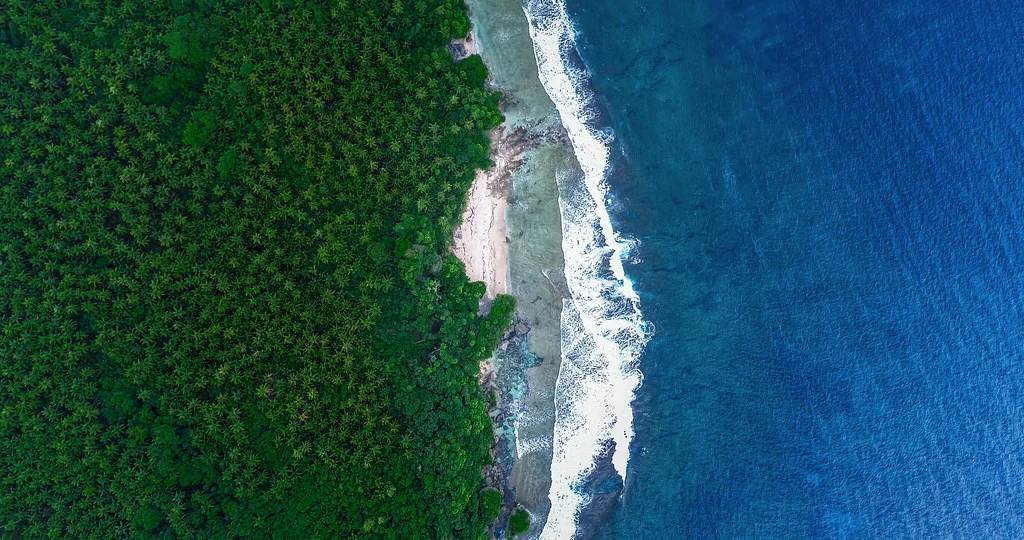
Photo: Wikimedia Commons
My Logbook: Where America's Day Begins
I stepped off the gangway at Apra Harbor just as the morning sun cleared the ridge above the naval station, and the humid air hit me like a warm towel pressed against my face. The smell of frangipani mixed with diesel exhaust from the container yard, and I could hear the low hum of a forklift somewhere beyond the terminal fence. We had arrived at Guam — the westernmost point of US soil in the Pacific — and my wife and I had exactly nine hours to see what this island had been keeping from us for years of planning itineraries that always seemed to route somewhere else.
Our taxi driver, a soft-spoken Chamorro man named Frank, took us north along Marine Corps Drive, past strip malls and fast-food joints that could have been anywhere in small-town America. But then the road turned and the jungle closed in, thick green walls of tangled vines and breadfruit trees pressing against the roadside, and suddenly we were somewhere else entirely. Frank pointed to a low stone wall half-hidden in the undergrowth. "Latte stones," he said quietly. "From the old ones. A thousand years, maybe more." I craned my neck to see the ancient coral pillars, mushroom-shaped and weathered smooth, standing in a silent row like sentinels guarding a memory no one alive could fully understand. The air smelled of wet earth and plumeria, and something about those stones — their permanence, their patience — settled in my chest like a held breath.
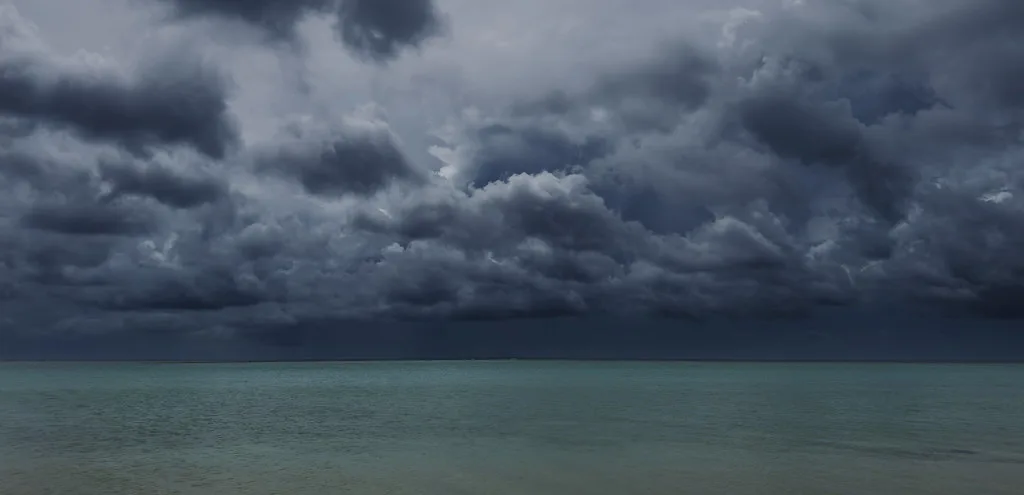
Our first real stop was the War in the Pacific National Historical Park at Asan Beach, and I was not prepared for what it did to me. The drive from the port took only fifteen minutes, but the transition felt like crossing into a different century. The turquoise lagoon looked deceptively peaceful, sunlight dancing on ripples that hid nothing of the coral reef below. However, the moment I walked past the first Japanese coastal defense gun — still aimed seaward, its barrel corroded green and pocked with rust — the beauty of the place took on a weight I had not expected. I stood in the shade of a palm tree beside a weathered concrete pillbox, reading the brass plaque listing the names of Marines who had fought and died on this beach in July 1944. The sound of waves breaking on the reef was the only noise. My heart swelled with something I could not name — gratitude, perhaps, or grief for young men who never got to grow old in the country they defended. I whispered a quiet prayer for them and for the Chamorro families who endured three years of occupation before the liberation came.
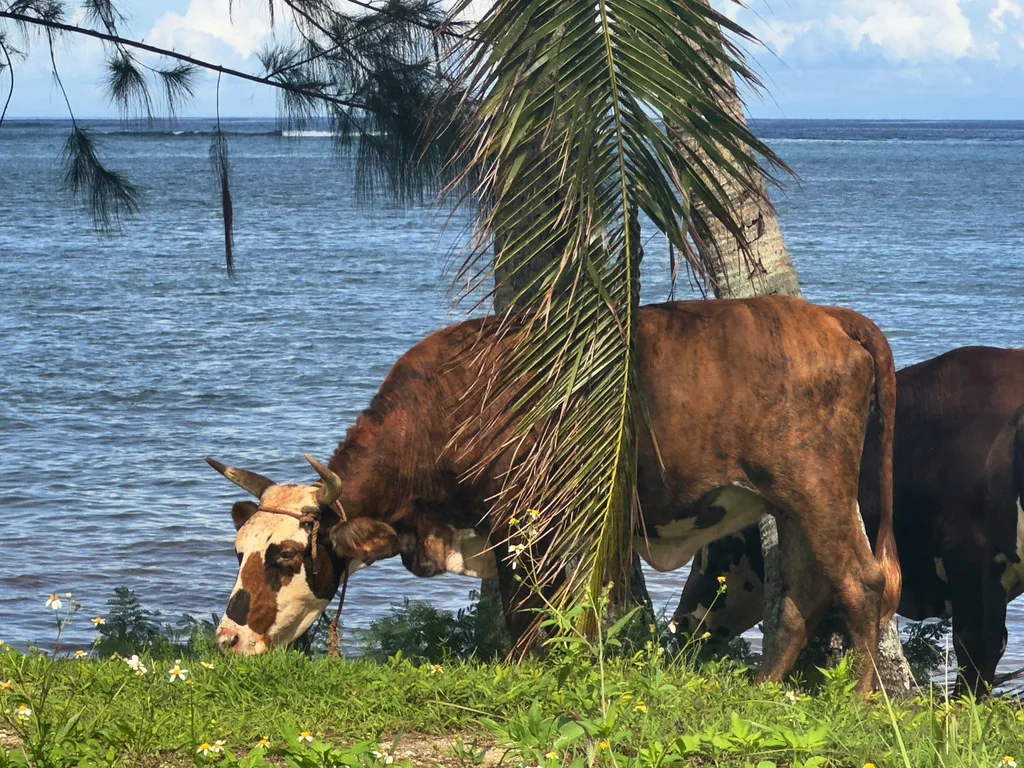
We drove north to Two Lovers Point through lush green hills blanketed in tropical jungle, the road winding past small villages and the occasional roadside barbecue stand selling chicken and red rice for $5 a plate. The legend of Puntan Dos Amantes says two ancient Chamorro lovers leapt from the 400-foot cliff rather than be separated by their feuding families. Standing at the viewpoint, looking down at the reef-laced water so far below, I felt the vertigo in my stomach and the wind tugging at my hat. The silence up there was enormous. Despite the small crowd of tourists ringing the brass bell for good luck — the admission fee is $3 per person — my wife and I found a quiet spot at the railing and just watched the ocean stretch toward the Philippines without saying anything for several minutes. Sometimes the most important conversations happen without words.
Back in the taxi, Frank took us to Tumon Bay for lunch. The contrast was jarring — from silent cliff and solemn war memorial to a strip of luxury hotels and duty-free shops bustling with visitors from Japan and Korea. We ate at a beachside restaurant where I ordered kelaguen, a Chamorro dish of chopped grilled chicken tossed with lemon juice, coconut, and hot pepper, served over red rice. The bill came to $18 for two plates. I ate slowly, tasting the citrus and smoke, watching the turquoise water lap against the white sand barely twenty feet from our table. A pair of snorkelers floated over the reef, their bright masks bobbing like buoys. The water was so clear I could see the coral heads from where I sat.
It was at the T. Stell Newman Visitor Center that something shifted inside me. The small museum at the edge of the park displayed photographs from the occupation years — Chamorro villagers forced into labor camps, families separated, a culture suppressed under military authority. One photograph showed a group of women standing outside a tin-roofed hut, their faces drawn and exhausted but defiant. A handwritten caption explained they had hidden supplies and intelligence for the resistance at enormous personal risk. I felt my eyes fill with tears standing in that quiet room. These were not soldiers or politicians. They were mothers and daughters who chose courage when it would have been safer to look away. The lesson did not need a plaque or a speech. It was written in those faces, and I carry it with me still.
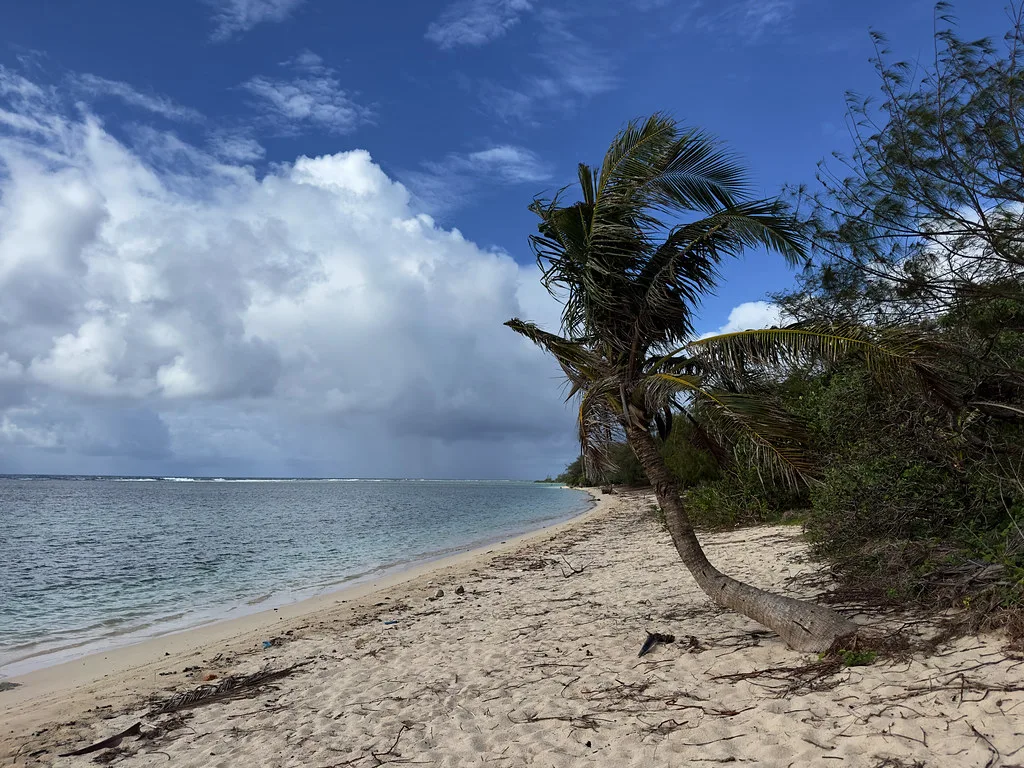
On the ride back to the ship, Frank took a detour through Hagatna to show us the Dulce Nombre de Maria Cathedral-Basilica, a white Spanish colonial church rebuilt after the war. We did not go inside — time was short — but I stood on the sidewalk looking up at its bell tower while the late afternoon light turned the stucco the color of warm honey. Frank told me the original church had been built in 1669 by the first Spanish missionaries. Three and a half centuries of typhoons, wars, and earthquakes, and still it stood. Still the bells rang on Sunday mornings. I thanked Frank, shook his hand, and told him his island had taught me something I had not expected to learn. He smiled and said, "Guam does that to people." I believed him. As the ship pulled away from Apra Harbor that evening, I stood at the rail watching the green ridgeline shrink into the western horizon, and I understood why the Chamorro call this place "Guahan" — "we have." Not in the sense of possessing, but in the sense of holding close what matters. That is what Guam taught me — to hold close what matters, and to remember those who held it close before me.
Weather & Best Time to Visit
The Cruise Port
Cruise ships dock at Apra Harbor on Guam's western coast, a deep-water commercial port shared with the US Naval Base. The terminal area is basic — a covered walkway with security screening and restrooms, but no shops, restaurants, or currency exchange inside the facility. Taxis queue just outside the port gate with government-regulated fixed rates: $25-30 to Tumon Bay, $15-20 to Hagatna, and $35-40 for a round-trip to Two Lovers Point. The port surface is flat and paved, making it wheelchair accessible at ground level, though the distance from the ship to the gate can be several hundred meters depending on the berth. Shuttle buses are sometimes provided by the ship or port authority on busy days. The terminal is roughly twenty minutes by car from Tumon Bay's resort district, which is the primary destination for most cruise visitors. Unlike many Pacific ports, Guam uses US dollars and accepts US credit cards everywhere, so there is no need to exchange currency — a genuine convenience for American travelers.
Getting Around
Guam is a car-dependent island, and the main sights are spread across a 30-mile stretch from Apra Harbor in the southwest to Ritidian Point in the north. Taxis are the most reliable option from the port. Fixed government rates eliminate haggling — confirm the fare before boarding. Uber operates on Guam and often offers lower fares than traditional taxis. A full-day taxi charter costs roughly $150-200 and covers all the main attractions. Rental cars are available from agencies in Tumon Bay ($40-60 per day) and are the most flexible option if your ship spends a full day in port, though driving is on the right side (US-style) and roads can be congested around Tumon during midday.
Public transit exists through the Guam Regional Transit Authority, but buses run infrequently and routes do not connect well to the cruise port or key tourist sites, making them impractical for visitors on a time-limited port day. Walking is feasible within Tumon Bay's hotel strip and along Hagatna's compact historic center, but attempting to walk between major destinations is not realistic due to distances, narrow shoulders on main roads, and the tropical heat. Wheelchair users and those with limited mobility should plan on vehicle transport for all inter-site travel. Tumon Bay's main strip has paved sidewalks and accessible entrances at most hotels, shops, and restaurants. The WWII memorial sites at Asan Beach have paved pathways through the main areas, making them accessible for moderate-energy visitors, though some overlook and hillside monuments involve uneven ground or steps.
Excursions & Activities
War in the Pacific National Historical Park
The most significant historical site on the island, this National Park Service property encompasses seven separate units scattered across Guam, preserving WWII battlefields, Japanese gun emplacements, and memorials to both American and Chamorro sacrifice. The Asan Beach Unit — where US forces landed on July 21, 1944 — is the most visited and sits about fifteen minutes from the port. Admission is free. The T. Stell Newman Visitor Center offers exhibits, a short film, and ranger talks. Allow 2-3 hours for a thorough visit. This is a low-energy excursion with paved paths through the main areas. You can visit independently by taxi ($15 each way) or through a ship excursion that typically combines the park with other island highlights for $60-90.
Two Lovers Point (Puntan Dos Amantes)
A dramatic clifftop overlook rising 400 feet above the Philippine Sea, Two Lovers Point offers sweeping panoramic views and tells the legend of two Chamorro lovers who leapt rather than be separated. The small park includes a viewing platform, photo stations, a brass wishing bell, and a gift shop. Admission costs $3 per person. A taxi from port runs about $30-35 round trip. Allow 45 minutes to an hour. The viewpoint is accessible via paved walkways. You can visit independently or book ahead through a ship excursion that packages it with Tumon Bay for around $50-70.
Tumon Bay Beach & Snorkeling
Guam's primary resort beach offers crystal-clear water, a protected marine preserve with colorful coral and tropical fish, and a long stretch of white sand backed by hotels and shops. Snorkel gear rental costs about $10-15 from beachside vendors. The Tumon Bay Marine Preserve is shallow enough for beginners and teeming with parrotfish, butterflyfish, and sea turtles. Duty-free shopping at the DFS Galleria and Tumon Sands Plaza is a short walk from the beach. Budget 2-4 hours. A taxi from port costs $25-30. No need to book ahead — the beach is public and free. A guaranteed return to the ship is easy to arrange since taxis are plentiful in Tumon.
Chamorro Village & Cultural Experience
Located in Hagatna, the Chamorro Village is a complex of local shops, craft stalls, and food vendors celebrating indigenous culture. If your ship is in port on a Wednesday evening, the weekly Night Market is the single finest cultural experience on the island — live music, traditional dance performances, and dozens of food stalls serving kelaguen, red rice, kadon pika, and coconut candy. Admission is free. On non-Wednesday days, the village is quieter but still worth a stop for handmade crafts and local snacks ($2-5 per item). A taxi from the port costs $15-20. Allow 1-2 hours.
Latte Stone Park & Hagatna Walking Tour
The compact capital of Hagatna is walkable in a morning. Latte Stone Park preserves eight ancient Chamorro pillars relocated from southern Guam, and nearby Plaza de España contains ruins of the Spanish Governor's Palace dating to the 1700s. The Dulce Nombre de Maria Cathedral-Basilica, rebuilt after WWII, anchors the town's skyline. All three sites are free to visit and within walking distance of each other. A taxi from port costs about $15. Allow 1.5-2 hours. This is a low-energy, self-guided walk that works well independently for travelers who prefer history and culture over beaches.
Scuba Diving & Reef Exploration
Guam's warm Pacific waters (28-30°C year-round) and exceptional visibility make it a standout diving destination. Sites include the Blue Hole near Piti, the sunken WWII freighter Tokai Maru, and the coral gardens of Fingers Reef. A two-tank guided dive costs $100-150 through local operators. Snorkeling-only trips run $30-50. Book ahead through a local operator or ship excursion — dive boats fill quickly on port days. Ship excursions for diving typically cost $120-180 and include a guaranteed return to the vessel, which matters given dive sites can be 30-45 minutes from the port.
Depth Soundings
Guam uses the US dollar — no currency exchange needed. ATMs are widely available in Tumon Bay and Hagatna. Credit cards are accepted at nearly all restaurants, shops, and hotels. Small cash amounts ($1-5) are useful for roadside barbecue stands, market vendors, and the Chamorro Village food stalls. Tipping follows standard US customs: 15-20% at restaurants, $1-2 per drink at bars, and rounding up for taxi drivers. Hotel porters expect $1-2 per bag.
Guam's culture blends Chamorro traditions with American, Spanish, and Japanese influences. Respect for elders is deeply valued — greet older residents with "Hafa Adai" (hello) and you will be warmly received. Churches are important community centers; dress modestly when visiting the cathedral or any religious site. The island observes US federal holidays, which can affect business hours. Water is safe to drink from the tap, and food safety standards match the US mainland. Guam is in the Chamorro Standard Time zone (ChST), ten hours ahead of US Eastern time and a full day ahead of the US West Coast — hence the island's motto about being where America's day begins.
Photo Gallery
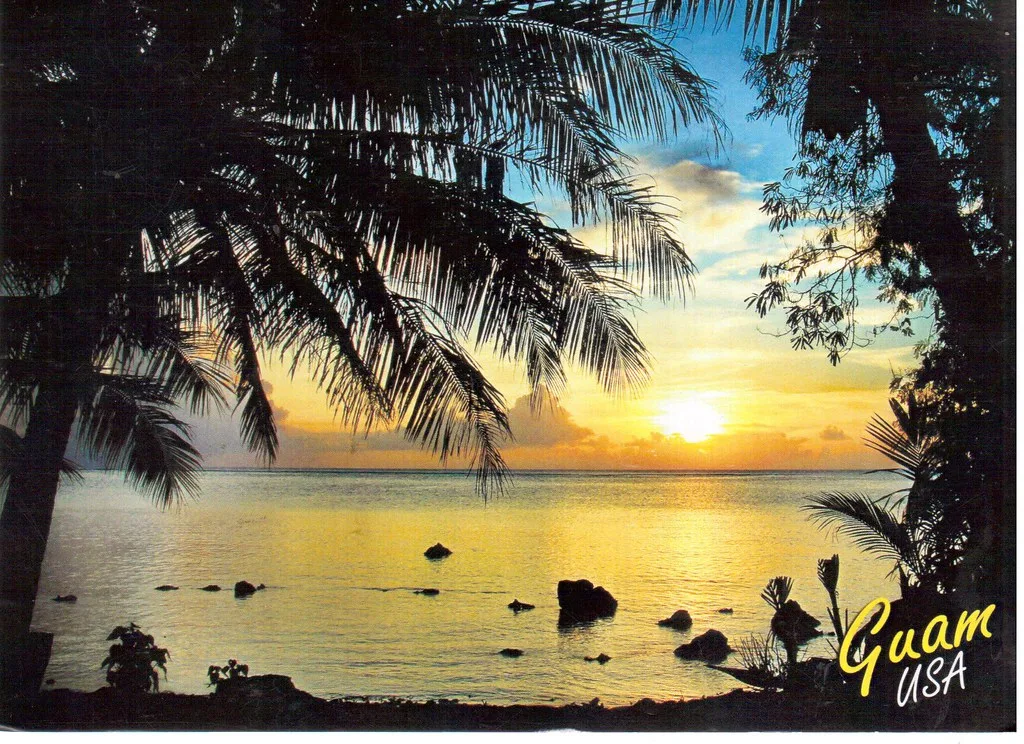
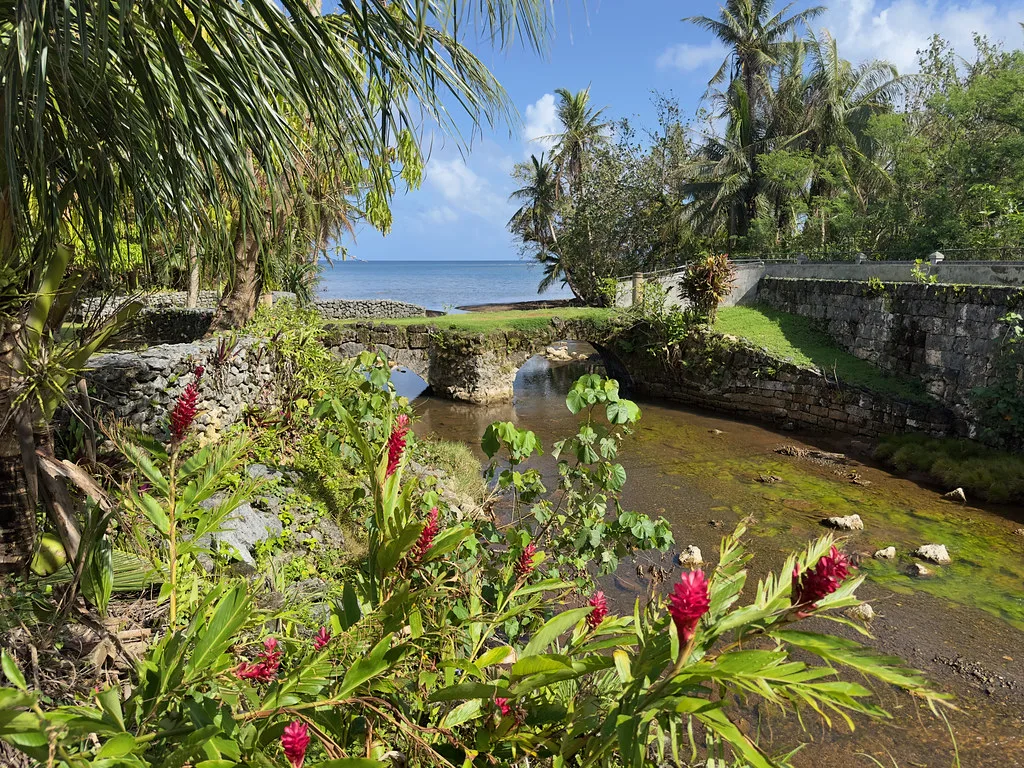
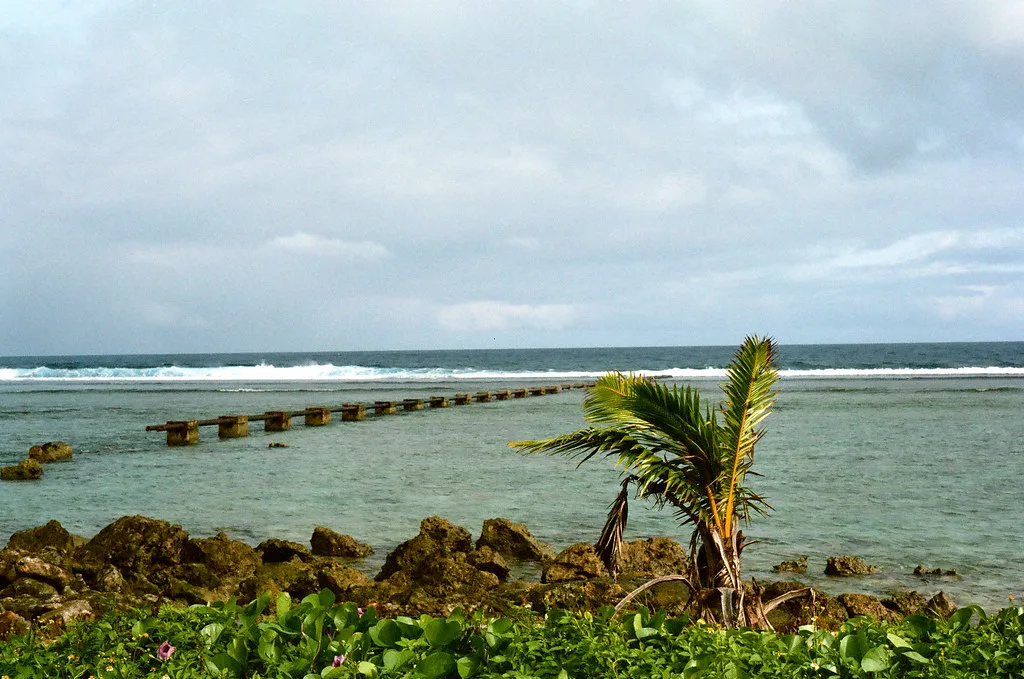


Image Credits
All photographs on this page are used under Creative Commons or free-use licenses. Images sourced from Wikimedia Commons, Unsplash, Pixabay, Pexels, and Flickr.
Frequently Asked Questions
Is Guam a US territory?
Yes. Guam is an organized, unincorporated territory of the United States. US citizens do not need a passport, the currency is US dollars, and English is widely spoken alongside Chamorro. Standard US customs and immigration rules apply for non-US citizens.
Where do cruise ships dock in Guam?
Ships dock at Apra Harbor on the western coast. The terminal is basic with restrooms but limited amenities. Taxis wait outside the gate with fixed rates: $25-30 to Tumon Bay and $15-20 to the capital Hagatna.
What is the best WWII site to visit?
War in the Pacific National Historical Park at Asan Beach is the most accessible and comprehensive site. It is free, fifteen minutes from port, and includes the visitor center with exhibits and a memorial overlooking the 1944 landing beach.
Do I need local currency in Guam?
No currency exchange is needed. Guam uses US dollars and accepts American credit cards everywhere. ATMs are readily available in Tumon Bay and Hagatna. Small cash is handy for market vendors and roadside food stands.
Can I snorkel from the beach?
Absolutely. Tumon Bay Marine Preserve offers excellent shore snorkeling with coral, parrotfish, and sea turtles in shallow, calm water. Gear rental costs $10-15 from beachside vendors. No boat trip is necessary.
What are latte stones?
Latte stones are ancient Chamorro architectural pillars — massive coral or limestone columns topped with hemispherical capstones. Used as building foundations over 1,000 years ago, they are an iconic symbol of Guam's indigenous heritage. See them at Latte Stone Park in Hagatna, free of charge.
Guam — Port Guide
Last reviewed: February 2026