

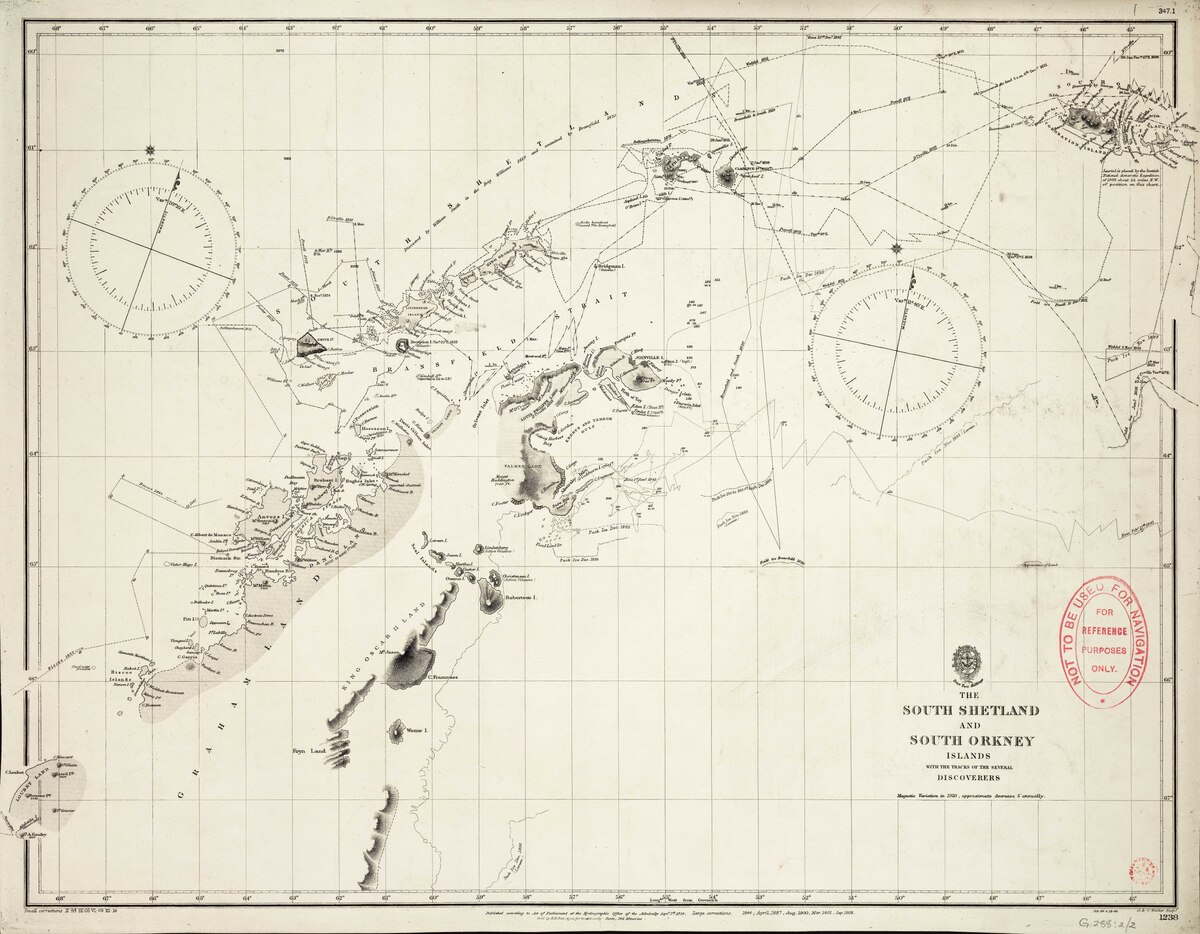
The South Shetland Islands are the gateway to Antarctica — an archipelago of 11 major islands stretching 335 miles between the Drake Passage and the Antarctic Peninsula. These volcanic islands host abundant wildlife, active research stations, and one of Antarctica's most unique experiences: sailing into the flooded caldera of Deception Island.
Captain's Logbook
South Shetland Islands Cruise Guide
From the Logbook
"As we approached Neptune's Bellows — the narrow entrance to Deception Island's caldera — the captain cut engines and the ship went silent. The volcanic cliffs towered on both sides, the passage just wide enough for our hull. Inside, the caldera opened into an otherworldly bay: black sand beaches, rusting whaling tanks, steam rising from the water's edge. Passengers were already stripping to swimsuits, eager to dig trenches in the sand where geothermal heat meets Antarctic cold. You swim in Antarctica at an active volcano. It's as surreal as it sounds."
— Deception Island landing, South Shetland Islands
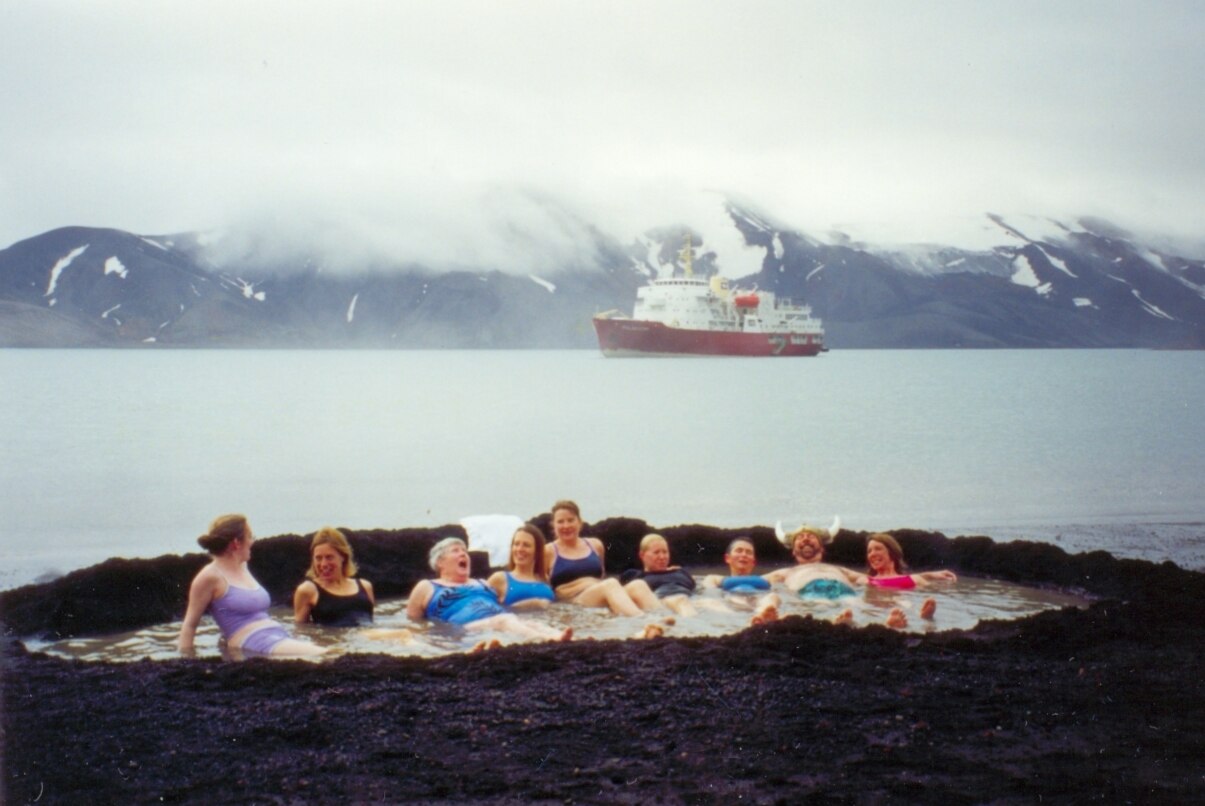
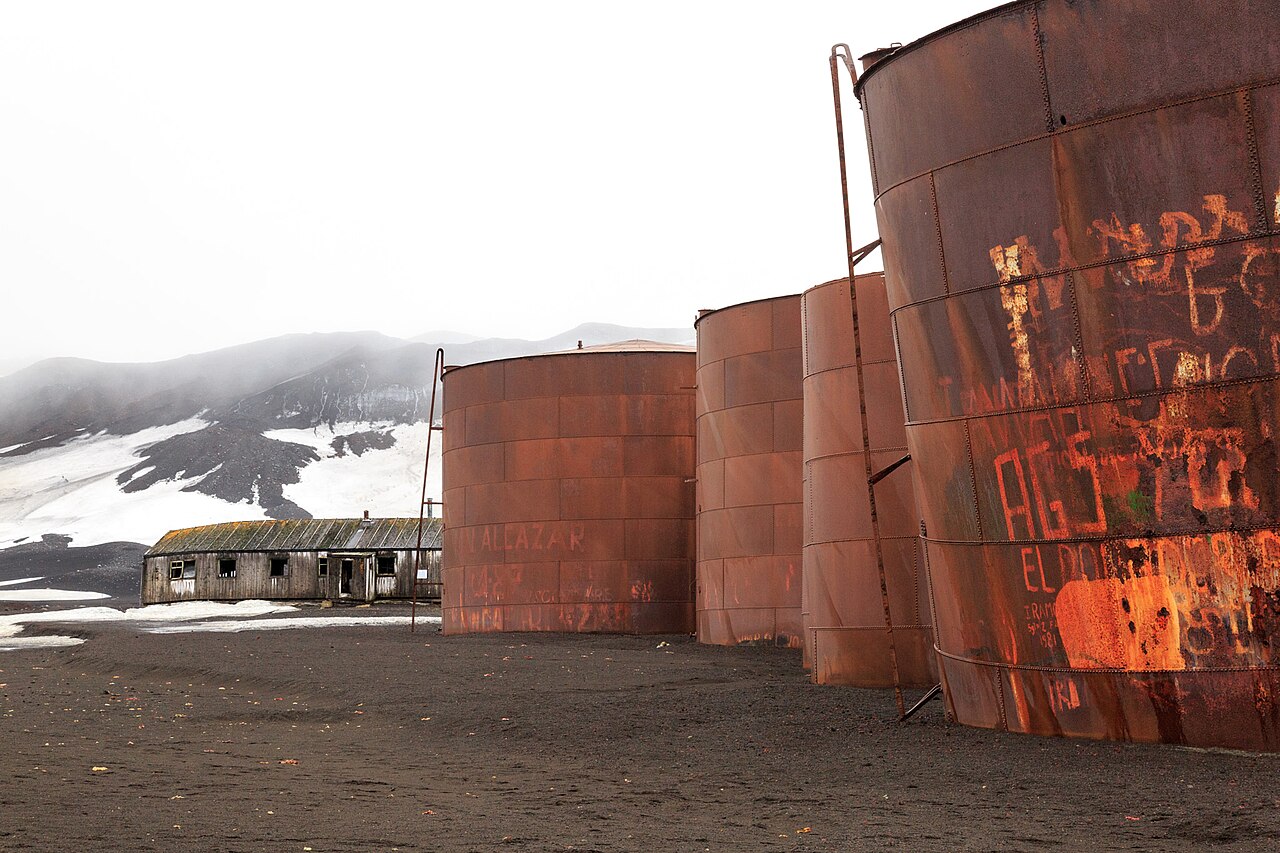
Highlight: Digging a hole in the black volcanic sand at Pendulum Cove and sinking into warm geothermal water while snow-capped peaks encircle the caldera.
I stepped off the Zodiac onto Half Moon Island and my boots sank into wet gravel. The cold hit me first — sharp, clean, unlike any cold I had felt before. It went through my jacket and into my chest. I could smell the penguin colony before I saw it: a pungent, earthy thickness that clung to the air. Then the sound — thousands of chinstrap penguins calling at once, a chorus that echoed off the volcanic ridgeline. I stood still and watched them waddle past me in single file, unafraid, as if I were just another rock on their path. A glacier across the channel calved while I watched — a low crack, then a rumble, then a wall of ice sliding into water the color of cold steel. The splash sent a wave across the bay. I felt the mist on my face from thirty meters away. My hands were shaking — not from cold, but from the scale of it all.
The morning had started aboard the expedition ship at 5:30 AM, when the expedition leader's voice crackled over the PA system announcing that conditions were favorable for a landing at Half Moon Island. I pulled on thermal layers, waterproof pants, a parka rated to minus thirty, neoprene-lined rubber boots borrowed from the ship's gear locker, and a life jacket over all of it. I looked like an overstuffed orange sausage. Everyone did. Nobody cared. We filed down to the mudroom on Deck 3, where the Zodiac drivers — young, salt-weathered guides who seemed entirely unbothered by the two-meter swell — helped us step down into the inflatable boats. The transfer from ship to Zodiac is the moment Antarctica becomes real. You leave the heated corridors and the buffet and the piano bar, and you drop into a rubber boat bobbing on water so cold it would kill you in minutes. The driver guns the outboard and you skim across the surface toward a shoreline that no road connects to, no airport serves, no city has ever touched.
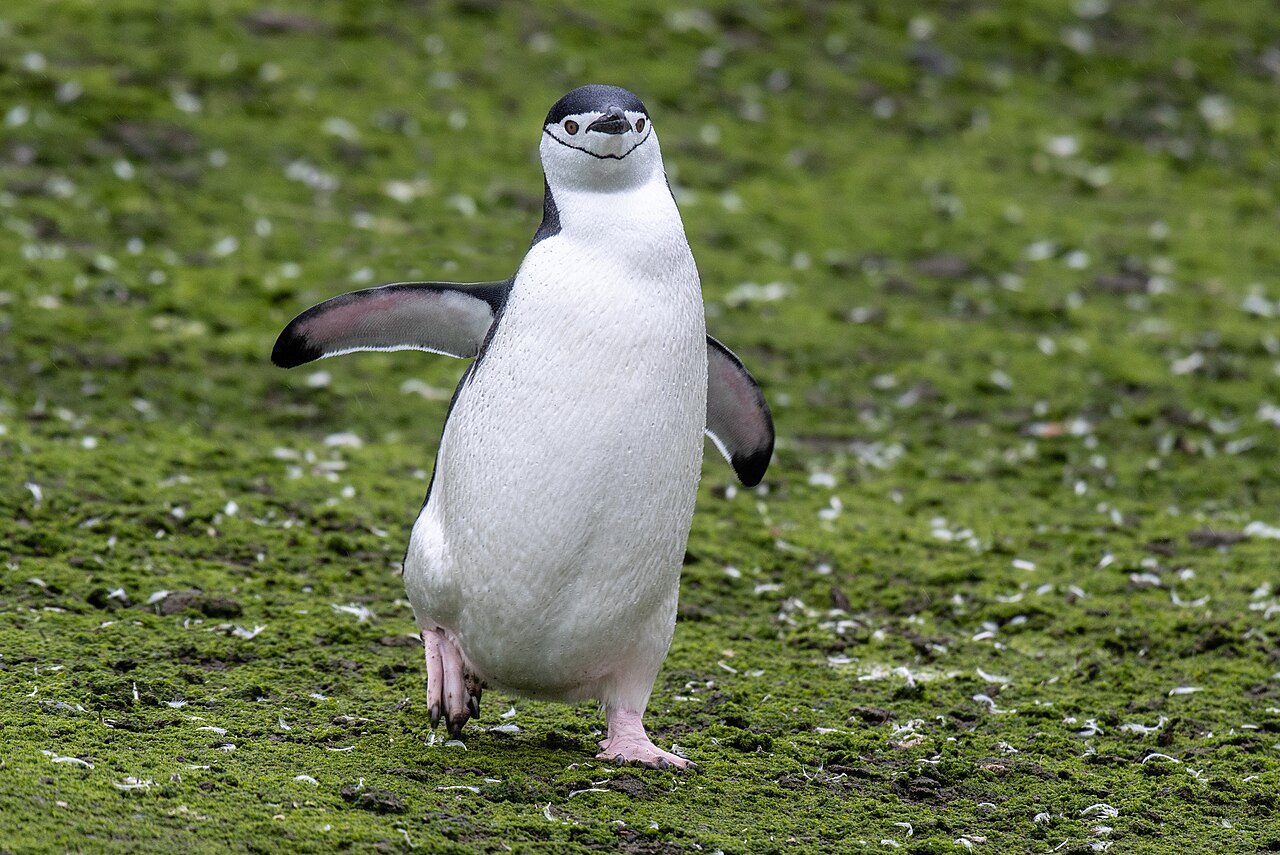
Half Moon Island is a crescent of volcanic rock barely two kilometers long, but it holds one of the South Shetlands' largest chinstrap penguin colonies — roughly 3,300 breeding pairs when we visited. The IAATO guidelines are clear: stay five meters from wildlife, remain on designated paths marked by flag poles, do not touch anything living. But the penguins have not read the guidelines. They walk across the paths, they inspect your boots, they stand at your feet and trumpet skyward as if announcing your arrival to the colony. A chinstrap penguin is a small, fearless creature with a thin black line running beneath its chin like a helmet strap, and it moves through the world with a determination that borders on defiance. I watched a pair take turns incubating an egg on a nest made of small stones, each pebble carefully selected and placed. One bird would waddle off toward the water, belly-flop into the surf, and disappear. Twenty minutes later it would return, beak full of krill, and the pair would perform an elaborate greeting ceremony — heads thrown back, beaks pointed at the sky, a braying duet that carried across the colony.
I had read about Antarctica for years, studied photographs, watched documentaries. Nothing prepared me for the silence between the sounds. Nothing prepared me for how small I felt standing on that gravel beach, surrounded by ice and life and a sky so wide it bent at the edges. I looked at the mountains behind the colony and realized I was crying. Not from sadness. From the weight of standing somewhere so ancient and so fragile at the same time. The wind dropped for a moment and the only sound was penguin calls and the distant groan of glacial ice shifting in the channel. I thought about everyone I loved and wished they could stand here, just for one minute, and feel what I was feeling — the strange, aching privilege of witnessing a place that does not need you, has never needed you, and will continue its ancient rhythms long after you leave.
The next day brought Deception Island, and it was unlike anything I had experienced at any port in any ocean. Our ship approached Neptune's Bellows — the narrow gap in the volcanic caldera wall — and the captain cut engines to drift speed. The cliffs rose on either side, dark volcanic rock streaked with ash and snow, the passage barely 230 meters wide. A submerged rock called Ravn Rock lurks just beneath the surface on one side, and the wreck of a whaling vessel on the other. The captain threaded the needle and the caldera opened before us: a vast, circular bay of dark water ringed by volcanic slopes, steam rising from the shoreline where geothermal vents heat the sand. We anchored in Port Foster and took the Zodiacs to Whalers Bay, where the ruins of a Norwegian whaling station have stood since abandonment in 1931. Rusted boilers, collapsed buildings, enormous iron tanks that once held whale oil — all slowly being reclaimed by volcanic ash and Antarctic weather. The station was destroyed by a volcanic eruption in 1969 and never rebuilt. Walking among the ruins, I could hear the wind whistling through the corroded metal. The smell of sulfur drifted from the hot springs nearby.
At Pendulum Cove, passengers were stripping down to swimsuits in minus-two-degree air. The expedition staff had dug trenches in the black volcanic sand where geothermal heat warms the water to a bearable temperature — if you dig deep enough and mix the hot spring water with the cold ocean water pooling around you. I waded in wearing my swimsuit and gasped. The sensation was disorienting: warm sand beneath my feet, freezing air on my shoulders, steam rising around me while snow-capped peaks encircled the caldera. I lay back in my shallow trench and looked up at a sky so pale it was almost white, and something broke open in my chest that I cannot fully explain. It was not joy, exactly, though joy was part of it. It was the feeling of being exactly where I was supposed to be, doing something so absurd and so beautiful that my body did not know whether to laugh or shiver. I did both.
Later that afternoon, we took the Zodiacs to Baily Head on the outer coast of Deception Island, where a colony of over 100,000 chinstrap penguin breeding pairs covers the volcanic hillside. The landing was rough — the swell pushed the Zodiac sideways and the driver timed the surf to beach us between waves. We scrambled onto black volcanic sand and hiked up a slope carpeted with penguins. The noise was extraordinary. The smell was staggering. The sight — thousands upon thousands of small black-and-white birds covering every visible surface, their calls creating a wall of sound that made conversation impossible — was one of the most overwhelming things I have ever witnessed. I stood on that volcanic hillside with my waterproof pants smeared with guano and my eyes watering from the ammonia and the wind, and I thought: this is what the world looked like before we rearranged it. This is abundance. This is what a healthy ecosystem sounds like when you stop talking and listen.
The expedition cruise that brought me here cost $8,500 for an eleven-day voyage from Ushuaia, and I would pay it again without hesitation. Antarctic expedition cruises typically range from $5,000 to $15,000 depending on the ship, cabin category, and itinerary length. The landing fees and Zodiac excursions are included in the fare — there are no additional charges for going ashore. If you do not own waterproof expedition gear, most ships offer rental packages for $50 to $100 covering boots, pants, and parkas. There is nothing to buy on shore. There are no shops, no restaurants, no souvenir stands. You bring everything you need from the ship, and you take everything back — including every scrap of waste. The Antarctic Treaty demands it, and the expedition staff enforce it with quiet, absolute authority.
Looking back from the warmth of home, I realize the South Shetland Islands changed something in me that I did not know needed changing. I had spent years visiting ports where the measure of a good day was how much I saw, how many photographs I took, how efficiently I covered the highlights. Antarctica dismantled that framework entirely. The best moments were the ones where I stopped moving and simply stood still — watching penguins, listening to ice, feeling wind that had crossed an entire ocean without touching land. I did not conquer anything. I did not check boxes on a list. I stood on volcanic gravel at the bottom of the world and let the silence teach me something about scale, about patience, about the difference between visiting a place and being changed by one. Every port I have visited since feels slightly different because of those days in the South Shetlands. Not lesser — just different. As if Antarctica recalibrated the instrument I use to measure wonder.
The Cruise Port
There is no traditional cruise port in the South Shetland Islands — no pier, no terminal building, no taxi rank waiting on a quayside. This is expedition cruising at its most elemental. Your ship anchors offshore in protected bays and coves, and all landings are conducted via Zodiac inflatable boats operated by the expedition team. At Deception Island, ships sail directly through Neptune's Bellows into the flooded volcanic caldera and anchor in Port Foster, where Zodiacs ferry passengers to Whalers Bay or Pendulum Cove. At Half Moon Island, the ship anchors in the channel and Zodiacs land on a gravel beach below the chinstrap penguin colony. Yankee Harbour on Greenwich Island offers another common landing site with a gentle gravel beach suitable for wet landings.
Landing conditions change rapidly. The expedition leader makes the call each morning based on wind speed, swell height, ice conditions, and visibility. A planned landing can be cancelled or redirected within minutes. Flexibility is not optional — it is the fundamental condition of Antarctic travel. Most expedition ships carry 100 to 200 passengers, and IAATO regulations limit shore landings to no more than 100 people at a time. Your ship will rotate landing groups, with each group spending roughly 60 to 90 minutes ashore before returning to the Zodiac for the transfer back. Antarctic expedition cruises range from $5,000 to $15,000 per person depending on ship size, cabin grade, and voyage length — landing fees and all Zodiac operations are included in the fare.
Weather & Best Time to Visit
Deception Island
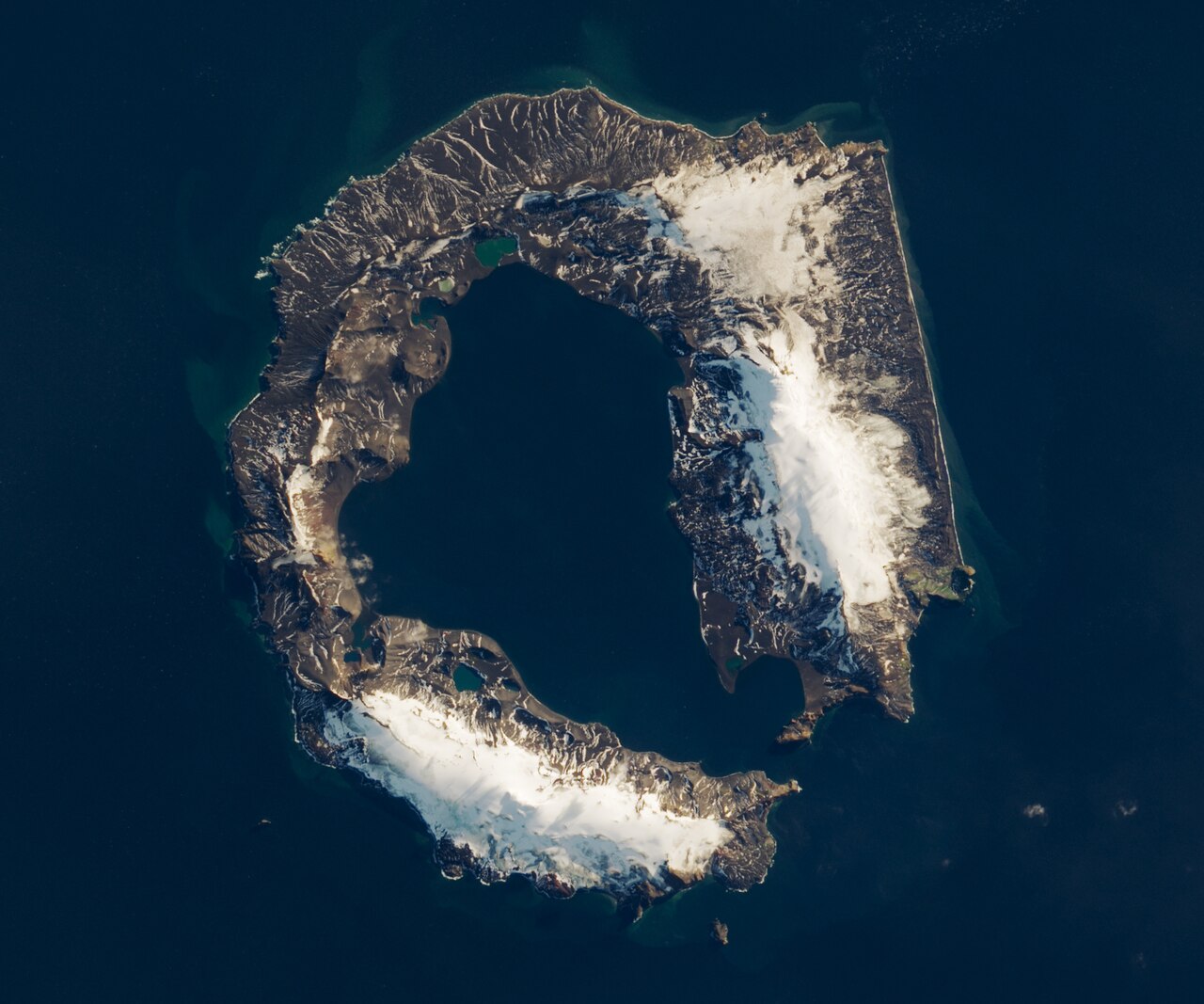
Deception Island is one of Antarctica's most extraordinary destinations — an active volcanic caldera you can sail inside:
- Neptune's Bellows — Dramatic 230m-wide entrance passage between volcanic cliffs
- Whalers Bay — Abandoned Norwegian whaling station, rusting tanks, haunting industrial ruins
- Pendulum Cove — Geothermal beaches where you can "swim" in Antarctica (water temperature varies)
- Baily Head — Massive chinstrap penguin colony (100,000+ breeding pairs) on outer coast
- Volcanic activity — Last erupted 1970. Geothermal vents still active. Scientists monitor continuously
Wildlife
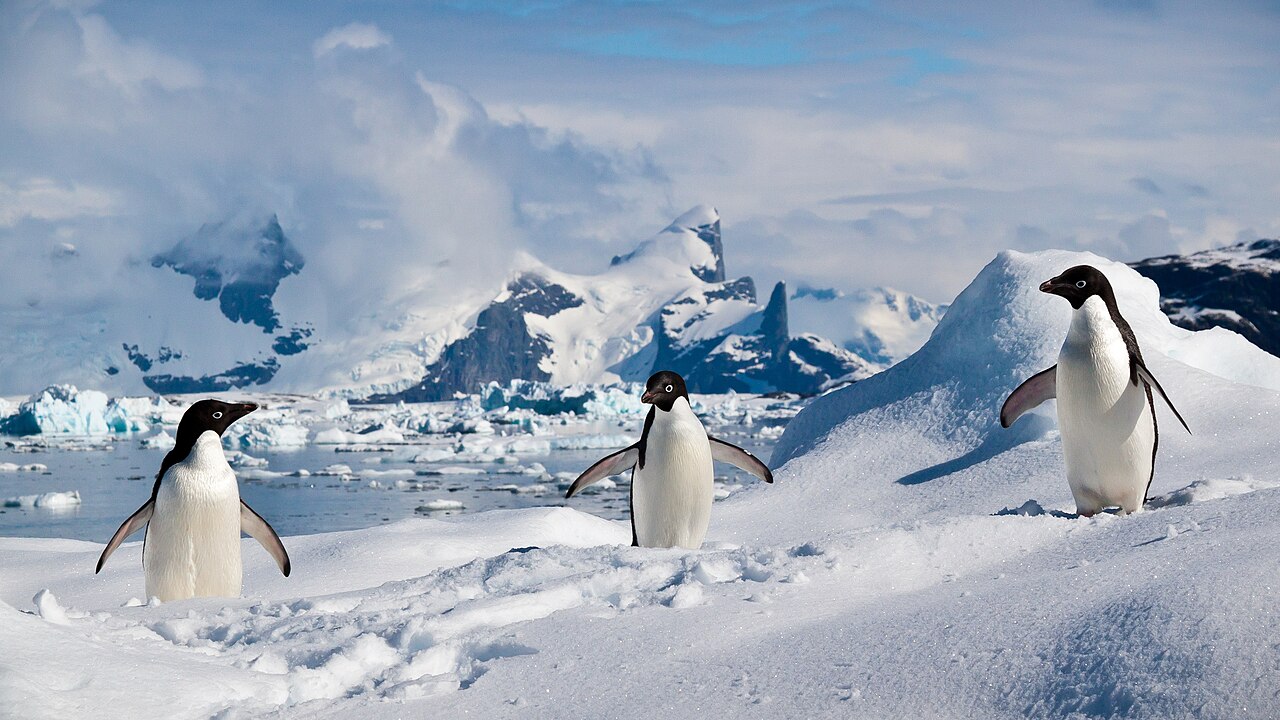
The South Shetland Islands host significant wildlife populations:
- Chinstrap penguins — Dominant species, named for distinctive "chinstrap" markings
- Gentoo penguins — At several landing sites, recognizable by red-orange bills
- Antarctic fur seals — Aggressive during breeding season, maintain distance
- Elephant seals — Massive males weigh up to 4 tons, often seen at Hannah Point
- Whales — Humpback and minke whales feed in surrounding waters
- Seabirds — Antarctic terns, skuas, giant petrels, blue-eyed cormorants
Research Stations
King George Island has the highest concentration of research stations in Antarctica, earning it the nickname "Antarctic Greenwich Village":
- Bellingshausen (Russia)
- King Sejong (South Korea)
- Artigas (Uruguay)
- Great Wall (China)
- Presidente Eduardo Frei Montalva (Chile) — Includes small settlement, school
- Escudero (Chile)
- Carlini (Argentina)
Station visits depend on prior arrangement and operational schedules.
Getting Around
Zodiac transfers: The Zodiac is your only mode of transport between ship and shore. These rigid-hulled inflatable boats carry 8 to 12 passengers per trip and are driven by trained expedition staff. Boarding requires stepping down from a gangway platform into a moving boat — the crew will assist you, but you need reasonable mobility and balance. Wheelchair users and passengers with limited mobility should note that Antarctic landings are not wheelchair accessible; however, most ships offer scenic Zodiac cruising as an accessible alternative. Wet landings mean stepping from the Zodiac into shallow water and walking onto the beach, so waterproof boots extending above the ankle are essential. Most expedition ships provide rubber boots as part of the voyage or offer rental for $50 to $100 if you have not brought your own.
On shore: Once on land, you walk. There are no roads, no vehicles, no paths beyond those marked by the expedition team with flag poles and guide ropes. All visitors must follow IAATO (International Association of Antarctica Tour Operators) guidelines: stay on designated walking routes, maintain at least five meters distance from wildlife, do not touch or feed animals, carry out all waste, and do not remove any natural materials — not a pebble, not a feather, not a bone. The terrain is uneven volcanic rock, gravel, and occasionally snow or ice. Walking poles are helpful on steeper sites like the Baily Head approach. There is no independent transport of any kind. You go where the expedition team takes you, when conditions allow, and you return when instructed. This is not a limitation — it is the framework that keeps Antarctica intact.
South Shetland Islands Map
Top Excursions & Attractions
There are no independent excursion options in Antarctica. Every landing is a ship excursion organized by the expedition staff and included in your cruise fare, with guaranteed return to the vessel. The only booking decision is the expedition cruise itself — book ahead, as popular departure dates sell out 12 to 18 months in advance. Expedition cruises from Ushuaia typically cost $5,000 to $15,000 per person for 10 to 21-day voyages.
- Deception Island volcanic caldera hike — After landing at Whalers Bay, hike along the rim of the caldera through volcanic ash slopes with panoramic views of Port Foster and the surrounding peaks. The terrain is loose scree and ash, moderately strenuous, with the expedition team setting the route based on conditions. You pass the ruins of the abandoned whaling station and British research base destroyed by the 1969 eruption. On a clear day, the views from the caldera rim stretch across the Bransfield Strait to the Antarctic Peninsula.
- Half Moon Island chinstrap penguins — A relatively easy landing on a crescent-shaped volcanic island hosting approximately 3,300 breeding pairs of chinstrap penguins. The walking circuit takes 45 to 60 minutes along a flagged path above the beach. Antarctic terns nest nearby and may dive at visitors who stray too close. Weddell seals often haul out on the gravel beach. The views across the channel to Livingston Island's glaciers are spectacular.
- Yankee Harbour gentoo colony — A sheltered landing on Greenwich Island where a gentoo penguin colony of several thousand pairs occupies the rocky beach. The gentoos are recognizable by their bright red-orange bills and white headband markings. This site also features an old Argentine refuge hut and excellent views of glacial ice. The beach walk is gentle and suitable for all fitness levels.
- Hot springs at Pendulum Cove — The most surreal activity in Antarctica: swimming in geothermally heated water on a black volcanic beach inside an active caldera. The expedition team digs trenches where hot spring water mixes with cold ocean water to create a tolerable bathing temperature. Bring a swimsuit under your expedition gear. Water temperature varies wildly from scalding to freezing within centimeters, so test before committing. Bragging rights are permanent and well-earned.
- Baily Head mega-colony — The outer coast of Deception Island hosts one of the largest chinstrap penguin colonies on Earth, with over 100,000 breeding pairs. Landing conditions here are challenging — exposed surf beach, steep approach — and the expedition leader will only attempt it when conditions cooperate. If you make it ashore, the scale of the colony is staggering.
Shackleton History
Elephant Island holds special significance in Antarctic exploration:
- Point Wild — Where 22 men of Shackleton's Endurance expedition survived 4+ months awaiting rescue in 1916
- Pardo Bust — Bronze memorial to Chilean pilot Luis Pardo, who rescued the stranded men
- Difficult landings — High seas and rocky coastline often prevent Zodiac landings; scenic cruising typical
Depth Soundings
Money: There is nothing to buy in the South Shetland Islands. No shops, no restaurants, no currency exchange, no ATMs. Everything you need comes from the ship. Your expedition cruise fare ($5,000 to $15,000 per person) covers all landings, Zodiac operations, lectures, meals, and expedition gear loans. The only additional costs are tips for expedition staff (typically $15 to $20 per day) and optional waterproof gear rental ($50 to $100 if your ship charges separately for boots or parkas). Budget for the cruise itself — not the port days.
Timing: Landing schedules are dictated by weather, wildlife, and ice conditions — not by a printed itinerary. The expedition leader announces each day's plan at a morning briefing, and it can change within the hour. Be dressed and ready in the mudroom when your landing group is called. Shore time is typically 60 to 90 minutes per landing, with two landings per day when conditions allow. There is no "all-aboard time" in the traditional cruise sense — the Zodiac drivers control the rotation.
Safety: Antarctic conditions are serious. Hypothermia, frostbite, and UV exposure are real risks even in summer. Layer clothing, wear sunscreen rated SPF 50 or higher (the ozone layer is thin here), and carry sunglasses rated for snow glare. Follow all expedition staff instructions without exception. Maintain wildlife distances. Watch your footing on wet volcanic rock and gravel. The nearest hospital is in Ushuaia, two days away by sea.
Communication: There is no cell service in the South Shetland Islands. Some expedition ships offer satellite Wi-Fi, but speeds are glacial and costs are high — expect $10 to $30 per day for limited data. Download everything you need before leaving Ushuaia. Most passengers disconnect entirely and find it liberating. Bring a physical camera with spare batteries (cold drains them fast) rather than relying on your phone.
Gear: Waterproof outer layers are non-negotiable. Thermal base layers, fleece mid-layers, waterproof pants, insulated waterproof boots, warm hat, gloves, and a neck gaiter are essential. Most expedition ships provide or loan rubber boots and expedition parkas. Bring your own thermal layers and gloves. A dry bag for your camera gear is worth its weight in gold during Zodiac transfers.
Practical Information
- Location — 75 miles north of Antarctic Peninsula
- First landfall — Often first landing site after crossing Drake Passage
- Weather — Notoriously changeable; fog, wind, rain common
- Swimming — Possible at Deception Island's geothermal beaches (bring swimsuit!)
- Landings — Via Zodiac; wet landings common
Photo Gallery
Frequently Asked Questions
What is Deception Island?
Deception Island is an active volcanic caldera in the South Shetland Islands. Ships sail through Neptune's Bellows into the flooded caldera. Hot springs warm the black sand beaches. Abandoned whaling station remains at Whalers Bay. It's one of Antarctica's most unique landing sites.
Can you really swim in Antarctica?
Yes, at Deception Island's Pendulum Cove. Geothermal heat warms the water near shore, though temperatures vary wildly. Dig a trench in the black sand to mix hot spring water with cold ocean water. Bring a swimsuit and prepare for bragging rights.
Which research stations can you visit?
Visits depend on prior arrangement and weather. King George Island has the most stations, some of which occasionally welcome cruise passengers. Arrangements are made through expedition staff, not passengers.