


Photo: Wikimedia Commons (CC BY-SA)
Captain's Logbook: Ålesund
The author visited Ålesund in 2019 aboard Norwegian cruise itinerary. Observations reflect personal experience; verify current conditions before travel.
We sailed in at sunrise and the town looked like a watercolour painting — all soft pinks, mint greens, butter yellows, and fairy-tale turrets reflected perfectly in calm water. I stood on deck longer than I should have, just watching the light change on those Art Nouveau façades, feeling like I'd sailed into an illustrated storybook rather than a Norwegian fishing port. The morning air tasted of salt and cold and carried the distant cry of seabirds wheeling above the islands.
But there's a heartbreaking story beneath all that beauty. On the night of January 23, 1904, Ålesund was a densely packed medieval town of wooden buildings — tight lanes, narrow alleys, centuries of timber construction leaning into each other. A fire started in a warehouse just after midnight. The wind was fierce. By morning, nearly 850 buildings had been razed to ash and 10,000 people — almost the entire population — were left homeless in the dead of winter. I tried to imagine standing in the smoking ruins, watching everything you'd ever known reduced to embers against the January sky.

What happened next still astonishes me. International aid poured in, most notably from Germany's Kaiser Wilhelm II, who had vacationed in these fjords and loved the region. Young Norwegian architects — many just back from training in Germany and brimming with enthusiasm for Jugendstil, the sinuous Art Nouveau style sweeping Europe — saw not catastrophe but opportunity. Within three years, between 1904 and 1907, they rebuilt the entire town center in one of the most concentrated collections of Art Nouveau architecture anywhere on the continent. Every tragedy carries seeds of transformation; Ålesund proved that beauty can rise from ashes.
Walking these streets now felt like stepping into a living museum. Every façade was a canvas: ornate plasterwork depicting climbing roses, twisting vines, mythical dragons, and Norse sea serpents. I ran my fingers along cold stone carvings of fish and flowers. Turrets and spires reached skyward from buildings that never needed them — pure joy, pure artistry. The architects gave Ålesund towers and flourishes not because they were practical, but because after losing everything, beauty mattered more than efficiency.
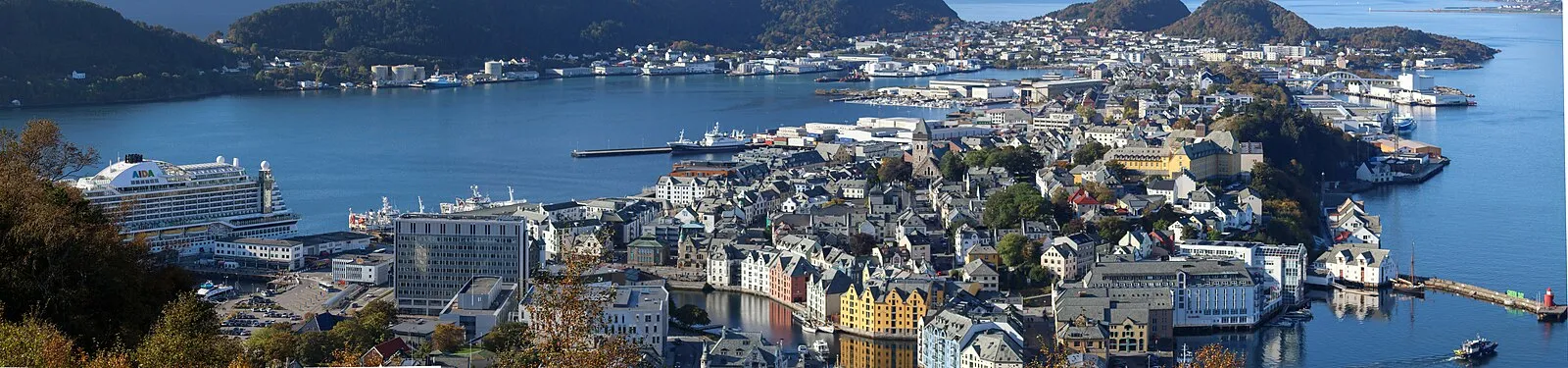
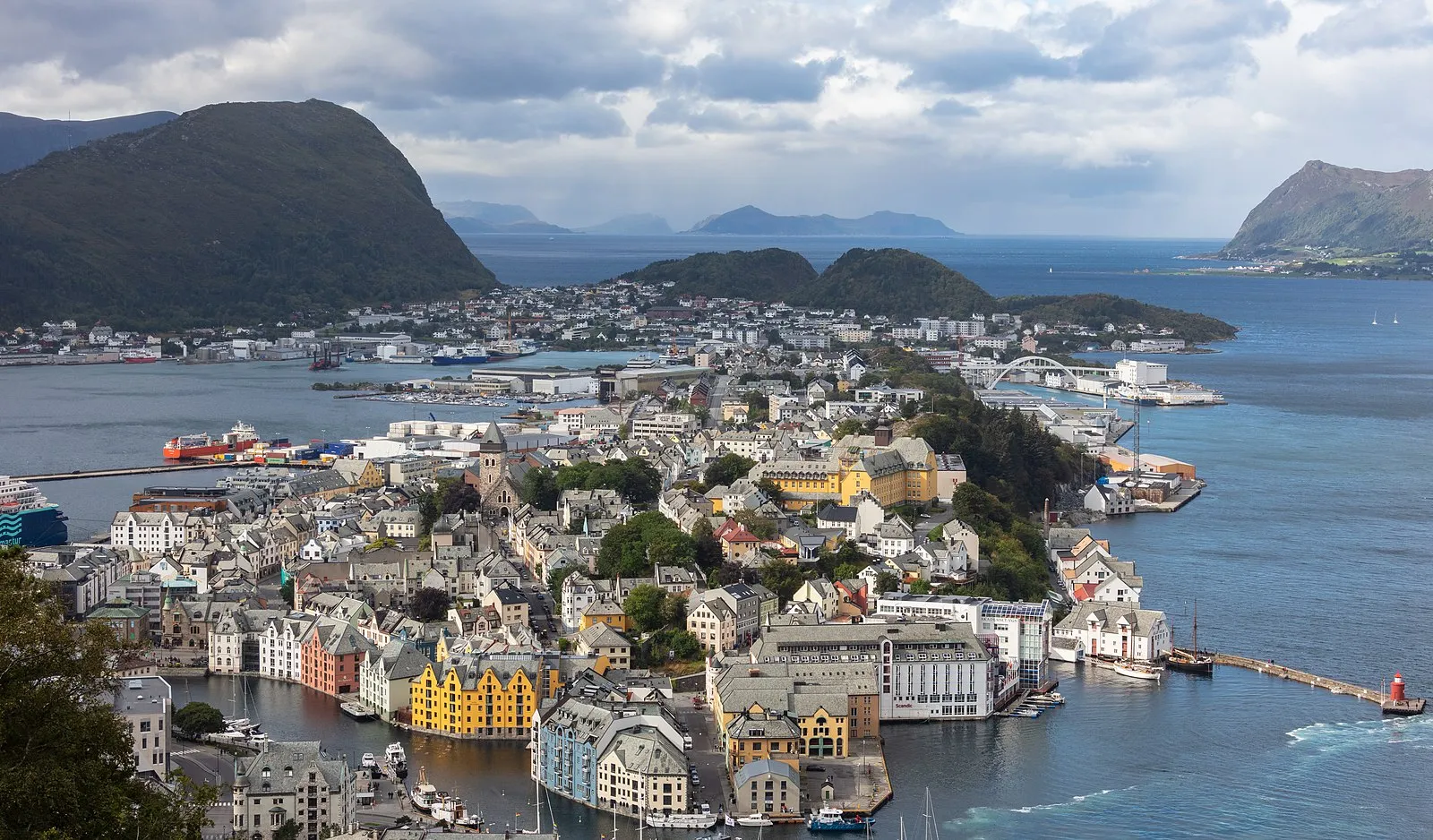
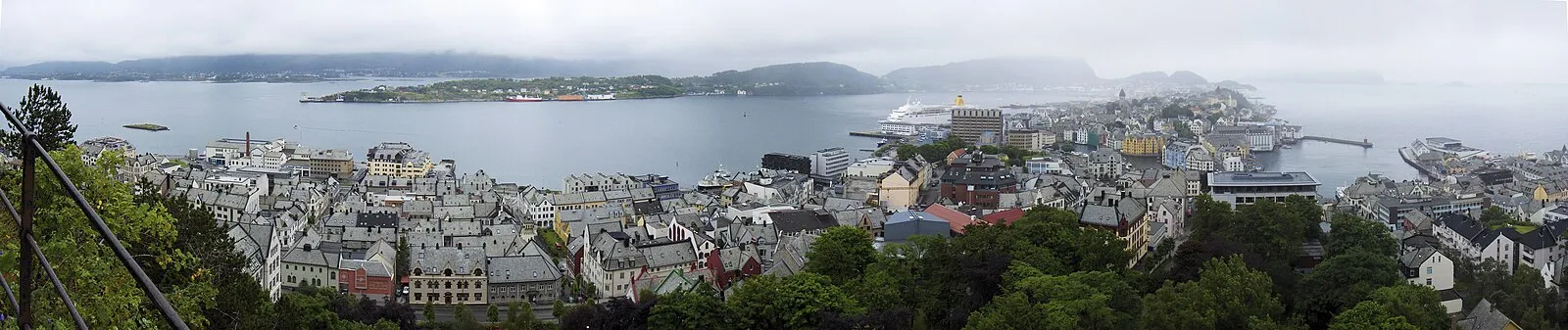
We climbed the 418 steps to Mount Aksla at 8 a.m. and had the entire viewpoint to ourselves — 360 degrees of islands, fjords, and snow-capped Sunnmøre Alps turning soft pink in the morning light. My legs burned by step 200 but I kept going, hearing my breath echo in the quiet morning air. From up there, the grid of colourful rooftops below looked like a patchwork quilt stitched with gold thread. I smelled pine and sea spray mixing on the breeze. I thought about those 10,000 souls huddled in the cold in 1904, and how remarkable it is that their descendants gave us this transformed marvel instead of a town rebuilt in haste and despair.
We had breakfast at a café built in 1905 with original Jugendstil interiors still intact — curved wooden booths, floral stained glass, brass fixtures shaped like lilies. I ordered coffee and svele (thick Norwegian pancakes, 85 NOK) with brunost, that caramelized brown cheese that tastes like fudge and nostalgia all at once. The rich sweetness lingered on my tongue. The waitress told me her great-great-grandfather helped rebuild this very building. She spoke with quiet pride, as though the fire's memory still warmed these walls.
In the afternoon we went kayaking in the Brosundet canal (350 NOK per person for 2 hours) right through the heart of town — paddling between Art Nouveau façades while locals waved from wrought-iron balconies. The water was glass-calm, doubling every tower and turret in perfect reflection. Cold spray touched my face as my paddle dipped and rose. Paddling through the middle of an architectural treasure felt surreal, like gliding through a postcard come to life. The sound of water lapping against stone walls mingled with distant church bells.

We also visited the Jugendstilsenteret (130 NOK adult admission), the Art Nouveau Centre museum housed in an old pharmacy. The exhibits chronicle the fire, the despair, and the dizzying three-year burst of creativity that followed. There are photographs of the ruins — people standing in snow-covered rubble, faces blank with shock. Architect sketches covered in flowing plant motifs line the walls. A small room dedicated to Kaiser Wilhelm's aid shipments shows the international outpouring that made the rebuild possible. It's a quiet museum, wheelchair accessible throughout, but it gave me context for every beautiful building I'd been photographing all day.
The pros: Ålesund is the most beautiful town in Norway, and it's compact enough to see everything in a day. The architecture is utterly unique, the people are warm, and the setting — scattered across islands in a sapphire fjord — is breathtaking. The cons: those 418 steps to Aksla are no joke (though they're steady and there are landings for rest), and if you skip the Jugendstil museum you'll miss the soul of the story. However, accessibility is good throughout town — flat waterfront areas, accessible cafés, and the museum has lifts and accessible facilities.
What I Learned: Ålesund taught me that catastrophe doesn't have to define a community — response to catastrophe does. The people of 1904 could have rebuilt quickly and cheaply. Instead, they chose beauty. They chose to transform their greatest loss into their greatest gift to future generations. That's not just urban planning; that's an act of profound hope. Walking these streets, I felt the weight of that choice in every ornate façade, every whimsical turret. Some wounds become windows. Some fires forge fairy tales.
Weather & Best Time to Visit
The Cruise Port
Ålesund's cruise terminal sits right in the town center — one of the most convenient port arrangements you'll find anywhere. Ships dock alongside Storneskaia pier, just steps from the Art Nouveau district. No shuttles required; you'll literally step off the gangway and into a fairy tale.
The terminal area has basic facilities including restrooms and a small visitor information kiosk. Larger ships may anchor in the harbour and tender passengers ashore, though this is less common. In either case, you're immediately in the heart of everything worth seeing.
Accessibility: The pier and town center streets are flat and well-paved, suitable for wheelchairs and mobility aids. Most shops and cafés are accessible at ground level. The Jugendstilsenteret museum has lifts. For Aksla viewpoint, a road leads to the top — arrange a taxi if stairs aren't possible.
Getting Around Ålesund
Ålesund is gloriously walkable. The cruise terminal places you directly in the Art Nouveau core, and everything worth seeing in the immediate area is within a 15-minute walk. The Jugendstilsenteret museum sits five minutes from most docking points. The base of the Aksla steps stands about ten minutes away. Waterfront cafés cluster everywhere you look.
For attractions further afield, local buses run regularly and are reasonably priced ($5-7 USD or 50-70 NOK per trip). Taxis wait near the terminal and can take you to Atlanterhavsparken aquarium (3 km west, roughly $15-20 USD or 150-200 NOK one way) or drive you to the top of Aksla if the stairs aren't feasible ($20-25 USD or 200-250 NOK). Rental bikes are available during summer months for those wanting to explore the islands beyond walking distance ($30-40 USD per day).
The town spreads across several islands connected by bridges and tunnels, but cruise visitors rarely need to venture beyond the central island where all the architectural highlights concentrate. Stick to the walkable core and you'll have more than enough to fill your port day without transportation costs. The tourist information office near the harbor provides free maps and can help with booking transportation or excursions if needed.
Accessibility: Town center streets are flat, well-paved, and wheelchair accessible. Most shops and restaurants have step-free entrance at street level. The Jugendstilsenteret museum features lifts throughout. For Aksla viewpoint, taxis can drive to the summit via road for visitors who cannot manage the 418 steps.
Port Map
Beaches & Nature
Ålesund isn't a beach destination in the traditional sense — water temperatures hover around 10-15°C even in summer. But the natural setting is spectacular for other reasons. The town sprawls across islands at the entrance to Geirangerfjord, surrounded by the dramatic peaks of the Sunnmøre Alps.
Aksla Mountain: The 418-step climb (or taxi ride) rewards you with 360-degree panoramas of islands, fjords, and distant snow-capped peaks. Pack a windbreaker — it's brisk at the top even on sunny days.
Brosundet Canal: Kayak rentals let you paddle right through the heart of town between Art Nouveau façades. Glass-calm water doubles every turret in perfect reflection.
Atlantic Sea Park (Atlanterhavsparken): One of Scandinavia's largest saltwater aquariums, 3 km west. Built into the coastline with waves crashing outside. The underwater tunnel is spectacular. Allow 2 hours; fully accessible.
Excursions & Activities
Aksla Viewpoint Climb (Free, High-Energy)
The 418 steps to the summit offer the quintessential Ålesund experience. Start from the town park and climb steadily through landscaped terraces with benches at intervals. The panorama expands with every landing — colourful rooftops, island chains stretching toward the horizon, snow peaks catching morning light. Budget 1.5-2 hours round-trip including photo stops. Go early morning for best light and fewer crowds. Not suitable for those with mobility limitations, though taxis can drive to the top via road ($20-25 USD). No tickets or reservations required — simply show up and climb at your own pace.
Jugendstilsenteret Museum ($13 USD / 130 NOK, Low-Energy)
The Art Nouveau Centre occupies a beautifully restored 1907 pharmacy building. Exhibits chronicle the devastating 1904 fire through photographs of ruins and refugee camps, then trace the remarkable three-year rebuild through architect drawings, period furnishings, and restored interiors. The Time Machine room recreates a complete Jugendstil apartment. Plan 45-60 minutes. Fully wheelchair accessible with lifts. Essential context for everything you'll see outside. Purchase tickets at the door — no advance reservation needed. Open daily during cruise season; check hours for your visit date.
Kayaking the Brosundet Canal ($35 USD / 350 NOK, Medium-Energy)
Paddle through the heart of Ålesund between Art Nouveau façades reflected in mirror-calm water. Guided tours last 2-3 hours and require no previous experience — outfitters provide all equipment and instruction. Morning departures offer best water conditions. Book ahead through your ship excursion desk for guaranteed return to ship, or go independent with local operators for more flexibility. Not wheelchair accessible; requires ability to get in/out of kayak independently. This is one of the most memorable ways to experience the architecture.
Atlanterhavsparken Aquarium ($20 USD / 195 NOK, Low-Energy)
Scandinavia's largest saltwater aquarium sits 3 km west of town center. Walk-through underwater tunnel showcases North Atlantic species — cod, halibut, wolffish, and more gliding overhead. Outdoor seal habitat, touch pools, feeding demonstrations throughout the day. Built into rocky coastline with waves crashing outside the glass. Allow 2 hours plus travel time. Fully accessible. Excellent for families or marine life enthusiasts. Tickets available at the door; no reservation required. Local bus ($5 USD) or taxi ($15-20 USD) provides transportation from port.
Art Nouveau Walking Tour (Free-$25 USD / 250 NOK, Low-Energy)
Self-guided walks using the tourist office map (free) or join guided tours departing from the harbour ($25 USD / 250 NOK). Discover dragons, sea serpents, climbing roses, and other Jugendstil motifs adorning nearly every façade. Guides share stories of individual architects and buildings. Tours last approximately 1.5 hours. Fully accessible on flat streets. Reserve guided tours at the tourist office near the harbor; walk-ins accepted when space permits.
Food & Dining
Ålesund offers excellent dining options concentrated around the waterfront and pedestrian streets. Fresh seafood dominates menus — the town remains a working fishing port beneath its architectural beauty.
Brosundet Brasserie serves elevated Norwegian cuisine in a converted warehouse overlooking the canal. Fresh fish of the day (295-395 NOK), exceptional seafood platters, elegant ambiance. Reservations recommended for dinner.
Sjøbua Fiskerestaurant occupies an old fish warehouse right on the harbour. Traditional dishes including bacalao, fish soup (125 NOK), and platters of local catches. More casual atmosphere, moderate prices (mains 225-350 NOK). Wheelchair accessible ground floor.
Kafé Lyspunktet in the town center offers excellent coffee and svele (Norwegian pancakes, 85 NOK) with brunost — that caramelized brown cheese essential to the Norwegian experience. Original Jugendstil interior with curved wooden booths and floral stained glass. A quiet spot for breakfast or afternoon coffee.
Budget option: The fish market near the harbour sells fresh shrimp, smoked salmon, and fish cakes for picnic-style eating (50-100 NOK). Several bakeries offer pastries and sandwiches under 80 NOK.
Local Notices
Weather: Even in summer, temperatures rarely exceed 18°C and wind off the fjord can be brisk. Bring layers and a windbreaker, especially for the Aksla climb. Rain gear advisable — weather changes rapidly in Norwegian fjords.
Currency: Norwegian Krone (NOK). Credit cards accepted virtually everywhere, including small cafés and market vendors. ATMs available in town center. Norway is expensive by European standards — budget accordingly.
Language: Norwegian; English spoken widely and fluently by most locals. Tourism is a major industry and visitor services are excellent.
Sunday Hours: Many shops close Sundays. Museums and restaurants typically remain open. If your port day falls on Sunday, confirm opening times for any key attractions you want to visit.
Depth Soundings Ashore
Ålesund delivers something rare in cruising: a port where the primary attraction is the entire town itself rather than a single landmark or beach. The architectural uniformity creates an immersive experience — you're not visiting Art Nouveau buildings, you're inside a complete Art Nouveau world that somehow survived and thrived. That context matters. Understanding the 1904 fire transforms casual sightseeing into something more meaningful.
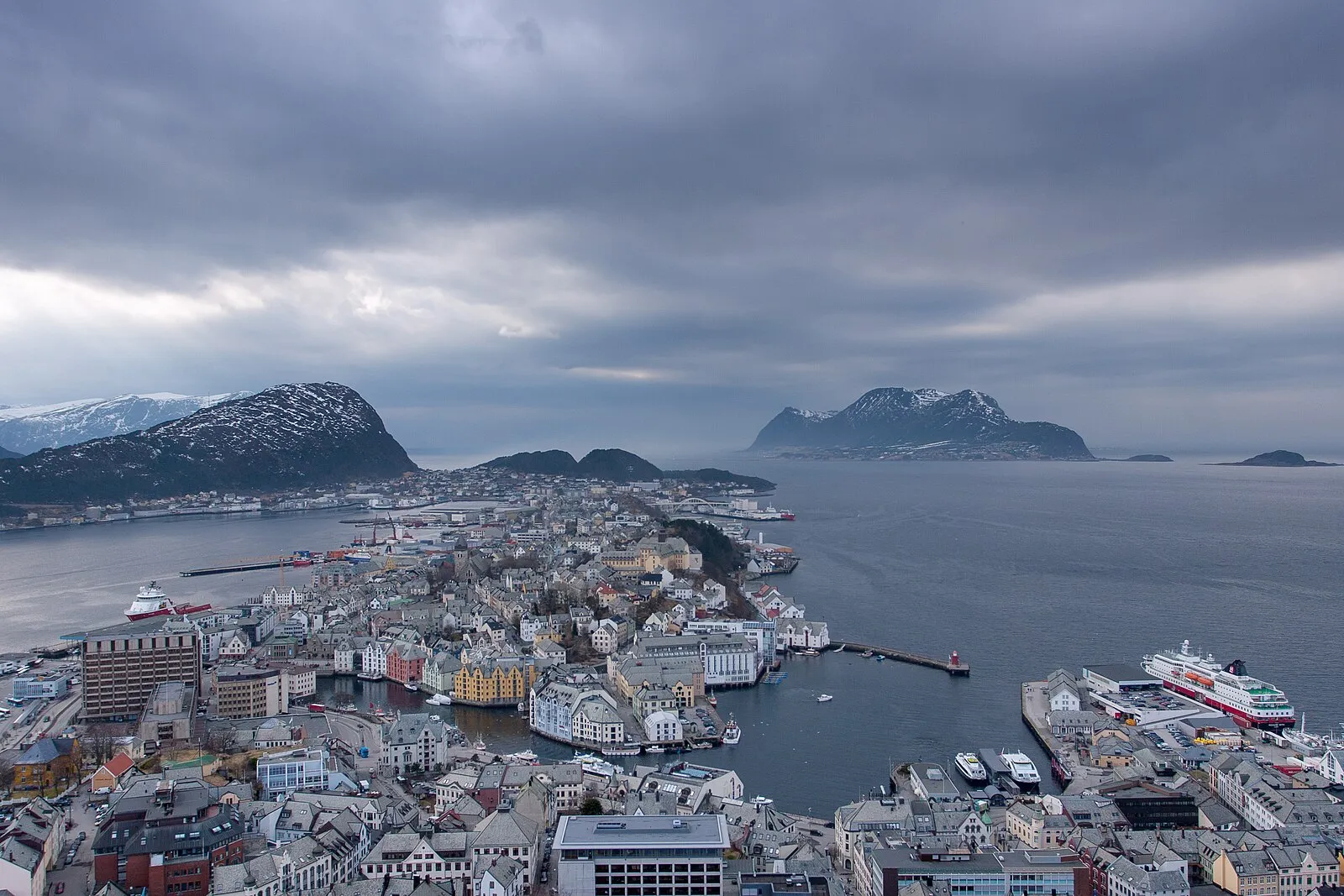
The Aksla climb is worth the effort for anyone physically able. The panorama changes character depending on weather and light — overcast days give moody Nordic atmosphere, while clear mornings paint everything in pastels. Go early to avoid crowds from multiple ships.
Skip the aquarium unless you're traveling with children or have a particular interest in marine life — your limited port time is better spent in the unique architectural core. But don't skip the Jugendstilsenteret museum. That 45-60 minutes provides context that enriches every façade, turret, and dragon carving you'll photograph afterward.
The honest assessment: Ålesund is expensive (this is Norway), the weather is unpredictable, and 418 steps challenge even fit visitors. But the town is genuinely one of Europe's hidden architectural treasures. The story of transformation — catastrophe into beauty, ashes into turrets — resonates long after you've sailed away. I've returned twice and would go again.
Practical Information
- Country
- Norway
- Currency
- Norwegian Krone (NOK) — roughly 10 NOK = 1 USD
- Language
- Norwegian; English widely spoken
- Port Type
- Dock (usually) or tender (occasionally)
- Walk to Town
- Immediate — terminal in town center
- Aksla Steps
- 418 steps, 1.5-2 hours round-trip
- Water Temperature
- 10-15°C (not swimmable)
- Best For
- Architecture, photography, scenic viewpoints
- Accessibility
- Flat town center; museum has lifts; taxi to Aksla summit available
- Wi-Fi
- Available in most cafés and the tourist office
Photo Gallery



Frequently Asked Questions
Q: Is Ålesund worth visiting on a cruise?
A: Absolutely. It's the most beautiful town in Norway and one of Europe's hidden architectural treasures. The entire center is a living Art Nouveau museum — compact, walkable, and uniquely beautiful. Few ports offer anything comparable.
Q: What's the story with the 1904 fire?
A: On January 23, 1904, a massive fire destroyed nearly 850 wooden buildings overnight, leaving 10,000 homeless. With international aid (especially from Kaiser Wilhelm II of Germany) and young architects trained in Jugendstil, they rebuilt entirely in Art Nouveau style within three years. Tragedy became one of Europe's greatest architectural legacies.
Q: How difficult is the Aksla climb?
A: The 418 steps are steady but relentless. Landings provide rest points every 50-60 steps. Most moderately fit people manage it in 20-30 minutes up, though taking your time is recommended. Alternatives exist for those with mobility concerns — taxis drive to the summit via road.
Q: Can I walk from the cruise terminal?
A: Yes — the terminal sits right in town center. You'll step off the ship directly into the Art Nouveau district. Everything worth seeing is within a 15-minute walk: museum (5 min), Aksla steps (10 min), waterfront cafés (everywhere).
Q: What's the best thing to do with limited time?
A: Climb to Aksla viewpoint for panoramas, visit the Jugendstilsenteret museum for context, then simply wander. The architecture IS the attraction. Every street offers photogenic façades adorned with dragons, roses, turrets, and towers.
Q: Is Ålesund accessible for wheelchair users?
A: The town center is flat and well-paved. Most shops and restaurants are accessible. The Jugendstilsenteret museum has lifts throughout. For Aksla, taxis can drive to the summit viewpoint. The aquarium is fully accessible.
Q: What's the best time of year to visit Ålesund?
A: June through August — warmest weather (12-18°C), longest daylight (20+ hours in June), and all attractions fully operational. May and September are cooler but less crowded. Most cruise ships call June-August.
Q: Does Ålesund have a hurricane or storm season?
A: Norway is not in a hurricane zone. The relevant exposure is an exposed Atlantic coast with a very wet Atlantic climate — wet year-round, slightly drier May–June. November through January are the months to avoid.
Q: What should I pack for Ålesund's weather?
A: Waterproof jacket is non-negotiable — Norwegian coastal rain can arrive without warning even in summer. Warm layer underneath (12-18°C feels cool), comfortable shoes with grip for the 418 Aksla steps and cobblestones, sunscreen for long summer daylight.
Q: Will rain ruin my port day in Ålesund?
A: Rain is possible any day in Norway, but it's rarely a washout. The Art Nouveau architecture is actually more atmospheric in soft rain. The Jugendstilsenteret museum and Atlantic Sea Park aquarium are excellent indoor options. Norwegians have a saying: "There's no bad weather, only bad clothing." Carry a waterproof layer and embrace it.
Last reviewed: February 2026