


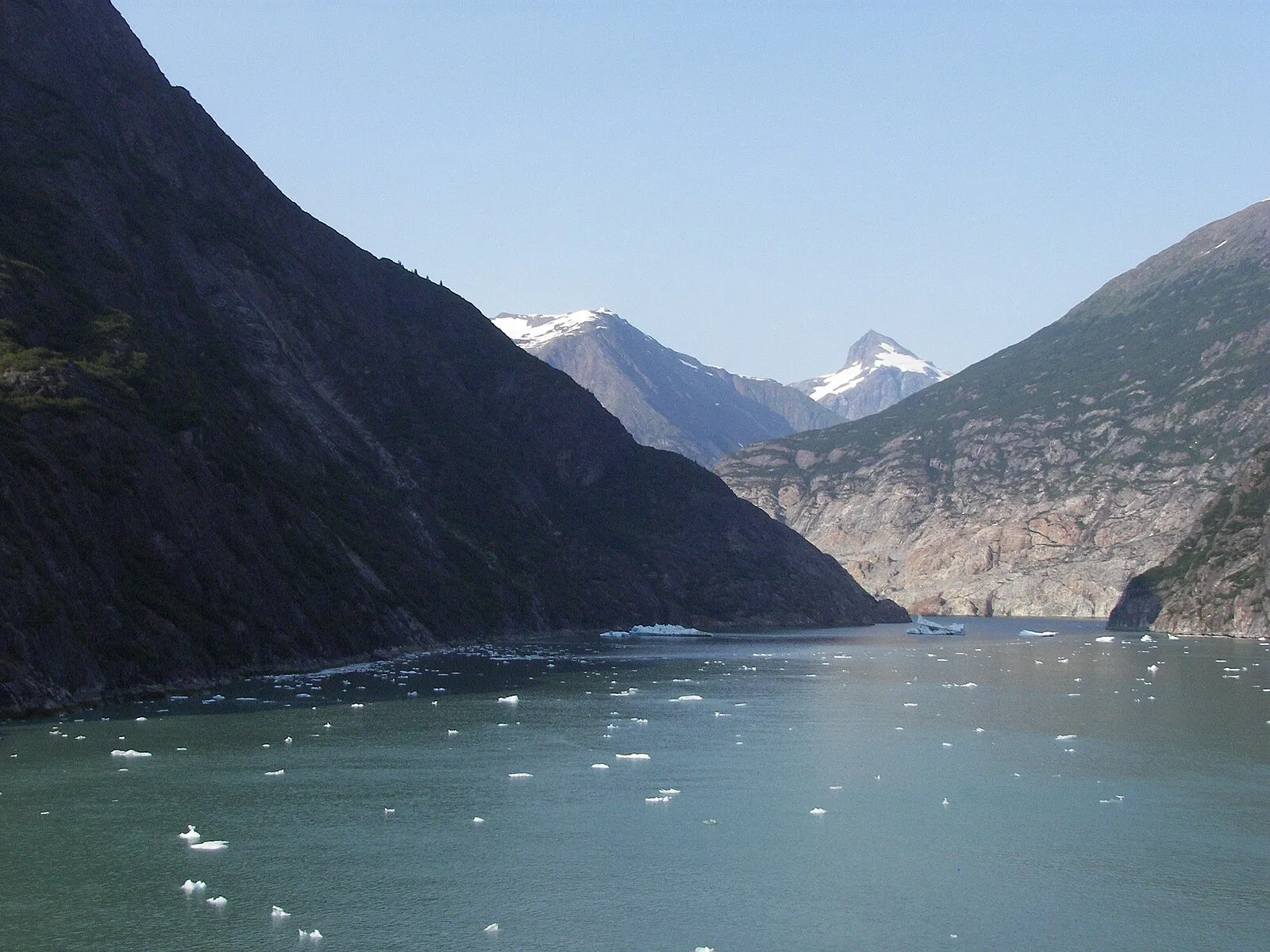
Photo: WikiMedia Commons (CC BY-SA)
My Endicott Arm Logbook
I'll be honest—when the captain announced we'd be diverting from Tracy Arm to Endicott Arm due to ice conditions, I heard some disappointed murmurs around me. Tracy Arm has the name recognition, the two Sawyer Glaciers, the reputation. But as our ship entered Endicott Arm that morning, every single one of those disappointed passengers changed their tune. This 30-mile fjord tucked within the 653,179-acre Tracy Arm-Fords Terror Wilderness turned out to be one of the most spectacular glacier experiences of my Alaska cruising career.
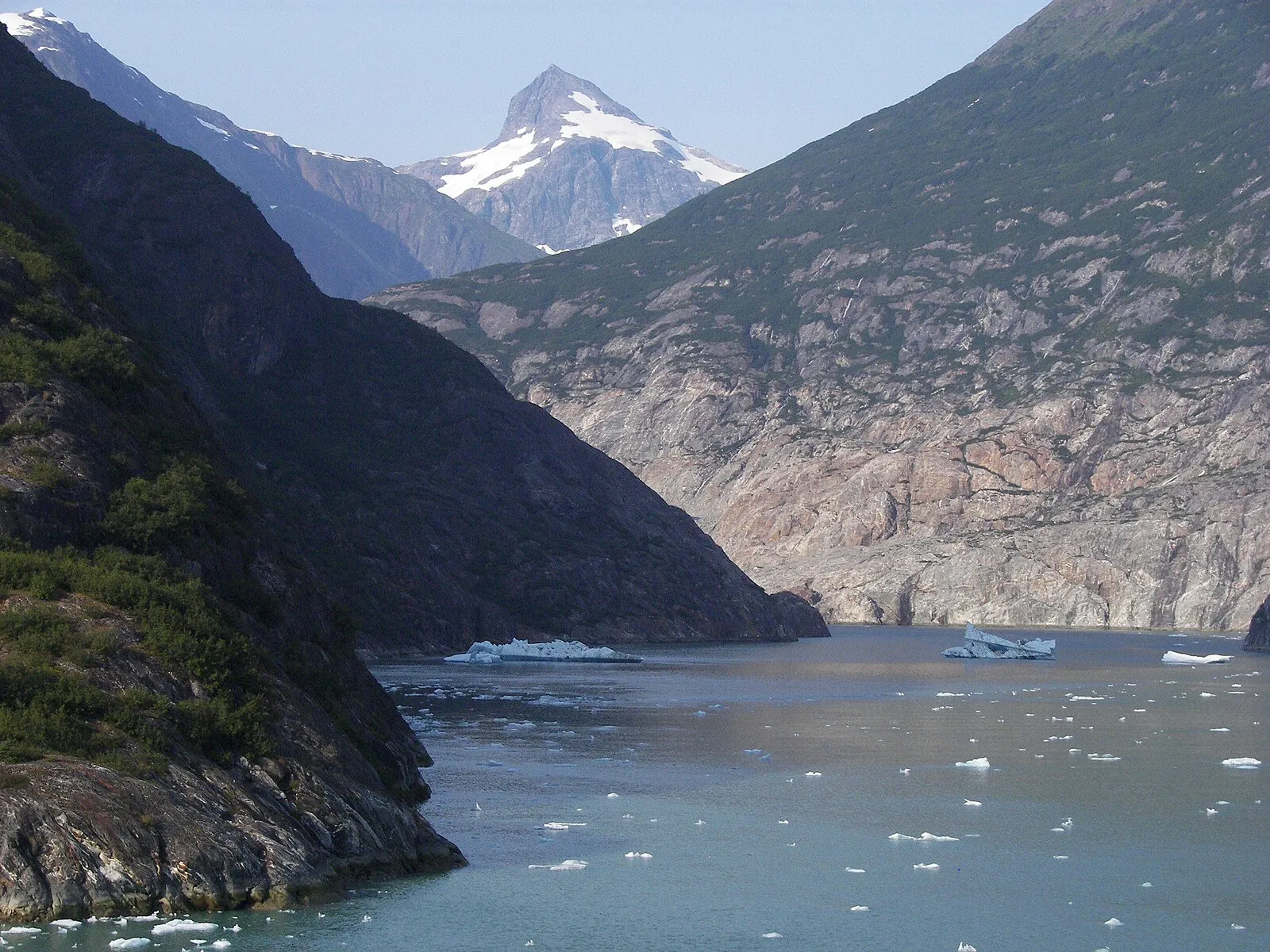
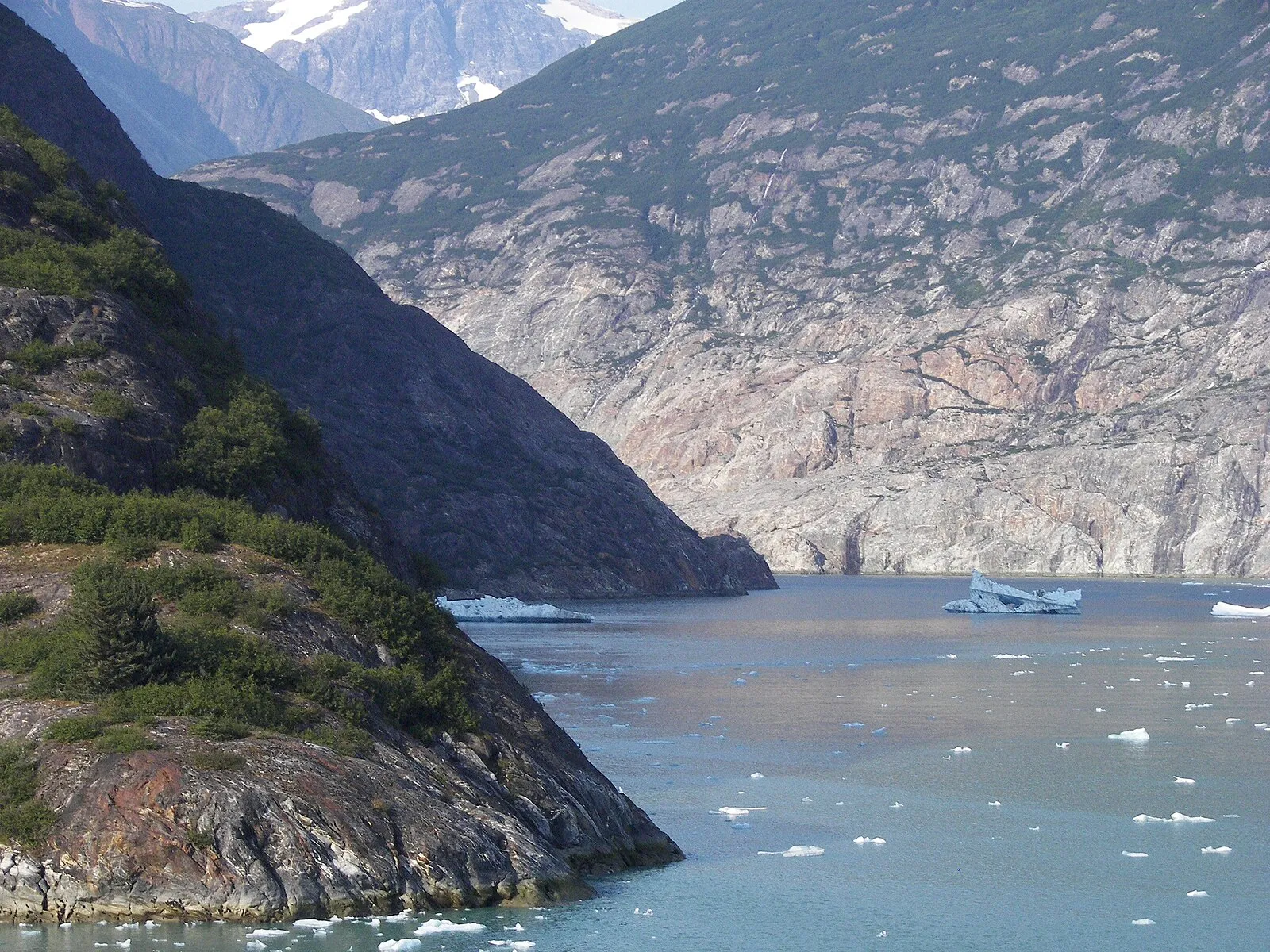
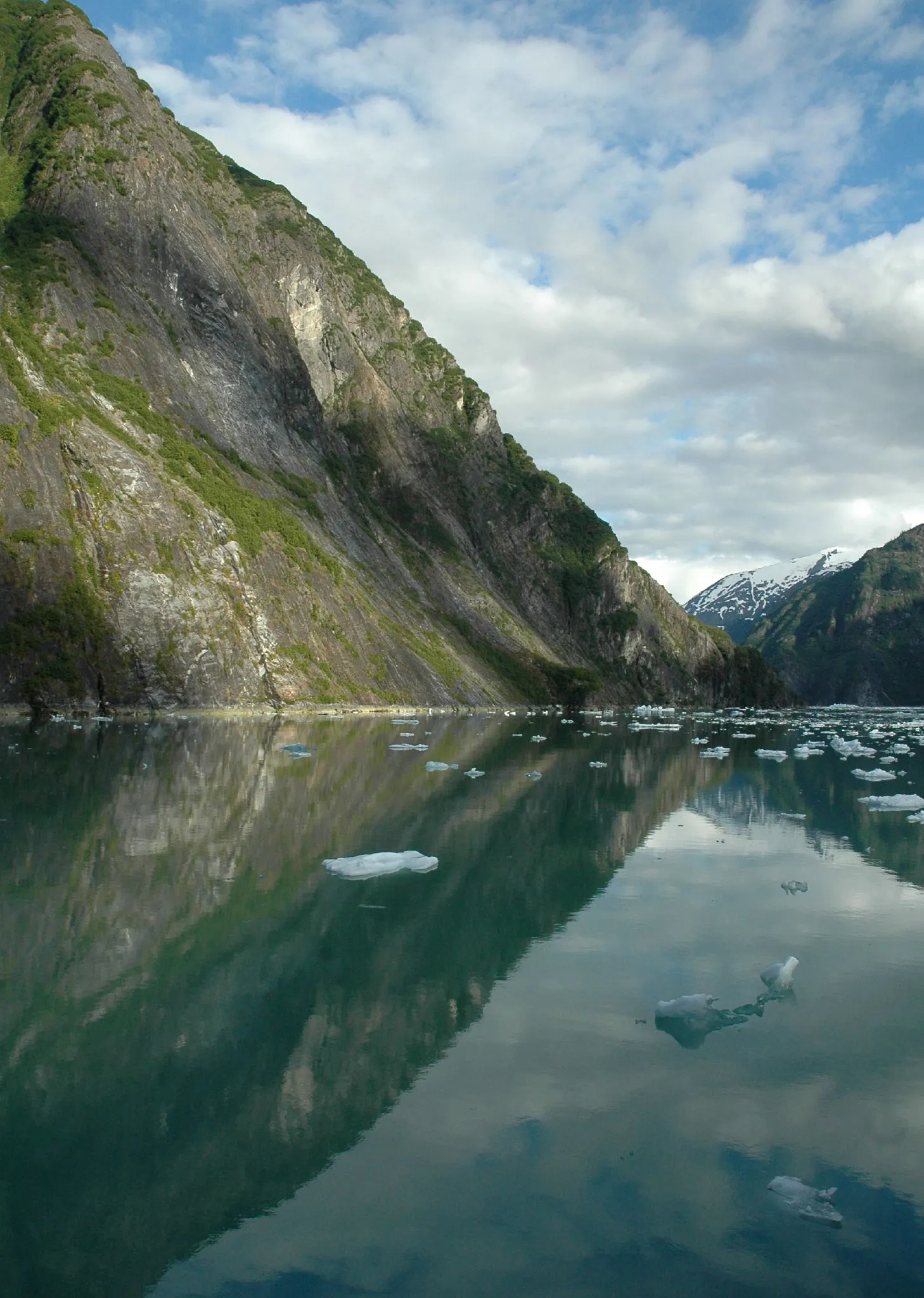
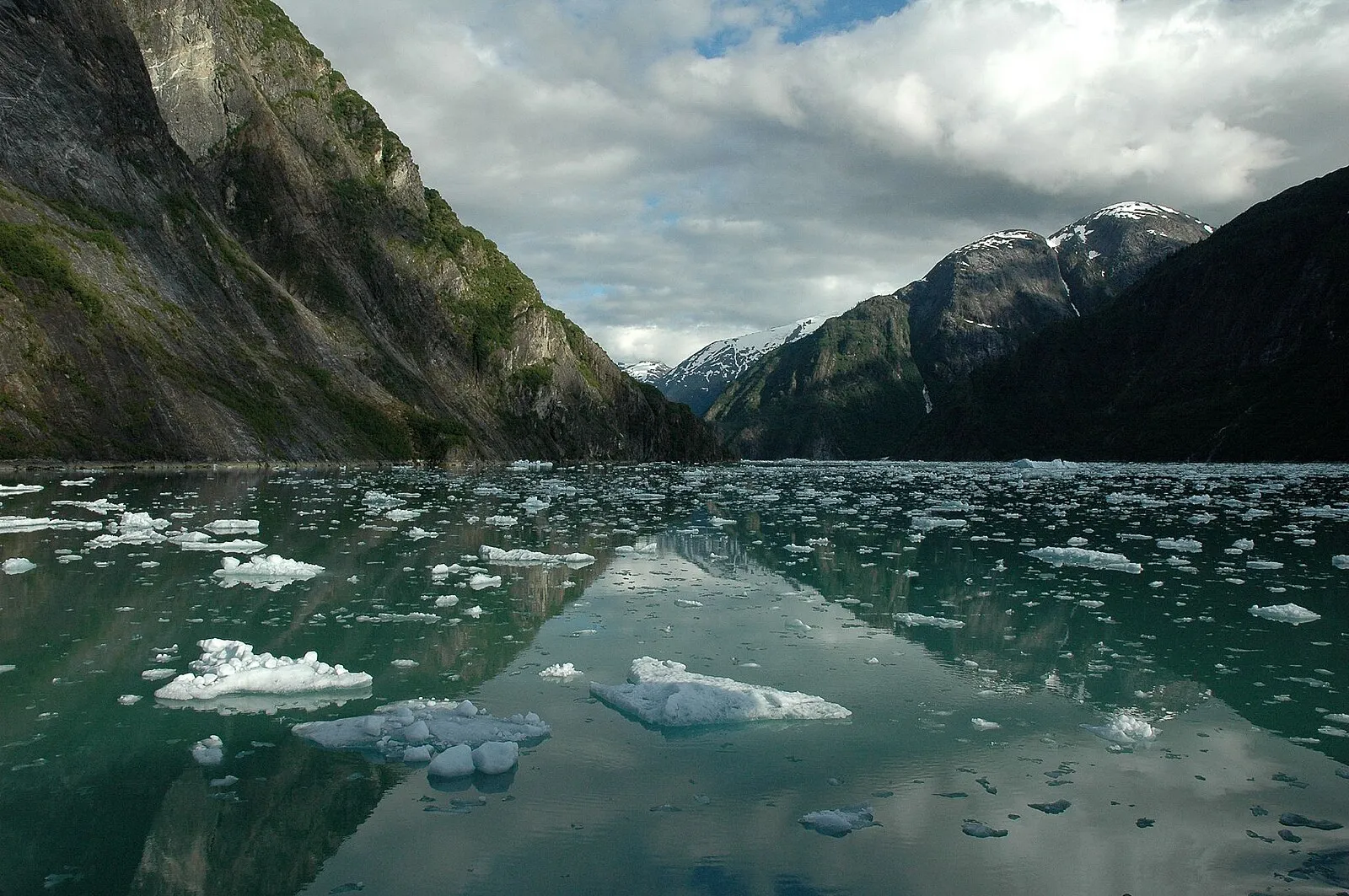
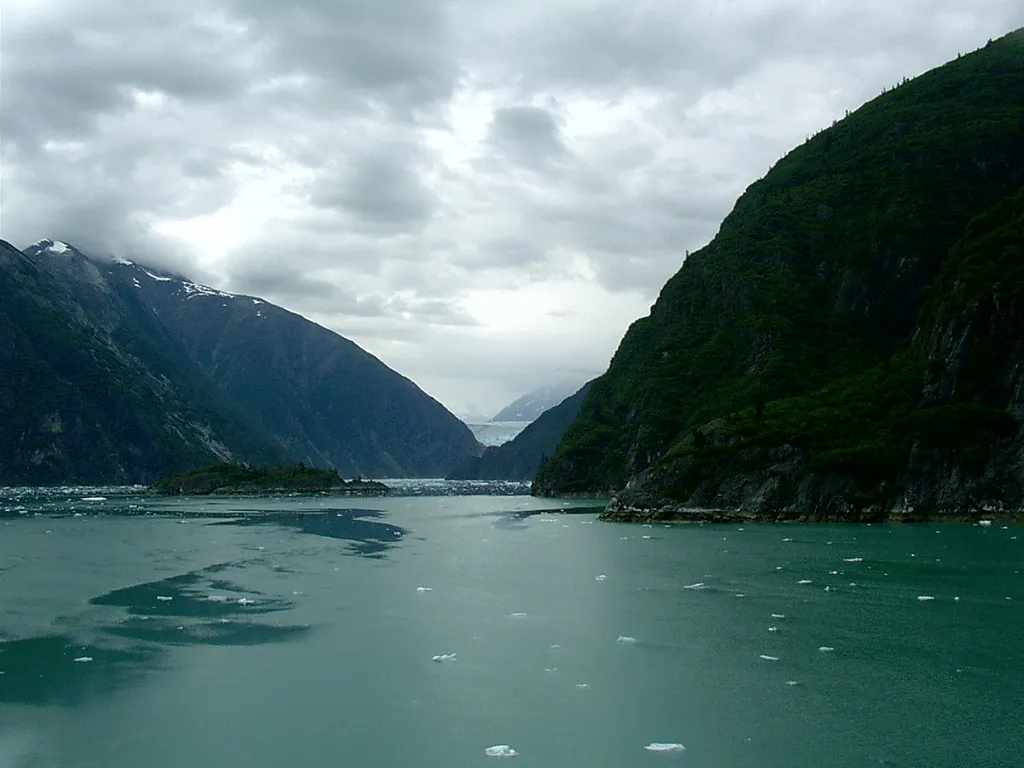
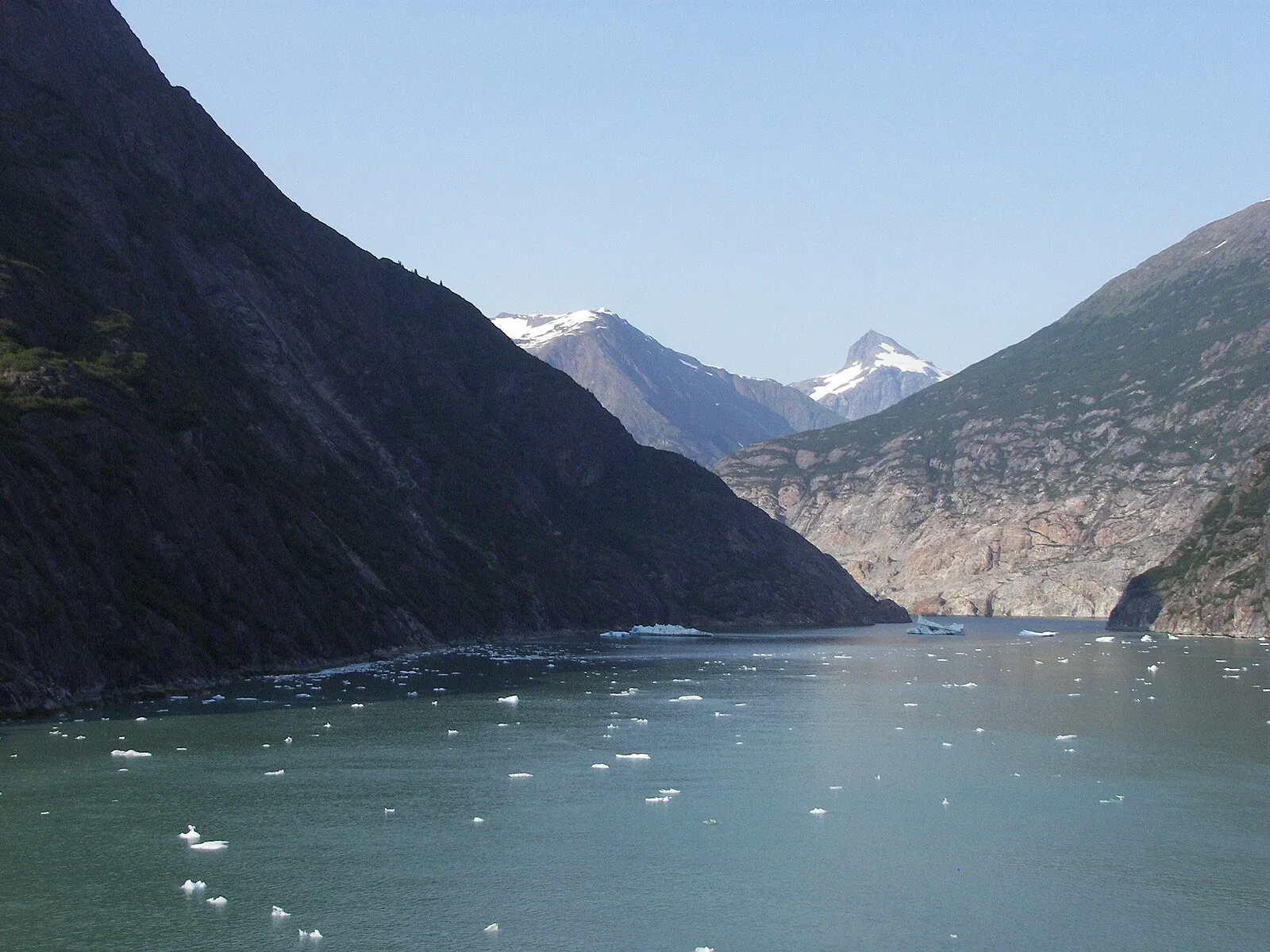
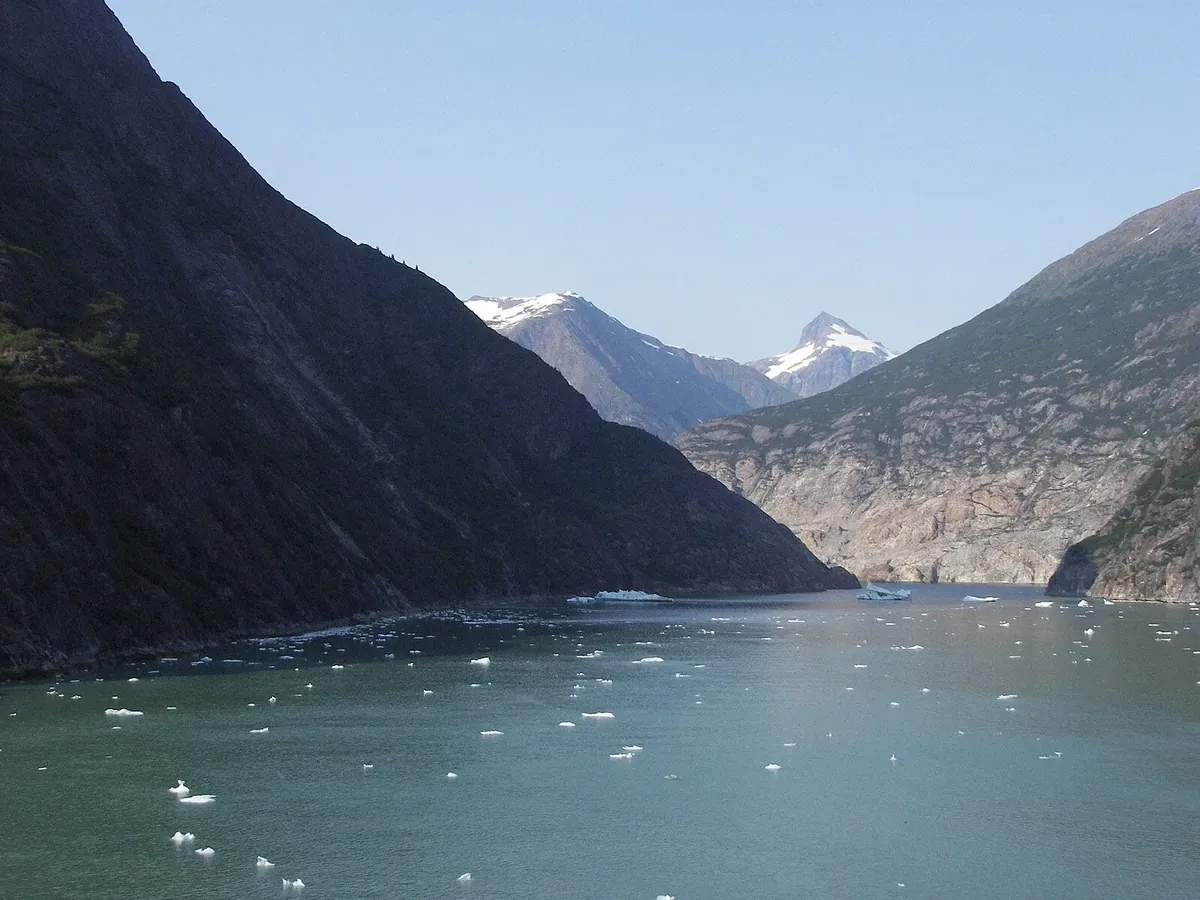
The approach was magnificent. Granite walls rose 3,000 feet on either side, streaked with waterfalls that seemed to appear around every bend. The water shifted from deep blue to milky turquoise as we progressed, a sign of the glacial flour—rock ground fine by ice—suspended in the fjord. Icebergs began appearing, first in scattered twos and threes, then in floating fields that our navigator picked through with practiced precision. The fjord floor dropped 1,200 feet beneath our hull, and I couldn't shake the feeling of traveling through a landscape carved by forces beyond human comprehension.
My binoculars were glued to my face for most of the transit. Harbor seals lounged on nearly every sizeable ice floe, their spotted coats blending remarkably well with the white and blue ice. This stretch of water is one of the largest harbor seal breeding grounds on the planet, and during our visit I spotted dozens of mother-pup pairs hauled out on floating platforms where predators couldn't reach them. One mother lifted her head as we drifted past, assessed our ship, decided we weren't a threat, and settled back down with her pup nuzzled against her side. That moment of trust—a wild animal choosing not to flee—stays with me.
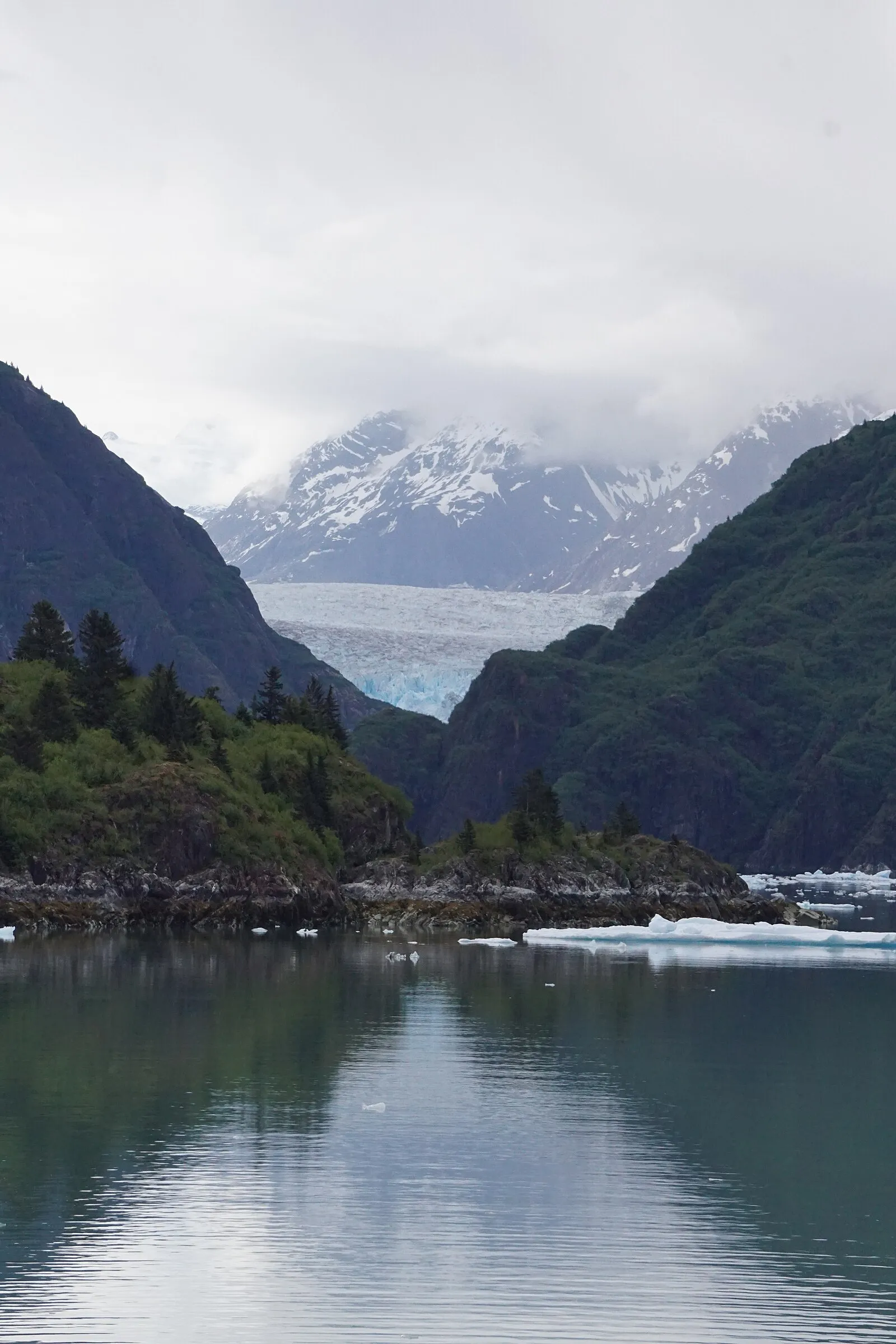
Dawes Glacier dominates the head of Endicott Arm—a 600-foot-tall wall of ice stretching half a mile wide. Unlike some glaciers that feel distant and static, Dawes was actively putting on a show. I watched three major calving events in under an hour, each one beginning with a crack that echoed off the granite walls and ending with a thunderous splash as house-sized chunks crashed into the water. The phenomenon has a name among glaciologists: "white thunder." Standing on deck with my camera ready, I understood exactly why.
What surprised me most was the relative solitude. While Tracy Arm often sees multiple ships threading its narrow passages, we had Endicott Arm nearly to ourselves. Just one smaller expedition vessel shared the fjord with us, and the captain positioned our ship to give everyone optimal glacier views without feeling crowded. The naturalists aboard provided running commentary about the geology, wildlife, and history, including the fact that John Muir had explored these waters and compared them favorably to Yosemite Valley.
On the way back out, I noticed details I'd missed on the way in. Waterfalls that hadn't been visible from the inbound angle now caught the late afternoon light, their spray creating small rainbows against the dark rock. Bald eagles circled overhead, riding the thermal currents along the cliff faces. A brown bear worked the shoreline in the distance, flipping rocks and likely hunting for the salmon that run these waters in season. The wilderness surrounding us is protected by congressional designation—no development, no extraction, no permanent human presence except for occasional research camps.
When we finally cleared Endicott Arm and entered Stephens Passage, I found myself already planning my next Alaska cruise and secretly hoping for another ice diversion. Tracy Arm may have the famous name, but Endicott Arm delivered everything I'd hoped for and more: glaciers, wildlife, solitude, and that indescribable feeling of being small in the presence of ancient ice and primordial landscape. If your itinerary includes Endicott Arm—planned or diverted—consider yourself fortunate.
The experience also reinforced something I've learned throughout my Alaska cruising: flexibility is part of the adventure. Ice conditions change constantly, weather shifts hourly, and the glaciers themselves are in perpetual motion—advancing, receding, calving, transforming. What might initially feel like a disappointment often reveals itself as an unexpected gift. Endicott Arm certainly did for me, and I suspect it will for you too. My advice? Embrace wherever the ice takes you—Alaska always delivers more than you could ever imagine.
Weather & Best Time to Visit
Cruise Port
Endicott Arm is a scenic cruising destination—ships do not dock. All viewing happens from the ship's decks as the vessel navigates the 30-mile fjord over approximately 4-6 hours. Located about 60 miles southwest of Juneau within the Tracy Arm-Fords Terror Wilderness, Endicott Arm serves as both a scheduled destination and an alternative when ice conditions prevent access to nearby Tracy Arm. There are no shore landings, no tender operations, and no disembarkation—this is a full day dedicated to glacier and wildlife viewing from the comfort of your cruise ship.
Ships typically approach Dawes Glacier at the fjord's head, where the captain positions the vessel for optimal calving views before slowly navigating back out. The naturalist staff provides commentary throughout, explaining the geology, ecology, and wildlife you're witnessing. Some cruise lines offer optional Zodiac or kayak excursions (approximately $300-450 per person) that launch from the ship for closer glacier and wildlife encounters, though availability depends on conditions and ship capabilities.
Getting Around
Currency: US dollars (for any onboard purchases during scenic cruising).
Where to Position Yourself: The forward observation decks offer the best views as the ship enters the fjord and approaches Dawes Glacier. These prime locations fill up early, so I recommend staking your claim at least 30 minutes before the scheduled fjord entry. The upper decks provide excellent panoramic views of the 3,000-foot granite walls, while lower outside decks offer more intimate perspectives and better angles for wildlife photography when seals are spotted on nearby ice floes.
Indoor vs Outdoor Viewing: Observation lounges offer warmth and comfort, but I strongly recommend outdoor viewing for the full experience. The sounds of Endicott Arm—calving thunder, waterfall roar, ice creaking—are essential to appreciating the scale and power of this landscape. Temperatures drop noticeably near Dawes Glacier (often 15-20 degrees colder than open ocean), so dress in layers with a waterproof outer shell.
Accessibility: Most ships have accessible viewing areas for scenic cruising, though outdoor decks may become slippery from glacial spray. Wheelchair users should check with guest services about optimal accessible viewing locations. The ship's PA system broadcasts naturalist commentary throughout, so you won't miss information regardless of your location aboard.
Timing: Endicott Arm transits typically begin in early morning and conclude by early afternoon, with extended time at Dawes Glacier mid-transit. Set your alarm for the early approach—watching the fjord entrance emerge through morning mist is unforgettable.
Endicott Arm Fjord Map
Interactive map showing the 30-mile Endicott Arm Fjord, Dawes Glacier, and Fords Terror inlet. Note: Endicott Arm is scenic cruising only—no shore landing.
Excursions
Scenic cruising and optional expedition tours—no traditional port excursions.
Ship Excursion: Zodiac Glacier Expedition (Where Available)
Some cruise lines offer small-boat expeditions during Endicott Arm transit. These typically cost $300-450 per person and last 2-3 hours. Participants board Zodiacs or similar expedition craft launched from the ship and cruise closer to Dawes Glacier and the iceberg fields than the main vessel can safely navigate. The experience is weather and ice dependent—ships cannot guarantee these excursions will operate. When they do run, they offer incredible intimate encounters with calving ice, seal colonies, and the sheer scale of the glacier face. Book ahead through your cruise line if interested, as capacity is typically limited to 20-40 passengers per departure.
Ship Excursion: Kayaking Endicott Arm (Where Available)
A few expedition-style cruise lines offer kayaking during Endicott Arm visits (approximately $200-350 per person). Paddling through the iceberg field provides an unforgettable perspective—being eye-level with seals on ice floes while Dawes Glacier towers in the distance is genuinely humbling. These excursions require no prior kayaking experience, include guides and safety equipment, and operate only in calm conditions. If your ship offers this option, I recommend it highly for the unique vantage point.
Independent Option: Glacier Viewing from the Ship
The most popular "excursion" at Endicott Arm is simply positioning yourself on deck for optimal viewing—completely free and remarkably rewarding. No booking required, no guaranteed return concerns, and you maintain flexibility to move around the ship as conditions change. Bring binoculars (essential for seal spotting and glacier detail), camera with telephoto lens if available, and plenty of layers. Hot beverages from the onboard cafes ($5-8 for specialty coffee) help ward off the glacial chill.
Fords Terror (Limited Access)
Off Endicott Arm lies Fords Terror, a narrow inlet with tidal currents so fierce they terrified early explorers—hence the name. Large cruise ships cannot enter due to size and dangerous currents. However, some small expedition ships and day-tour operators from Juneau offer Fords Terror kayaking adventures at slack tide (approximately $400-600 for full-day trips). If your itinerary allows and you're adventurous, this is wilderness Alaska at its most intense.
Booking Guidance
For optional Zodiac or kayak expeditions (if your ship offers them), book ahead through your cruise line's excursion desk—these limited-capacity experiences sell out quickly. For standard ship viewing, no booking needed—just arrive early to claim your preferred deck position. Since you never leave the ship for standard viewing, guaranteed return to the vessel is not a concern here.
Depth Soundings
Practical details for your Endicott Arm scenic cruising experience.
Timing & Schedule
Endicott Arm transits typically begin in early morning and conclude by early afternoon—4-6 hours total depending on ice conditions and how long the captain chooses to linger at Dawes Glacier. The glacier is at the fjord's head, so maximum viewing occurs mid-transit. Set your alarm early—the entrance with its first iceberg sightings is worth waking for.
Weather Expectations
Endicott Arm sits within one of Southeast Alaska's wetter regions. Expect overcast skies, mist, and the possibility of rain. However, dramatic weather often creates the most atmospheric photos—misty fjord walls, clouds wrapping mountain peaks, waterfalls emerging from fog. Sunny days are spectacular but not guaranteed. Dress for wet conditions regardless of forecast.
Accessibility Notes
Most ships have accessible viewing areas for scenic cruising, though outdoor decks may become slippery from spray and mist. Wheelchair users should check with guest services about optimal accessible viewing locations. Some ships position chairs in observation lounges with large windows as an indoor alternative. The ship's PA system broadcasts naturalist commentary throughout, so you won't miss information regardless of your location.
Costs Aboard
Since there's no port call, expenses are limited to onboard purchases: specialty coffee ($5-8), hot chocolate ($6-9), binocular rental if needed ($15-25/day), camera memory cards from the shop ($30-50), and photography packages if offered ($50-200). The ship's photographer typically stations on deck during glacier approach—images available for purchase at cruise ship rates ($20-30 per digital image).
What to Bring on Deck
Layers are essential—temperatures drop 15-20 degrees near Dawes Glacier compared to open ocean. Waterproof outer layer recommended for spray and mist. Hat and gloves even in summer. Binoculars (truly essential—you'll regret skipping them). Camera with charged batteries (cold drains them quickly, bring spares). Snacks from the buffet to avoid losing your prime viewing position. Hot beverage in an insulated mug if deck rules permit.
Endicott Arm Gallery
Frequently Asked Questions
Q: When is the best time of year to visit Endicott Arm?
A: Cruise ships visit Endicott Arm from May through September. June through August offers the best weather and longest daylight (17-19 hours). May and September can be cooler and wetter but offer fewer ships and more solitude. Peak glacier calving activity occurs throughout the summer season.
Q: What weather concerns exist for Endicott Arm?
A: Southeast Alaska has no hurricanes, but rain is common even in summer—this is temperate rainforest country. Temperatures drop 15-20°F near Dawes Glacier compared to open water. Bring waterproof layers and dress warmly. Hypothermia is possible if underprepared for extended deck viewing.
Q: What should I pack for viewing Endicott Arm?
A: Waterproof jacket with hood is essential. Bring warm layers including fleece, gloves, and a hat even in summer. Binoculars are crucial for wildlife and glacier detail. Pack extra camera batteries (cold drains them quickly). Consider hand warmers for extended deck viewing near the glacier.
Q: Will rain ruin the Endicott Arm experience?
A: Light rain actually creates atmospheric conditions with mist, fog, and dramatic lighting that many photographers prefer. Most cruisers stay on deck regardless of drizzle—the glacier and wildlife are worth getting slightly damp. Heavy rain is rare but may drive viewers to indoor observation lounges.
Q: Why did my ship go to Endicott Arm instead of Tracy Arm?
A: Ice conditions in Tracy Arm can be unpredictable—heavy ice sometimes blocks passage to the Sawyer Glaciers. When this happens, ships divert to Endicott Arm, which often has clearer passages and offers equally spectacular scenery at Dawes Glacier. Many passengers actually prefer Endicott Arm for its relative solitude and excellent wildlife viewing.
Q: Is Endicott Arm as good as Tracy Arm?
A: Many passengers prefer Endicott Arm—it's often less crowded with fewer ships sharing the fjord, and Dawes Glacier provides intimate, spectacular views with frequent calving activity. The seal colonies in Endicott Arm are often more active, and the overall wilderness feeling can be even more intense. Consider it a gift rather than a consolation prize.
Q: What wildlife will I see at Endicott Arm?
A: Harbor seals on ice floes are nearly guaranteed—Endicott Arm is prime seal pupping habitat. You may also see sea otters, bald eagles circling overhead, mountain goats on impossible cliff ledges, brown bears along the shoreline, and occasionally humpback whales or orcas at the fjord entrance.
Last reviewed: February 2026
Key Facts
- Location
- Southeast Alaska, within Tracy Arm-Fords Terror Wilderness
- Access
- Scenic cruising only — ships do not dock
- Key Feature
- Dawes Glacier — 600-foot ice face, half a mile wide
- Best Season
- June through August (17-19 hours daylight)
- Climate
- Cool and wet; 45-60°F in summer, frequent rain and mist
- Wildlife
- Harbor seals, bald eagles, brown bears, mountain goats, humpback whales